Confessions of a Tail-Chaser: Breaking the Cycle of Canine Existential Dread
In this fictional satire, a philosophical hound spirals over the futility of chasing its own tail until enrichment toys that echo ancestral hunting instincts step in to restore a sense of purpose.
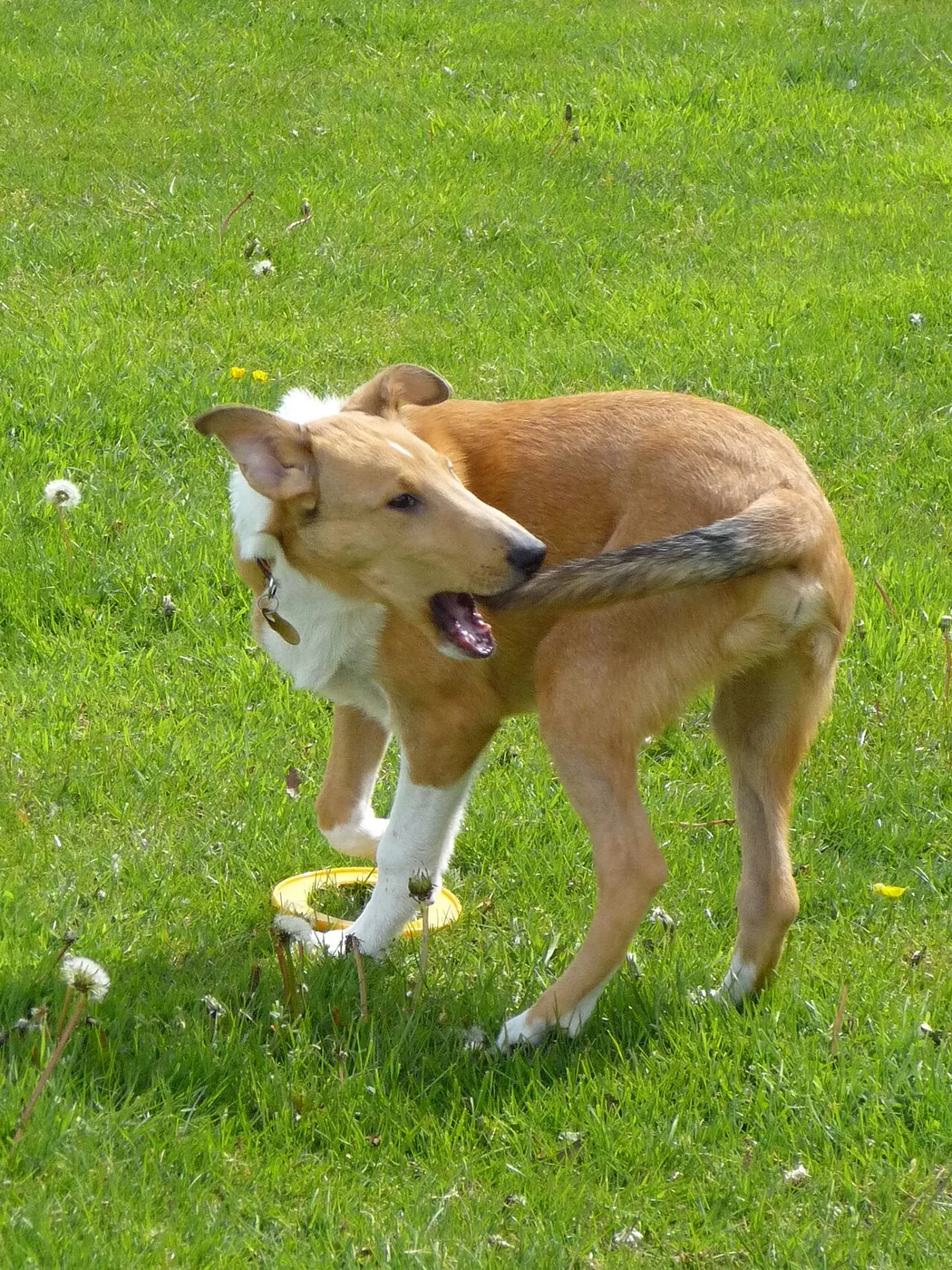
Modern documentary photograph of a dog chasing its tail (2012). Lil Shepherd · CC BY 2.0 · Web size optimized; source linked for the original.
Meet Reginald P. Woofington, a floppy-eared basset hound with the soul of a melancholic French novelist and the wardrobe of a gentleman who has given up. One ordinary Tuesday, while contemplating the meaning of squeaky balls on his velvet chaise, Reginald caught a glimpse of something treacherous and familiar: his own tail, twitching like a traitor in the shadows. What followed was not a simple game of fetch-yourself, but a full-blown existential spiral that would make even the most jaded philosopher fetch a fainting couch. This is his story, told with the dramatic flair only a dog who has read too much Camus between naps could muster.
The Ancient Whirl of Self-Doubt
In the misty dawn of Reginald's imagination, his ancestors galloped across primordial plains, eyes locked on fleeting shadows that promised either feast or fight. One fateful afternoon in the suburbs, however, the shadow in question was attached rather inconveniently to his own hindquarters. The realization hit like a dropped biscuit: if this tail was truly his, why did it insist on playing hard to get? Round and round he spun, a fluffy dervish of doubt, each revolution peeling back another layer of his fragile canine psyche.
The more Reginald twirled, the more his tail seemed to wink at him with impish delight, a plush embodiment of every unanswerable question from "Why are we here?" to "Why does the mailman always escape?" Collapsing in a dizzy heap after his twelfth orbit, tongue lolling like a pink surrender flag, he pondered whether any pursuit in life was worth the vertigo. His existential tail-chase had transformed a harmless twitch into a metaphor for the eternal elusiveness of satisfaction, proving that even in a house with unlimited treats, a hound could still feel profoundly unfulfilled.
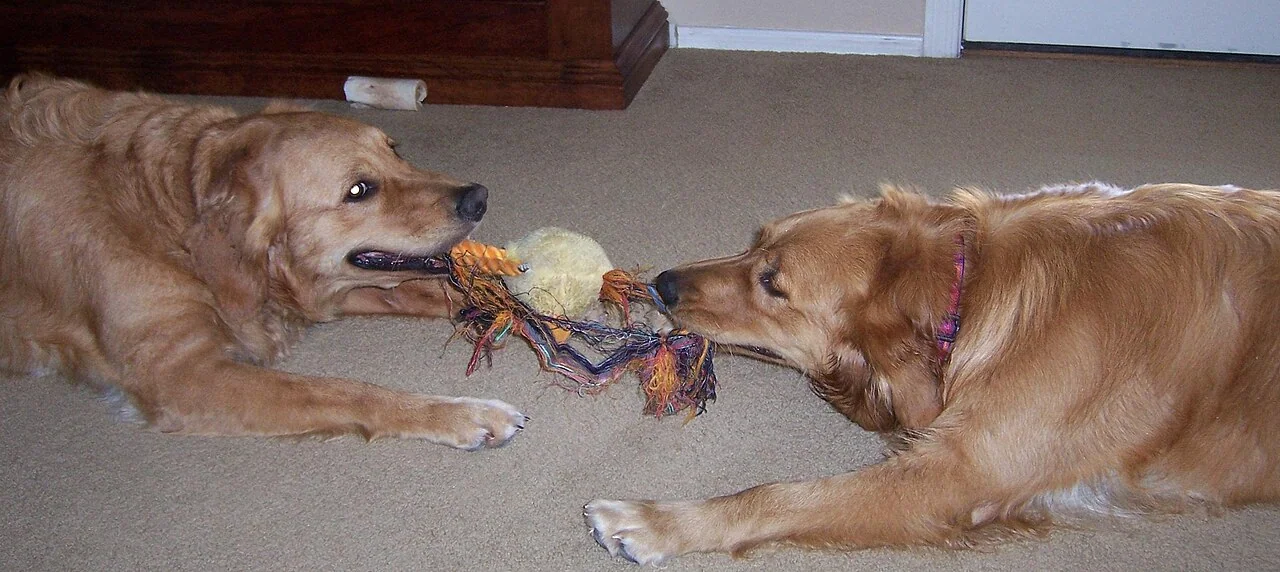
Two Golden Retriever dogs playing with a dog toy shaped like a duck's head. The dogs' names are "Elly" and "Sophie". Brandt Luke Zorn · CC BY-SA 2.0. Web size optimized; original linked.
Philosophical Paws and the Problem of the Tail
Reginald began composing imaginary memoirs in his head, titling chapters things like "The Tail and the Absurd" and "Being and Wagging." His tail, he decided, was the ultimate Zeno's paradox with fur: no matter how furiously he lunged, the destination receded in an infuriatingly circular fashion. In his more theatrical moments, he addressed the appendage directly, demanding to know if it was a separate mischievous sprite that had latched on purely to ruin his otherwise dignified existence.
These philosophical flights of fancy only deepened his gloom. One afternoon, while staring at a sunbeam as if it held the secrets of the universe, Reginald concluded that pure contemplation was useless against such a fluffy foe. What he needed was not more navel-gazing (or tail-gazing, as it were), but something solid to redirect his spiraling instincts toward. The satire of his situation lay in how a simple wiggle could reduce a once-proud tracker of squirrels to a dizzying bundle of questions about the self, all while his humans wondered why he suddenly refused to fetch the newspaper.
Toys That Hunt Back: Enrichment as Existential Rescue
Salvation arrived in the form of Sir Fluffington the Third, a suspiciously realistic plush pheasant with a squeaker that sounded like a tiny outraged duck. The moment Reginald pounced, the old neural circuits lit up like fireworks. Here was prey that fought back just enough to feel authentic, without the humiliation of chasing something permanently attached to his own rear. Stalk, chase, pounce, shake: the full predatory symphony played out across the living room rug, leaving him panting with satisfaction instead of philosophical despair.
Soon Reginald was demanding an entire menagerie of contraptions. There was the Rolling Rabbit Roulette, a treat-dispensing orb that scattered kibble like panicked bunnies; the Dancing Feather Flirt Pole that taunted him just beyond his noble nose; and the Mystical Snuffle Mat, a carpet of hidden treasures that turned his living room into an olfactory wonderland. Each victory over these worthy adversaries restored a sense of noble purpose. The tail, once a mocking enigma, became merely an afterthought as Reginald discovered that true joy resided not in catching the uncatchable, but in the glorious theater of the hunt itself.
When the Spin Becomes Serious: Knowing When to Seek Help
Not all of Reginald's revolutions were played for laughs. On certain gray afternoons, his spinning took on a trance-like quality, as if he were auditioning for a role in a particularly gloomy ballet. In these moments, the satire takes a brief detour into caution, reminding us that when circling becomes compulsive, complete with dramatic tail-nibbling and existential sighs loud enough to wake the cat, it might be time to consult wiser heads, or at least the two-legged ones with access to the treat jar and the vet's phone number.
Reginald's humans began noting when the whirls interrupted dinner or turned his usual cheerful zoomies into something resembling a crisis of confidence. The lesson hidden in the humor is that not every tail-chase can be solved by positive thinking or a new toy alone. Sometimes a dog needs a professional to ensure his dread isn't rooted in an itchy ear or a deeper mystery of the mind. By blending the ridiculous with the responsible, Reginald's tale gently ribs the notion that every problem can be pondered away while still championing the power of thoughtful intervention.
A New Orbit: Finding Joy Beyond the Tail
In the end, Reginald traded his dizzy orbits for purposeful gallops across the backyard, his ears flapping like triumphant banners. He still sneaks the occasional suspicious glance at his tail, but now it's with the fond recognition one gives an old rival who has been properly outmaneuvered. His collection of battle-scarred toys lies scattered like medals of honor, each squeaker and rattle a testament to instincts finally given a worthy stage. Life, he decided between triumphant rolls in the grass, was far too rich to waste on self-doubt when there were so many imaginary pheasants left to conquer.
The moral of this entirely made-up memoir is as warm as a sunbeam on a windowsill: sometimes the answer to life's biggest questions comes not from endless spinning, but from a well-timed game of tug or a puzzle that makes you work for your supper. Reginald Woofington, once a philosopher of the posterior, now simply a dog who remembers that the best response to existential dread is often a perfectly timed squeak. In the grand comedy of canine existence, a little redirection can turn even the most tortured tail-chaser into a creature who wags with genuine, unexamined delight.
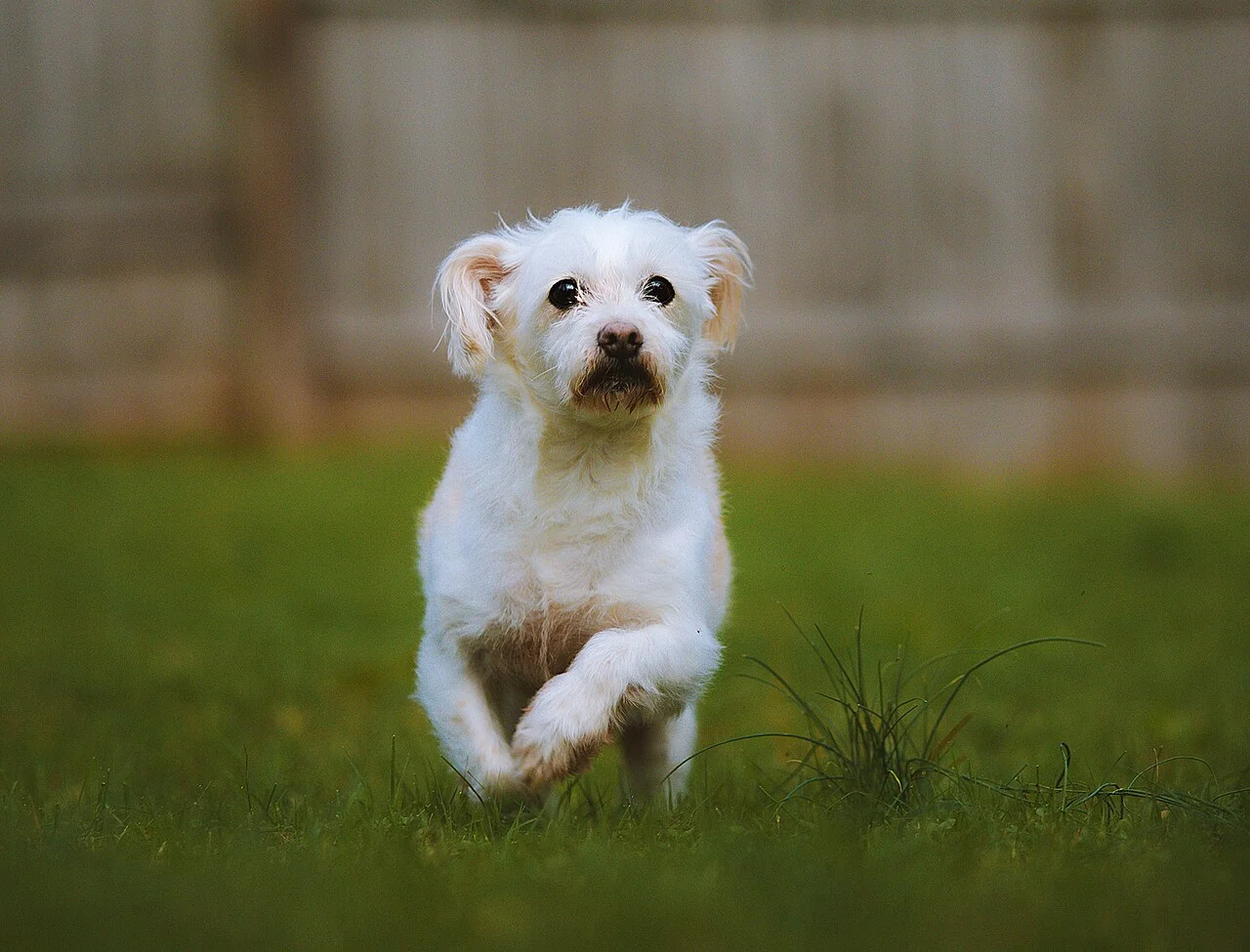
Modern documentary photograph of a dog running happily in a backyard (2021). Reba Spike · CC BY 2.0. Web size optimized; original linked.
AI-assisted original writing. This feature was revised against source material and checked for unsupported claims. Fictional satire: the characters and situations are invented.
In this satirical negotiation, household dogs and their noisy gadgets hammer out a paw-friendly accord laced with positive reinforcement and desensitization playlists.
 Photograph