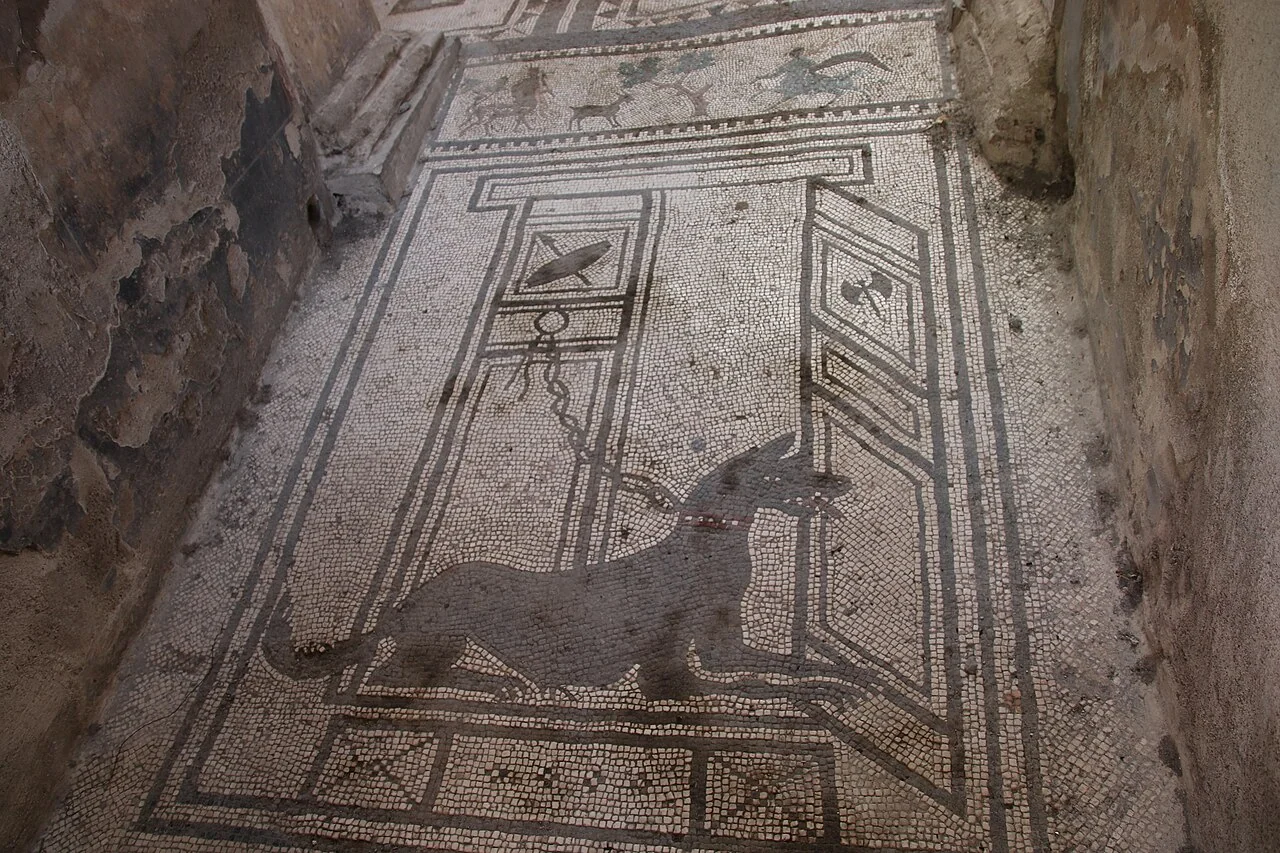
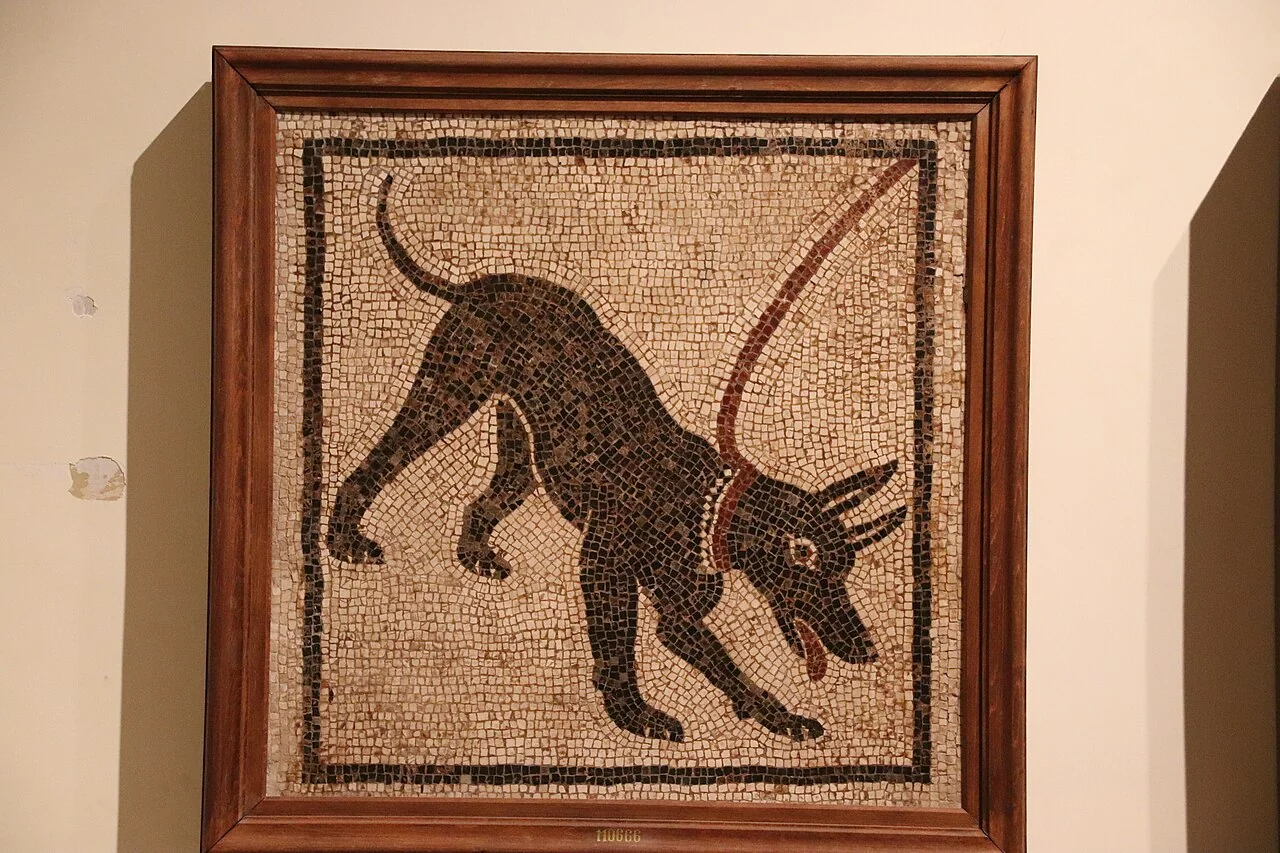
Black mosaic of a chained dog from the Casa di Paquio Proculo in Pompeii, a well-known Roman artifact often interpreted as a 'cave canem' warning. Gary Todd from Xinzheng, China · Public domain · Web size optimized; source linked for the original.
Roman law treated animals as potential sources of harm that required clear rules for assigning blame and compensation. The Digest of Justinian, compiled in the sixth century, preserved earlier jurists’ opinions on these matters, including scenarios involving dogs. These texts do not record specific courtroom verdicts with named parties or exact payouts. Instead, they discuss general principles, exceptions, and regulatory prohibitions. The material shows a practical concern for balancing animal behavior with human oversight, often with a touch of legal hair-splitting that feels surprisingly familiar. This article explores the main ideas, their limits, and what they might mean for thinking about responsibility today. Light humor appears only in clearly labeled fictional asides; all factual statements stay within the cited source material.
The Core Legal Action for Animal-Caused Harm
The actio de pauperie allowed a person who suffered damage from a quadruped to seek either the surrender of the animal or payment of its estimated value. According to Ulpian, this remedy applied to all quadrupeds and traced its roots to the Law of the Twelve Tables. The rule treated the animal itself as the source of the noxia, or harm, rather than automatically punishing the owner. This framework aimed to provide a remedy without requiring proof of the owner’s personal negligence in every case.
The Digest makes clear that the action was not limited to dogs but covered a broad category of four-footed animals. Jurists discussed dogs mainly when considering exceptions or special circumstances. The emphasis remained on the animal’s act rather than on modern notions of strict liability or full insurance. Readers might usefully ask how this animal-focused remedy differs from today’s systems that often center on human insurance policies or criminal charges against owners.
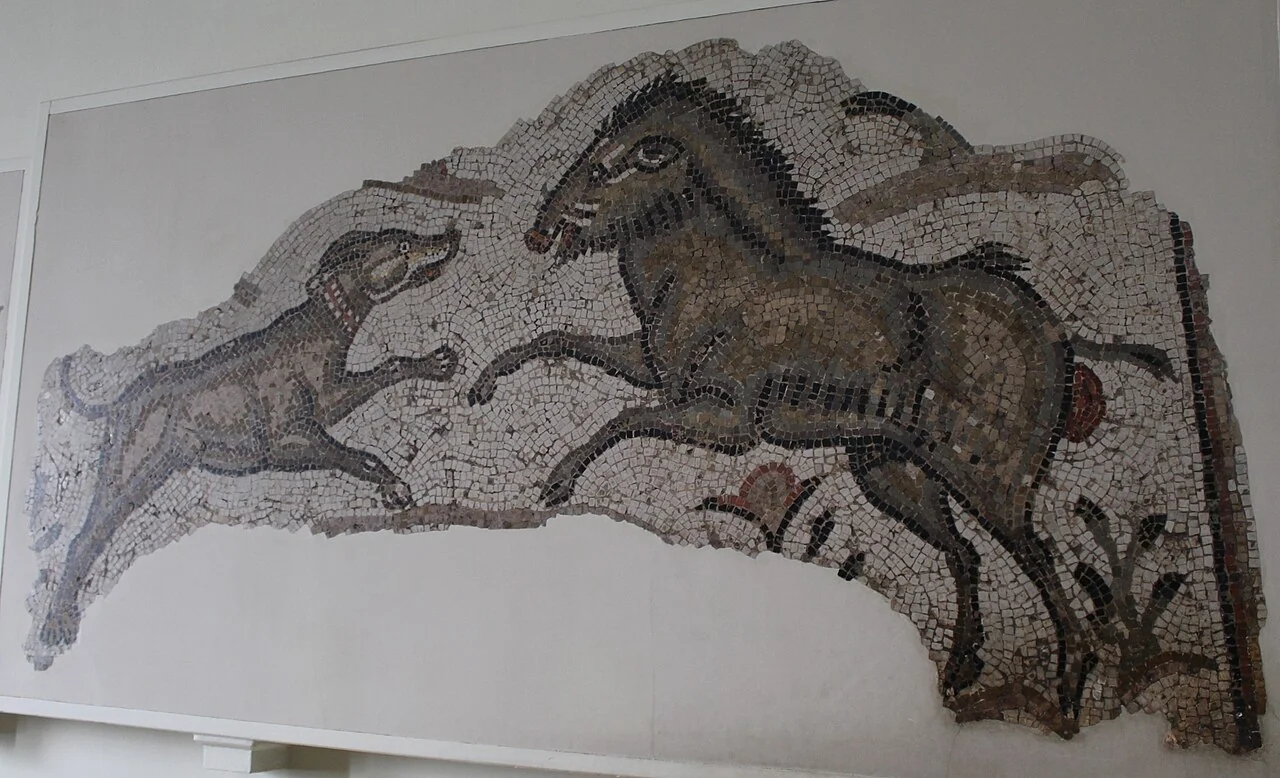
Boar confronting a hunting dog, detail from a Late Roman mosaic pavement from Carthage, 5th–6th century CE. Archival photograph of ancient Roman mosaic artwork. 14GTR · CC0 1.0. Web size optimized; original linked.
When a Handler’s Own Fault Replaced the Animal Action
Ulpian explained that the actio de pauperie would not lie if a dog broke away because of its natural asperity, or ferocity, and the person leading it could have held it more firmly or should not have taken it through that particular place. In such situations, liability shifted to the human handler. The jurist’s hypothetical highlighted the importance of reasonable control and prudent route selection.
This exception illustrates a recurring Roman legal theme: human fault could override the simpler animal remedy. The Digest does not supply real-world examples or quantified outcomes; it offers the principle as guidance for judges or litigants. An editorial observation is that the rule rewards foresight while still acknowledging that dogs can be unpredictable. A clearly fictional satirical scenario might imagine a harried Roman merchant claiming his exceptionally calm dog suddenly turned wild only after he chose the crowded forum shortcut; such invention is offered only for illustration and is explicitly labeled as playful fiction, not history.
Dogs in Shops and the Question of Provocation
Paulus recorded a debated view concerning a person who entered a shop while fleeing from a magistrate and was injured by a dog kept there. Some authorities held that no action lay in the name of the dog in that situation, while others reached the opposite conclusion if the dog was running loose. The discussion turned on whether the victim’s own entry provoked the incident or whether the owner had failed to secure the animal.
These passages show jurists wrestling with causation and contributory behavior. The texts remain at the level of abstract analysis rather than concrete verdicts. One useful reading question is whether modern courts would treat a fleeing person’s sudden appearance as assumption of risk or as irrelevant to the owner’s duty. The Roman material leaves room for interpretation, reminding us that assigning blame has always involved judgment calls.
Regulatory Bans on Dangerous Animals in Public Spaces
Separate from the actio de pauperie, the curule aediles issued edicts prohibiting the keeping of dogs, boars, wolves, and similar animals in places of common traffic where they might cause harm. The regulations set fixed penalties if a free person was killed or injured. These rules operated as public-order measures rather than private compensation lawsuits.
The Digest references these edicts in connection with animal sales and market oversight, indicating a layered legal approach. One system addressed individual damages through noxal actions; another used administrative penalties to discourage risky behavior in advance. This duality suggests Romans valued both reactive remedies and preventive rules. An implication worth considering is whether contemporary cities might benefit from clearer distinctions between civil liability and outright public bans on certain breeds or behaviors.
What These Rules Reveal About Roman Attitudes Toward Animals and People
The compiled opinions treat dogs as creatures capable of sudden ferocity yet still subject to human guidance. Liability often hinged on whether the handler exercised appropriate control. The jurists appear less interested in the dog’s inner life than in practical questions of prevention and remedy. This focus feels pragmatic rather than sentimental, though a light fictional vignette could picture a Roman lawyer arguing passionately on behalf of an innocent hound while winking at the judge; again, such scenes are offered only as transparent editorial satire.
Editorial analysis suggests the Digest’s approach rewards careful animal management without demanding superhuman vigilance. Uncertainties remain about how often these rules were invoked in daily life or how judges balanced competing testimonies. The material invites readers to reflect on current debates over pet liability, leash laws, and breed-specific legislation. The ancient framework underscores a lasting truth: when animals and humans share space, clear rules help reduce conflict even if they cannot eliminate surprise.
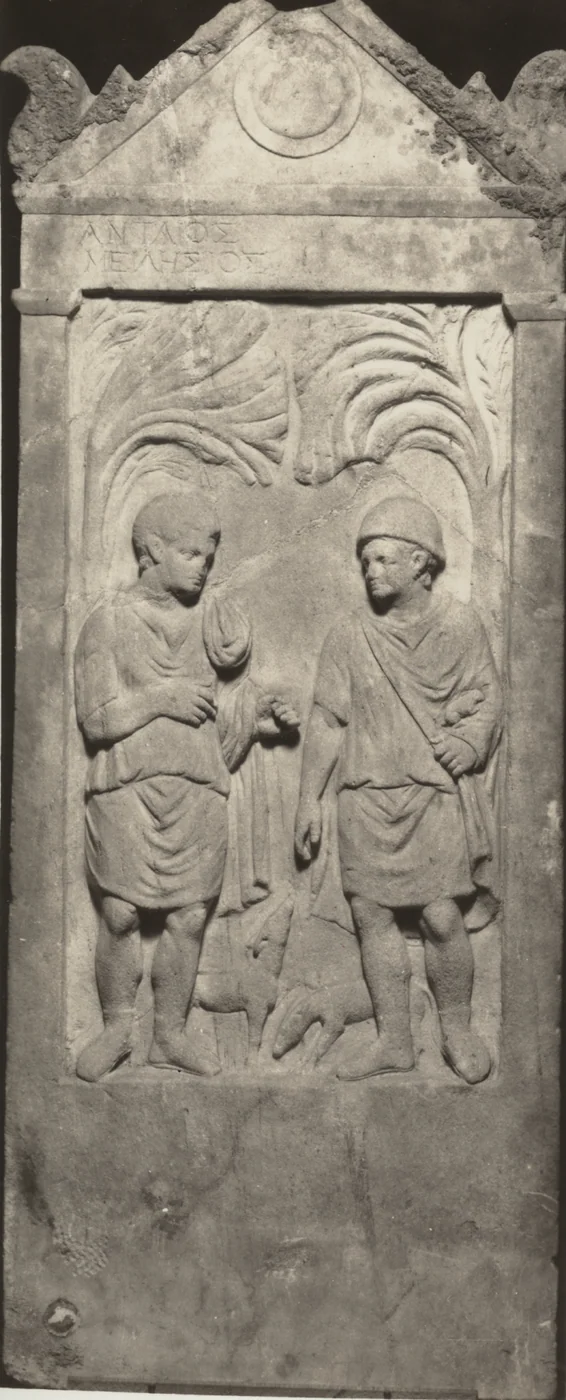
Roman funerary stele (2nd century AD) depicting two men, two dogs, and trees. A genuine Roman artifact showing dogs in a human context, reflecting practical attitudes toward animals. Anonymous (Category:Roman Empire)Unknown author · Public domain. Web size optimized; original linked.
AI-assisted original writing. This feature was revised against source material and checked for unsupported claims. Follow the references below for evidence and its limits.
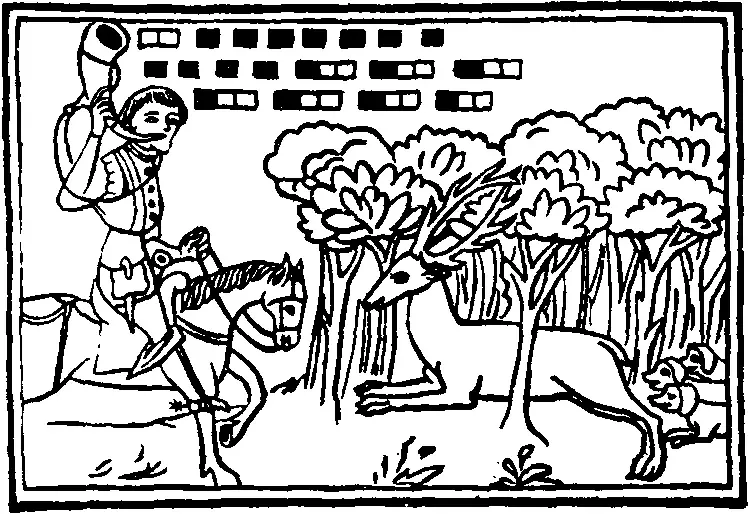
Royal charters set rules for restraining dogs to protect game, while hunting manuals later recorded the calls and names used by those who followed hounds on the trail.
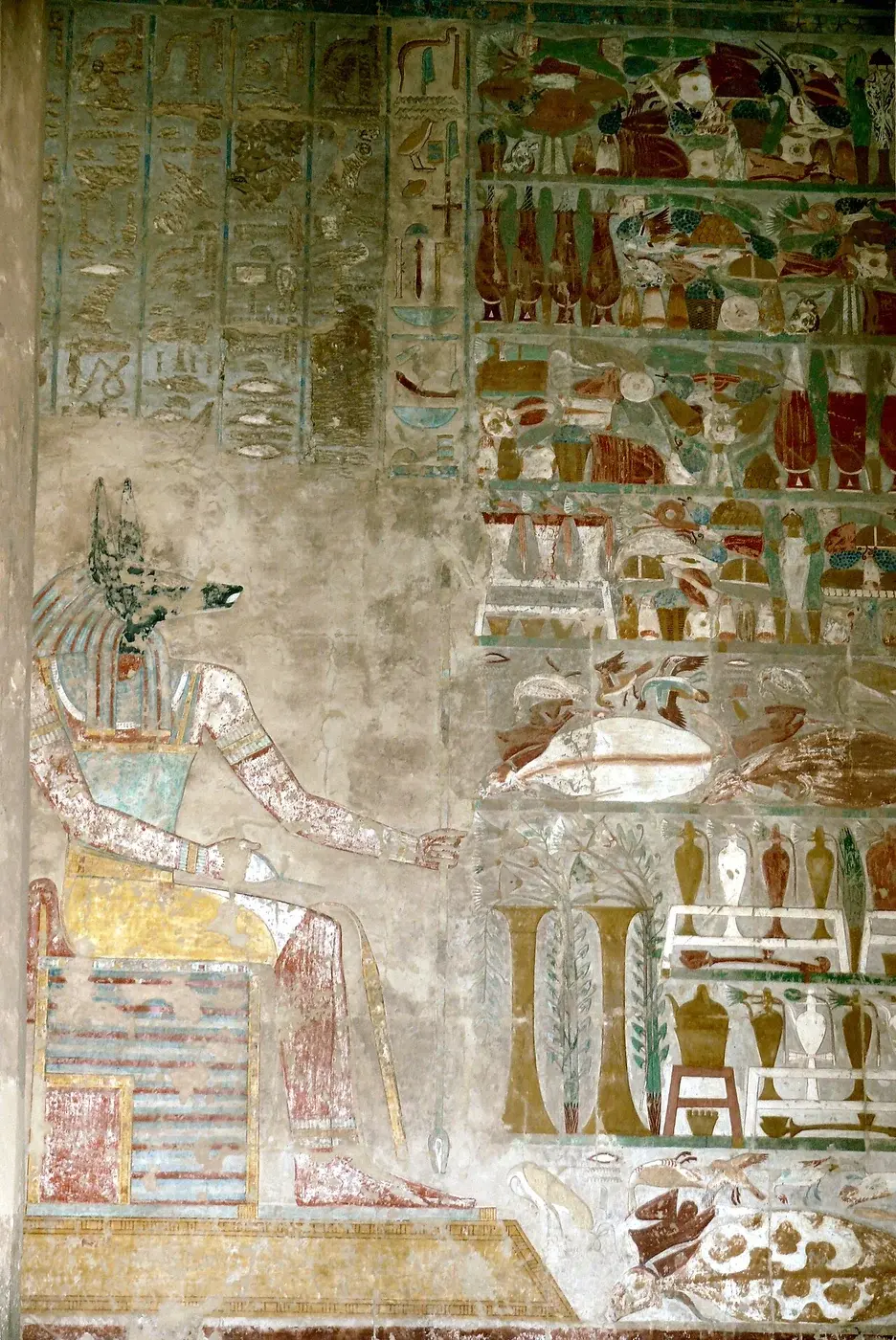
Evidence from Saqqara and Asyut shows that dogs and other canids were mummified in large numbers as votive offerings connected to the gods Anubis and Wepwawet.
 Historical collection image