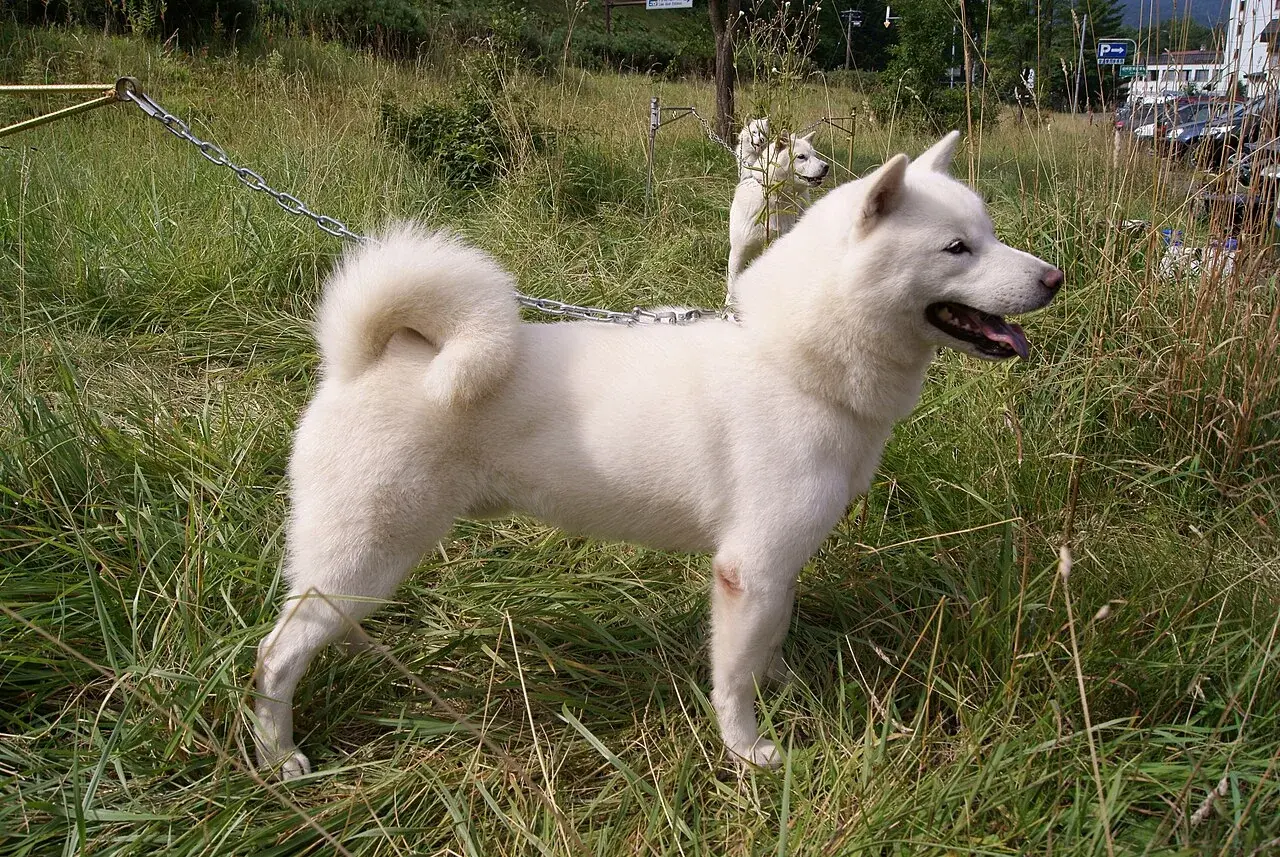
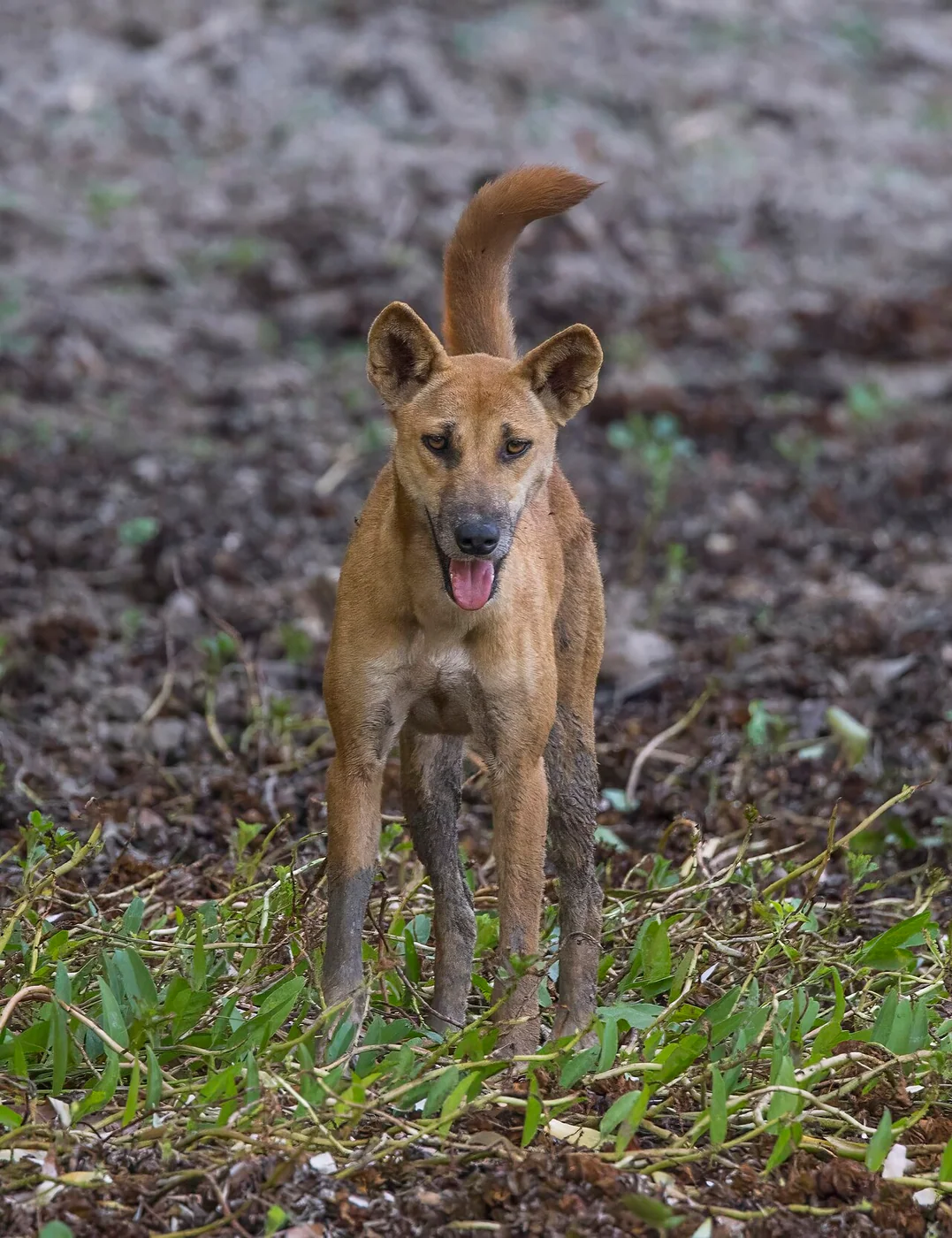
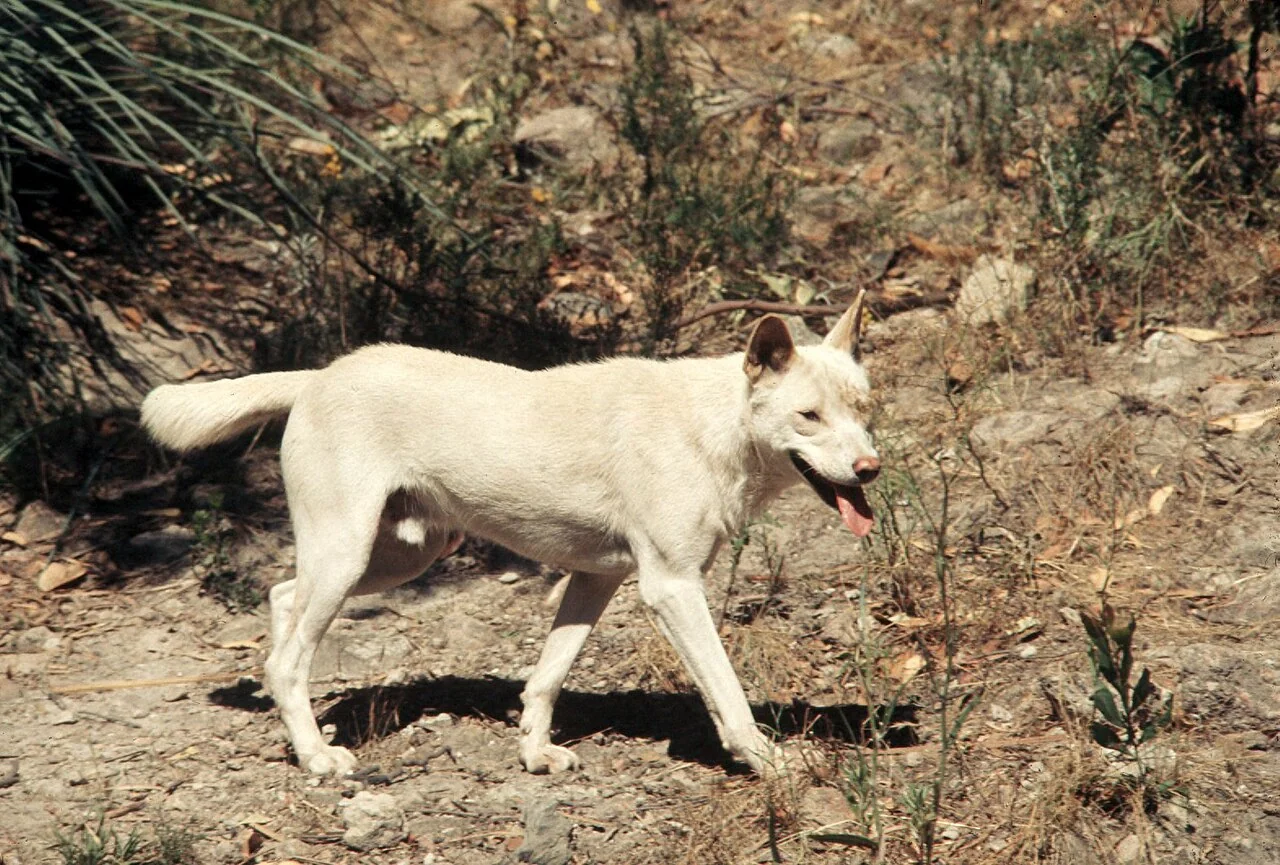
Dingo (Canis lupus dingo) in natural habitat, Kakadu National Park, NT, Australia (documentary photograph) Charles J. Sharp · CC BY-SA 4.0 · Web size optimized; source linked for the original.
Dingoes are an unmistakable part of the Australian landscape: alert ears, ginger or sandy coats, and a howl that carries across the outback at night. They are often called Australia’s wild dog, yet their precise history remains a subject of ongoing research. Two major museums offer careful summaries of the archaeological, genetic and ecological evidence. The picture that emerges is one of an animal that arrived thousands of years ago, adapted to many environments, and has lived alongside people in varied ways. The sources also highlight what is still uncertain, including the exact timing of arrival and the full range of relationships First Nations communities have had with dingoes over time. This article sticks closely to those museum accounts, adds light editorial reflections on what the evidence implies for conservation and curiosity, and ends with questions that might shape further reading. No single narrative covers every region or every community; the record is patchy, and that patchiness itself is part of the story.
Arrival Timelines and the Limits of Current Evidence
Both the National Museum of Australia and the Australian Museum note that dingoes reached the mainland at least 3,500 years ago according to some archaeological finds, with the earliest undisputed date sitting at about 3,250 years ago from bones in Madura Cave. Genetic studies have suggested the possibility of an earlier presence, perhaps closer to 4,000 years or more, but these remain interpretations rather than settled fact. The museums are careful to treat dates as research findings that can shift with new discoveries, not as a single fixed event. This caution is useful. It reminds us that “deep time” in this context is still being calibrated, and a few thousand years can matter when trying to understand how an introduced species reshaped ecosystems.
The uncertainty matters for animal welfare and land management. If dingoes have been part of Australian environments for longer than some pastoral records assume, their role as a top-order predator may be more integral than early colonial views allowed. Readers might ask: how would our policies change if future digs pushed the arrival date back another thousand years? The museums do not claim to have the final answer; they simply report the range of evidence and the ongoing debate. That honesty keeps the conversation grounded and open to new data.
Dingoes are medium-sized carnivores with a shoulder height of 440–620 mm, body length of 860–1,230 mm, and weight between 12 and 24 kg. Their coat colour varies by habitat: ginger with white feet is common, shifting toward golden yellow in deserts and darker tan to black in forested areas. They have a broad head, erect ears, a tapered muzzle and longer canine teeth than many domestic dogs. The tail is bushy, the body fur short. These traits are consistently described across the museum materials and appear to help dingoes thrive in widely different climates.
The animals occupy woodland, grassland and forest-edge habitats wherever reliable water is available. After European settlement and the spread of farming, their range contracted sharply in parts of New South Wales, Victoria, south-eastern South Australia and southern Western Australia. Today they remain common across much of the rest of the mainland but are largely absent from Tasmania, which they never reached. The museums note that dingoes are opportunistic and can live in many environments, yet human activity has clearly shaped where they are now found. A light-hearted aside: while a suburban backyard might seem inhospitable to a dingo, the same adaptability that once let them cross continents now sometimes leads to unwelcome visits near the urban fringe, reminding us that “wild” is a relative term.
Diet, Hunting Behaviour and Ecological Role
Dingoes are opportunistic carnivores that mainly eat mammals such as rabbits, kangaroos, wallabies and wombats. They will also take reptiles, insects, birds and, when native prey is scarce, domestic livestock. They scavenge at night, hunt alone or in small packs for larger game, and are thought to have contributed to the extinction of mainland thylacines by competing for food. The Australian Museum presents this as one plausible factor among others, not as proven causation. Such ecological interactions illustrate how an introduced species can become a keystone predator over millennia.
Their role in controlling rabbits, feral pigs and other pests is acknowledged as beneficial to farmers in some contexts, yet the same hunting behaviour makes dingoes unpopular with pastoralists. This tension sits at the heart of modern management debates. An editorial observation: the evidence shows dingoes are efficient at making a living in tough country, yet the very traits that make them successful survivors are the ones that bring them into conflict with human economies. Rather than villain or hero, the dingo appears as a pragmatic opportunist. Reading the sources leaves one wondering whether better separation of livestock and native habitats, rather than eradication attempts, might reduce conflict while preserving the ecological services dingoes provide.
Documentary photograph of a dingo walking through its natural habitat. Dingoes are opportunistic carnivores that hunt mammals such as kangaroos, wallabies and rabbits. Garst, Warren, 1922-2016, photographer · CC BY-SA 4.0. Web size optimized; original linked.
Social Life, Reproduction and Communication
Dingoes defend clearly defined territories, which they rarely leave, though pack members may share space when hunting cooperatively. They rarely bark but howl at night to call pack members or warn off intruders. Scent-marking, defecation and urination on prominent objects help define boundaries. These behaviours are described in detail by the Australian Museum and suggest a sophisticated system for living at low densities across vast landscapes.
Breeding occurs once a year between March and June. Gestation lasts about nine weeks, with litters usually of four to six pups. Both parents help rear the young, often in hollow logs, rock shelters or old burrows. Pups are weaned at around two months and may stay with the family for up to a year. Only the most dominant pair in a pack typically breeds; others assist with feeding. Sexual maturity arrives at roughly one year for males and two for females. Dingoes can interbreed with domestic dogs, a point the museums flag as the greatest current threat to genetic purity. The picture is of a flexible yet structured social animal whose family life looks recognisably canine yet remains tuned to Australia’s demanding environments. One cannot help smiling at the thought of a dingo pack coordinating via howls under a starry sky, a scene that feels both ancient and immediate.
Human Relationships, Colonial Records and Conservation Outlook
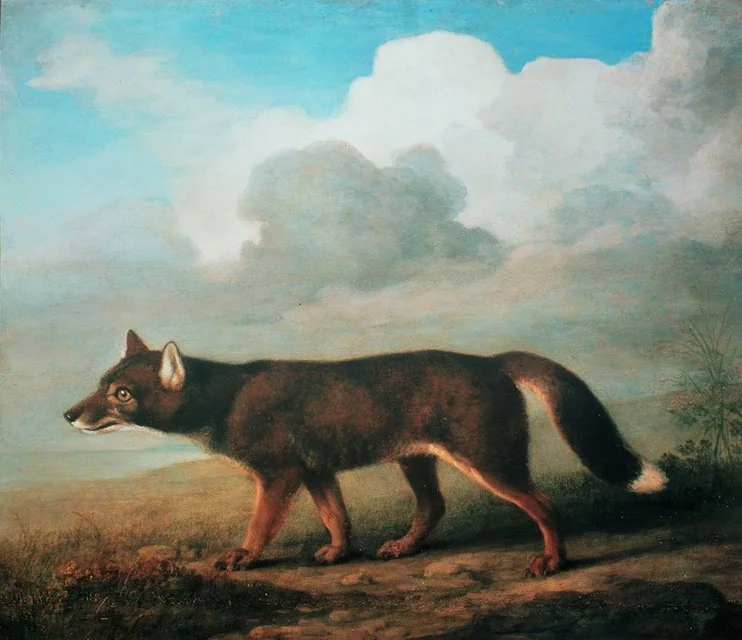
The National Museum of Australia describes varied relationships between First Nations people and dingoes, noting that accounts differ by community and should not be generalised. Later colonial encounters often viewed dingoes as threats to livestock, leading to widespread control efforts including the famous dingo fence along parts of the New South Wales, Queensland and South Australian borders. A painting by George Stubbs, commissioned by Joseph Banks and based on a dingo skin rather than a living animal, became an early European representation of the species. The museums are careful to separate artistic interpretation from direct observation.
Today the main pressure on dingoes comes from interbreeding with domestic dogs as urban areas expand into the outback. Eradication campaigns have largely failed, yet hybridisation risks diluting the gene pool. The Australian Museum notes that dingoes have adapted rapidly over roughly 4,000 years and continue to influence ecosystems. An editorial implication is that genuine conservation may require accepting dingoes as a naturalised part of the fauna rather than an invasive pest to be eliminated. Questions for further reading could include: how do different Indigenous knowledge systems describe dingo behaviour, and can those insights inform non-lethal management? What legal and ethical frameworks might balance livestock protection with preservation of dingo genetic integrity? The evidence leaves room for cautious optimism if policy follows the science rather than outdated assumptions.
In the end the museums offer a portrait of a resilient wild dog whose history is still being written. Their accounts are limited by the available archaeology, genetics and historical records, yet those limits themselves are instructive. Approaching the topic with care, curiosity and a touch of humour at our own human attempts to manage the untameable may be the most useful stance of all.
George Stubbs, A portrait of a large Dog from New Holland (Dingo), 1772 (historical painting of a dingo) George Stubbs · Public domain. Web size optimized; original linked.
AI-assisted original writing. This feature was revised against source material and checked for unsupported claims. Follow the references below for evidence and its limits.
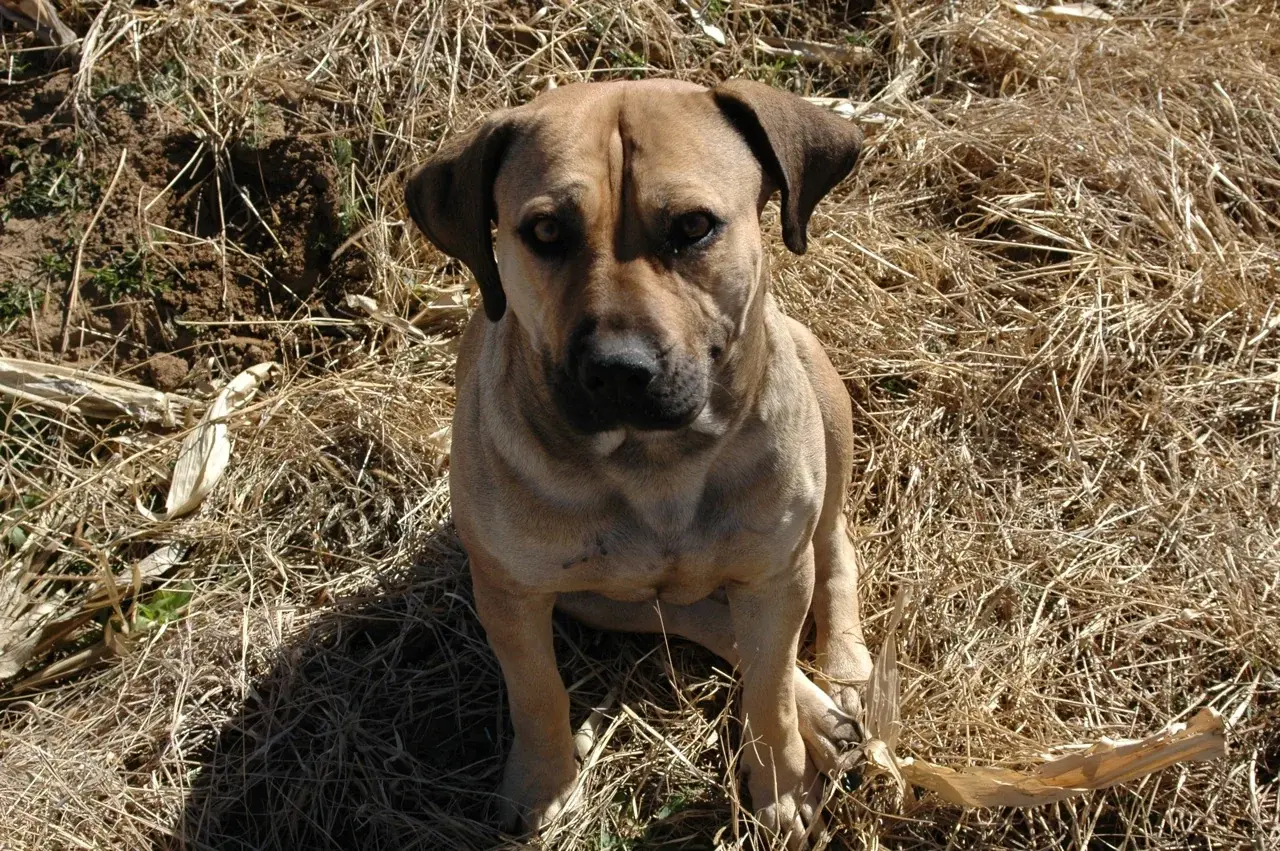
Large mastiff-type dogs have served as protectors on remote South African farms for generations, though many popular stories about their exact origins remain unverified tradition.
 Photograph