Research shows canine cognition follows a clear arc of early gains, midlife peak, and later gentle decline, offering owners practical ways to support their pets at every age.
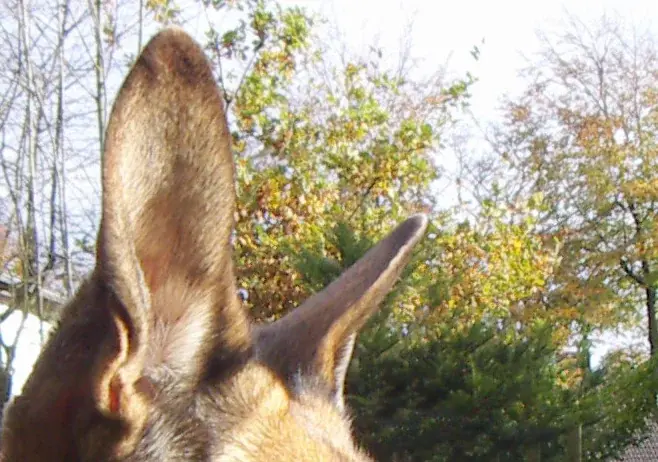
Dog fetus specimen prepared by diaphanization technique to visualize anatomical structures, on display at the Museum of Veterinary Anatomy, FMVZ USP. Wagner Souza e Silva · CC BY-SA 4.0 · Web size optimized; source linked for the original.
Puppies tumble with electric energy, adult dogs solve daily puzzles with ease, and many seniors greet their people with the same warm recognition they have shown for years, even if their steps have slowed. Evidence from large-scale citizen science and laboratory studies shows that a dog's cognitive abilities follow a predictable quadratic path: they rise sharply in early life, reach their highest point in middle age, and then ease downward in later years. This pattern appears across breeds of different sizes and expected lifespans. The changes reflect normal development rather than sudden failure, although some senior dogs develop more noticeable brain alterations. Understanding these shifts can help owners provide suitable activities and know when to consult a veterinarian. Two key research efforts supply the clearest available data on this topic.
Early Cognitive Gains in Puppies and Adolescents
Cognitive performance in dogs increases during the first part of life, according to a cross-sectional study of more than 4,000 dogs. Tasks measuring memory and decision-making showed steady improvement from puppyhood into young adulthood. This rise aligns with the rapid brain development that occurs after birth, when senses and learning pathways become more refined. The same dataset found that all breeds followed broadly similar upward trajectories regardless of body size or typical lifespan.
Owners often notice this growth in everyday behavior. Puppies learn to recognize familiar scents and sounds within weeks and quickly pick up associations between actions and outcomes. The evidence does not detail exact neural mechanisms but confirms that measurable cognitive capacity keeps climbing through the early months and into the second year. This period offers a natural window for positive training and exposure that can build on the brain's rising ability to form and retain new information.
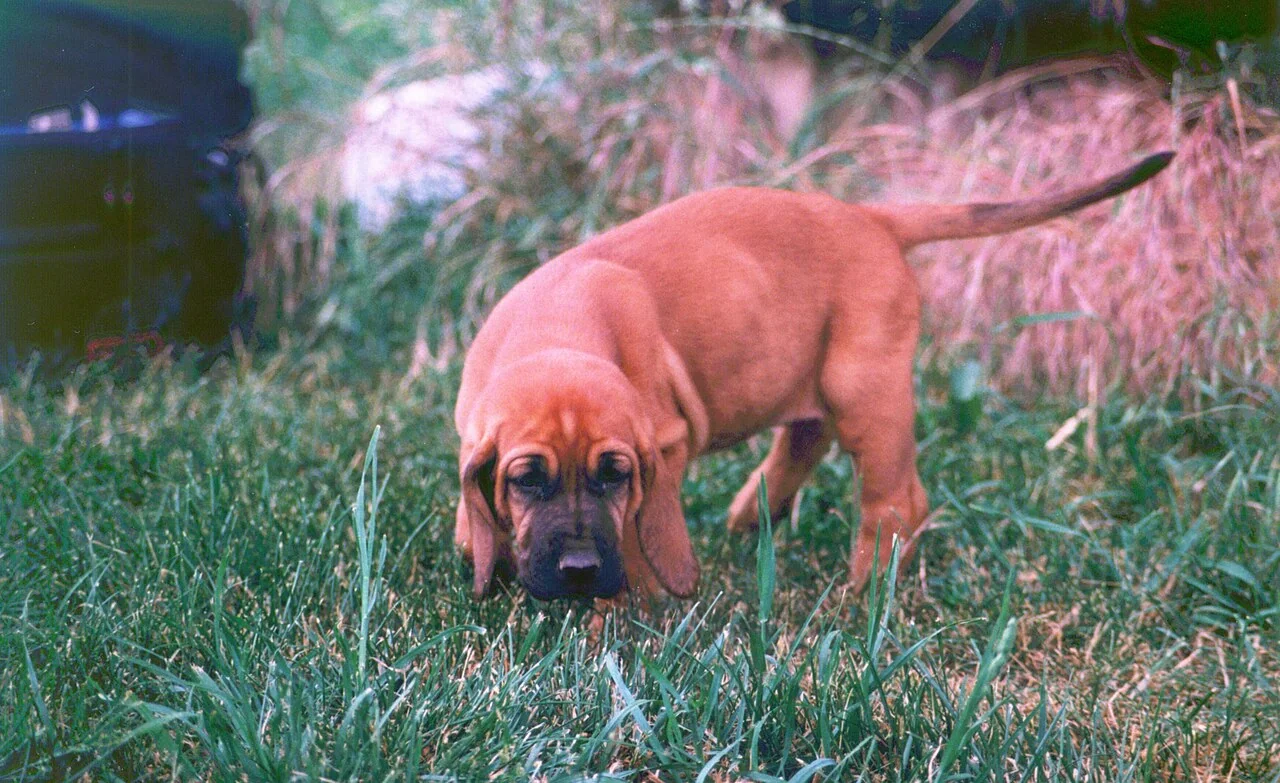
Three week old Bloodhound puppy, nose to the ground. (1999) Asilverstein · CC BY-SA 3.0. Web size optimized; original linked.
Midlife Peak Performance
Cognitive measures in the large citizen-science sample reached their highest point during midlife. For most of the nine tasks examined, performance followed an inverted U-shaped curve, with the peak occurring roughly between young adulthood and the onset of old age. Quadratic models using age as a variable fit the data better than straight-line or logarithmic ones, indicating that midlife represents the strongest period for memory, problem-solving, and decision-making in the average dog.
This peak matches what many owners observe. Adult dogs often appear especially attuned to routines, quick to learn signals, and capable of handling complex daily tasks. The study controlled for training history and still found the same midlife advantage, suggesting the pattern is widespread rather than limited to dogs with extensive formal education. Because the data come from a single snapshot in time rather than repeated testing of the same animals, individual dogs may vary, yet the overall trend across thousands of participants is clear.
Later-Life Cognitive Decline
After the midlife peak, cognitive scores in the same set of tasks declined in later years. The downward slope appeared across breeds, although dogs with shorter average lifespans sometimes showed a more limited late-life drop, possibly because fewer of them reach the most advanced ages. The researchers described this as support for a truncation effect rather than a compressed decline. The evidence comes from cross-sectional observations, so it cannot prove that any single dog follows the exact same path over time.
Laboratory studies of aging dog brains provide additional context. Significant cortical atrophy, increased ventricular volume, and reduced hippocampal neurogenesis occur with advancing age. These structural changes can appear even before certain protein deposits become prominent. Not every senior dog develops enough impairment to interfere with daily life, and the degree of change varies. The combination of behavioral data and neuroanatomical findings suggests that some slowing is typical while more pronounced difficulties may warrant veterinary evaluation.
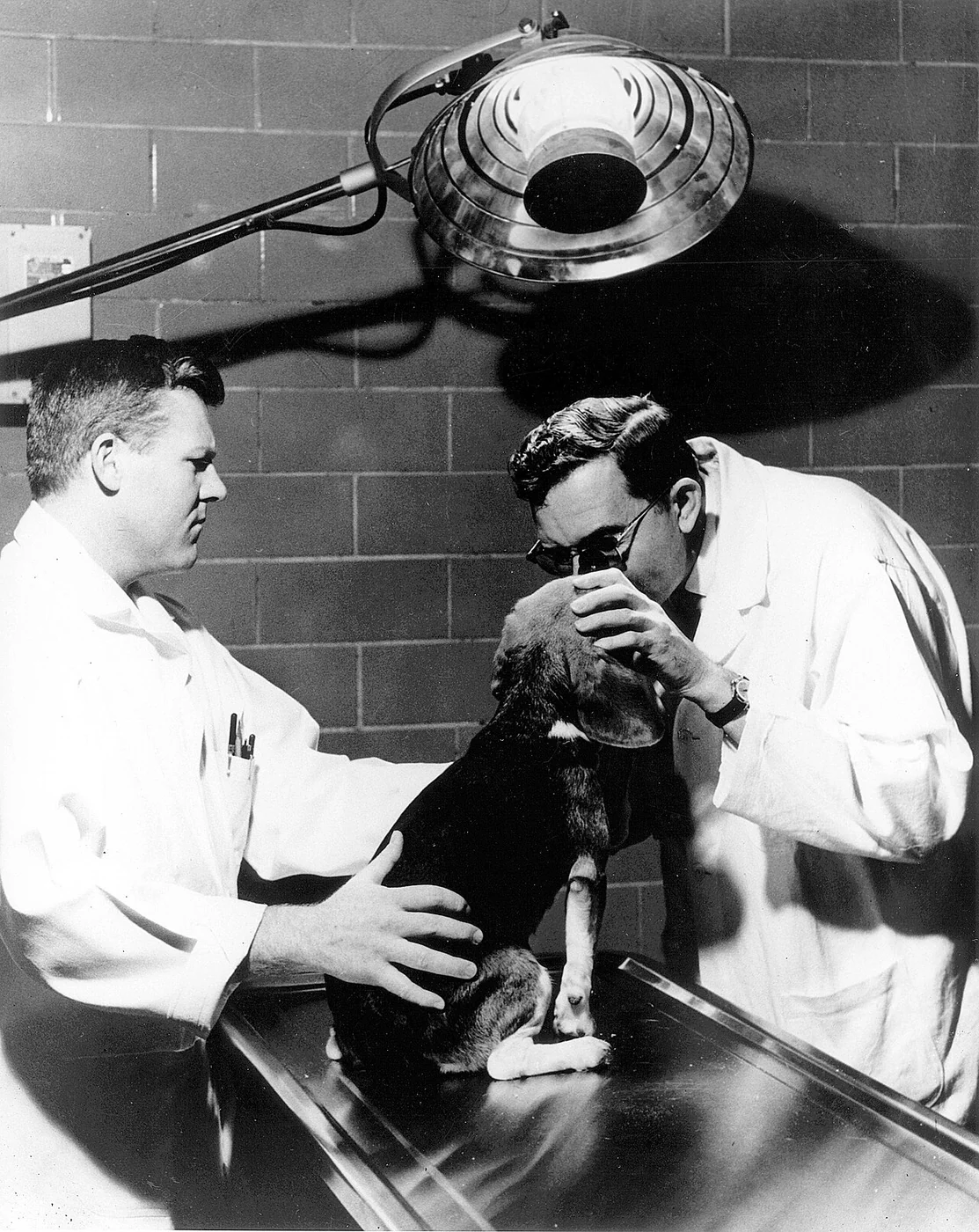
Veterinarians examining a dog in a laboratory setting, representing studies of canine health and aging. ENERGY.GOV · Public domain. Web size optimized; original linked.
Supporting Cognitive Function at Every Stage
The research implies that owners can help by matching activities to the dog's current abilities. During the rising and peak phases, varied mental challenges and consistent routines appear to align naturally with the brain's stronger learning capacity. In later years, shorter sessions, familiar environments, and continued gentle social contact may help preserve engagement. The citizen-science study found the age-related patterns held even after accounting for training history, but it did not test specific interventions.
Regular veterinary check-ups remain useful for distinguishing typical age-related shifts from changes that fall outside the normal range. Owners who notice alterations in greeting behavior, stair use, or sleep patterns can bring those observations to the clinic. The evidence does not support firm claims about any particular diet, supplement, or exercise prescription, but it does underscore the value of maintaining social contact and avoiding prolonged isolation in senior dogs.
Reading the Evidence and Practical Questions
Both studies rely on particular populations. The cognitive performance data come from voluntary online tasks submitted by dog owners, which may attract participants whose dogs are healthier or more engaged than average. The neurobiology findings draw heavily from beagle research colonies, so generalization to all breeds carries some uncertainty. Still, the quadratic trajectory and the presence of age-related brain changes appear in multiple sources and offer a coherent picture.
Thoughtful owners might ask themselves several questions. How does my dog's current behavior compare with what it could do a year or two ago? Are the changes gradual and mild, or have they begun to affect safety and quality of life? What simple adjustments, such as using familiar landmarks or keeping sessions short, might reduce frustration for an older dog? These questions flow directly from the documented patterns without claiming that any specific outcome is guaranteed. The evidence invites appreciation for the full arc of a dog's life rather than dread of its later chapters.
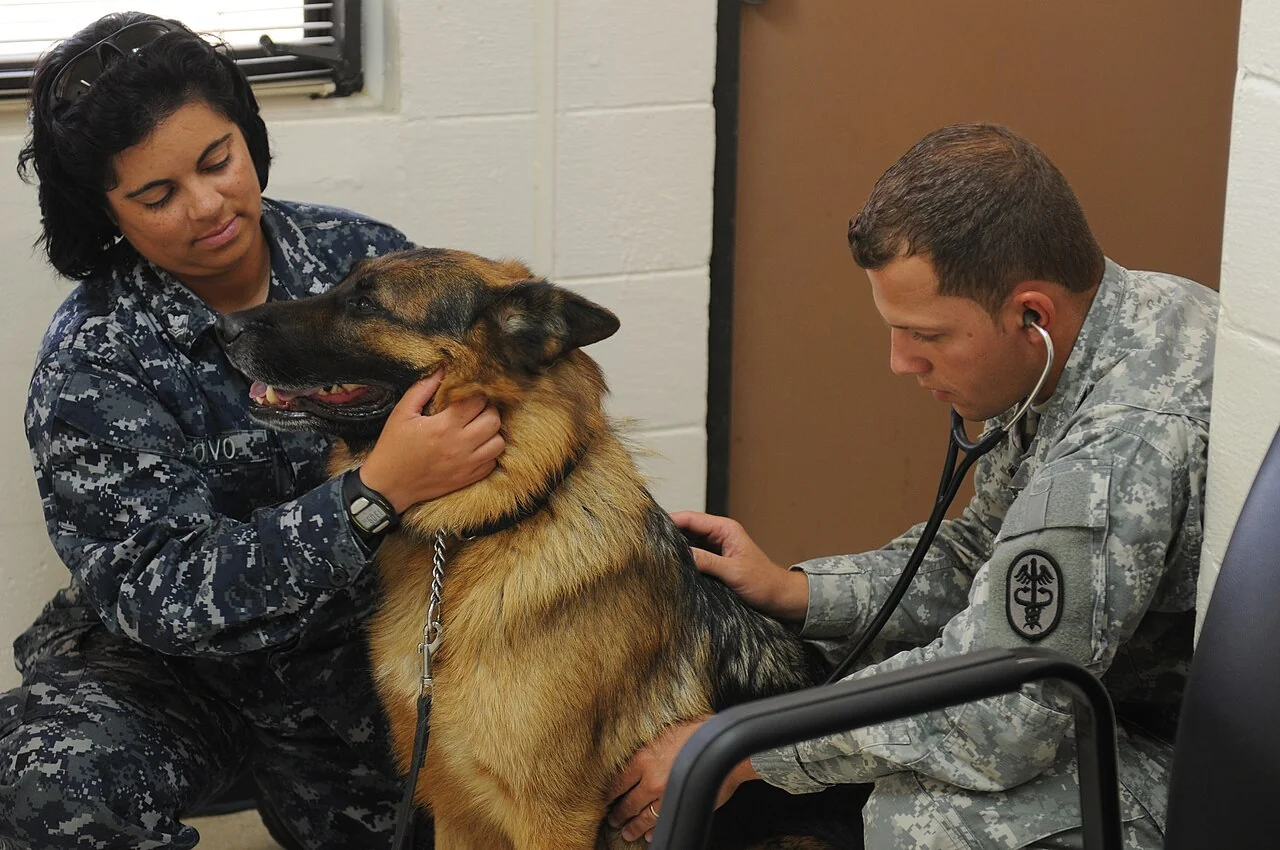
Army Veterinary Technician listens to a dog’s heartbeat at the Guantanamo Bay Veterinary Treatment Facility. Maddelin Angebrand · Public domain. Web size optimized; original linked.
General education, not individual veterinary advice. Ask a veterinarian about your dog’s health and care.
AI-assisted original writing. This feature was revised against source material and checked for unsupported claims. Follow the references below for evidence and its limits.
Protected command centers in the brain and spinal cord team up with far-reaching nerves that connect to muscles, skin, and organs, letting dogs react to scents, sounds, and sudden surprises.

 Reference image