How a Handful of Enthusiasts Launched Organized Sheepdog Trials in 1970s America
The formation of the United States Border Collie Club in 1975 and the first handler clinic in 1976 helped bring structured herding events to a country that previously had almost none.
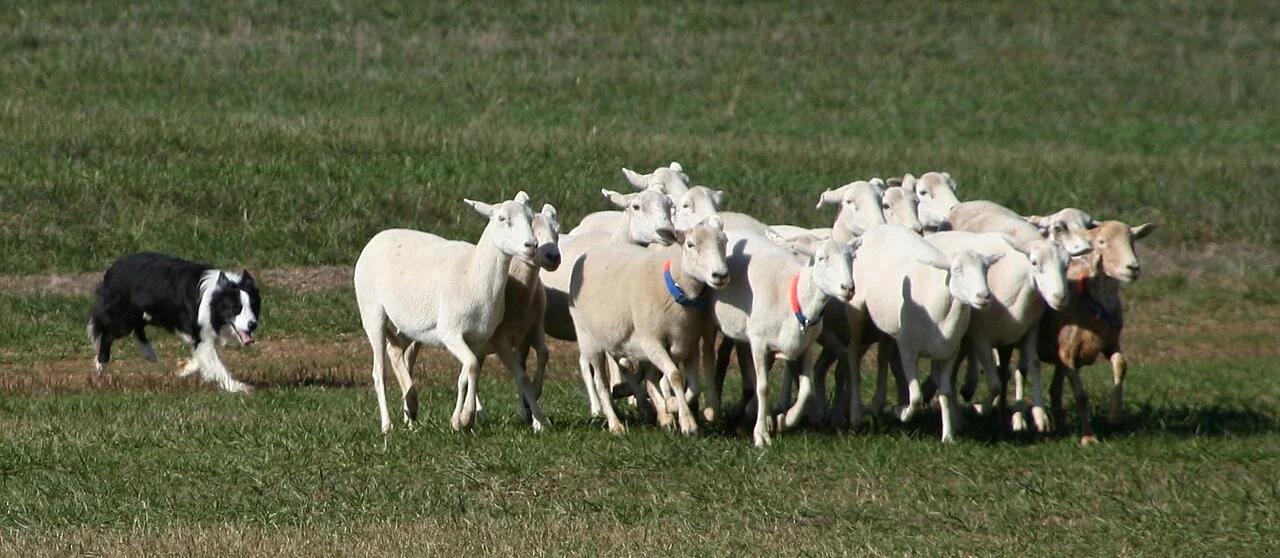
Border Collie at the sheepdog trials at Rural Hill Farm in Huntersville, North Carolina (2007 documentary photograph of American trial practice). Scot Campbell · CC BY-SA 2.0 · Web size optimized; source linked for the original.
Before the 1970s, competitive sheepdog trials were a rare sight in the eastern United States. Only a couple of major events existed, leaving handlers with few chances to test their dogs or learn from one another. A small group of dedicated people changed that by creating a national club and organizing the first training clinic. Their efforts laid groundwork for wider interest in working sheepdogs without relying on show-ring standards. The story is one of quiet determination rather than overnight revolution, and it offers a window into how organized animal sports sometimes begin with little more than a few like-minded individuals and a borrowed field.
The Limited Landscape of American Trials in the Mid-1970s
In spring 1975, the Fair Hill Sheep Dog Trial in Newark, Delaware, stood out as one of only two major sheepdog trials in the eastern United States. The other was the older Kentucky Blue Grass Trial. For handlers eager to compete or improve, opportunities were scarce. Many had to travel long distances or simply work without the benefit of seeing skilled dogs and handlers in action. This sparse calendar meant that practical knowledge about competitive herding remained limited for most Americans interested in the craft.
The situation created a clear need for structure. Without regular events, it was difficult to build a community or pass along specialized skills. A few individuals recognized that simply wishing for more trials would not create them. Their response was practical: gather at an existing event, talk with others who shared the same frustrations, and begin building something new. The Fair Hill trial became the unlikely birthplace of a national organization.
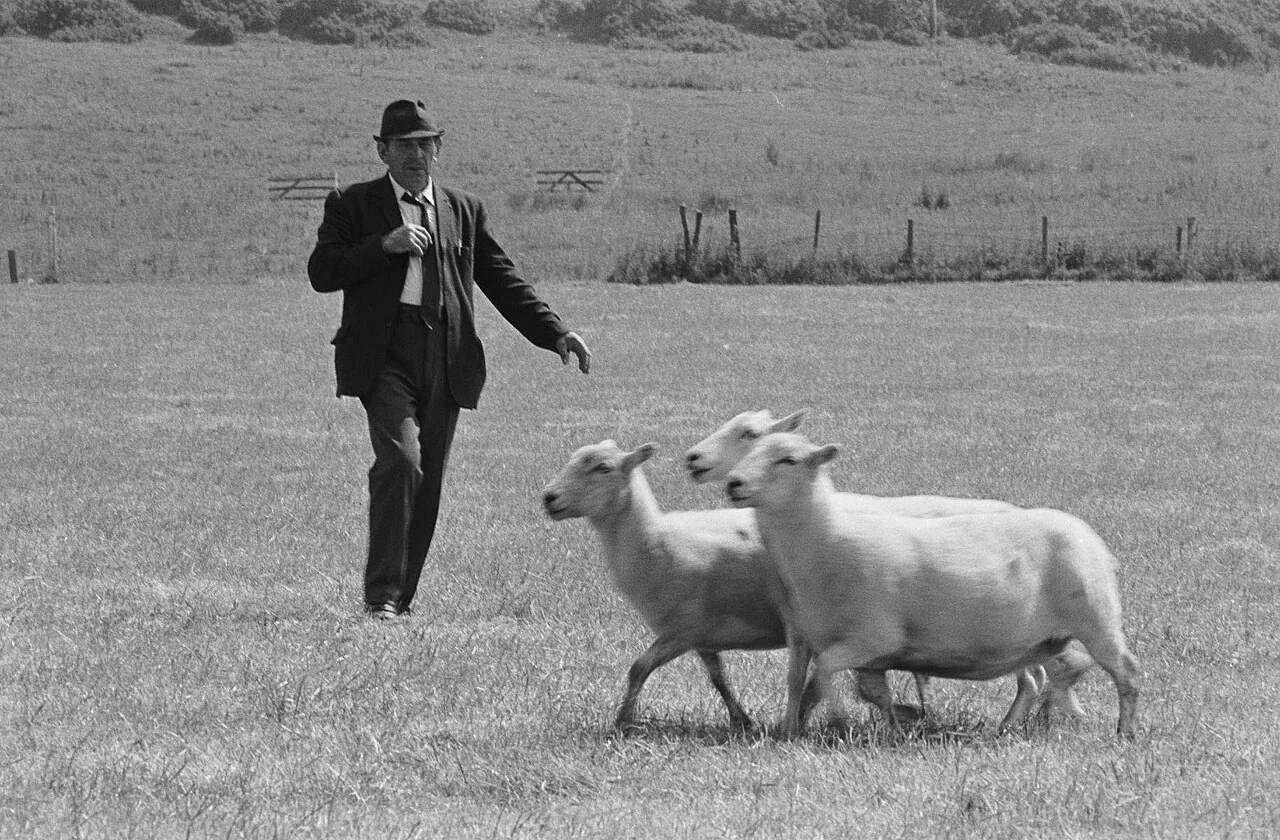
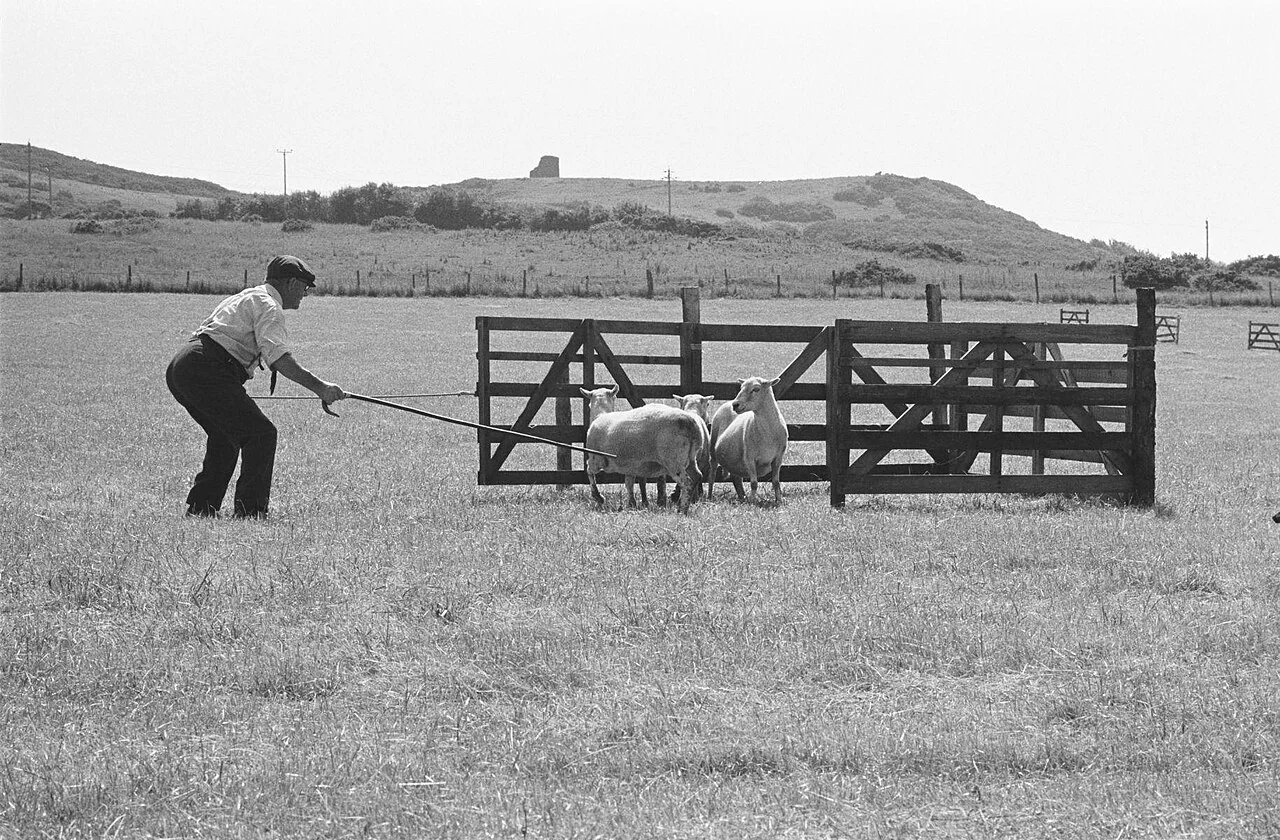
Llandudno Sheepdog Trials, 2 August 1972 Geoff Charles · CC BY-SA 4.0. Web size optimized; original linked.
Birth of the United States Border Collie Club
In 1975, Ethel Conrad and a group of fellow enthusiasts formed the United States Border Collie Club while attending the Fair Hill trial. Ethel Conrad and Carol Lingenfelter served as the club’s first co-presidents. The timing was deliberate. By meeting at an established trial, the founders could speak directly with active handlers and build support among people already committed to working dogs.
The club’s creation marked a shift from scattered individual efforts to a coordinated national presence. Its early focus stayed on practical herding rather than appearance standards. This emphasis helped ensure that the organization’s activities centered on the working abilities long valued in these dogs. The move also signaled growing interest in preserving those abilities through regular competition and education instead of letting them fade from lack of opportunity.
The First North American Handler Training Clinic
In 1976, the newly formed United States Border Collie Club organized a sheepdog handlers training clinic at Sunnybrook. The event is believed to have been the first of its kind in the United States and, according to one timeline, in all of North America. Instruction came from Arthur Allen, a respected figure whose guidance gave participants a rare chance to learn proven techniques in a structured setting.
For many attendees, the clinic represented their first formal exposure to advanced handling methods. The gathering combined demonstration, feedback, and shared experience in ways that isolated practice could never match. Its success encouraged further events and helped spread knowledge that might otherwise have remained confined to a few regions or families. The clinic also demonstrated that demand existed once the right opportunity appeared.
Sheepdog trial in progress at Llandudno, Wales, August 1972 – a scene from the era when the first North American handler clinic was organized in 1976. Geoff Charles · CC BY-SA 4.0. Web size optimized; original linked.
Later Organizational Growth and the Rise of Sanctioned Trials
By 1979, another group had formed: the United States Border Collie Handler’s Association. This organization began sanctioning sheep and cattle dog trials across the United States and Canada. Its creation built on the foundation laid four years earlier and expanded the number of competitive opportunities available to handlers.
Together, these two groups helped transform a landscape that once offered almost no trials into one that supported regular events. The USBCC focused on education and community building, while the USBCHA emphasized formal competition standards. Their combined efforts increased visibility for working dogs and created pathways for new handlers to enter the sport. The progression from idea in 1975 to multiple sanctioned trials by the end of the decade shows how quickly modest beginnings can lead to broader activity.
Editorial Reflections and Questions for Readers
Looking back, the story of these 1970s efforts carries a gentle reminder that meaningful change often starts small. A few people meeting at one trial in Delaware managed to spark organizations that still influence herding events today. There is light humor in imagining those early conversations: probably more talk of muddy boots and stubborn sheep than grand manifestos. Yet the outcome was lasting. The focus on working ability over show-ring fashion helped keep practical skills alive in American competitions.
What might have happened without that 1975 gathering? Would interest in working sheepdogs have dwindled further, or would another group have stepped forward later? Readers might usefully ask themselves how today’s animal sports could benefit from similar grassroots energy. The implications extend beyond one breed: when people notice a gap in opportunity or knowledge, forming a club or hosting a clinic can be more effective than waiting for larger institutions to act. In an era of polished online videos and professional trainers, it is worth remembering that some of the most valuable learning still happens in a field with a handful of dogs, a few sheep, and people willing to share what they know. The 1970s example suggests that persistence and a borrowed venue can sometimes matter more than perfect conditions.
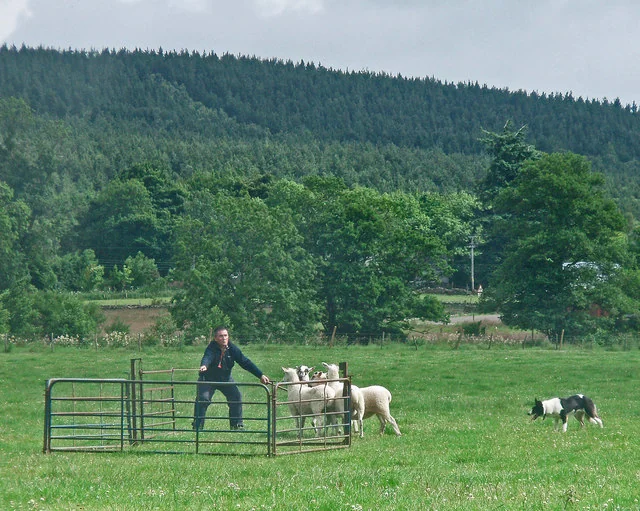
Border collie penning sheep at the 2008 Aboyne sheepdog trials, Ballogie C Michael Hogan · CC BY-SA 2.0. Web size optimized; original linked.
AI-assisted original writing. This feature was revised against source material and checked for unsupported claims. Follow the references below for evidence and its limits.
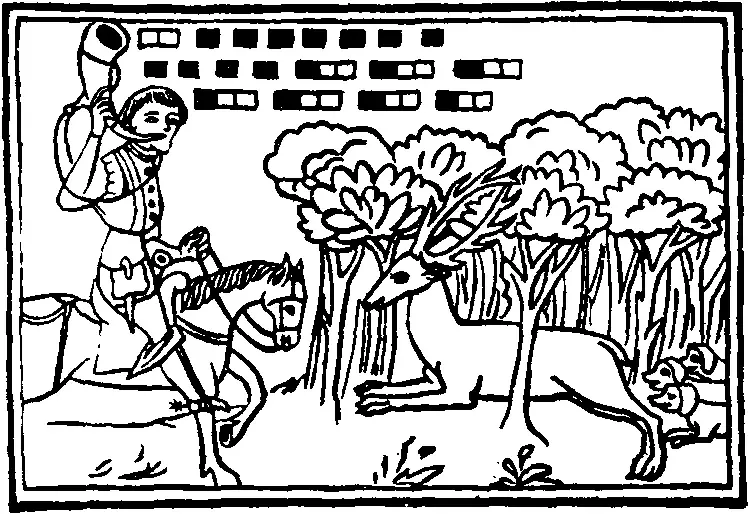
Royal charters set rules for restraining dogs to protect game, while hunting manuals later recorded the calls and names used by those who followed hounds on the trail.
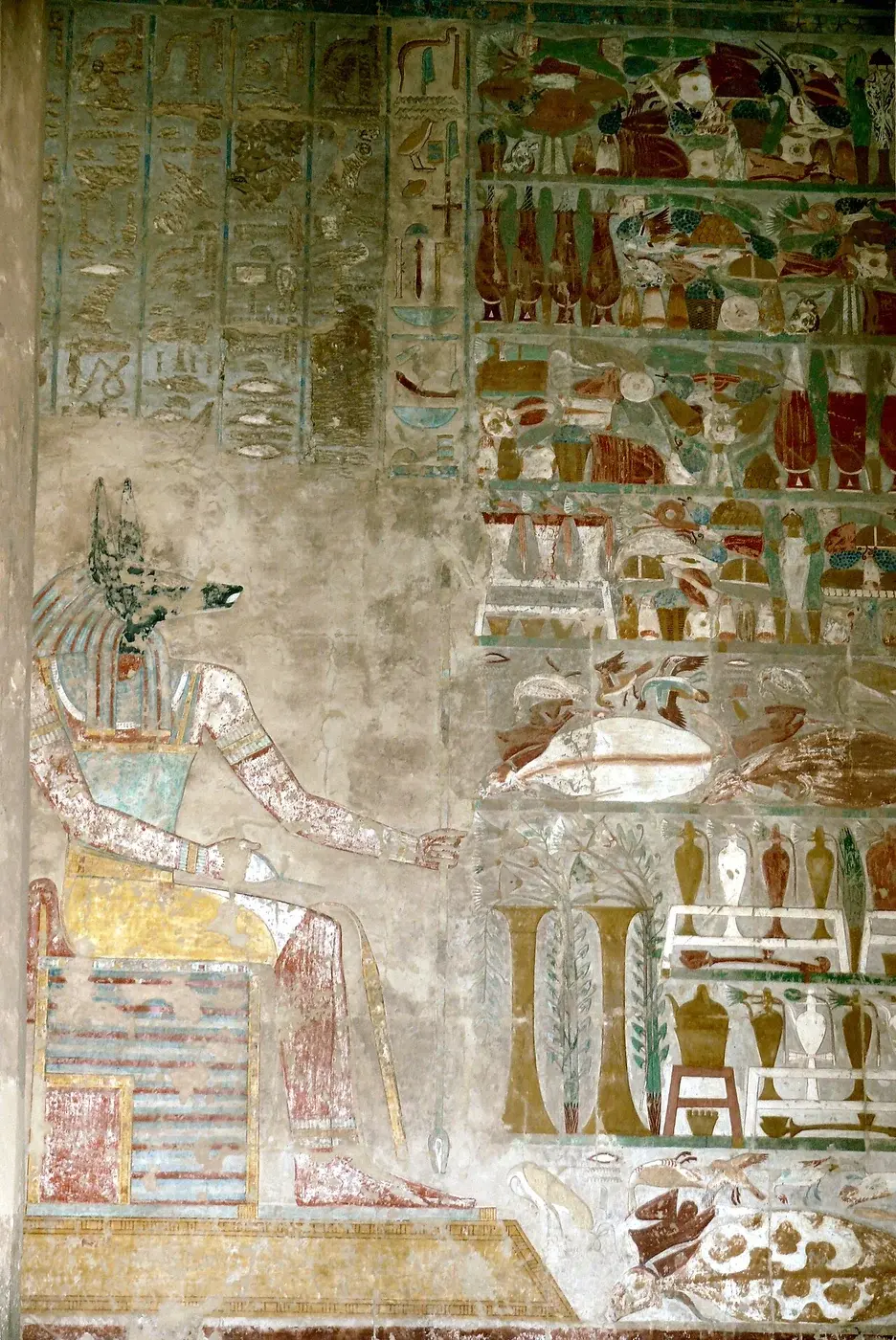
Evidence from Saqqara and Asyut shows that dogs and other canids were mummified in large numbers as votive offerings connected to the gods Anubis and Wepwawet.
 Historical collection image