Japan’s First Guide Dogs Arrived in 1939 for Blinded Soldiers
Imported German Shepherds helped some veterans of the Sino-Japanese War regain independence, decades before guide-dog programs became widespread in the country.
East Japan Guide Dog Association facility in Utsunomiya, Japan Miyuki Meinaka · CC BY-SA 4.0 · Web size optimized; source linked for the original.
The idea of using dogs to guide people who are blind has a longer and more international history than many realize. In Japan, the first recorded working guide dogs appeared in 1939. Four German Shepherds arrived from training centers in Germany and were retrained at a Tokyo army hospital before being paired with soldiers who had lost their sight during the Sino-Japanese War. This modest beginning, sparked by an American visitor the year before, laid groundwork for later efforts in the country. The episode offers a concrete look at how guide-dog assistance crossed borders and adapted to local needs. The evidence shows a mix of private enthusiasm, military involvement, and practical retraining that turned imported dogs into working partners.
An American Visitor Plants the Seed
In 1938 an American named John Forbes Gordon visited Japan accompanied by his guide dog, Ortie. He traveled the country giving lectures that introduced the concept of guide dogs to Japanese audiences. The talks appear to have caught the attention of at least one influential listener, Yasuo Soma, who later played a key role in bringing trained dogs from overseas. Gordon’s visit is consistently cited in Japanese historical accounts as the first public introduction of guide dogs to the country.
The lectures themselves did not immediately produce local training programs. Instead, they inspired further steps. Soma, associated with the Japan Shepherd Dog Association, began exploring the possibility of importing dogs already trained in Germany. The evidence indicates that initial government and military skepticism existed, but private efforts helped move the idea forward. This pattern of civilian initiative supporting what would become a military rehabilitation project is one of the more interesting aspects of the story.
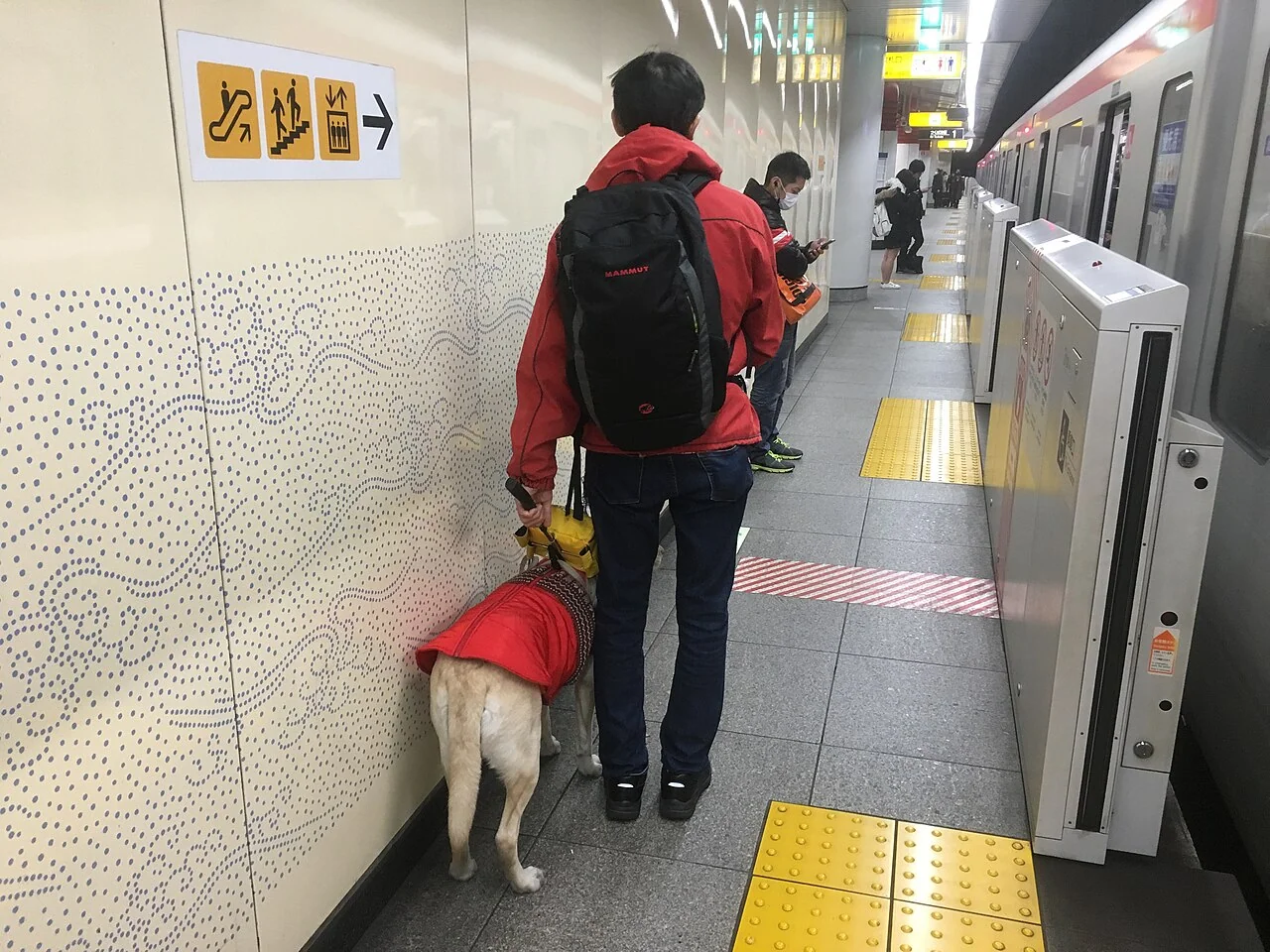
Guide dog in Japan (盲導犬、日本にて) Nesnad · CC BY 4.0. Web size optimized; original linked.
Four Shepherds Make the Journey
In 1939 four German Shepherds—named Rita, Asta, Podo, and Ruthie in most accounts—were imported from a training school in Potsdam, Germany. They arrived in Kobe on May 26 after a long voyage. The dogs had been trained to respond to German commands and to the traffic patterns of European cities. Their new home would require both linguistic and cultural adjustments.
The dogs were taken to the First Provisional Hospital of the Army in Tokyo, the predecessor to today’s Center Hospital of the National Center for Global Health and Medicine. There, staff retrained them to obey Japanese-language commands and to handle local street conditions. The hospital served as both quarantine facility and training ground. Once the retraining was judged successful, the dogs were donated to blinded soldiers as part of a social-rehabilitation effort. The sources agree that these four animals became Japan’s first working guide dogs.
Context of the Sino-Japanese War
The soldiers who received these dogs had lost their sight during the Sino-Japanese War, also known as the China conflict. This detail corrects an earlier assumption that the program served World War I veterans; the timeline and conflict are clearly later. The expanding war created a growing number of visually impaired former servicemen who needed practical ways to regain independence.
Military hospitals were logical settings for testing guide dogs. The army hospital in Tokyo already dealt with wounded soldiers, and its staff had both medical and logistical resources. Pairing trained dogs with these veterans was framed as a step toward social rehabilitation rather than purely medical treatment. The evidence does not provide individual soldier stories or success rates, but it does confirm that the dogs were intentionally assigned for this purpose.
Former Japanese Garrison Hospital Beitou Branch building Gt82025 · CC BY-SA 4.0. Web size optimized; original linked.
Practical Challenges and Adaptations
Retraining the imported dogs was not simply a matter of swapping German for Japanese commands. The animals also had to learn to navigate Tokyo’s traffic, sidewalks, and public behavior. Sources note that the hospital staff worked to make the dogs responsive to local conditions while preserving the core guiding skills they had learned in Germany.
The involvement of civilian dog enthusiasts alongside military personnel added another layer. Soma and others from the Shepherd Dog Association brought specialized knowledge that the hospital might have lacked. This collaboration between private enthusiasts and the army hospital seems to have been essential in overcoming early official hesitation. The result was a small but functional pilot program that demonstrated the feasibility of guide dogs in a Japanese context.
Later Influence and Editorial Reflections
Experience gained with these four dogs later informed domestic training efforts in Japan. While the 1939 imports remained a limited project, they are credited as the starting point for the country’s guide-dog history. The Japan Guide Dog Association traces its foundational knowledge to this episode. Today guide dogs are a recognized part of accessibility services, though the numbers remain modest compared with some Western countries.
Reading the sources leaves several open questions. How many soldiers ultimately worked with these first dogs? What was the typical partnership length, and did any of the animals continue working beyond their initial assignments? The records are quiet on these points. One editorial takeaway is that guide-dog programs often begin through determined individuals rather than large institutions—an observation that applies beyond Japan. Another is the quiet dignity of adapting European-trained dogs to help veterans of a different conflict. The story carries a light, almost whimsical image of German Shepherds learning Japanese street etiquette, yet the underlying purpose was serious: restoring mobility and confidence to people who had sacrificed their sight. That blend of practicality and compassion feels worth remembering.
Guide dog's memorial cenotaph of the East Japan Guide Dog Association C3s7 · CC0 1.0. Web size optimized; original linked.
AI-assisted original writing. This feature was revised against source material and checked for unsupported claims. Follow the references below for evidence and its limits.
Royal charters set rules for restraining dogs to protect game, while hunting manuals later recorded the calls and names used by those who followed hounds on the trail.
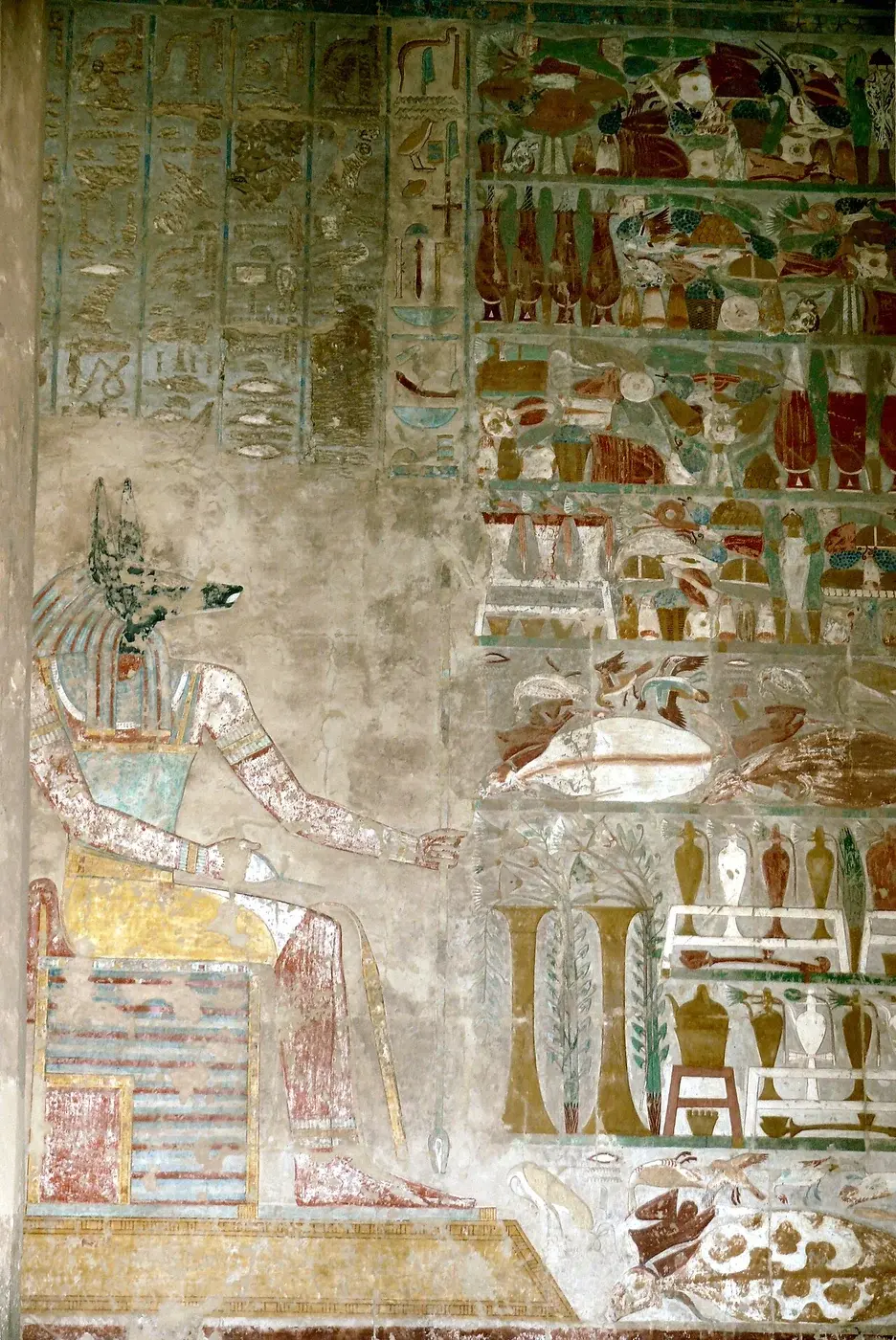
Evidence from Saqqara and Asyut shows that dogs and other canids were mummified in large numbers as votive offerings connected to the gods Anubis and Wepwawet.



 Historical collection image