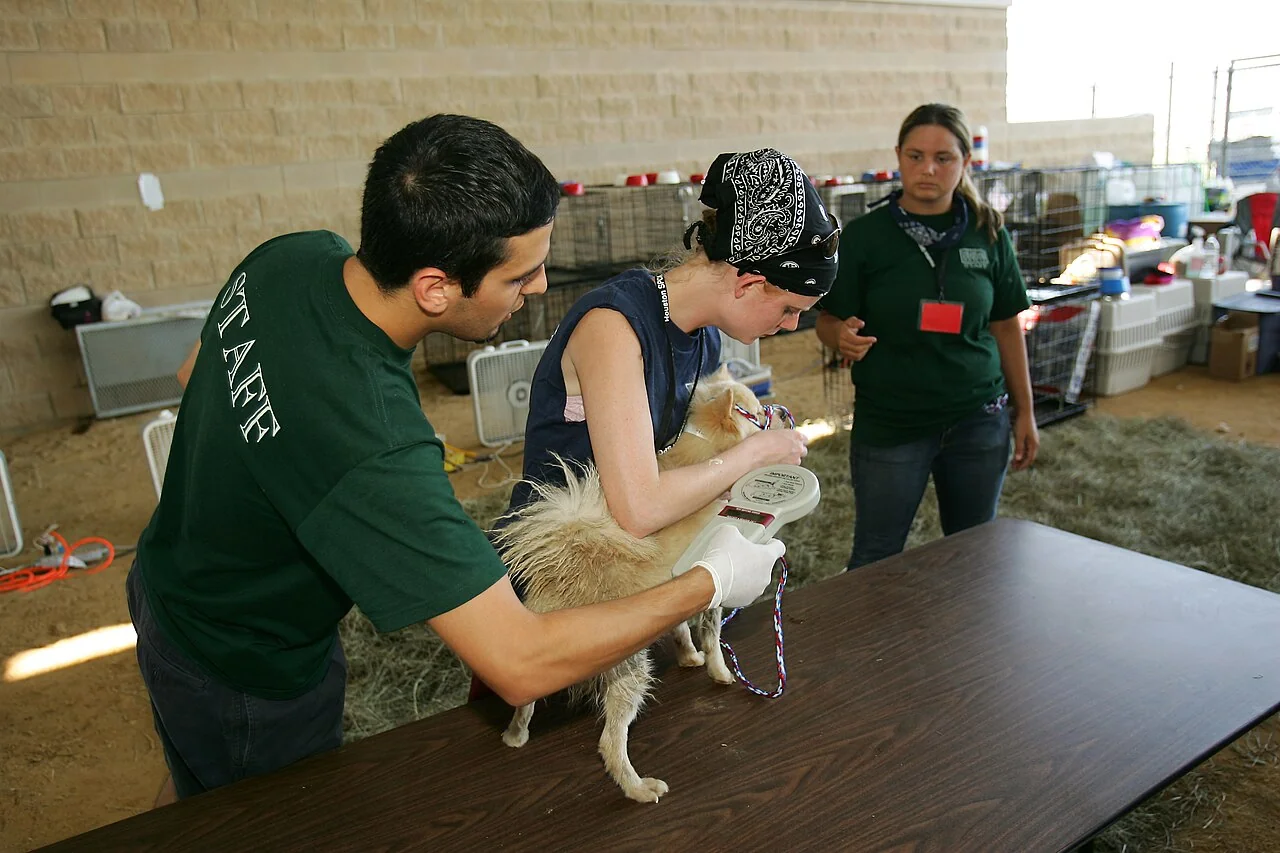
Veterinarians from the National Veterinarian Response Team implant a microchip into a dog for tracking purposes at an Animal Disaster Response Facility in Beaumont, Texas, following Hurricane Rita (September 30, 2005). Bob McMillan · Public domain · Web size optimized; source linked for the original.
Losing a dog is a heart-sinking experience for any owner. Yet a careful look at shelter data offers some genuine encouragement: animals carrying microchips stand a much better chance of being reunited with their families. A study from Ohio State University researchers, published in the Journal of the American Veterinary Medical Association, examined thousands of microchipped animals entering shelters across the United States. The findings highlight both the promise of the technology and the practical steps needed to make it truly effective. While the results do not support every optimistic claim circulating online, they do point to a clear advantage for chipped pets and underscore the importance of proper registration.
What the shelter data actually reveals
Between August 2007 and March 2008, researchers affiliated with Ohio State University College of Veterinary Medicine reviewed records from 53 animal shelters that scanned every animal on intake. The dataset included 7,704 microchipped animals, of which 4,083 were strays. For stray dogs with microchips where owners could be located, 74.1 percent were eventually reclaimed. Overall, the median return-to-owner rate for microchipped stray dogs reached 52.2 percent—more than double the 21.9 percent rate seen for dogs without chips. These figures come directly from shelters that made scanning a universal practice, offering a clearer picture than facilities that only check some animals.
The study also found that owners were located for 72.7 percent of all microchipped animals entering the shelters. Of those owners reached, 73.9 percent wanted their pet back. The research, led by Linda Lord and colleagues, therefore demonstrates a measurable benefit. Still, the advantage depends on the chip actually being detected and the contact details being accurate. Without those two conditions, even the best technology cannot work its magic. Reading this data invites a practical question: if you have already microchipped your dog, have you confirmed that the registry holds your current phone number and address?
Neil-17th Building (Veterinary Building), The Ohio State University, used for the department of veterinary medicine and bacteriology where the microchip shelter study was conducted. Source collection · Public domain. Web size optimized; original linked.
Detection rates and why they matter
The researchers discovered that 87 percent of the microchips were successfully read during the very first scan when the animal arrived at the shelter. This high initial detection rate is encouraging, yet the remaining 13 percent required repeated scans before the chip could be found. In other words, a single quick pass might miss a chip that is present. Shelters that scan thoroughly—and multiple times—therefore give lost pets the best possible shot at going home. The difference between one scan and several could literally be the difference between a joyful reunion and an animal staying lost.
This finding carries a light but useful reminder for owners and shelter staff alike: technology is only as good as the humans operating it. A scanner waved too quickly or at the wrong angle can overlook a chip. Pet guardians might chuckle at the image of a dog being gently wanded like airport security, but the extra care clearly pays off. The study authors stress that consistent scanning protocols improve outcomes. For anyone running or volunteering at a shelter, the implication is straightforward—make multiple scans standard procedure rather than a rare extra step.
The registration gap that undermines success
Even when a chip is detected, the next hurdle is reaching the owner. The most common reason owners could not be found was outdated or incorrect contact information in the registry databases. Only 58.1 percent of the registries contacted actually had the animal listed. This gap between implantation and proper registration turns what should be a simple process into a frustrating dead end. The Ohio State team emphasized that microchipping must be paired with immediate and accurate enrollment in a national database.
The news release accompanying the peer-reviewed paper reinforces this point. Lead researcher Linda Lord noted that simply having a chip is not enough; the information behind it must stay current. Pet owners are therefore encouraged to treat registry updates as seriously as renewing a dog license. Imagine moving house and forgetting to tell the microchip company—your dog could end up in a shelter with no way for staff to call you. The editorial takeaway is clear: microchips are a powerful tool, but only when owners treat the associated paperwork as an ongoing responsibility rather than a one-time task.
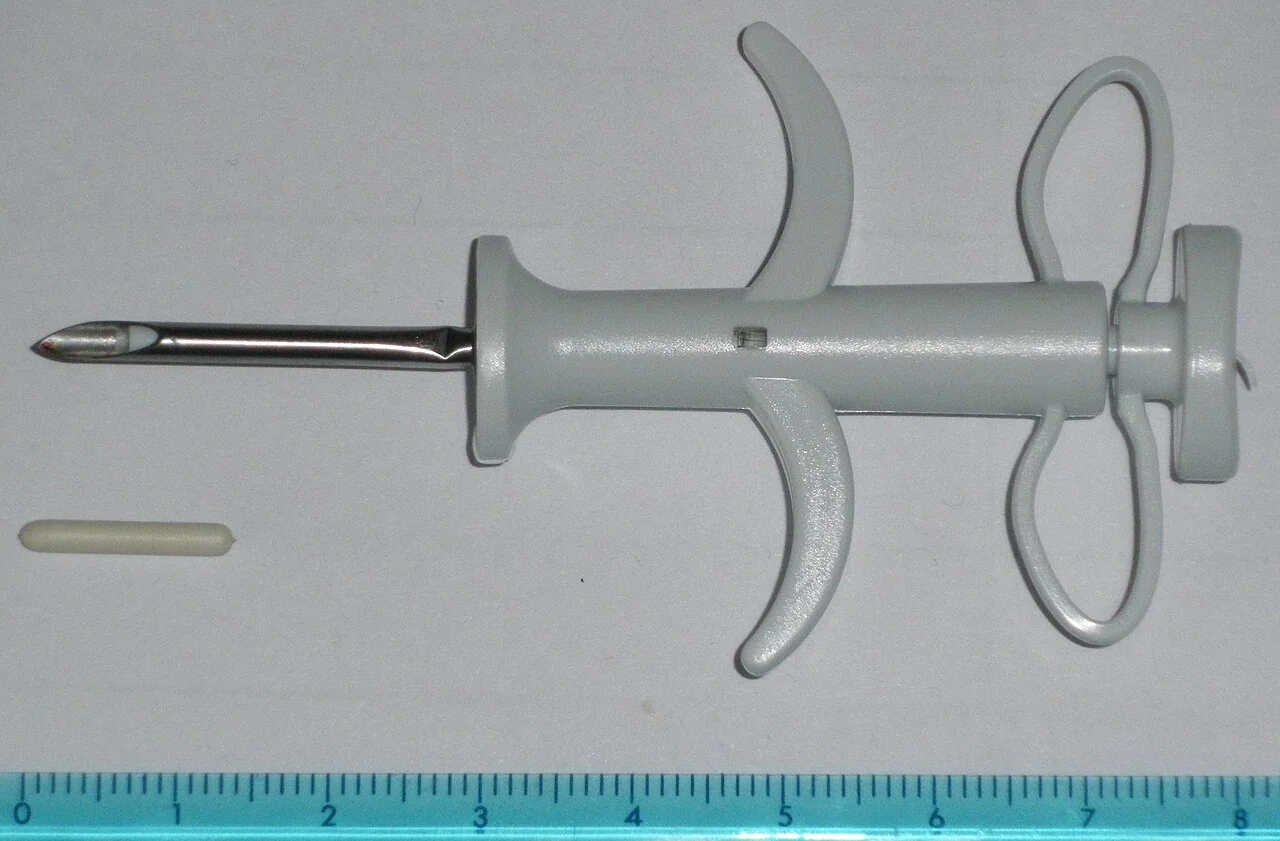
ISO-transponder for animals, the actual microchip implant used for pet identification. Uwe Gille · CC BY-SA 3.0. Web size optimized; original linked.
Practical implications for pet guardians
The evidence supports a few concrete actions. First, if your dog is not yet microchipped, the doubled return rate offers a compelling reason to schedule the quick procedure. Second, verify that the chip is registered and that your details are correct—then check again every time you move or change phone numbers. Many registries allow free updates; there is little excuse for letting the information grow stale. Finally, ask your veterinarian to scan the chip at every annual visit to confirm it is still working and readable.
These steps may feel mundane, yet they transform a statistical advantage into a real-life safety net. There is a gentle humor in realizing that our most advanced pet-recovery technology still relies on something as ordinary as keeping an address current. But the data shows that attention to those ordinary details dramatically raises the odds of a happy ending. For families who treat their dogs as full members of the household, investing a few minutes in registry maintenance is a small price for peace of mind.
Limitations and what the numbers cannot tell us
The study focused exclusively on animals that had already entered participating shelters. It does not measure how many lost dogs are recovered directly by owners or neighbors before reaching a shelter, nor does it address reunion speed. Claims that microchips reunite 87 percent of lost dogs within 48 hours, or that free clinics produce rapid returns, find no support in this research. The 87 percent figure in the paper refers only to initial scan detection rates, not to overall reunions or timelines. Readers should therefore approach broader online assertions with healthy skepticism.
Another limitation is the time period: the data reflect shelter practices from 2007–2008. Scanning technology, registry systems, and owner awareness may have improved since then. The shelters involved were also those committed to universal scanning, which may not represent every facility. These caveats do not diminish the positive findings, but they do remind us that the evidence has a specific scope. An honest reading leaves room for cautious optimism rather than sweeping guarantees. Pet owners and shelter workers alike would do well to celebrate the progress while continuing to push for better registration rates and more consistent scanning.
The Ohio State University veterinary building (completed 1903, demolished 1998), formerly occupied by the Department of Veterinary Medicine. Source collection · Public domain. Web size optimized; original linked.
AI-assisted original writing. This feature was revised against source material and checked for unsupported claims. Follow the references below for evidence and its limits.


 Photograph