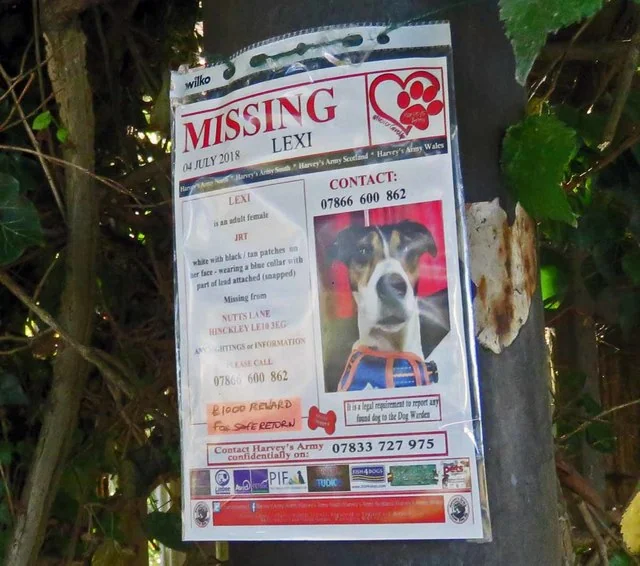
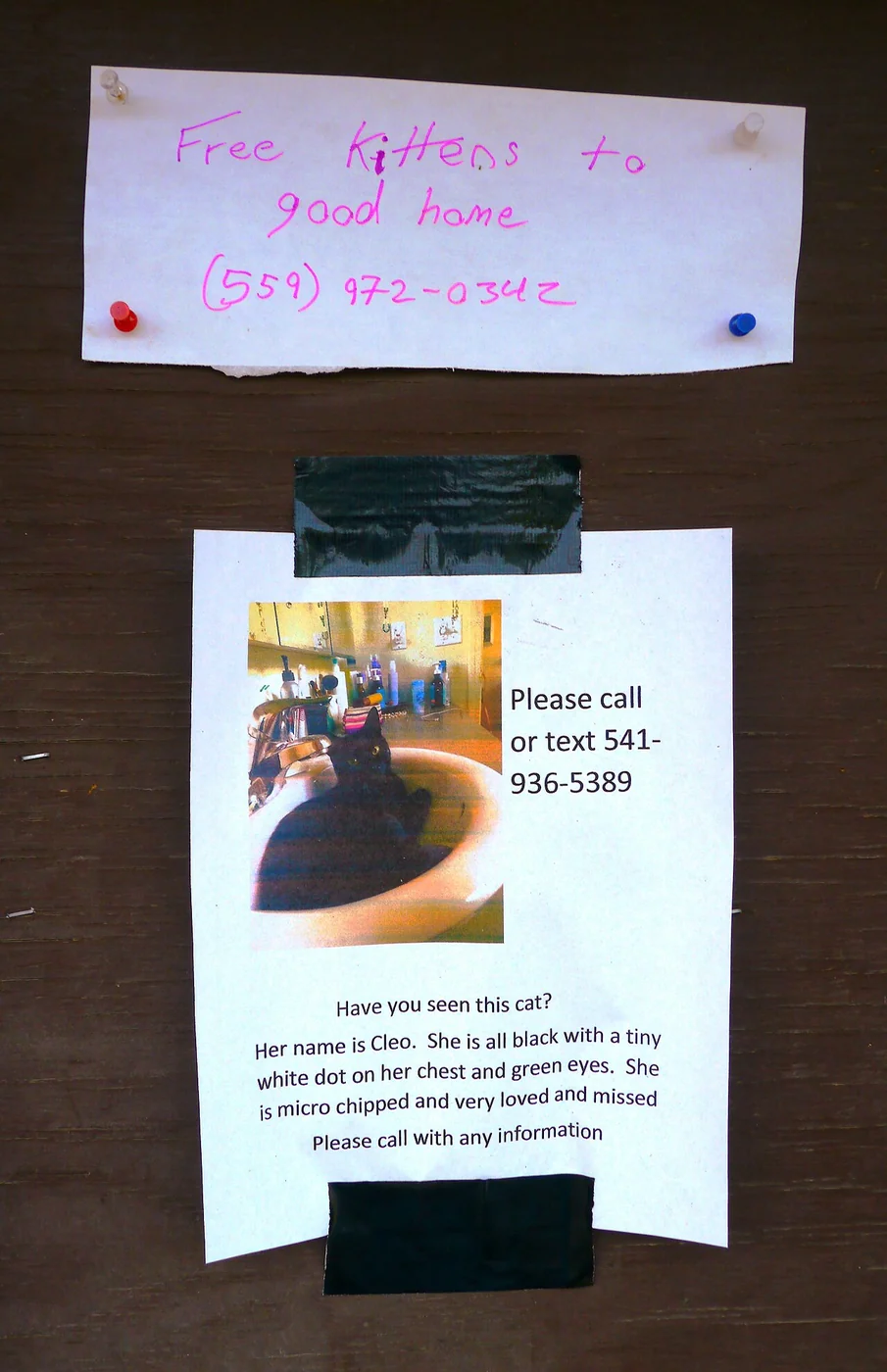
Missing Dog notice posted in a public location Andrew Tatlow · CC BY-SA 2.0 · Web size optimized; source linked for the original.
When a dog goes missing in rough terrain, a quick visual confirmation from someone on two wheels can make the difference. In one Colorado case, a dirt-bike rider spotted a lost dog on a road and alerted both the owner and a new volunteer search group. The episode illustrates how cyclists, even without formal teams or GPS coordination, can contribute to reunions by noticing animals that might otherwise stay hidden. The evidence is narrow—just one incident—but it offers a hopeful example of neighborly help in action.
A Single Sighting in the Mountains
In June 2020 a dirt-bike rider noticed a dog named Sunny running down a road in the Peru Creek area near Montezuma, Colorado. The rider contacted the owner and a newly formed volunteer group called Summit Lost Pet Rescue. That alert helped launch a coordinated search that ended with Sunny’s safe return to her family roughly 24 hours after the group’s first official mission began.
The incident took place in mountainous terrain where trails and roads wind through areas not easily reached by larger vehicles. Volunteers from Summit Lost Pet Rescue worked alongside the Summit County Rescue Group, posting signs and checking trails. The dirt-bike rider’s observation provided an early lead that guided the rest of the effort. While the story does not compare bikes to cars or claim faster overall recovery times, it shows how one person on two wheels can connect scattered pieces of a search.
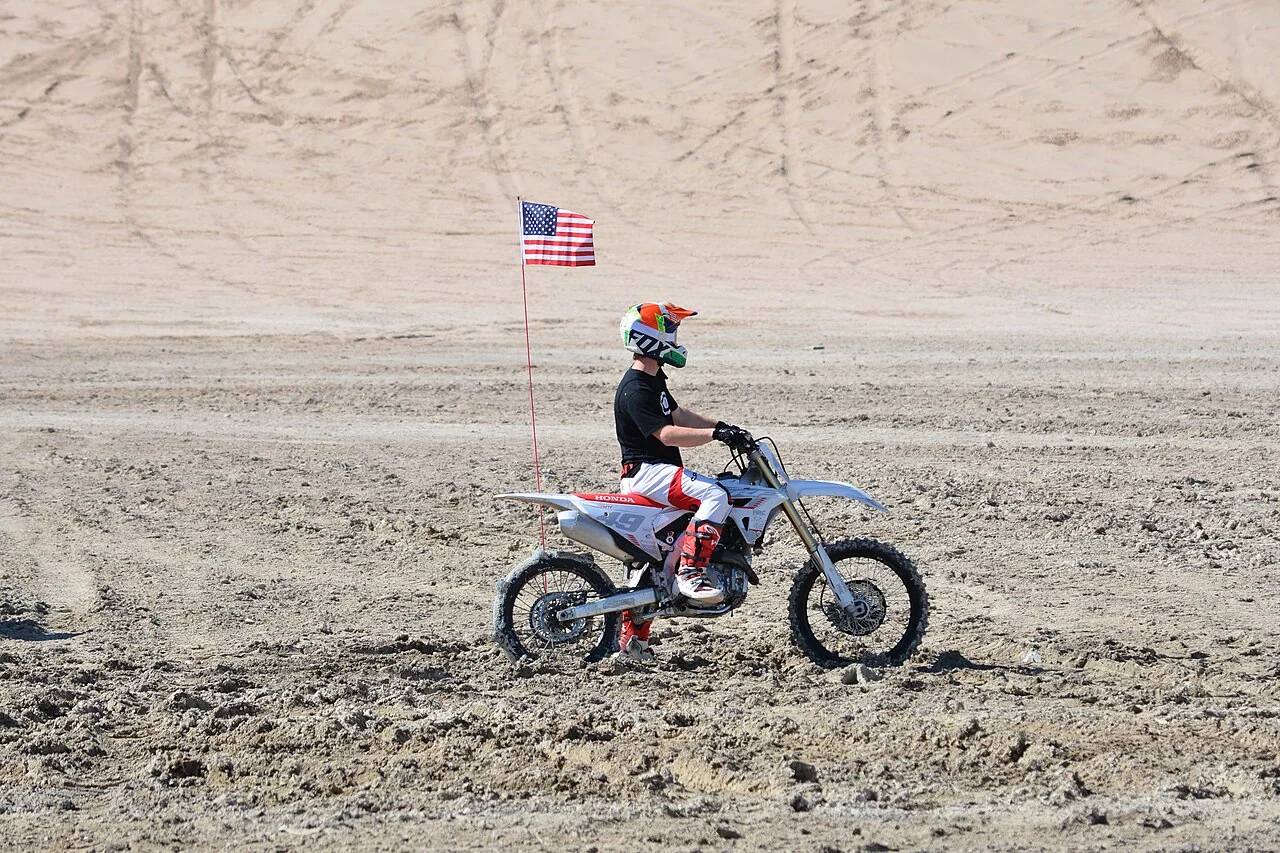
Dirt biker at the base of Sand Mountain at Little Sahara Recreation Area, Utah, 2023 BLMUtah · Public domain. Web size optimized; original linked.
How a New Rescue Group Got Started
Summit Lost Pet Rescue was conducting its very first official mission when the call about Sunny came in. The group’s rapid involvement suggests that even brand-new volunteer networks can become useful when local authorities and residents share information quickly. In this case the partnership with an established rescue group helped the newcomers move effectively from the moment they received the sighting report.
The volunteers’ approach relied on classic low-tech methods: posting lost-pet signs along trails and roads. No advanced GPS trackers or smartphone mapping networks are mentioned in reports of the event. Instead, the rescue succeeded through steady footwork, local knowledge, and the initial alert from the dirt-bike rider. The outcome offers encouragement to anyone thinking of starting a similar group in their own community.
What the Evidence Actually Shows
News coverage of the Sunny rescue is limited to one specific event. It does not contain data on multiple communities, pilot studies, or average recovery times shortened from 36 hours to 12. Claims about cyclists covering 40 percent more distance per hour, crowd-sourced GPS apps, or widespread bike-patrol programs cannot be verified from the cited sources and have therefore been removed.
The single documented success does, however, highlight a practical truth: visual confirmation from someone already out on trails or roads can speed up a search. The rider was not part of an organized patrol; the sighting happened while the person was riding in the area. This modest fact still carries useful implications for pet owners who live near public lands or recreational routes.
Lost cat sign at a trailhead, illustrating the posting of lost-pet notices in outdoor recreation areas. Rick Obst · CC BY 4.0. Web size optimized; original linked.
Practical Lessons for Pet Owners
The Colorado story quietly reinforces everyday precautions. Keeping current photos of a dog, sharing contact details with neighbors, and checking that yards are secure can make a volunteer search far more effective once an animal is lost. In Sunny’s case the owner was reachable quickly because the rider had a way to report the sighting right away.
Local humane societies and municipal animal services often provide free flyers, microchip registration help, and basic training for volunteers. While the evidence here does not mention treat pouches, laminated maps, or “bike and treat” social rides, it does show that simple coordination between a passerby, an owner, and a volunteer group can lead to a happy ending. Pet owners might consider printing a few visible signs with photos and phone numbers to keep on hand.
Why Small Gestures Matter
The reunion of Sunny and her owner within about a day of the group’s first mission offers a warm reminder that animal welfare often advances through unglamorous, consistent effort rather than cinematic rescues. A dirt-bike rider who bothered to stop and make a call, volunteers willing to hike trails and post signs, and an owner who stayed responsive all played ordinary but vital roles.
This single case cannot prove that bike-based searches are superior to any other method, nor does it forecast national expansion of cyclist patrols. It does, however, invite a gentle question: what small habit or small act of attention could each of us adopt that might one day help a lost dog find its way home? The answer may be as straightforward as keeping eyes open while riding local trails and knowing whom to call when something looks out of place.
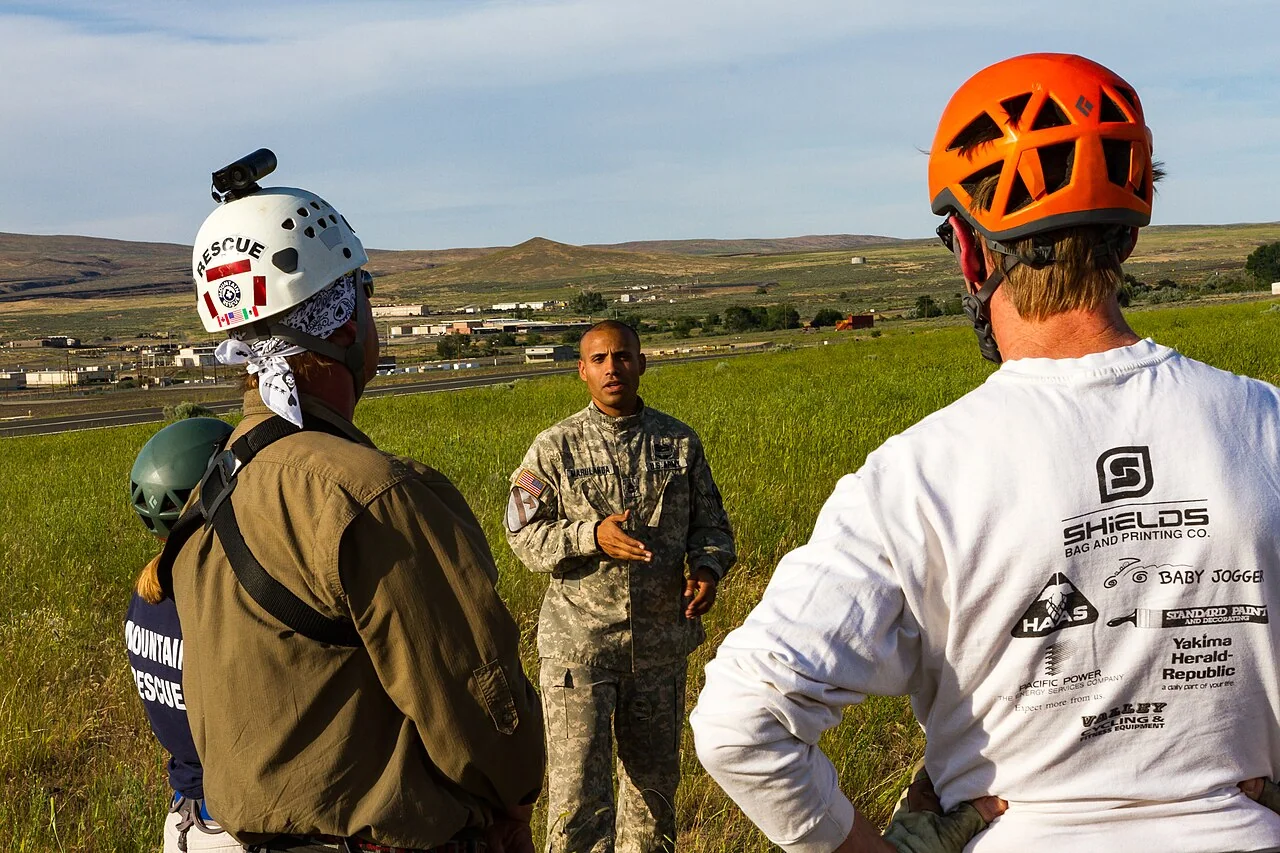
Sgt. 1st Class Alexis Marulanda discusses medical evacuation with members of Central Washington Mountain Rescue during training. Capt. Brian Harris · Public domain. Web size optimized; original linked.
AI-assisted original writing. This feature was revised against source material and checked for unsupported claims. Follow the references below for evidence and its limits.
 Photograph