Quiet Moments: Everyday Enrichment Ideas for Shelter Dogs
Small, practical steps that shelters can take with dogs in their care, drawn from available guidance and framed with gentle editorial thoughts on animal welfare.
U.S. Marine walking a shelter dog during a community relations event at an animal shelter in Spain, 2019 U.S. Marine Corps photo by Cpl. Kenny Gomez · Public domain · Web size optimized; source linked for the original.
Shelter dogs often face days filled with noise, limited space, and uncertain routines. Yet staff and volunteers can weave in simple activities that offer dogs a bit of choice, comfort, or fun. One widely referenced guide from the ASPCA highlights in-kennel and out-of-kennel options tailored to each dog’s needs. These are not miracle cures, and no universal success rates are claimed. Still, the ideas feel like modest wins worth considering. This piece looks at a handful of those approaches, shares some editorial reflections, and poses questions for readers who work with or care about shelter animals. The tone stays hopeful without overstating what the evidence actually shows.
Understanding the Role of Daily Enrichment
The ASPCA resource describes enrichment as activities organized by shelter staff for the individual dogs in their care. These can include controlled walks, positive human interaction, food puzzles, and sensory experiences. The emphasis is on matching the activity to the dog rather than applying a one-size-fits-all schedule. Staff observe how each dog responds and adjust accordingly. This individualized lens matters because dogs arrive with different histories, energy levels, and comfort around people or other animals.
From an editorial standpoint, framing enrichment this way feels quietly respectful. It treats the dogs as individuals instead of inventory. That perspective alone can shift how a shelter operates, encouraging slower, more attentive interactions even on busy days. One might ask: if a volunteer has only ten minutes with a particular dog, which single activity from the list might give that dog the most noticeable relief? The answer will differ, and that very difference invites thoughtful care.
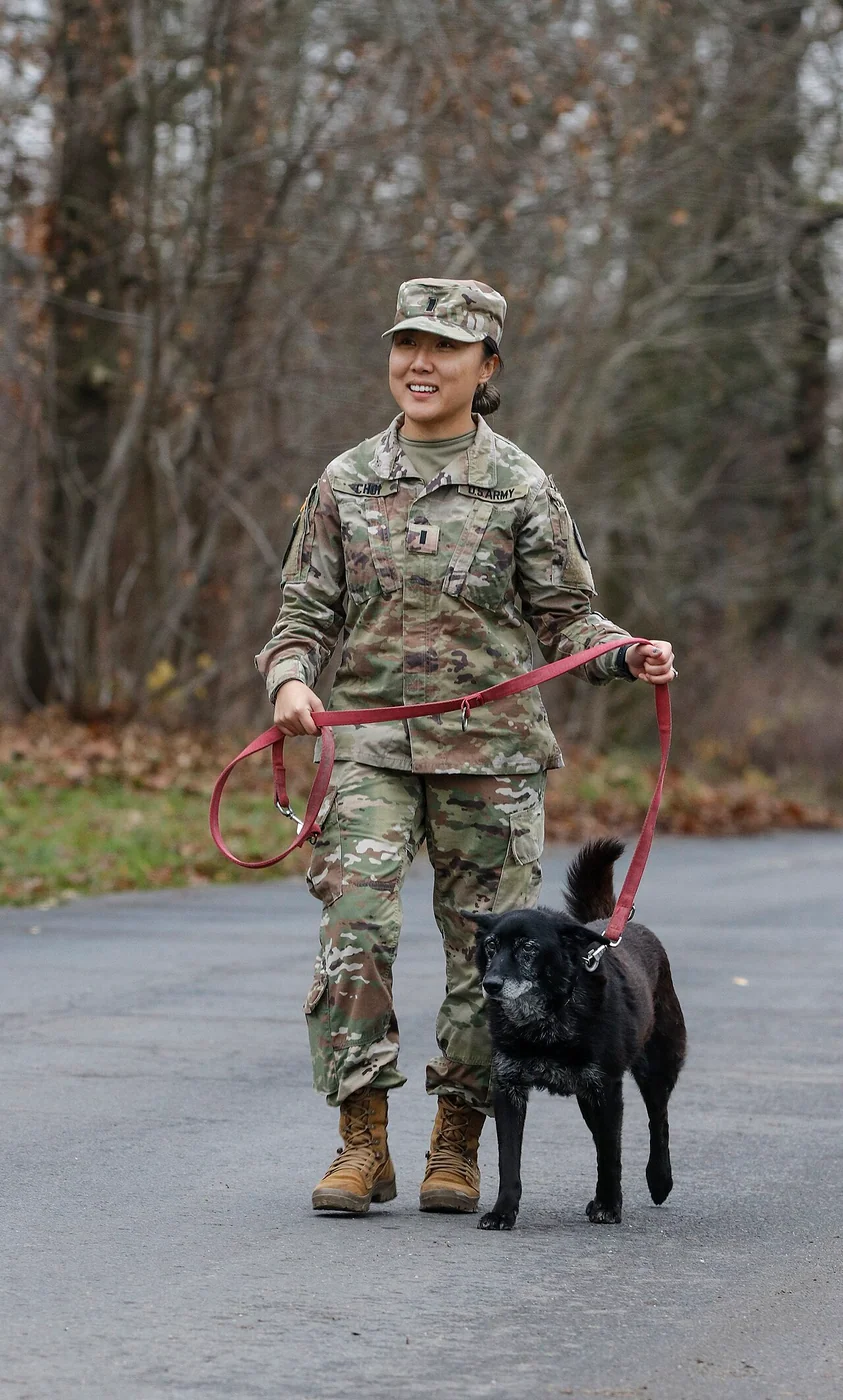
U.S. Army Reserve Lt. Katie Choi walks a dog from the Zary Animal Shelter in Zary, Poland, November 26, 2019. (U.S. Army Reserve photo by Master Sgt. Ryan C. Matson) U.S. Army Reserve photo by Master Sgt. Ryan Matson · Public domain. Web size optimized; original linked.
In-Kennel Activities That Fit Tight Spaces
Inside the kennel, food puzzles and sensory experiences stand out as practical choices. A stuffed Kong or similar puzzle can occupy a dog while staff handle other tasks. Sensory additions might involve safe scents on a towel or a frozen treat that takes time to lick. These options require little extra room and can be rotated to keep things interesting without overwhelming the dog.
Editorial thoughts here lean toward patience. Not every dog will engage with a puzzle right away; some may need calmer introductions or different textures. The humor in this is gentle: imagine a dog who would rather sit on the puzzle than solve it. That moment is not failure but information. Shelters might consider keeping a simple log of what each dog tries and how they react. Over time those notes become a quiet map of preferences, helping future days run smoother for both dogs and people.
Out-of-Kennel Opportunities for Movement and Connection
Controlled walks and positive human interaction are listed as key out-of-kennel activities. A short, leashed walk in a quiet area can provide fresh air and a change of scenery. Positive interactions might look like calm petting, gentle play with a toy, or simply sitting nearby while the dog explores. The ASPCA stresses that these should be organized thoughtfully so the dog does not become overstimulated or anxious.
Reading this, one wonders how many dogs miss out on these moments simply because schedules are tight. The implication feels clear: even a few extra minutes of one-on-one time can matter. Light humor surfaces when picturing a volunteer being politely ignored by a dog more interested in sniffing one specific patch of grass. That small scene reminds us that enrichment is not about forcing engagement but about offering options and then listening to the dog’s response. Shelters that build these outings into daily routines may notice subtle shifts in barking levels or overall alertness, though the source material does not quantify such changes.
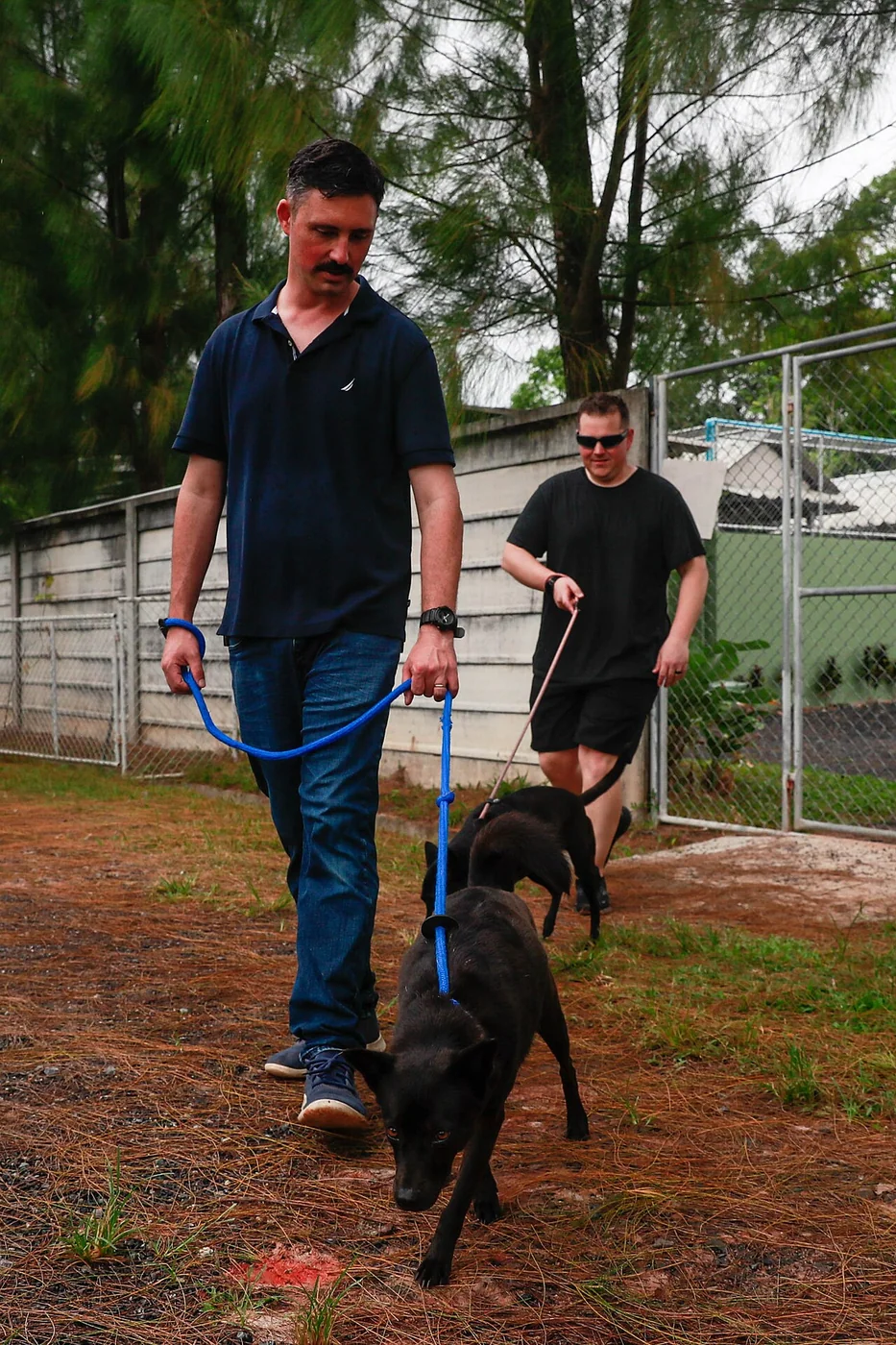
Sailors assigned to USS Michael Murphy walk dogs at the Soi Dog Foundation in Phuket, Thailand, November 25, 2024. (U.S. Navy photo by Mass Communication Specialist Seaman Christian Kibler) U.S. Navy photo by Seaman Apprentice Christian Kibler · Public domain. Web size optimized; original linked.
Sensory Experiences and Their Gentle Limits
Sensory enrichment can include anything from a frozen peanut-butter toy to a recording of birdsong played at low volume. The ASPCA guide presents these as possible parts of a broader program rather than required elements. The goal is to give dogs safe ways to use their senses without adding stress. Staff are encouraged to watch for signs that an experience is enjoyable versus overwhelming.
An editorial question follows naturally: what does “safe” actually look like in a busy shelter environment? The evidence leaves room for interpretation, reminding us that observation skills matter more than any single toy or gadget. There is a touch of warmth in picturing a dog tilting its head at a new smell, clearly pondering whether this strange thing is friend or foe. Such moments are small victories. They also highlight a practical limit: shelters must balance new experiences with the need for predictability. Too much novelty too quickly can backfire, so gradual introduction stays key.
Editorial Reflections and Practical Next Steps
Looking across the ASPCA material, the strongest thread is respect for individual differences. No sweeping claims about reduced stress or higher adoption rates appear in the cited source material. That absence keeps the conversation honest. Instead of promising big outcomes, the guidance invites shelters to experiment carefully and document what they see. Editorial analysis suggests this measured approach protects animal welfare by avoiding hype that could lead to disappointment or misplaced expectations.
For readers, several questions emerge. How might a small shelter with limited staff adapt these ideas without burning out volunteers? Could local businesses donate safe puzzle toys or scent items? What would a one-page checklist look like that helps new volunteers offer enrichment without guesswork? The implications point toward quieter, more attentive shelters where dogs experience tiny daily improvements rather than dramatic transformations. That feels like good news worth sharing, even if the evidence stays modest. A final light note: if a dog chooses to nap instead of engaging with today’s enrichment, perhaps that nap itself is the win. Rest is valuable too.
These reflections stay grounded in the available source. They do not invent programs, breeds, or statistics. The hope is that shelters and volunteers feel encouraged to keep trying small things, always watching the dogs for honest feedback.
When daily routines include even one or two of the listed activities, dogs may experience brief pockets of agency in an otherwise unpredictable environment. The ASPCA text frames this as part of responsible care rather than an optional extra. Editorial opinion holds that such routines honor the emotional lives of animals who cannot speak for themselves. That stance does not require dramatic claims; it simply asks people to pay closer attention.
One uncertainty worth naming is how consistently these practices are followed across different shelters. The source does not address regional differences or funding levels. Readers might consider whether their own community shelters have space in the schedule for these moments. If not, gentle advocacy could focus on adding just one new activity per week. The humor lies in the gap between ideal plans and real days: sometimes the best-laid enrichment is interrupted by a spilled water bowl or an unexpected visitor. Yet the effort itself signals care. Over time, that signal can shape a shelter’s culture in positive, if quiet, ways.
AI-assisted original writing. This feature was revised against source material and checked for unsupported claims. Follow the references below for evidence and its limits.


 Photograph