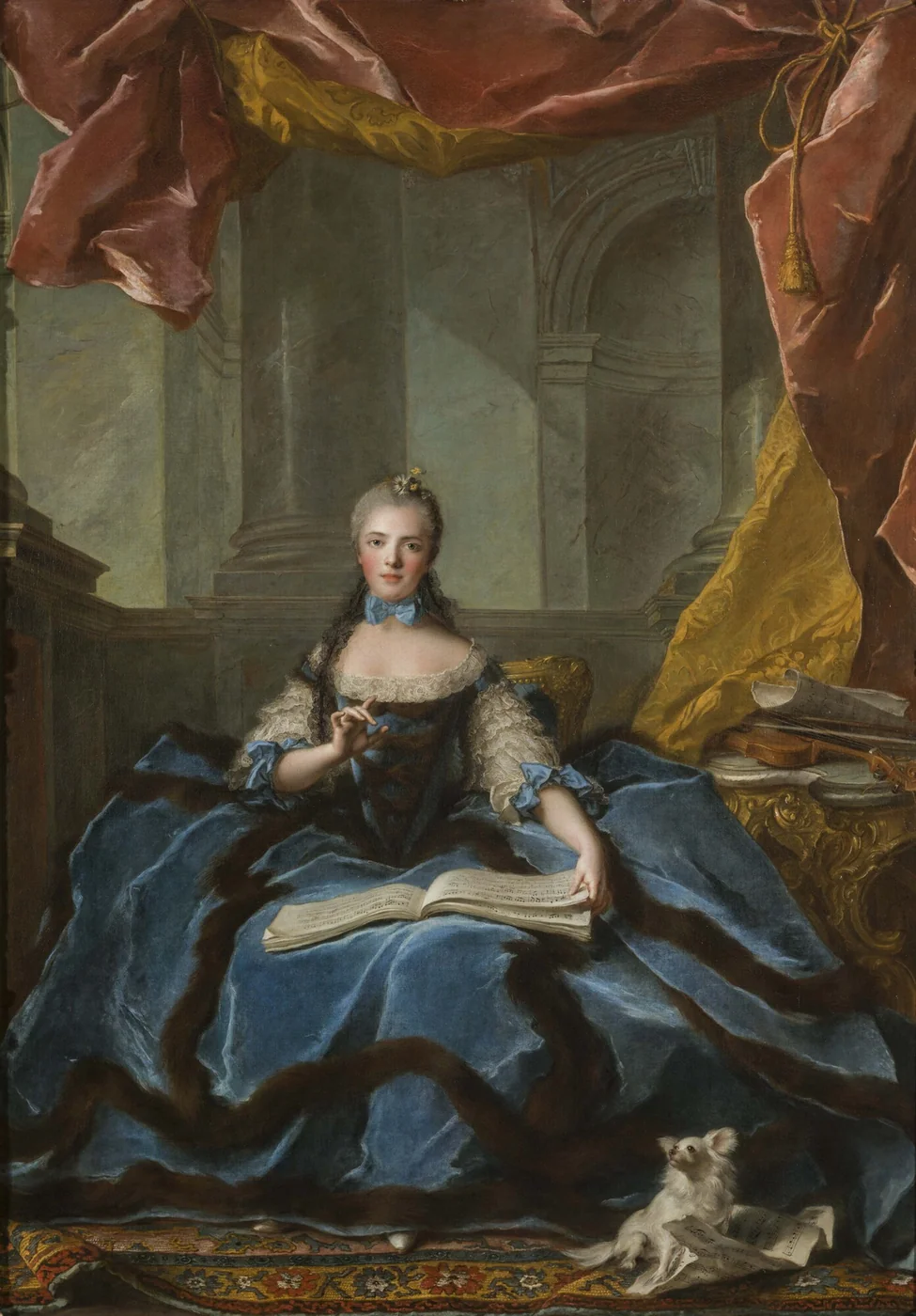
Jean-Marc Nattier, Madame Adélaïde of France (1758), oil on canvas, Musée national des châteaux de Versailles et de Trianon (MV 3802). Archival photograph of the historical painting. Jean-Marc Nattier · Public domain · Web size optimized; source linked for the original.
In 18th-century France, small dogs featured in many portraits of the aristocracy. These animals appear in paintings and prints that captured the likenesses of figures close to the royal court. While the artworks do not prove a widespread fashion trend or specific breeding programs, they offer a window into how elites chose to present themselves with their pets. The evidence comes mainly from dated paintings, engravings, and exhibition records rather than quantitative data on pet ownership. This article examines the artistic representations, their cultural context, and what they might suggest about attitudes toward animals, while steering clear of unsupported claims about a sudden "rise" in popularity or Parisian-specific trends.
Dogs in Royal Portraiture
One clear example appears in Jean-Marc Nattier's 1758 portrait of Madame Adélaïde, a daughter of Louis XV. The painting includes a small dog rendered in a naturalistic style, sitting near the subject. This detail suggests that including a canine companion was an acceptable element in formal royal likenesses at the time. Such choices by the artist and patron indicate that these animals held a visible role in how nobility wished to be remembered.
The presence of the dog in this portrait aligns with a broader pattern seen in other works from the mid-18th century. Artists like Nattier often balanced grandeur with touches of everyday life, and the small dog adds a sense of approachability without undermining the subject's status. Viewers today might ask whether the inclusion was symbolic of loyalty or simply a personal preference of the sitter. Either way, the painting stands as direct visual evidence rather than anecdote.
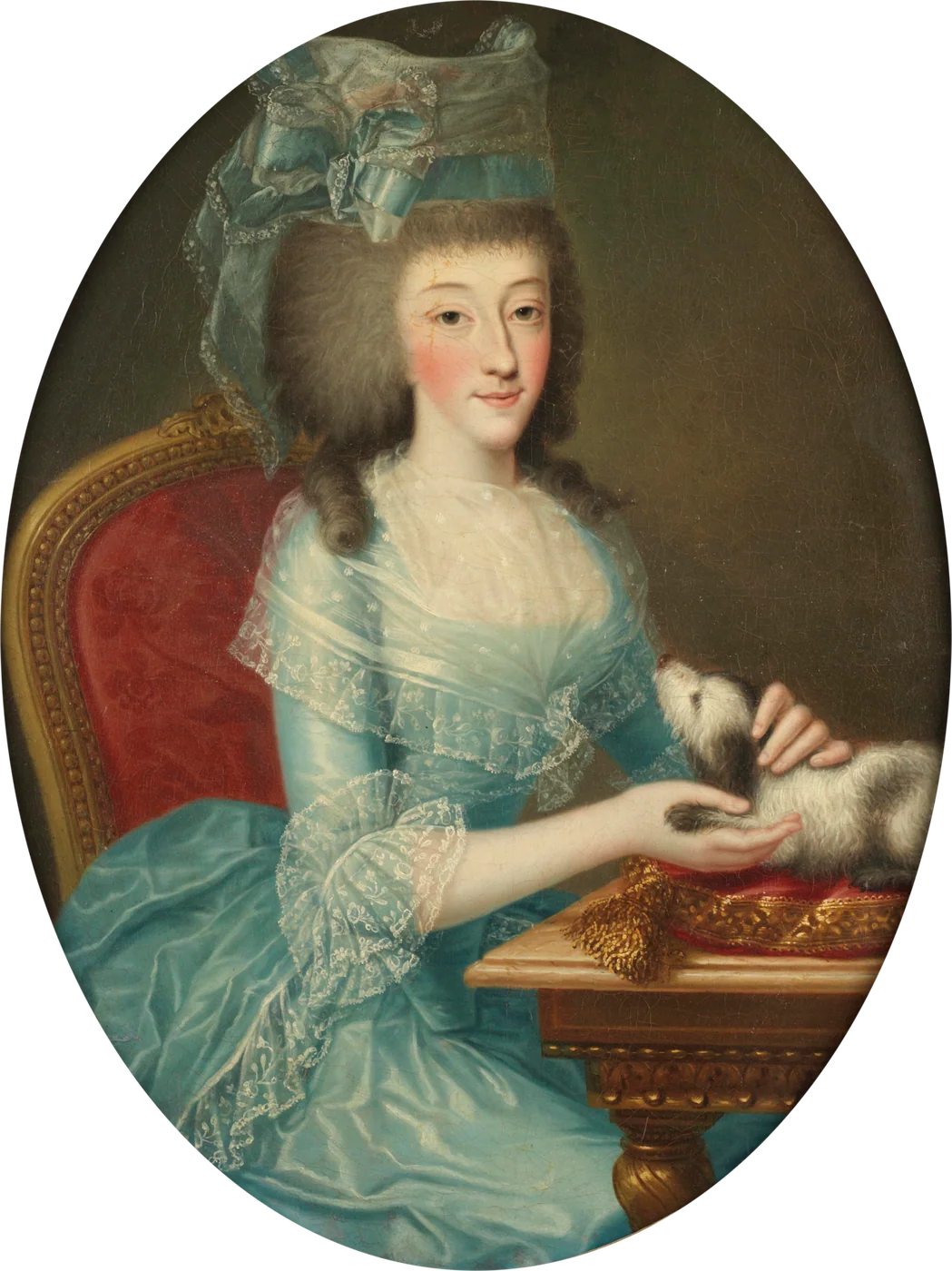
French School portrait identified as Princess Marie Thérèse, Countess of Artois, seated with a small dog. A separate royal portrait illustrating the period’s use of canine companions. Probably Giovanni Panealbo · Public domain. Web size optimized; original linked.
Portraits of Madame de Pompadour's Dogs
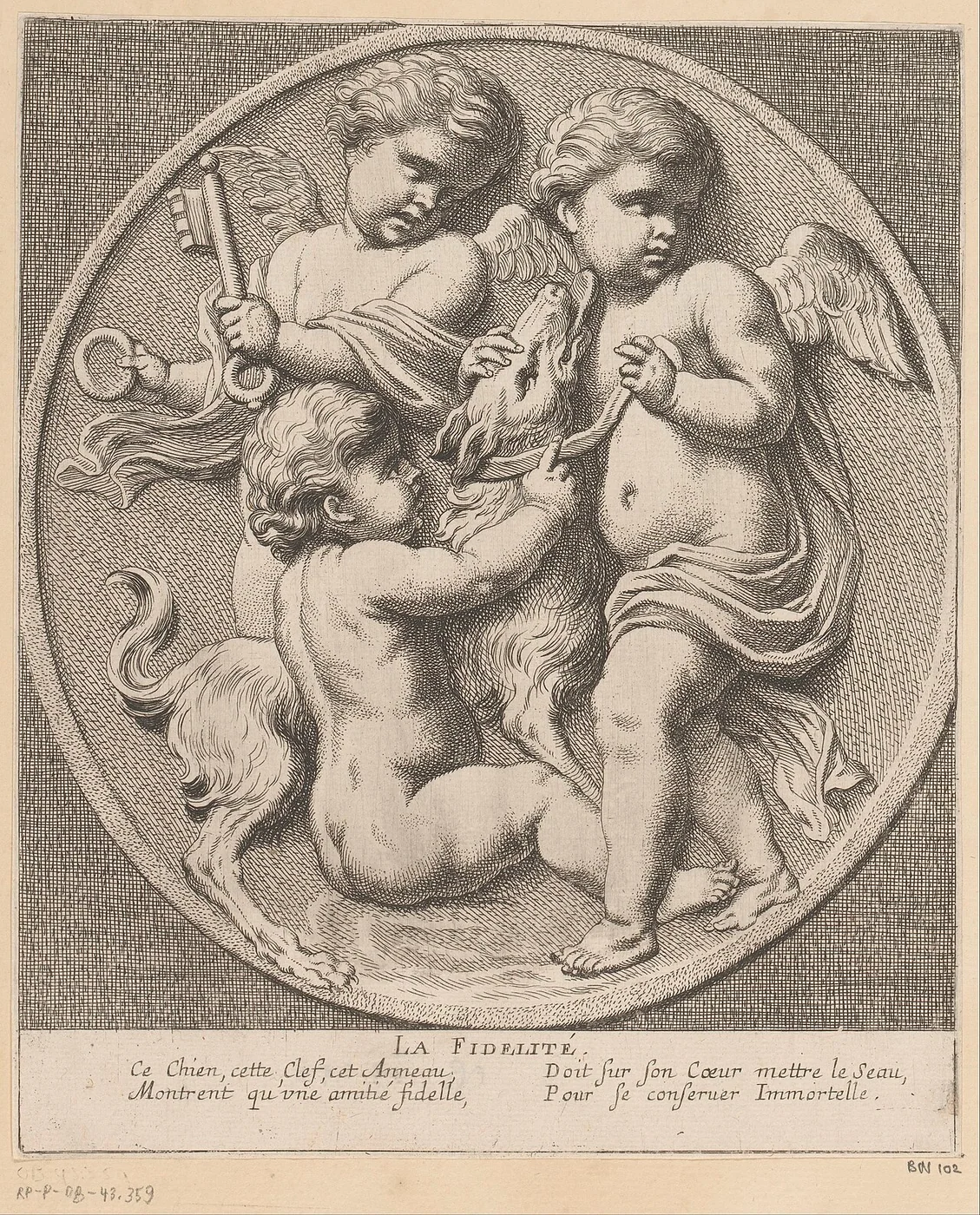
Madame de Pompadour, a prominent figure at the court of Louis XV, had at least two small dogs whose portraits were created and reproduced. A barbet named Inès was depicted as 'La Fidélité' in an engraving by Étienne Fessard after a work by Huet in 1755. Similarly, a spaniel called Mimi appeared as 'La Constance' in 1758. These engravings were exhibited together by Bachelier at the 1759 Salon, showing that images of the dogs circulated independently of their owner.
The decision to name the artworks after virtues like fidelity and constancy hints at an interpretive layer. The dogs were not merely accessories but subjects granted allegorical weight. This practice raises interesting questions about how 18th-century viewers understood the emotional bond between humans and pets. The engravings' exhibition at a major salon also points to a level of public interest in such images among artistic circles.
Spread of Dog Portraits Through Prints
Beyond paintings of people with their dogs, standalone or allegorical images of small dogs gained traction among the aristocracy. Prints allowed these artworks to reach a wider audience within elite circles. One example is a 1771 painting by Huet created for the comtesse de Brionne, which placed a small dog in an allegorical scene. Such works demonstrate that the animals could be central subjects, not just supporting elements.
The reproduction of these images through engravings and etchings made them more accessible than unique oil paintings. This medium likely helped popularize the aesthetic of small dogs in visual culture. An editorial observation: while this does not quantify how many aristocrats actually owned such pets, it does show that depicting them became a recognizable artistic motif. Light humor might note that even in an era of powdered wigs and rigid etiquette, a fluffy dog could steal the scene in a portrait.
17th-century engraving titled 'La Fidelité' showing putti placing a collar on a dog. An earlier allegorical print using the same virtue title later given to Madame de Pompadour’s dog Inès in 1755. Rijksmuseum · CC0 1.0. Web size optimized; original linked.
Cultural Meanings Behind the Imagery
The evidence from these artworks suggests that small dogs carried symbolic value. Names like 'La Fidélité' imply associations with loyalty and steadfastness, qualities prized in both human relationships and court life. Including a dog in a portrait could therefore communicate the sitter's character indirectly. This interpretive lens comes directly from the titles and contexts provided in the historical records of the paintings.
Yet the sources emphasize artistic representation over daily life. We cannot assume from portraits alone that small dogs were status symbols in a literal sense, or that their presence reflected a broader societal shift. A useful reading question emerges: how much did these images shape perceptions of pets versus merely reflecting existing attitudes? The distinction matters when interpreting visual culture from any period.
Implications for Understanding 18th-Century Attitudes
Taken together, the portraits and prints reveal a comfort with depicting animals alongside high-ranking individuals. This visual evidence points to a cultural acceptance of companion animals in elite spaces, at least in art. It invites modern observers to consider how pet-keeping practices may have intersected with ideas of refinement and emotion in pre-revolutionary France.
Editorial analysis: these artworks humanize historical figures in a relatable way, reminding us that even kings' daughters and royal favorites shared their lives with dogs. A fictional satirical scenario might imagine a pompous courtier insisting his lapdog sit for its own oil painting while complaining about the price of ribbons; such inventions highlight the absurdity of status-seeking without claiming they reflect real events. The surviving images encourage further study of primary sources like catalogs from the Salons. Implications include recognizing that animal welfare concerns, though different then, likely existed alongside affection. Readers might ponder whether today's pet culture echoes these earlier artistic expressions of companionship.
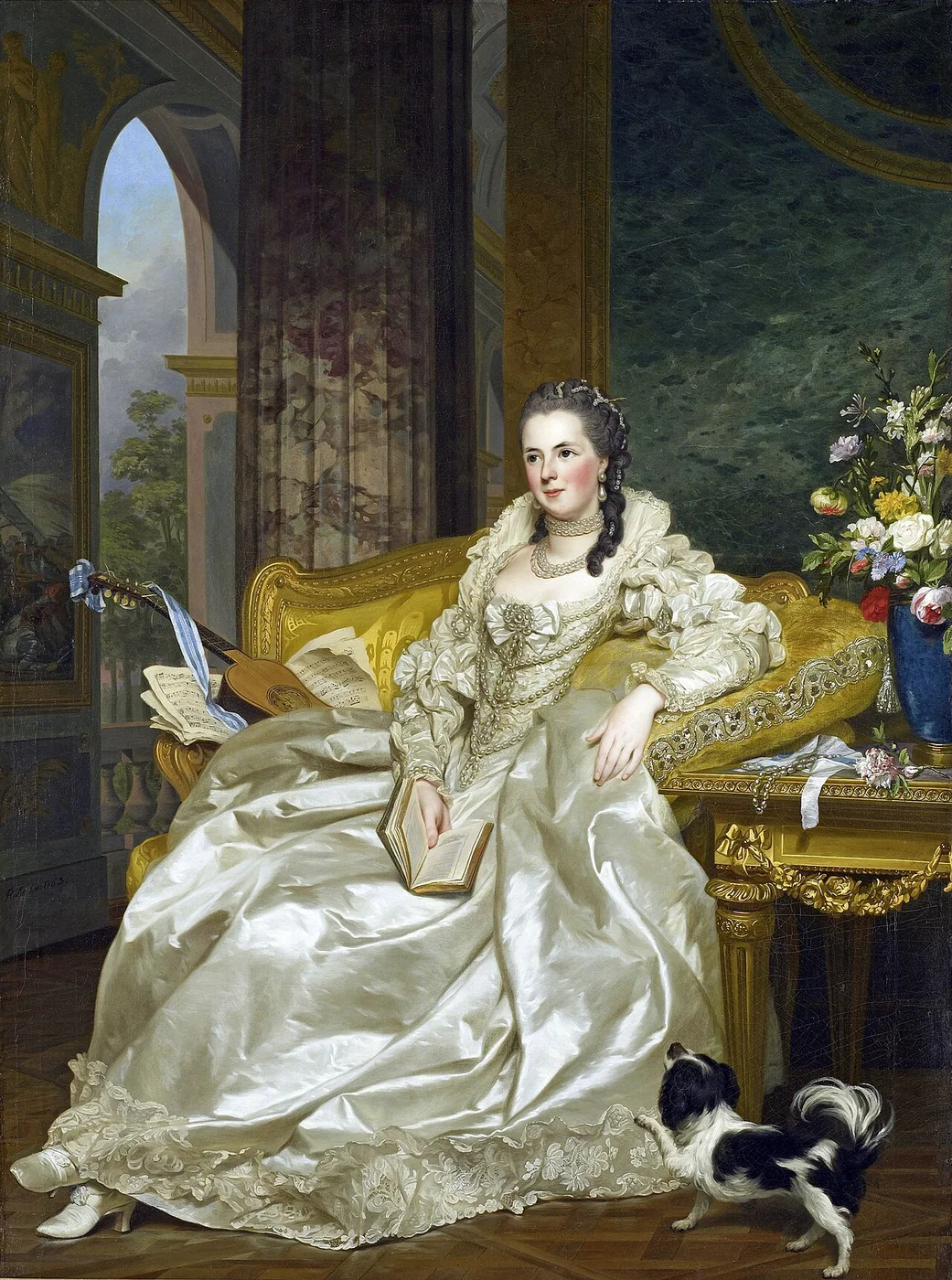
Alexander Roslin, The Comtesse d'Egmont Pignatelli in Spanish Costume, 1763. Portrait of a French noblewoman with a small lap dog, exemplifying the visual integration of companion dogs in pre-revolutionary aristocratic imagery. Alexander Roslin · Public domain. Web size optimized; original linked.
AI-assisted original writing. This feature was revised against source material and checked for unsupported claims. Follow the references below for evidence and its limits.
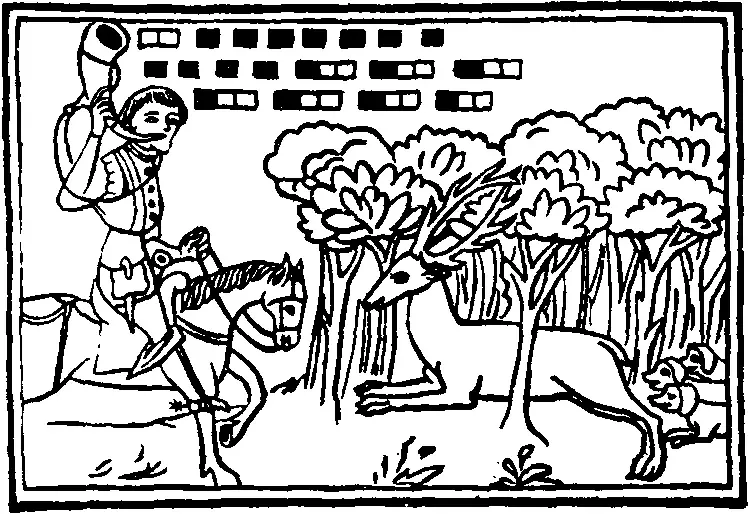
Royal charters set rules for restraining dogs to protect game, while hunting manuals later recorded the calls and names used by those who followed hounds on the trail.
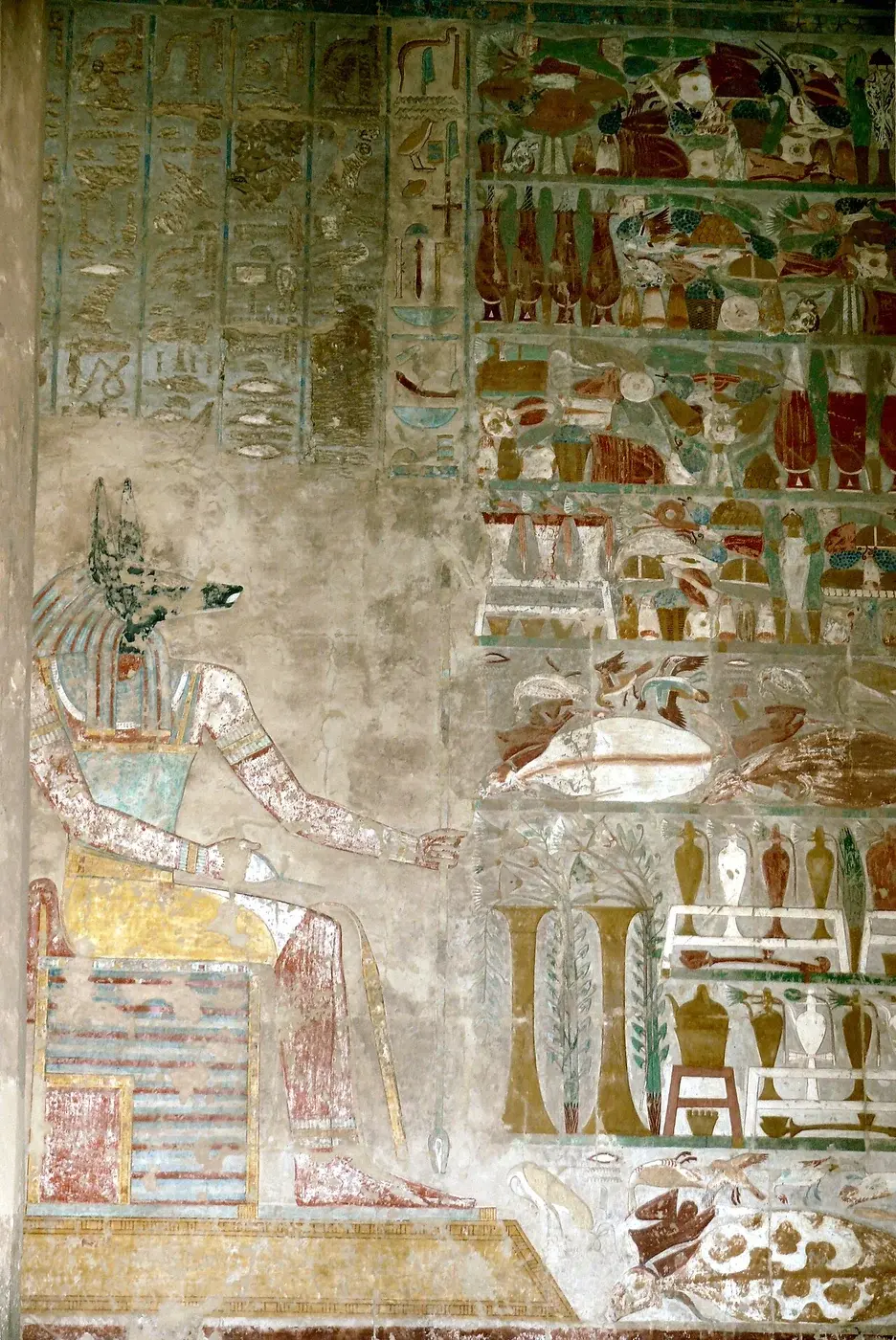
Evidence from Saqqara and Asyut shows that dogs and other canids were mummified in large numbers as votive offerings connected to the gods Anubis and Wepwawet.
 Historical collection image