Soviet Space Dogs: The Strays Who Helped Test the Path to Orbit
From suborbital rocket rides in the early 1950s to the first safe returns from space, mixed-breed street dogs from Moscow played a documented role in gathering data on launch stresses, weightlessness, and reentry.
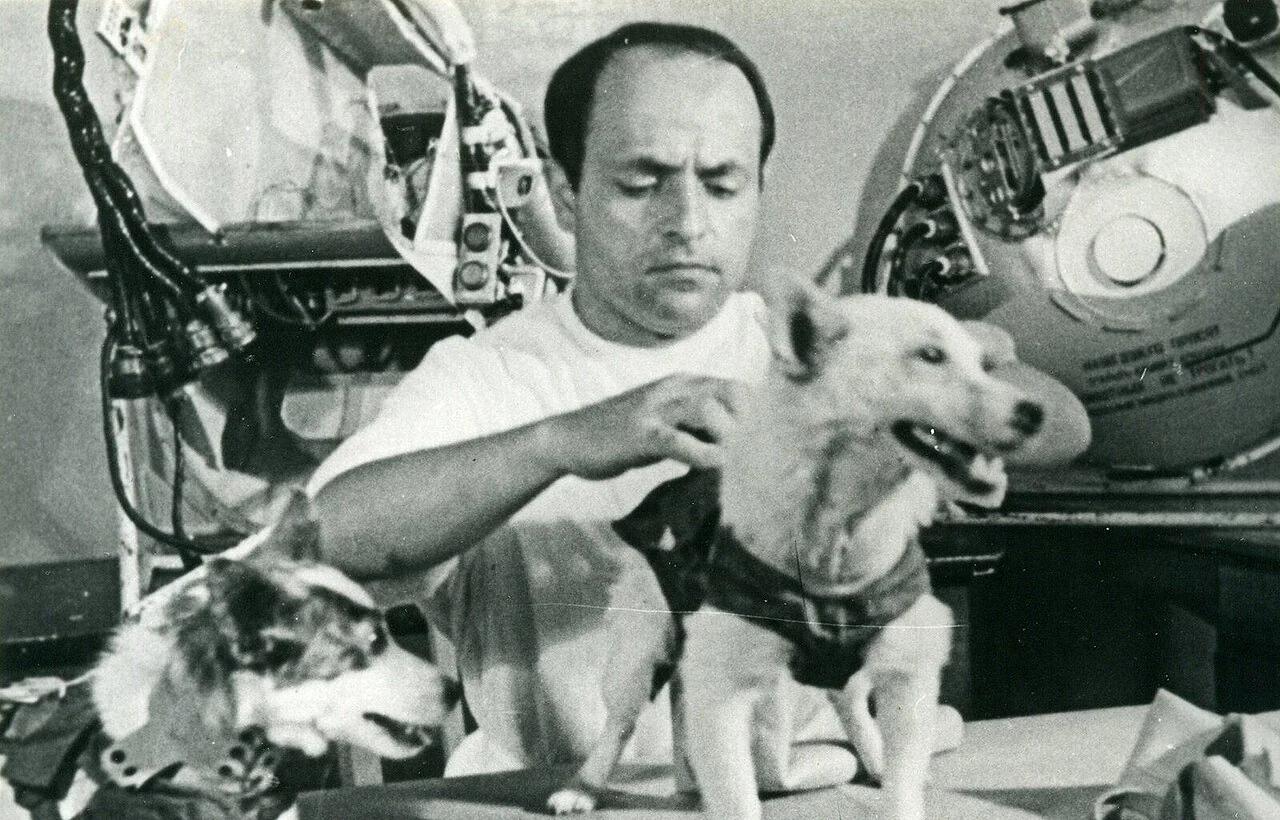
Armen Gurdzhian adjusts space equipment on Belka and Strelka, 1960 (historical photograph from the Museum of Cosmonautics) Музей космонавтики / Главархив Москвы · CC BY 4.0 · Web size optimized; source linked for the original.
Long before humans left Earth, Soviet scientists turned to dogs to learn what spaceflight might do to living bodies. Beginning in 1948 under Vladimir Yazdovskii at the Institute of Aviation Medicine, the effort focused on hardy strays chosen for their calm temperaments and physical traits that made them suitable for testing. These animals rode rockets, endured confinement, and in a few cases circled the planet, supplying information that fed into later human missions. While Laika’s 1957 orbital flight remains the best-known chapter, the broader program included both suborbital and orbital tests that continued into the 1960s. Evidence for exact numbers of dogs and flights stays limited because of secrecy that lasted until the late 1980s; many animals were renamed and records reused, so historians rely heavily on participant memoirs and declassified summaries. The story offers a window into early space biology, animal care under pressure, and the ethical trade-offs of using sentient beings to open the frontier. What follows draws only on the cited sources to trace what is solidly documented, note what remains uncertain, and consider the implications for how we view animal contributions to science.
Why Moscow Strays?
Soviet researchers deliberately selected mixed-breed dogs found on the streets of Moscow. These animals were valued for their hardiness, small size, and generally docile nature, qualities that helped them tolerate the stresses of training and flight. Females were often preferred because their anatomy fit more easily into the specialized suits and containers developed for the tests. Each dog received a detailed “passport” that included photographs, measurements of heartbeat and respiration, notes on eating and sleeping patterns, and observations of behavior during interactions with handlers. This level of record-keeping reflected genuine concern for the animals’ welfare even while preparing them for potentially lethal missions.
Training itself was rigorous. Dogs learned to tolerate long periods of confinement, exposure to acceleration, vibration, and loud noises. The selection process and preparatory work began in 1948, well before any launches. Oleg Gazenko, who joined the team in 1955, played a significant role in refining these methods for the more demanding orbital flights that followed. The sources emphasize that the dogs were not random laboratory subjects but individuals whose temperaments and responses were carefully tracked. This attention to detail helped scientists understand which animals might cope best with the unknowns of space travel.
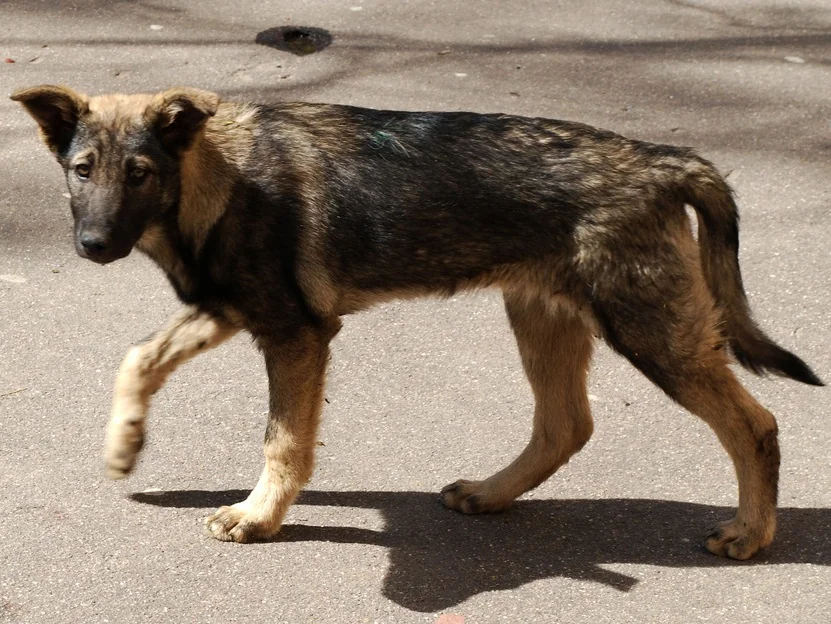
A stray dog on the streets of Moscow, typical of the mixed-breed dogs recruited for the Soviet space program (modern documentary photograph) Andrey from Russia · CC BY 2.0. Web size optimized; original linked.
Early Suborbital Flights
Between 1951 and 1956, dogs flew on R-1 rockets that reached altitudes of roughly 100 kilometers. These were suborbital missions in which pairs of animals rode inside hermetically sealed containers that parachuted back to Earth. The first successful recovery came in 1951 with dogs named Dezik and Tsygan. Over the next couple of years, nine dogs made flights on the R-1 series, and some individuals flew more than once. Additional suborbital tests continued on R-2A and R-5A rockets into the late 1950s.
These early launches studied the biological effects of launch acceleration, brief weightlessness, and the forces of reentry. Data on heart rate, breathing, and behavior helped engineers design safer systems for future crewed flights. Because Soviet records remained classified for decades, precise tallies of every flight and every dog are difficult to establish. The available evidence, drawn from later declassified summaries and participant accounts, confirms that multiple successful recoveries occurred and that the program produced practical information used in later spacecraft design. The dogs’ calm acceptance of the capsule environment after repeated training proved especially useful.
Laika and the Shift to Orbit
In 1957, a dog named Laika became the first living being to orbit Earth aboard Sputnik 2. Unlike the earlier suborbital flights, this mission had no planned recovery; Laika’s journey supplied data on how an animal would fare during prolonged orbital flight. Technical publications discussing the dog program appeared in greater numbers after this flight and again after Yuri Gagarin’s 1961 spaceflight. The sources note that popular accounts written by program participants, sometimes under pseudonyms, added color to the official technical reports.
Laika’s story is often remembered for its tragic ending, yet it also marked a turning point. The mission demonstrated that a living organism could survive launch and enter orbit, even if return was not yet possible. Subsequent orbital flights built directly on this foundation. While the precise details of Laika’s training and in-flight condition come from participant recollections rather than complete primary logs, the program’s documentation shows continued efforts to monitor the dogs’ physiological and behavioral responses.
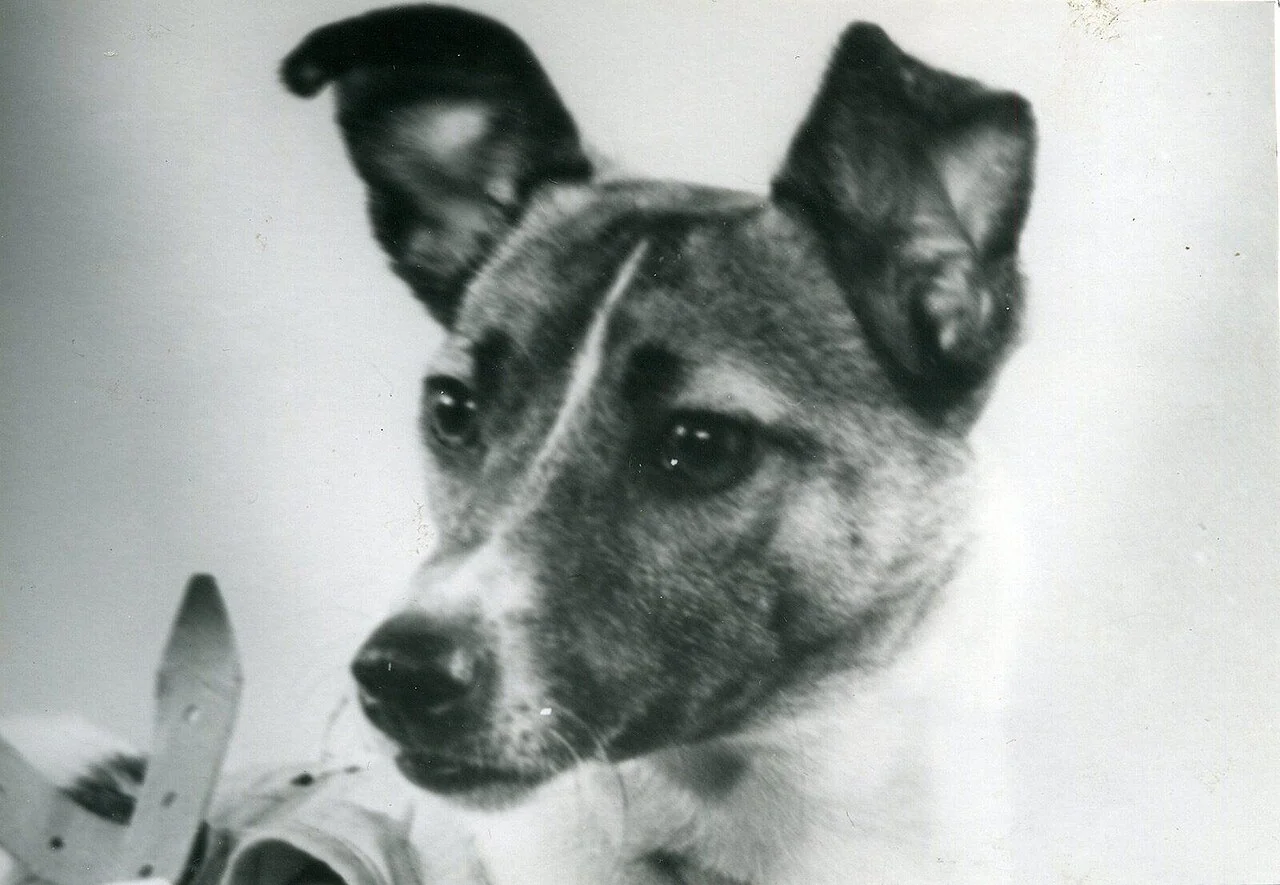
Laika before her flight aboard Sputnik 2, 1957 (archival photograph from the Museum of Cosmonautics) Музей космонавтики / Главархив Москвы · CC BY 4.0. Web size optimized; original linked.
Safe Returns and Later Orbital Missions
After Laika, Soviet teams achieved the first safe return of animals from orbit in 1960 with Belka and Strelka aboard Korabl-Sputnik 2, also known as Sputnik 5. The two dogs spent about a day in space alongside other biological specimens before landing safely. This success provided critical confirmation that living beings could endure launch, weightlessness, reentry, and recovery. The mission supplied data that directly supported the push toward human spaceflight, which followed with Gagarin’s flight less than a year later.
Several other orbital dog flights occurred in the years that followed, though exact counts and individual names remain uncertain because of renaming practices and incomplete public records. The sources stress that the program’s legacy rests largely on memoirs and declassified overviews rather than exhaustive original logs. Still, the pattern is clear: each successive test refined the understanding of how mammals responded to the space environment. The dogs’ ability to eat, sleep, and remain calm under these exotic conditions helped engineers solve practical problems of life support and capsule design.
What the Record Leaves Unclear—and What It Suggests
Historians face real limits when reconstructing the Soviet space dog program. Soviet secrecy until the late 1980s, combined with the reuse of names and the destruction or inaccessibility of some primary documents, makes concrete claims about exact numbers of flights or individual animals unreliable. The two the cited sources both acknowledge this uncertainty explicitly. What we can say with confidence is that dozens of dogs participated across more than a decade, that suborbital flights preceded orbital ones, and that the data gathered contributed to the systems that eventually carried humans into space.
Editorial reflection: The dogs’ story invites us to weigh scientific gain against animal cost. While the sources document attentive care—detailed health records, individualized training, and efforts to choose suitable subjects—they cannot erase the fact that some animals did not return. A useful reading question is whether today’s standards for animal research would permit similar work, and what alternatives (such as advanced simulators) might now replace living subjects. Another is how public memory has centered on Laika’s sacrifice while the broader, often successful efforts of many other dogs remain less discussed. These animals were not mere equipment; their documented behavioral adaptability and physiological resilience actively shaped the spacecraft that followed. Recognizing their role without sentimentality or exaggeration honors both the historical record and the welfare concerns it raises. The program’s mix of rigorous science and genuine affection for the dogs offers a nuanced picture worth pondering as we continue to send living beings—human and otherwise—into challenging environments.
AI-assisted original writing. This feature was revised against source material and checked for unsupported claims. Follow the references below for evidence and its limits.
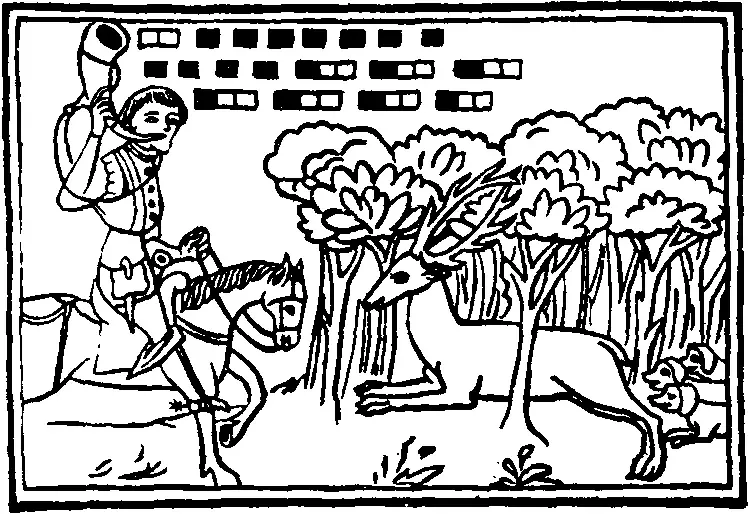
Royal charters set rules for restraining dogs to protect game, while hunting manuals later recorded the calls and names used by those who followed hounds on the trail.
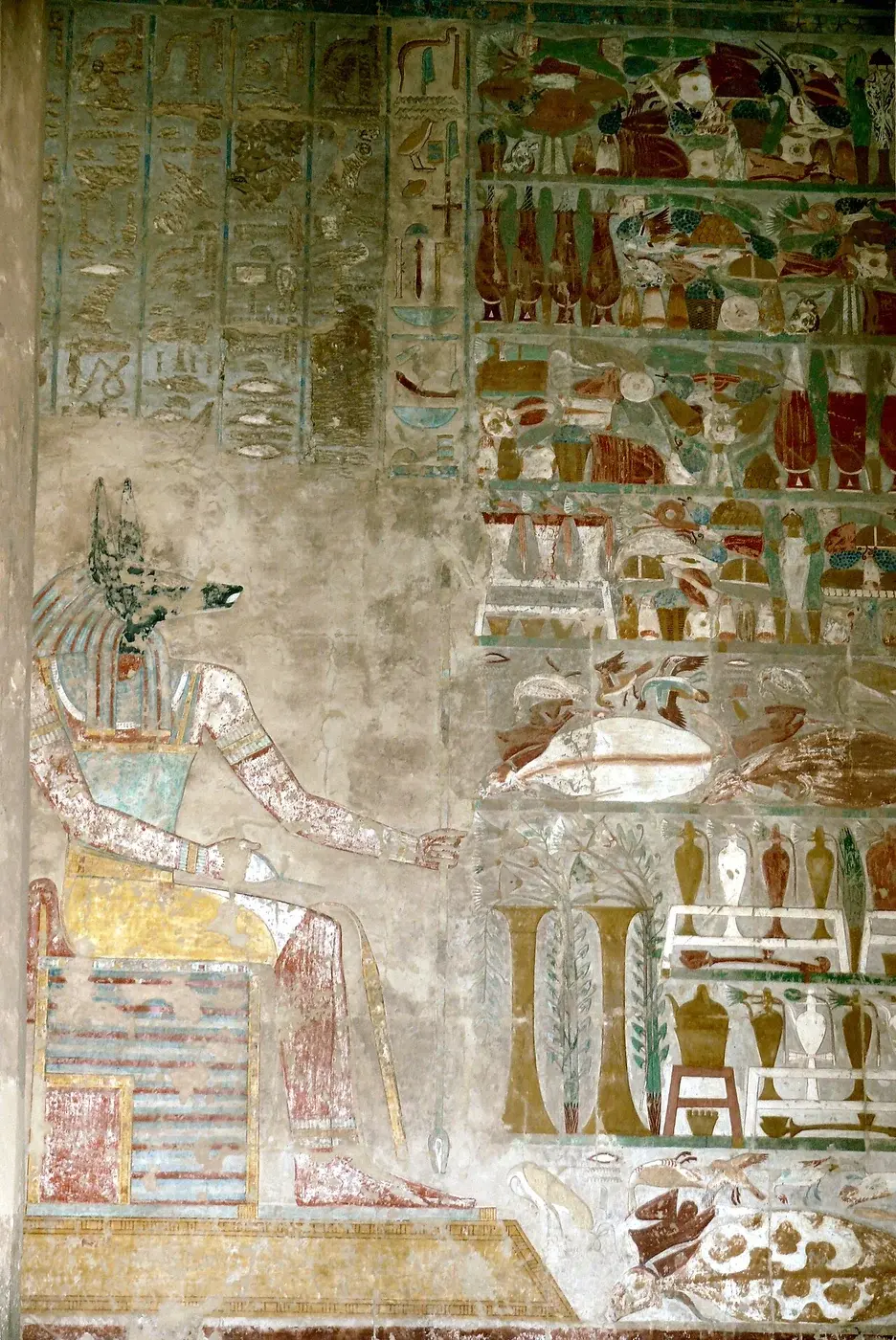
Evidence from Saqqara and Asyut shows that dogs and other canids were mummified in large numbers as votive offerings connected to the gods Anubis and Wepwawet.
 Historical collection image