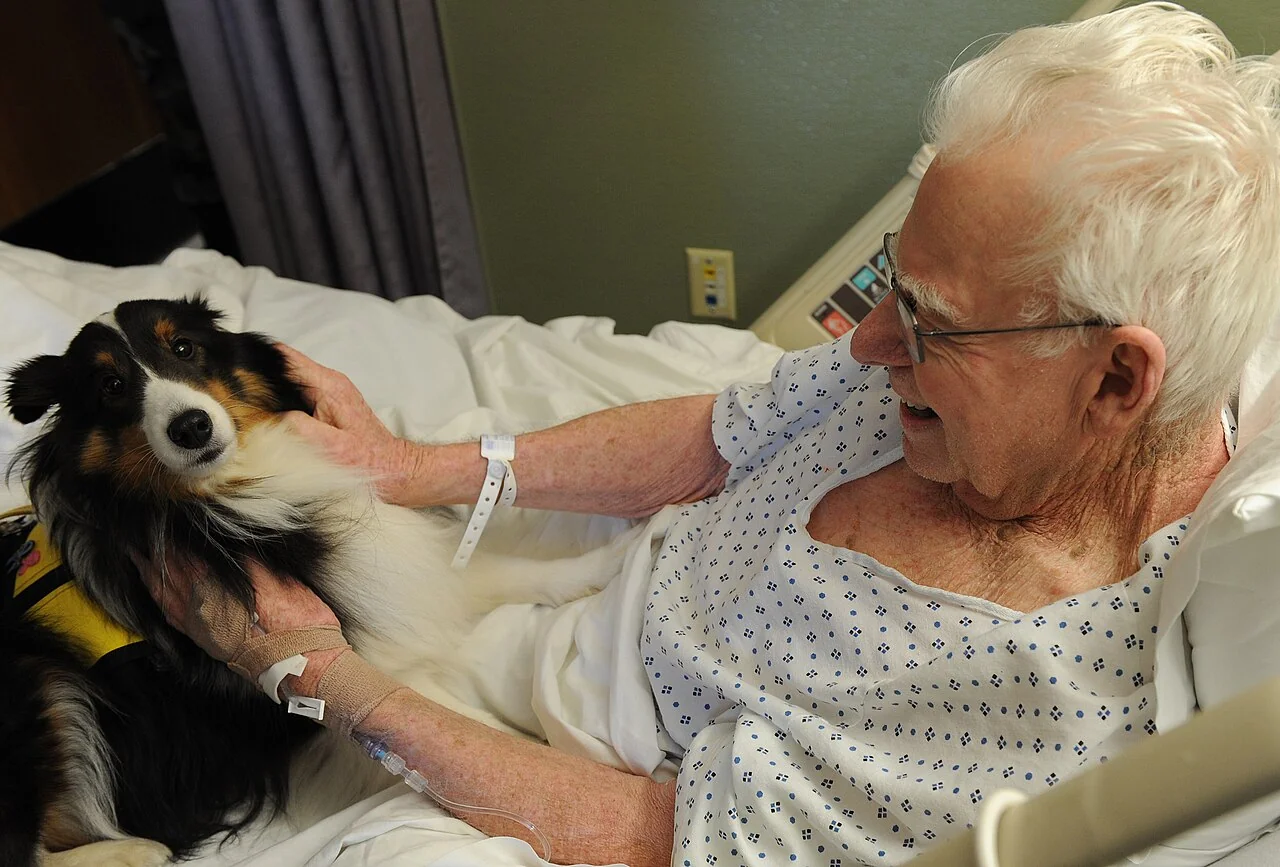
Documentary photo: Gene Mohr, a retired technical sergeant, pets Molly, a 3-year-old Sheltie therapy dog, at Langley Hospital, 30 January 2009. (U.S. Air Force photo) U.S. Air Force photo/Airman 1st Class Zachary Wolf · Public domain · Web size optimized; source linked for the original.
Therapy animals visit healthcare and education facilities to provide comfort. Organizations like Intermountain Therapy Animals have matched hundreds of volunteer teams with people going through challenging experiences. These animals, owned by their handlers, work under professional direction to enhance quality of life through calm, supervised interactions.
What Makes a Therapy Animal
A therapy animal has the skills and temperament to help with therapy under the guidance of a health care or human service professional. These animals partner with their volunteer handlers rather than belonging to the organizations they visit. This setup allows handlers to bring their own well-prepared pets into settings such as hospitals or care centers.
The focus stays on calm presence and gentle contact. Visits happen in supervised settings to keep everyone safe. Programs emphasize that the animals provide moments of connection for individuals who may feel isolated or anxious during treatment or recovery.
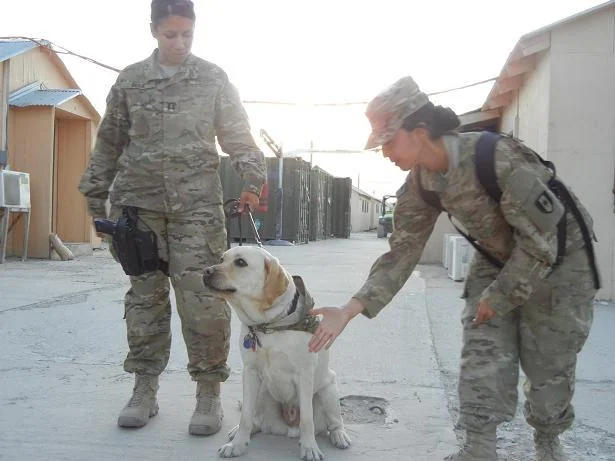
Documentary photo: Maj. Susan Snow congratulates therapy dog Maj. Timmy on his promotion as handler Capt. Christine Beck looks on at the Freedom Restoration Center on Bagram Airbase, 29 June 2011. (U.S. Army photo) Capt. Stephanie Vanneman · Public domain. Web size optimized; original linked.
How Programs Operate in Practice
Intermountain Therapy Animals, founded in 1993 in Salt Lake City, now fields more than 300 therapy teams. These teams visit over 170 facilities in Utah and Montana. The organization also maintains affiliate groups across the United States that follow similar standards for training and performance.
Volunteers and their animals take part in animal-assisted interactions at healthcare and education sites. Facilities can request a program, and volunteers receive orientation before they begin regular visits. The structure supports consistent, professional service without placing the animals in unsupervised or stressful situations.
The R.E.A.D. Program for Children
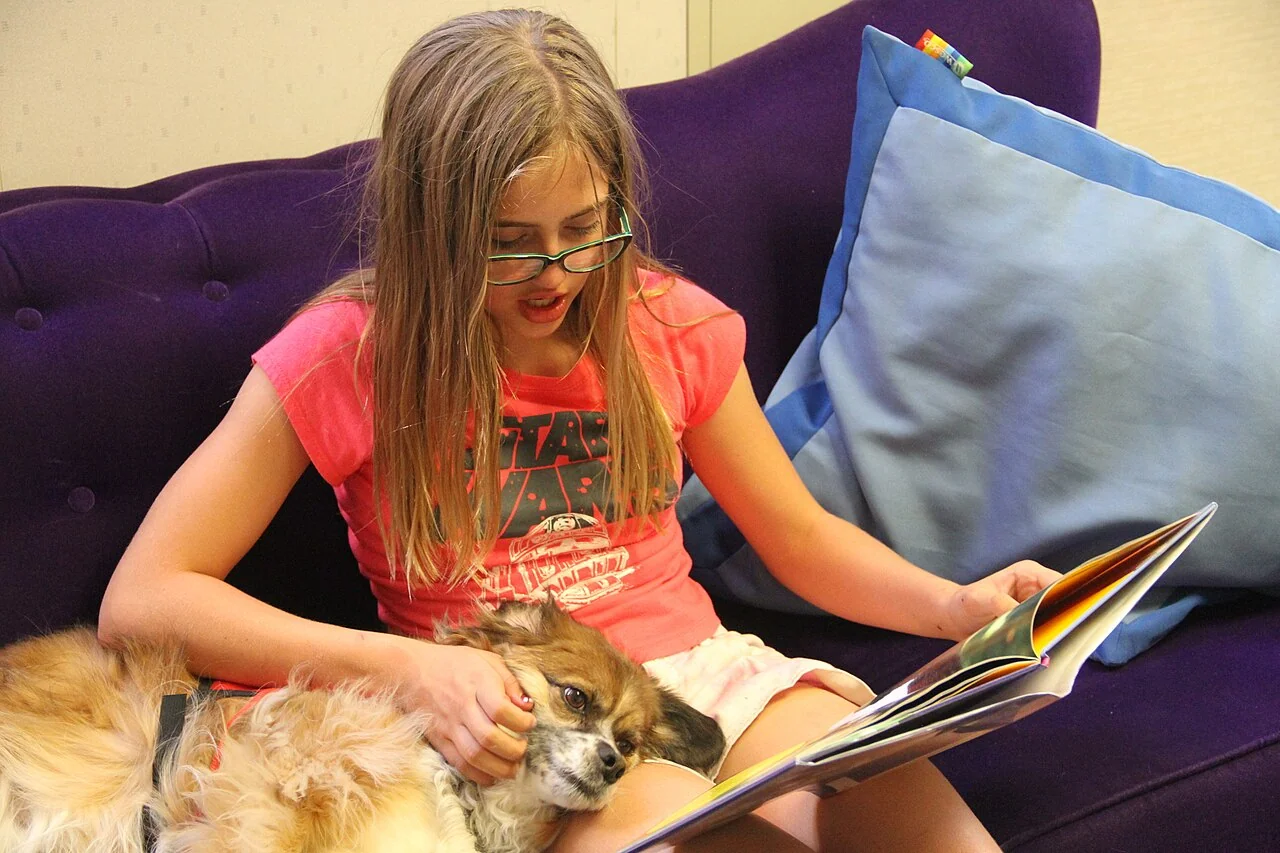
One specialized effort is the R.E.A.D. program, short for Reading Education Assistance Dogs. It helps children improve literacy and communication skills by having them read aloud to a calm dog and its handler. The non-pressured setting can make reading practice feel safer and more enjoyable.
Children who participate often show greater confidence in their abilities. The program operates in schools and libraries through trained volunteer teams. It remains one example of how therapy animals adapt to different needs while staying within clear professional guidelines.
Documentary photo: Margaret Foat, 10, reads a book while petting therapy dog Toby during a Paws for Reading session at Mickelsen Community Library on Fort Bliss, 16 March 2016. (U.S. Army photo) Abigail Meyer · Public domain. Web size optimized; original linked.
Volunteer Opportunities and Community Support
People interested in this work can explore volunteering with their own animals after the pets complete evaluation for suitable temperament. Organizations provide training resources and ongoing support so teams meet consistent standards. Those without animals can still help by attending events, donating, or assisting at fundraisers.
Facilities that want visits simply request a program. This open approach allows communities to connect with the work. Events also celebrate the volunteers and animals, reinforcing the shared goal of bringing comfort where it is needed most.
Why These Visits Matter
Therapy animal visits offer quiet companionship during hard moments. A gentle dog lying nearby or accepting careful petting can ease tension for patients and residents. Handlers report that the simple presence often sparks conversation or a smile, even on difficult days.
Programs maintain careful records and feedback to keep improving. The emphasis stays on safety, respect for the animals’ limits, and measurable value to the people receiving the visits. In this way, therapy animals continue to play a modest but meaningful role in many care settings.
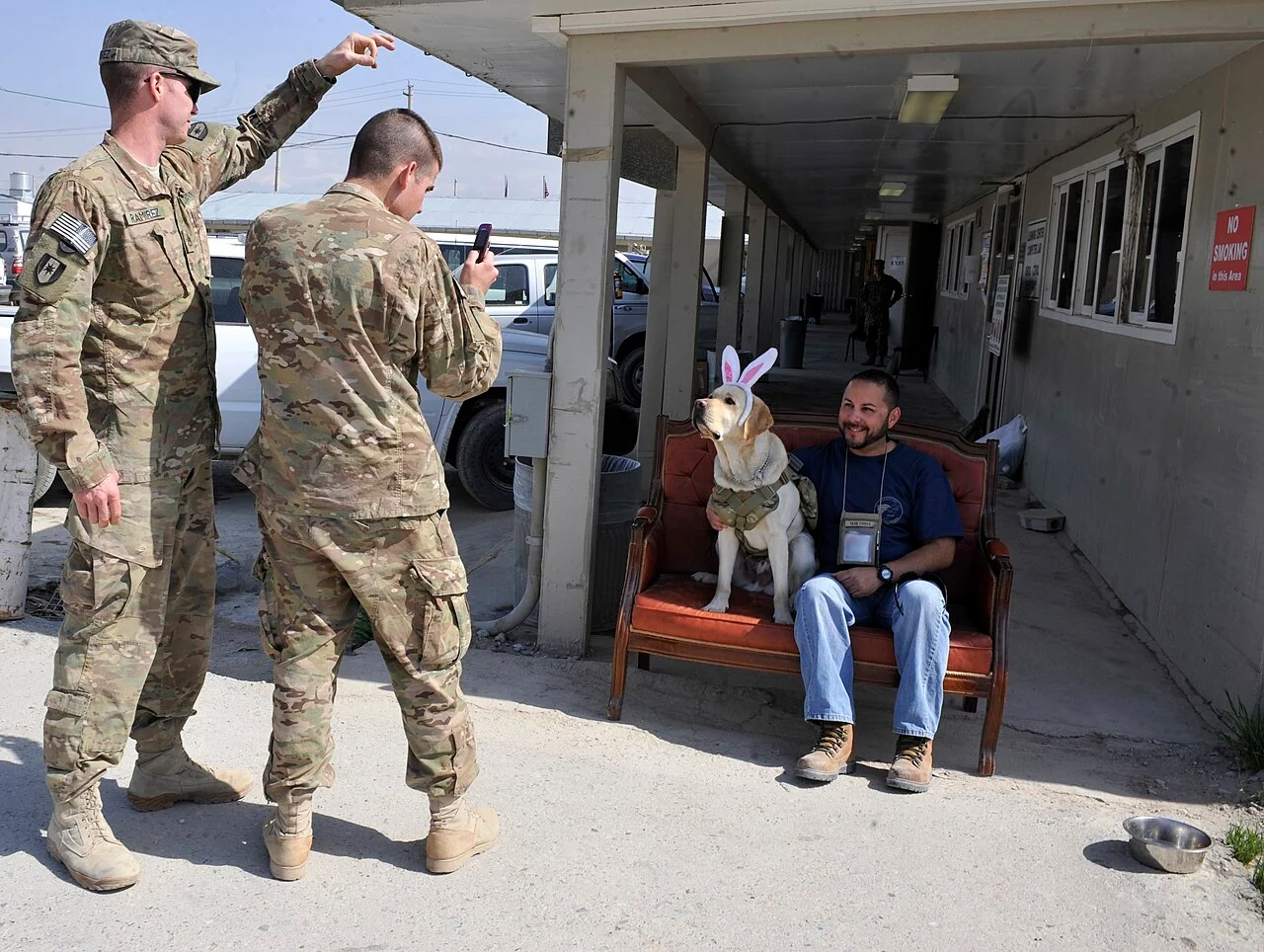
Documentary photo: Combat stress therapy dog Major Timmy poses at Bagram Air Field, Afghanistan, 13 April 2012. (U.S. Air Force photo) Airman 1st Class Ericka Engblom · Public domain. Web size optimized; original linked.
AI-assisted original writing. This feature was revised against source material and checked for unsupported claims. Follow the references below for evidence and its limits.
 Photograph