Ancient European Dogs Adapted Their Diets and Body Shapes to Match Human Lifestyles
Isotope data and jaw shapes from Mesolithic through Chalcolithic canine remains show how dogs’ feeding patterns shifted alongside changes in human hunting and herding economies.
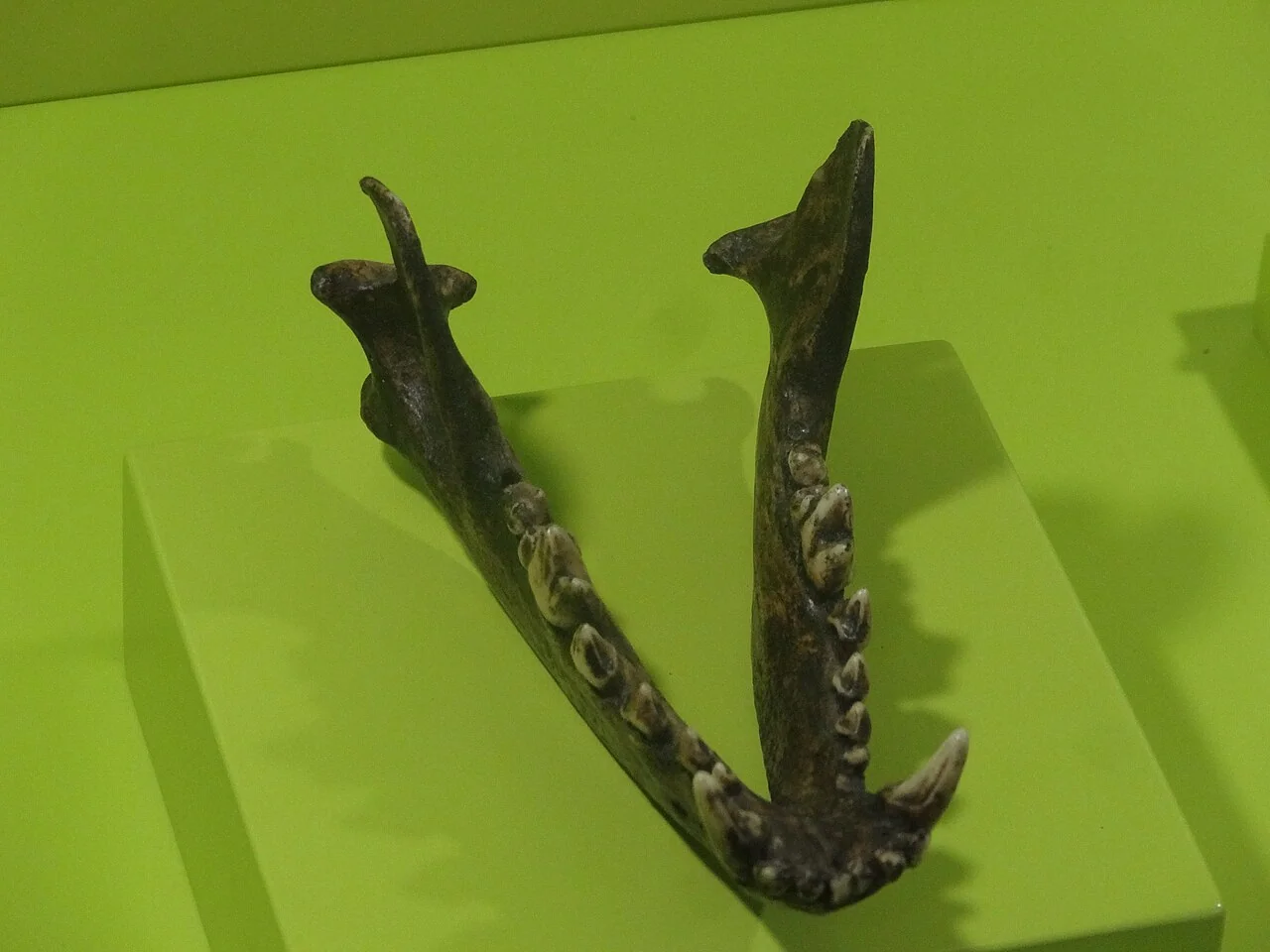
Neolithic dog mandible from the archaeological site of the Gavà mines, Spain. Photograph of historic artifact, 2014. Jordiferrer · CC BY-SA 4.0 · Web size optimized; source linked for the original.
Dogs have lived alongside people for thousands of years, and their remains offer quiet clues about how human ways of life shaped them. Two studies examined bones from hundreds of ancient canids across Europe. By looking at carbon and nitrogen isotopes locked in collagen, plus the three-dimensional shape of lower jaws, researchers found clear differences in what the dogs ate depending on whether their human companions focused on hunting or on herding livestock. The work does not prove specific tasks such as guarding sheep, but it does illustrate that dogs’ bodies and diets tracked the economic choices of the people around them. The findings invite us to picture these early companions adjusting to new routines—sometimes crunching through big-game bones, other times sharing meals from farm animals—while reminding us that animal welfare today benefits from the same attentive observation of needs that these archaeologists apply to the past.
How Isotopes and Jaw Shapes Tell Ancient Stories
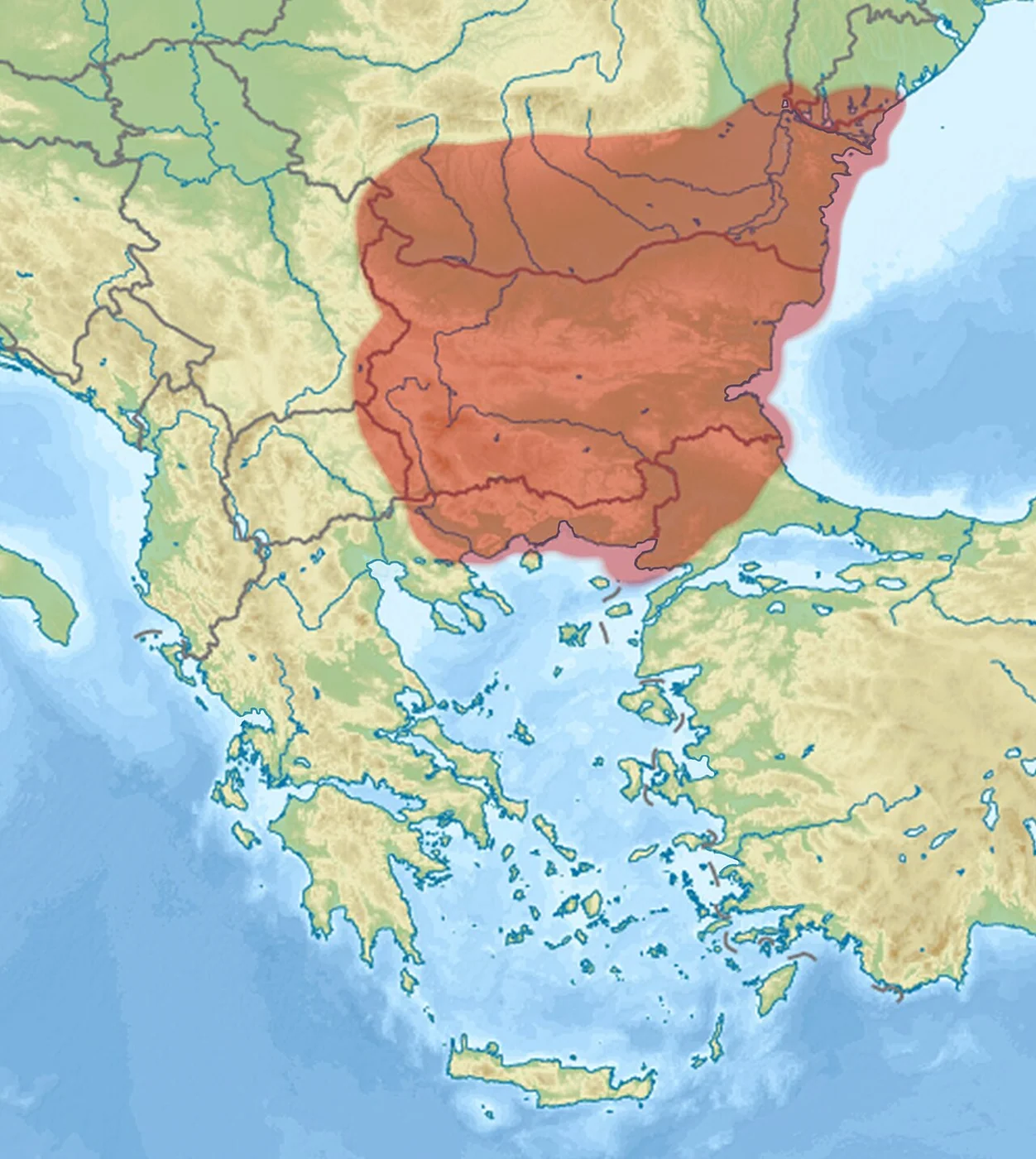
Stable isotope analysis measures the ratios of carbon and nitrogen preserved in bone collagen. Because different foods leave distinct chemical signatures, scientists can infer whether an animal mainly ate wild game, domestic livestock, or fish. When paired with 3D scans of mandibles, these data reveal whether the jaw was built for power—suited to cracking heavy bones—or for more varied chewing. The first study reviewed collagen from 3,514 canid remains recovered at 39 sites stretching from Denmark to Switzerland, spanning the Mesolithic into the Neolithic. The second focused on 150 dogs from three Chalcolithic settlements of the Gumelnița culture in Romania, dated between 4550 and 3900 BCE. In both projects, dogs could be distinguished from wolves by their isotopic profiles, helping correct cases where bone shape alone might mislead.
These methods do not speak directly to whether a dog herded livestock; the researchers themselves treat such roles as hypotheses drawn from archaeological context rather than direct proof. Still, the measurable differences in diet and robusticity offer a window into functional adaptation. One can almost smile at the thought of an ancient dog, jaw strong from deer hunting, suddenly faced with softer farm scraps and having to reinvent its daily grind—literally.
Dietary Shifts from Mesolithic Hunters to Neolithic Farmers
During the Mesolithic, when people relied heavily on wild resources, dogs appear to have shared that focus. The broad European survey notes that isotopic ratios in dog bones differ markedly from those of wolves, suggesting dogs already lived closely with humans and ate from human-provided or scavenged food. As communities moved into the Neolithic and began keeping domestic animals, the dogs’ diets broadened. The authors suggest this reflects new duties such as guarding houses, farms, and livestock, although they present this idea as a hypothesis based on prior archaeological interpretation rather than a conclusion proven by isotopes alone.
The Romanian Chalcolithic evidence sharpens the picture. At sites where herding formed the main subsistence strategy, dogs consumed a variable diet that included sheep, cattle, pigs, and possibly fish. Their nitrogen isotope values were higher, consistent with a food chain that included these domestic species. By contrast, at a site where hunting predominated, dogs showed lower nitrogen values and a more specialized focus on large wild game such as red deer, aurochs, and wild horse. The authors emphasize that these patterns reflect the prevailing human economy rather than proving the dogs performed herding themselves. The data do, however, demonstrate that canine nutrition closely mirrored human choices.
Mandible Shape Tracks Economic Specialization
Beyond chemistry, the physical form of the lower jaw tells its own tale. In the Gumelnița dogs, those from hunting-oriented settlements had more robust mandibles with greater emphasis on the temporal muscle attachment—features useful for subduing prey and breaking bones. Dogs from herding-focused villages displayed less robust jaws, matching their more varied and perhaps softer diet. The study found strong statistical covariation between mandible shape and isotope values, suggesting the dogs’ anatomy adapted over time to the socio-economic system in which they lived.
This correlation is intriguing but limited. The Romanian material dates to the Chalcolithic period, after the Neolithic, so it cannot speak directly to the earliest moments of livestock herding. The wider European survey similarly cautions that interpretations of specific functions rest on contextual archaeology and earlier scholarship rather than on the isotopic data in isolation. Even so, the combined evidence paints a consistent portrait of dogs as flexible partners whose bodies reflected the daily realities of their human groups.
Map of the Gumelnitsa-Kodjadermen-Karanovo VI culture Sapiens92 · CC BY-SA 4.0. Web size optimized; original linked.
Editorial Analysis: What These Patterns Suggest About Partnership
The studies invite reflection on the depth of the human–dog relationship long before written history. Rather than viewing dogs as passive scavengers, the data support the idea that their biology responded to human economic decisions. When people settled into herding, dogs ate more from the farmyard; when hunting remained central, dogs kept a wilder edge. This adaptability may explain why dogs have thrived across so many cultures and subsistence strategies. From an animal-welfare perspective, the research quietly underscores the importance of matching a dog’s diet and exercise to its environment—an insight as useful for modern owners as it is for archaeologists.
One editorial question arises: if dogs’ bodies changed to suit human economies, how much did human practices change in return? The evidence does not answer that, yet it encourages us to consider mutual influence. Another useful question is how these ancient patterns compare with today’s working dogs—livestock guardians, hunting hounds, or companions. The studies stop short of claiming direct continuity, but they remind us that observing an animal’s physical condition and food sources can reveal much about its role. Light-hearted speculation might imagine a Neolithic herder noticing a dog’s broadening waistline after too many sheep scraps and deciding the animal needed more patrol duty—an entirely fictional vignette offered only to illustrate the interpretive gap between data and daily life.
Implications for Understanding Early Animal Management and Modern Lessons
These isotopic and morphological findings add nuance to the story of animal domestication in Europe. They show that dogs were not uniform across the landscape; their diets and builds varied with local human strategies. This variation cautions against overly simple narratives about “the” Neolithic dog. It also highlights the value of combining multiple lines of evidence—chemistry, shape, cut marks on bones—to build a richer picture while acknowledging what remains uncertain.
For contemporary readers the research carries practical implications. It suggests that dogs have long been sensitive indicators of human lifestyle and resource use. Pet owners and working-dog handlers can take away the importance of tailoring nutrition and activity to an animal’s actual needs rather than a generic template. The studies also underscore the ethical dimension of animal husbandry: ancient herders, whether consciously or not, shaped their dogs’ welfare through their own economic choices. Reading the evidence with humility about its limits keeps the focus on observable facts while still allowing space for wonder at the enduring partnership between people and dogs.
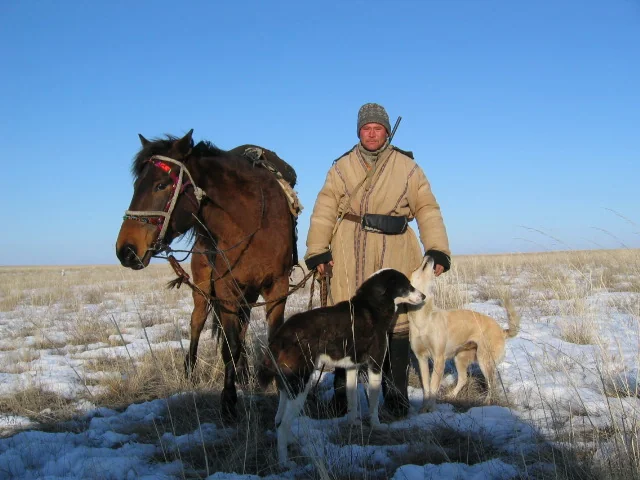
Kazakh shepherd with dogs and horse in Western Kazakhstan, February 2004. Airunp · CC BY-SA 3.0. Web size optimized; original linked.
AI-assisted original writing. This feature was revised against source material and checked for unsupported claims. Follow the references below for evidence and its limits.
Archaeological finds from select European sites offer glimpses into possible relationships between people and dogs, while underscoring the challenges of interpreting ancient deposits.
Owner-led projects offer scale and real-world glimpses into canine minds, yet differences in tester identity and uncontrolled home settings can introduce systematic errors that large samples do not automatically cancel out.
Penn State researchers once used MRI scans and computer simulations to map airflow inside a dog’s nasal passages, offering clues for designing better chemical sensors.
 Photograph