Early Evidence of Human and Dog Connections in Prehistoric Burials
Archaeological finds from select European sites offer glimpses into possible relationships between people and dogs, while underscoring the challenges of interpreting ancient deposits.
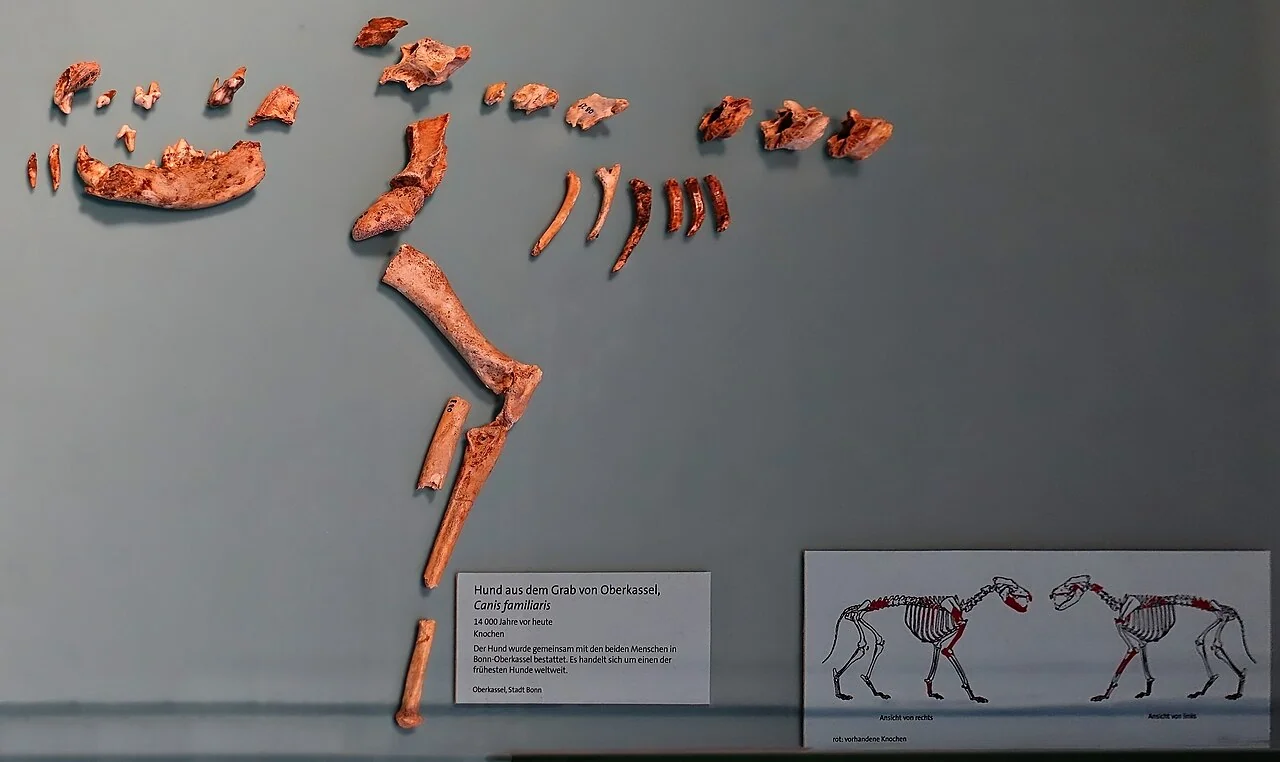
Dog skeleton from Oberkassel Don Hitchcock · CC BY-SA 4.0 · Web size optimized; source linked for the original.
Archaeologists examining ancient burial sites sometimes encounter dog remains alongside human ones. Two notable cases, one from the Upper Palaeolithic in Germany and another from the Middle Neolithic in the northeastern Iberian Peninsula, provide limited but intriguing data. These finds prompt questions about how people may have viewed dogs thousands of years ago. Yet experts caution that distinguishing deliberate ritual from everyday coincidence remains difficult. The evidence is narrow in scope, drawn from just a handful of locations, and interpretations rely on careful analysis of bones and their contexts. This article reviews what the available studies actually show, highlights uncertainties, and considers what these discoveries might imply without overstepping the data.
The Bonn-Oberkassel Discovery in Germany
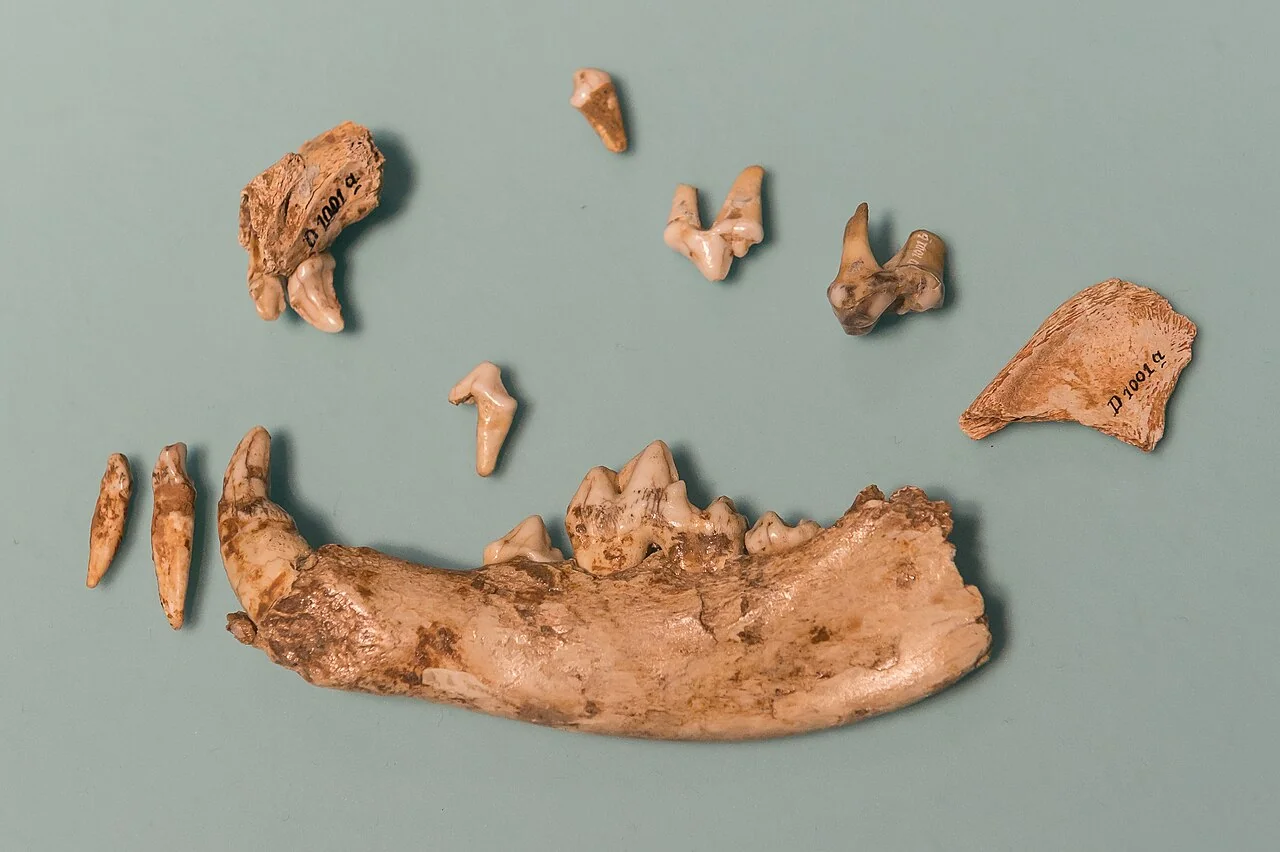
Re-examination of remains from a double human burial at Bonn-Oberkassel has identified bones from at least two dogs. One was a late juvenile estimated at about seven months old at death, while a single tooth came from a smaller, older individual. Radiocarbon dating places the context around 14,223 ± 58 years before present, during the Upper Palaeolithic. The juvenile dog's skeleton shows signs of severe oral lesions and enamel hypoplasia. These pathologies align with an infection such as canine distemper that likely began when the animal was roughly 19 weeks old.
Researchers note that the dog's survival through such a serious illness could suggest some form of human assistance, though this remains an interpretive suggestion rather than a firm conclusion. The burial also contained a molar from the second dog as a possible grave inclusion. This site is described in the literature as the earliest known example of a joint human and dog interment in the region. Still, the study emphasizes that separating intentional placement from natural association or later disturbance calls for thorough contextual review. Light humor might imagine a prehistoric teenager nursing a sick puppy through a rough patch, yet the reality is that we simply cannot know the emotional dynamics.
Zooarchaeological work at four coastal sites in Catalonia, including Bòbila Madurell, has documented 26 dog remains deposited within burial and ceremonial structures. These belong to the Pit Grave cultural horizon and date from the 5th to early 4th millennium BCE. The dogs appear in contexts interpreted by the researchers as accompanying offerings linked to human graves or ritual spaces. Isotopic analysis of carbon and nitrogen in the bones indicates that the dogs consumed a mixed diet including herbivores and terrestrial plants, resembling patterns seen in human remains from the same area.
This similarity has led to suggestions of close relationships between the people and their dogs during this period. The deposits are viewed by the authors as part of a stereotyped ritual practice within this specific territory, although such patterns are not widely recorded elsewhere at the time. Even so, the researchers acknowledge that it can be hard to differentiate ritual intent from more practical or incidental deposition based on archaeological context alone. The evidence is localized and does not support broad claims about universal prehistoric attitudes toward dogs.
Challenges in Interpreting Ancient Deposits
Both studies repeatedly stress the difficulty of moving from physical remains to confident statements about prehistoric beliefs or emotions. Pathologies on bones can indicate illness and possible care, but they cannot prove affection or intentional nursing. Similarly, the placement of dog bones near human burials might reflect ritual, yet post-depositional processes or coincidental overlap could produce the same pattern. The German find includes a tooth from a second dog, raising questions about whether it was deliberately added or simply present.
In the Iberian examples, the dietary overlap between humans and dogs is interesting but open to multiple explanations, from shared living spaces to intentional feeding. Editorial analysis here suggests that archaeologists do well to remain cautious. Over-interpreting sparse data risks projecting modern ideas of pets onto the distant past. A useful reading question is: what additional lines of evidence, such as more isotopic studies or detailed spatial mapping, would strengthen or challenge these preliminary interpretations?
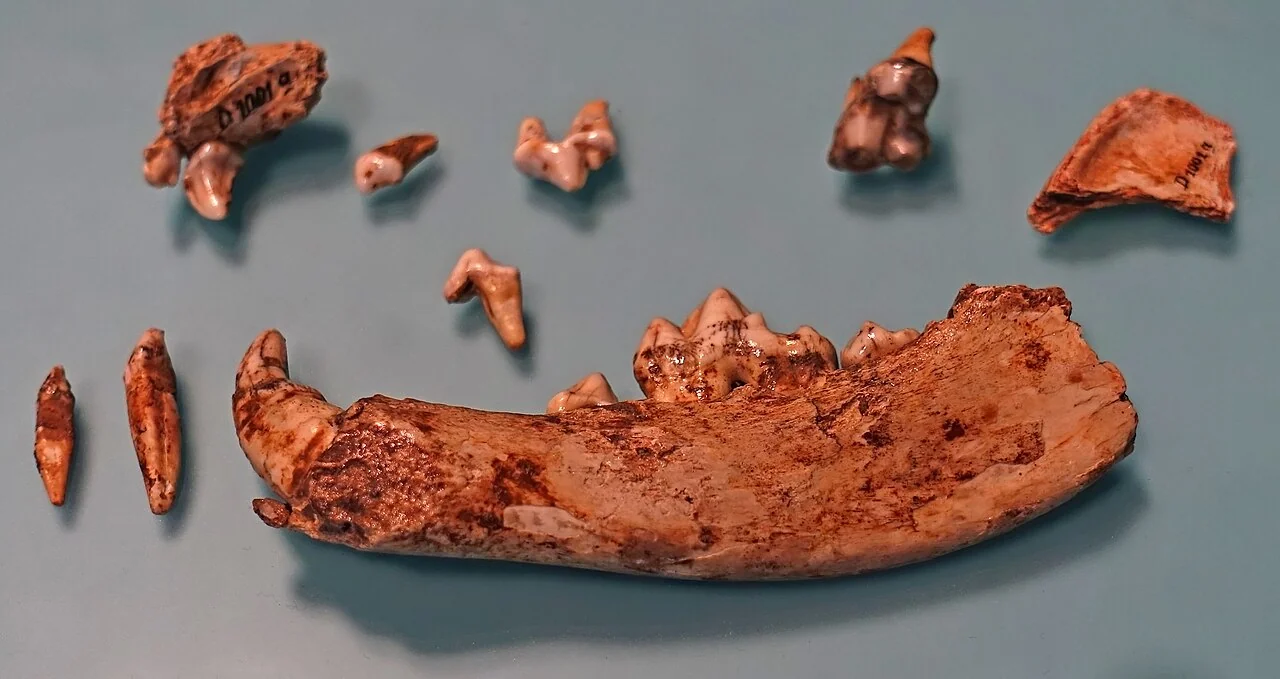
Dog remains from the Bonn-Oberkassel double burial (right mandible half, maxillary fragment and teeth) held at the Rheinisches Landesmuseum Bonn. This is one of the specific archaeological specimens discussed in the studies on interpreting prehistoric human-dog deposits. Thilo Parg · CC BY-SA 4.0. Web size optimized; original linked.
What the Evidence Might Imply for Human-Animal Bonds
If the deposits do reflect deliberate choices, they could hint at evolving connections between people and dogs over many millennia. The Palaeolithic example, if confirmed as intentional, would push such associations back to the end of the last Ice Age. The Neolithic cases might suggest that by the 5th millennium BCE, dogs had become integrated enough in some communities to be included in ceremonial contexts. These possibilities remain tentative given the small sample sizes and geographic limits.
Implications include the idea that human-animal relationships have long been multifaceted, extending beyond mere utility. Yet the studies do not claim to prove emotional bonds or universal practices. An editorial observation is that such finds encourage humility: our ancestors' inner lives are largely inaccessible. For modern readers, this can prompt reflection on current relationships with dogs. Are we continuing an ancient pattern of care, or have our attitudes changed in ways these bones cannot reveal? Satirical fiction might picture a prehistoric dog proudly wearing a tiny ceremonial collar, but that scenario is invented for illustration and not supported by any artifact.
Limitations and Directions for Future Work
The two papers together examine a modest number of remains from a handful of sites. No statistics about prevalence across Europe can be drawn, nor can the findings be generalized to other periods or regions without additional data. Caveats about distinguishing ritual from coincidence appear in both, reminding us that archaeology deals in probabilities rather than certainties. Uncertainties include the exact cause of the juvenile dog's illness and whether human care was indeed involved.
Future research could involve expanded isotopic sampling, more precise dating, and refined methods for identifying deliberate burial. Readers might ask: how can we improve our ability to read ancient intent without filling gaps with wishful thinking? The evidence invites continued careful study rather than sweeping narratives. In the end, these dog bones offer small windows into the past, best appreciated with a mix of curiosity and restraint, perhaps with a gentle chuckle at how much we still have to learn.
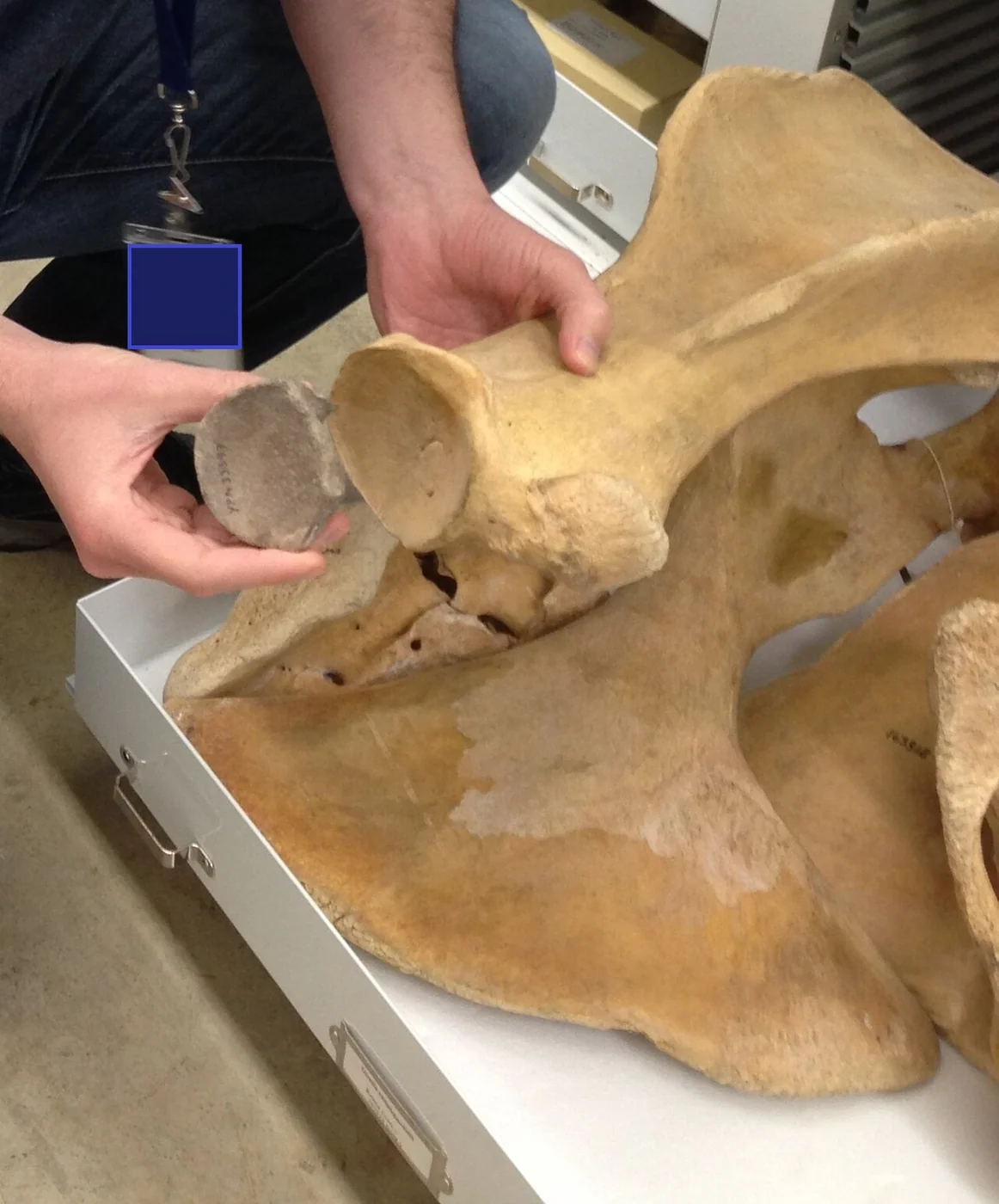
Zooarchaeology: comparing an archaeological bone to a modern bone in a comparative collection (modern documentary photograph) R Yeshurun · CC BY-SA 3.0. Web size optimized; original linked.
AI-assisted original writing. This feature was revised against source material and checked for unsupported claims. Follow the references below for evidence and its limits.
Owner-led projects offer scale and real-world glimpses into canine minds, yet differences in tester identity and uncontrolled home settings can introduce systematic errors that large samples do not automatically cancel out.
Penn State researchers once used MRI scans and computer simulations to map airflow inside a dog’s nasal passages, offering clues for designing better chemical sensors.
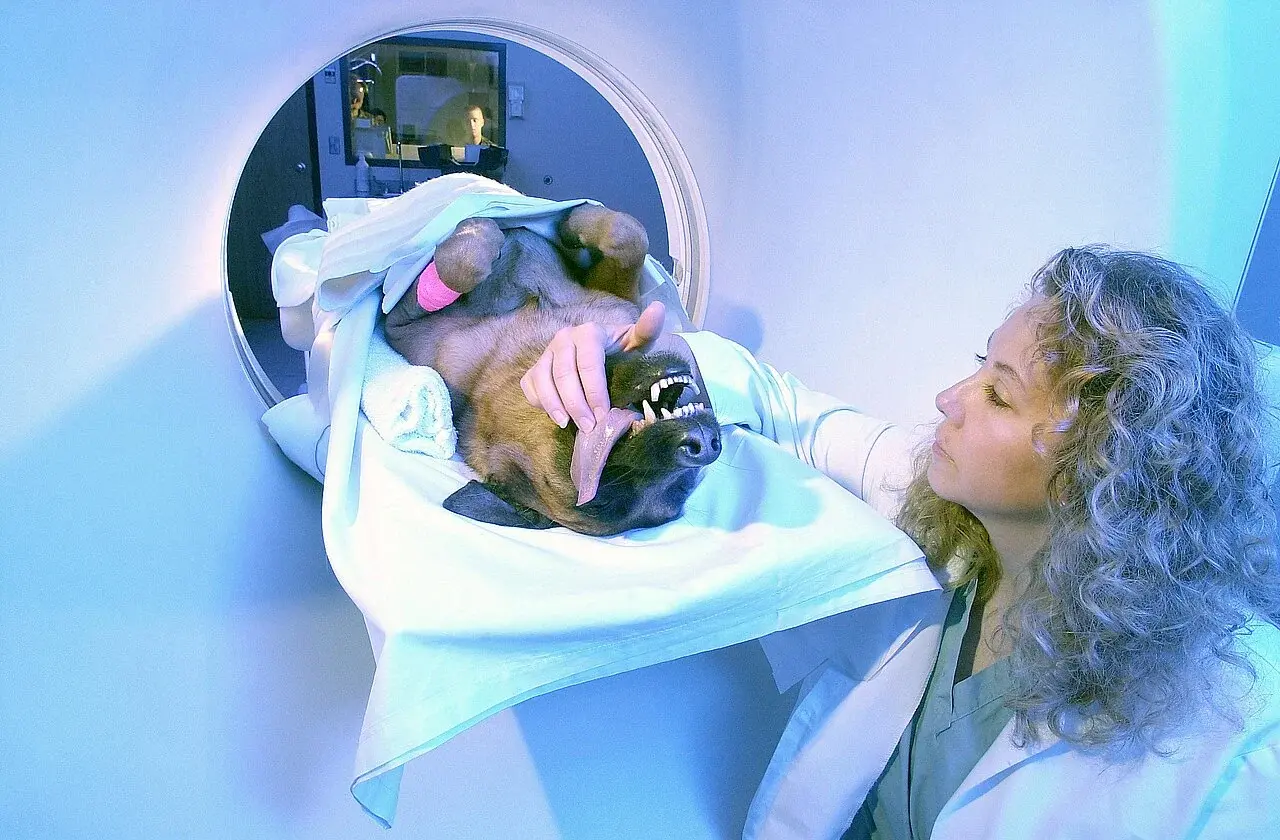
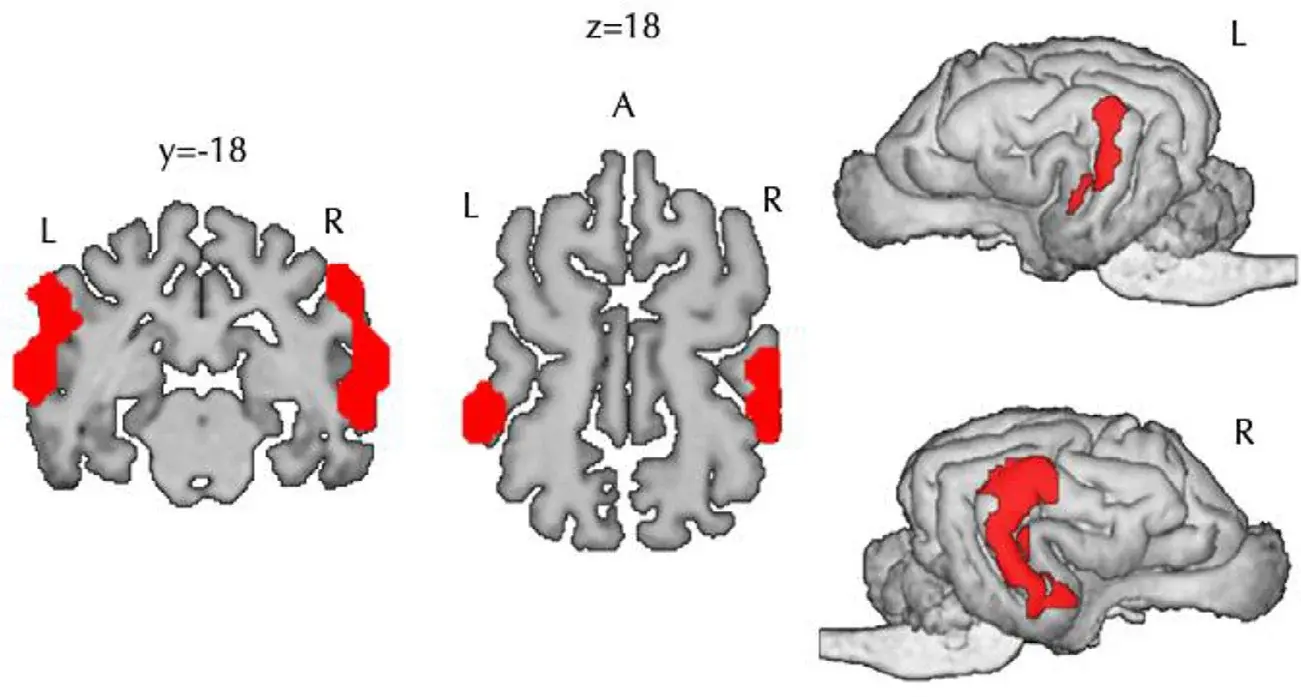
Comparative fMRI studies show that dogs, like humans, have brain regions that react more strongly to vocalizations than to non-vocal sounds, with sensitivity to emotional tone cues.
 Photograph