Breed-Specific Legislation Targets the Wrong Problem
Focusing on certain breeds distracts from the real drivers of dog bites: negligent ownership and missed opportunities for early socialization that affect every kind of pup.
Protest notes on Starbucks cards reading "Love all Bull" and opposing breed-specific legislation from a 2016 Montreal demonstration. Coastal Elite from Halifax, Canada · CC BY-SA 2.0 · Web size optimized; source linked for the original.
Imagine a golden retriever, tail thumping against the porch boards, suddenly lunging at a passing jogger because no one ever taught him that strangers are friends, not threats. Or picture a sleek little terrier mix, adored in a chaotic household, who nips a visiting child after weeks spent isolated in a crate. These scenes could unfold with any dog, yet too often our collective response is to scan for a particular shape of head or set of ears. Breed-specific legislation promises safety through prohibition, but it misses the deeper, more humane truth: living well with dogs demands we look past labels to the daily choices that shape their character and our shared world.
The Persistent Allure of the Quick Fix
Politicians love a visible solution. Paint a picture of a menacing dog and voters demand action. BSL feels decisive: measure the skull, check the paperwork, and declare certain dogs unwelcome. Yet it creates an illusion of control while the majority of incidents continue to trace back to individual circumstances rather than genetics alone. In a hypothetical suburb where such rules have been on the books for years, bite reports might dip briefly after the first wave of removals, only to creep back as new dogs arrive in homes unprepared for their responsibilities.
Meanwhile, the dogs that do appear in these scenarios often come from places where supervision was inconsistent, chaining was routine, or basic training never happened. These patterns surface in mixed-breed and purebred animals alike. By zeroing in on appearance, lawmakers sidestep the harder but more effective conversation about what owners owe their dogs and their neighbors every single day. A thoughtful approach would ask not which breed to ban, but how we can foster environments where curiosity and calm become the norm rather than the exception.
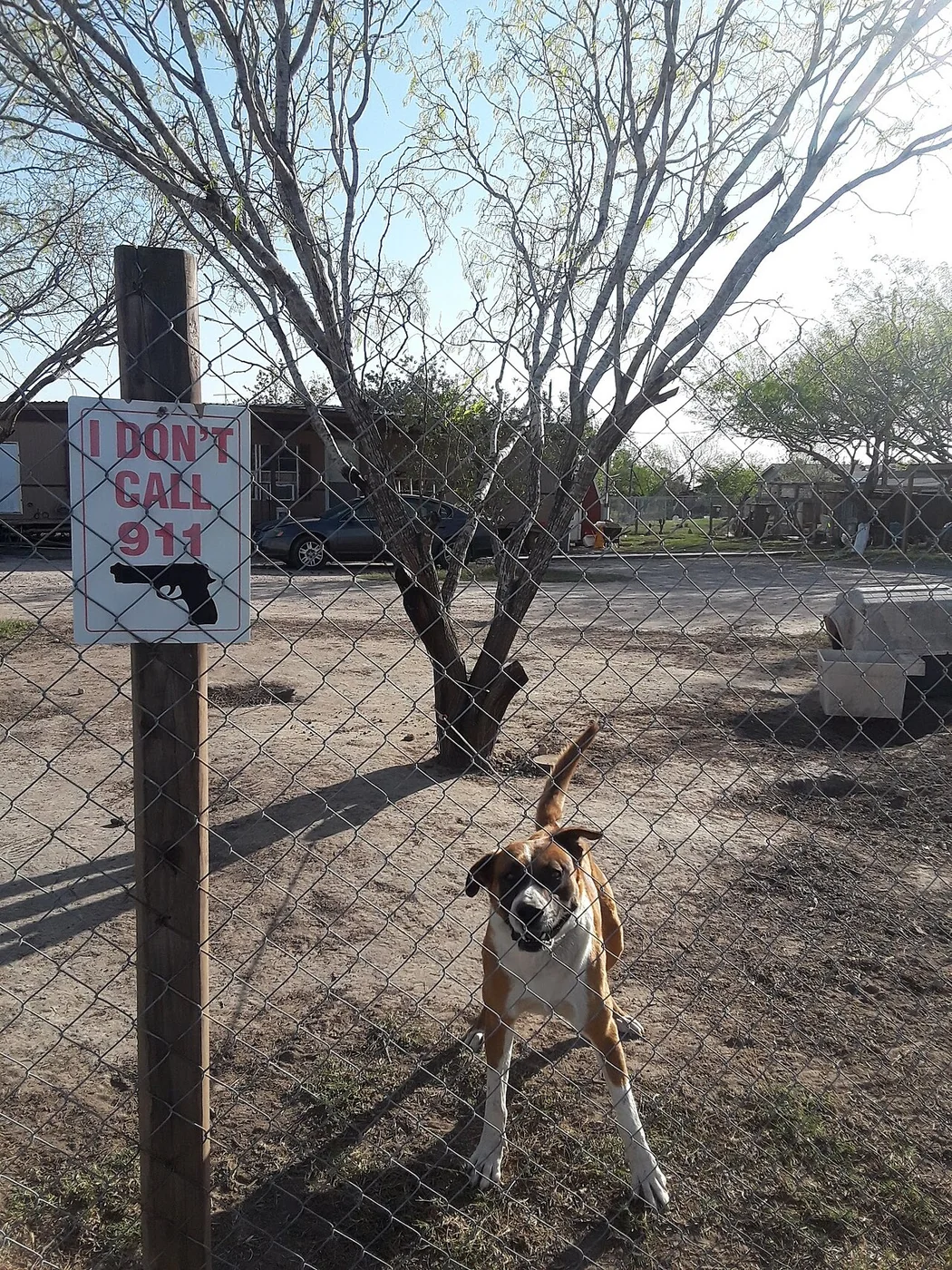
Dog guarding a yard in a South Texas colonia, standing in front of a fence Joshua Matthews · CC BY-SA 4.0. Web size optimized; original linked.
What the Patterns Suggest
Imagine poring over imagined records from bustling animal shelters and quiet veterinary clinics. What emerges is rarely a single breed dominating the ledger once other variables enter the picture. Factors such as whether a dog was neutered, how much positive human contact it received in its first months, and whether it lived in a household with prior tensions matter far more than bloodlines. A hypothetical mastiff raised with patient guidance might grow into a gentle giant, while a beagle denied those same chances could develop a hair-trigger response to sudden noises.
This does not mean genetics play no role; certain lines have been selected for guarding or hunting traits that can express as wariness toward the unfamiliar. Yet those same potentials respond dramatically to competent rearing. The more useful inquiry, in this light, becomes which combination of early experience, ongoing management, and owner accountability most reliably prevents harm. Framing the question this way shifts our focus from fear of the “other” to a shared investment in possibility, inviting every dog owner into a larger story of stewardship.
Socialization’s Quiet Power Across Breeds
Consider a litter of puppies, eyes just opening to the world, encountering a parade of friendly faces, other dogs, and novel sounds between eight and fourteen weeks old. Neural pathways form that favor curiosity over fear, a process that knows no brand name. A well-socialized Rottweiler might greet the mail carrier with a tail wag in one possible neighborhood tale, while an undersocialized spaniel snaps at a toddler’s sudden movement in another. The common thread runs through opportunity missed, not pedigree papers.
Communities that invest in accessible puppy classes, encourage positive-reinforcement training, and support owners who work full days could see improvements in neighborhood manners. These programs succeed because they meet dogs where they are rather than labeling them by ancestry. When cities redirect resources from breed enforcement toward such enrichment, the return shows up in fewer complaints and more genuine companionship. The tradeoff is clear: it requires patience and public will, yet the reward is a culture where dogs and people truly thrive together.
Litter of puppies at 8 weeks old Ejleroy · CC BY-SA 4.0. Web size optimized; original linked.
Negligent Ownership Deserves the Spotlight
The uncomfortable truth is that any dog can become a hazard in the wrong hands. Leaving a large dog unsupervised with small children, failing to secure a yard, or ignoring escalating warning signs all multiply risk regardless of registration. Stronger leash laws, swift consequences for repeat offenders, and mandatory reporting of incidents create accountability that travels with the owner rather than the collar tag. Such measures are breed-neutral and therefore harder to dodge, though they demand consistent enforcement that some municipalities might find politically inconvenient.
Enforcement focused on behavior instead of looks also sidesteps equity issues that can accompany blanket rules. Lower-income neighborhoods sometimes rely on larger, protective dogs for security; prohibitions can penalize families who have done everything right while failing to address the backyard breeder who never socializes a litter. Shifting the lens to responsible stewardship protects public safety without unintended discrimination. The tradeoff here is trading simplicity for nuance, but in that nuance lies a more just and effective path forward.
Practical Steps Toward Safer Shared Spaces
Cities could begin by phasing out existing breed-specific rules and replacing them with ordinances that evaluate each animal on its record and current behavior. Pair that with subsidized early-enrichment programs at shelters and community centers. Public parks might offer designated dog hours with trained monitors who model polite greetings and intervene early when tensions rise. These layered efforts treat dogs as individuals shaped by experience and environment, not as walking stereotypes.
Insurance companies could offer premium discounts for owners who complete recognized training courses, creating a financial incentive that crosses every breed. Schools and libraries might host age-appropriate sessions that teach children safe interaction while normalizing calm canine behavior. Over time the cultural shift from fear to informed coexistence makes sidewalks friendlier for everyone, four-legged or two. The real work is ongoing and imperfect, yet it honors the profound bond we share with dogs and the responsibility that bond entails.
Puppy Preschool building at Best Friends Animal Sanctuary, 2010 (documentary photo) Becker1999 from Grove City, OH · CC BY 2.0. Web size optimized; original linked.
AI-assisted original writing. This feature was revised against source material and checked for unsupported claims. An editorial perspective; interpretations are distinguished from factual reporting.
Sources & further reading
This article is labeled opinion and offers an editorial perspective.
Urban planners rarely pause to consider how their straight paths and echoing plazas feel through a dog's nose, ears, and eyes, yet a few gentle adjustments could transform shared spaces into places where both species truly thrive together.
Strict enforcement on suburban paths and trails quietly shields our canine companions from injury, escape, and tense encounters that off-leash freedom too often invites.



 Photograph