Urban planners rarely pause to consider how their straight paths and echoing plazas feel through a dog's nose, ears, and eyes, yet a few gentle adjustments could transform shared spaces into places where both species truly thrive together.
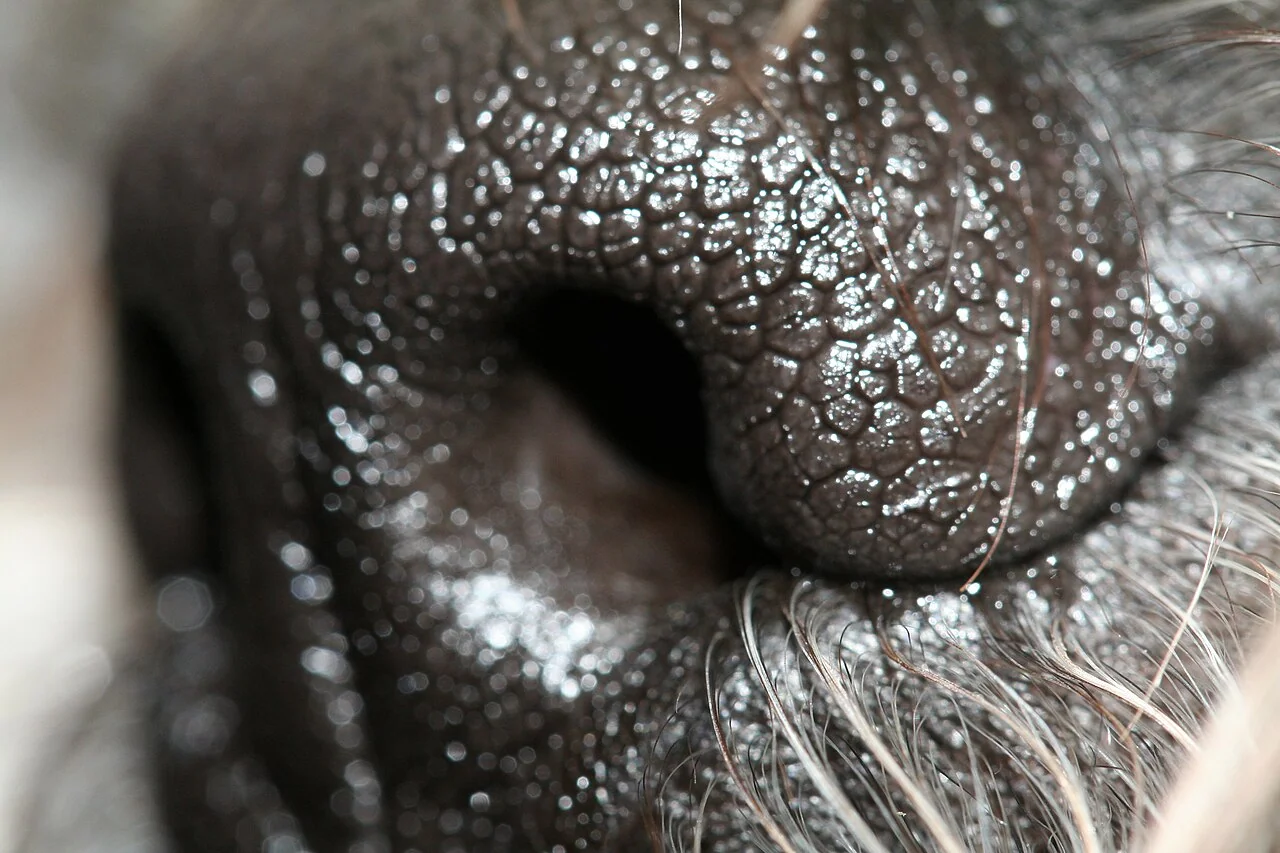
Macro close up of a dog's nose (specifically a Lhasa Apso) Stockimagery · CC BY-SA 3.0 · Web size optimized; source linked for the original.
We share our sidewalks and parks with creatures whose senses paint the world in colors we can scarcely imagine. A dog doesn't simply walk through a city block; he reads it like an unfolding novel written in scent, sound, and subtle motion. When planners overlook those differences, our companions pay the price in stress and missed joy. The good news is that thoughtful design need not favor one species over the other. With imagination and a willingness to trade a bit of tidy geometry for richer experience, we can create public spaces that respect the full sensory lives of the dogs who walk beside us.
The Nose Knows: Why Scent Trails Matter
Imagine stepping into a library where every book has been soaked in competing perfumes, the ink blurred and the stories scrambled. That is roughly what many urban parks offer a dog's nose. While we might register a faint whiff of cut grass or distant bakery, our canine companions detect layered histories: who passed by an hour ago, whether they were anxious or playful, even what they had for breakfast. A thoughtful park could instead offer scent corridors, gentle pathways bordered by plants chosen for their distinct yet harmonious aromas.
Picture a winding trail edged with lavender, rosemary, and soft grasses that release their fragrance only when brushed against. Such living trails would allow a dog to read the landscape at leisure rather than gulp chaos in frantic breaths. The tradeoff is modest. Planners might sacrifice a perfectly manicured lawn for slightly wilder borders, yet gain calmer visitors who tug less and linger more. In this imagined city, dogs could compose their own daily stories instead of drowning in an olfactory soup of exhaust, discarded wrappers, and overlapping marks from every passing animal.
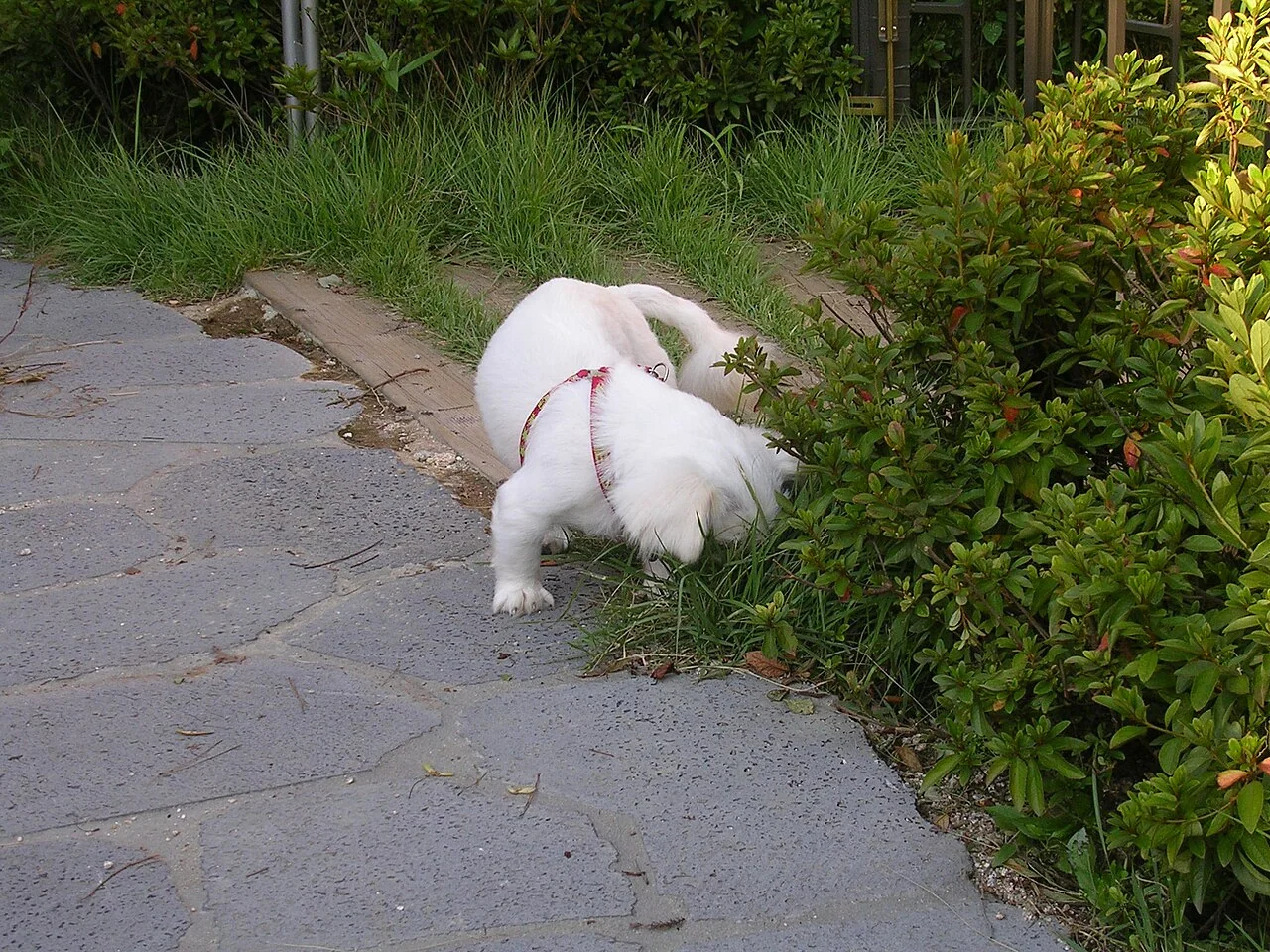
White dog sniffing grass on a pathway, documentary photo illustrating canine scent detection behavior Clementina · CC BY-SA 3.0. Web size optimized; original linked.
Soundscapes and the Need for Quiet Zones
A passing siren that barely registers with us can strike a dog's far more sensitive ears like a thunderclap. Construction beeps, rumbling trucks, and the constant background drone of urban life create an auditory pressure few dogs would choose if given the option. The solution need not be silence everywhere, an impossible demand. Instead, small sanctuaries of lower sound could be woven into the city fabric without disrupting human activity.
Consider a modest grove of dense evergreens or a sunken seating area shielded by earthen berms. These features might reduce ambient noise enough for a dog to lower his shoulders, stop scanning for threats, and simply exist in the moment. The tradeoff involves accepting that not every corner of a park must be equally loud or open. In return we receive dogs who feel safe enough to play rather than merely endure their daily walk, strengthening the bond between human and animal in ways that ripple outward to safer, happier public spaces.
Visual Barriers That Reduce Overload
Dogs read body language with astonishing speed, yet many urban walkways force them to track every approaching stranger, skateboarder, or loose dog simultaneously. The result is mental clutter that leaves even sociable animals tense and overwhelmed. Low hedges, staggered fencing, and clusters of ornamental grasses can break long sightlines without closing off the park or compromising human safety.
In this hypothetical redesign, a dog might choose to glance away for a moment of relief when a crowd approaches, knowing a visual screen waits nearby. The tradeoff is giving up the perfectly unobstructed vista that some planners prize. Yet that small surrender could mean the difference between a walk that exhausts and one that refreshes. Dogs granted permission to look away when they need respite often return to social interaction with greater ease, turning potential friction into smoother, more respectful encounters for everyone involved.
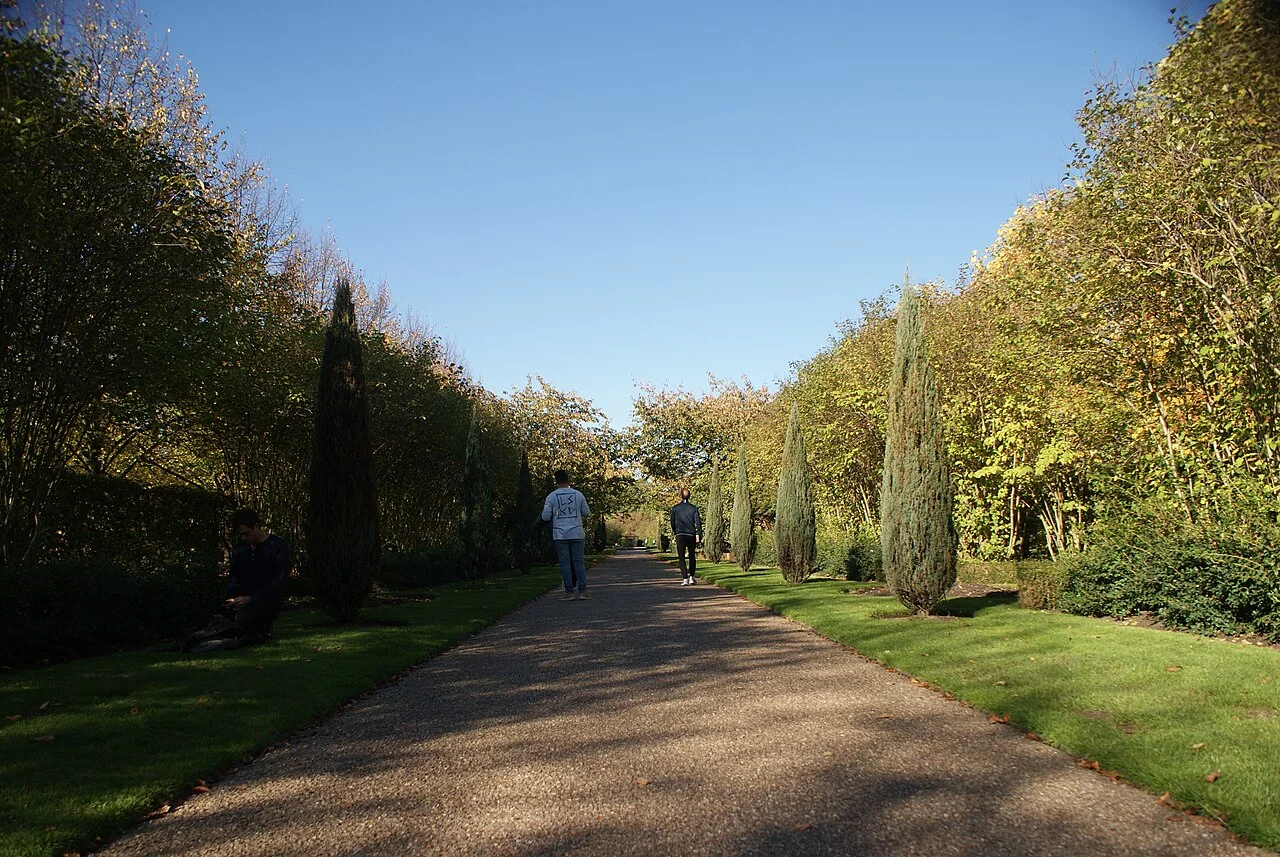
Path lined with hedges in Regent's Park, documentary photo demonstrating visual barriers created by planting Robert Lamb · CC BY-SA 2.0. Web size optimized; original linked.
Health and Behavior Benefits of Thoughtful Design
Chronic sensory overload can turn what should be joyful exercise into a daily ordeal, contributing to restlessness, digestive troubles, or heightened reactivity. A dog who spends his walk in a state of low-level alarm may learn to associate the outdoors with tension rather than delight. Well-designed spaces that offer scent trails, quiet alcoves, and visual screens give dogs the chance to self-regulate, choosing when to engage and when to retreat.
That sense of agency often translates into better physical health through more consistent, relaxed exercise and deeper trust between dog and guardian. The tradeoff here is philosophical as much as practical. We must accept that our canine companions have legitimate needs that sometimes diverge from our own preferences for open sightlines or bustling plazas. By honoring those needs, we build partnerships rooted in mutual respect rather than constant management, allowing both species to flourish side by side.
A Call for Planners to Think Like a Dog
Most municipal design boards focus understandably on human accessibility, traffic flow, and aesthetics that please two-legged eyes. Yet dogs ask for so little: a patch of earth that tells a story, a corner where the world grows quieter, a moment when they may look away without fear. Inviting animal behavior insights early in the planning process could yield surprising dividends at modest cost.
The investment returns richer public health, fewer tense encounters, and a deeper interspecies harmony that benefits every park user. We need not redesign entire cities overnight. Small, thoughtful adjustments, tested and refined over time, could accumulate into environments where dogs no longer merely tolerate our world but genuinely share in its pleasures. In the end, building cities that respect the full sensory symphony of our companions enriches every walk we take together, reminding us that living well with dogs means seeing the world, at least occasionally, through their eyes, ears, and remarkable noses.
AI-assisted original writing. This feature was revised against source material and checked for unsupported claims. An editorial perspective; interpretations are distinguished from factual reporting.
Sources & further reading
This article is labeled opinion and offers an editorial perspective.
Focusing on certain breeds distracts from the real drivers of dog bites: negligent ownership and missed opportunities for early socialization that affect every kind of pup.
Strict enforcement on suburban paths and trails quietly shields our canine companions from injury, escape, and tense encounters that off-leash freedom too often invites.
 Photograph