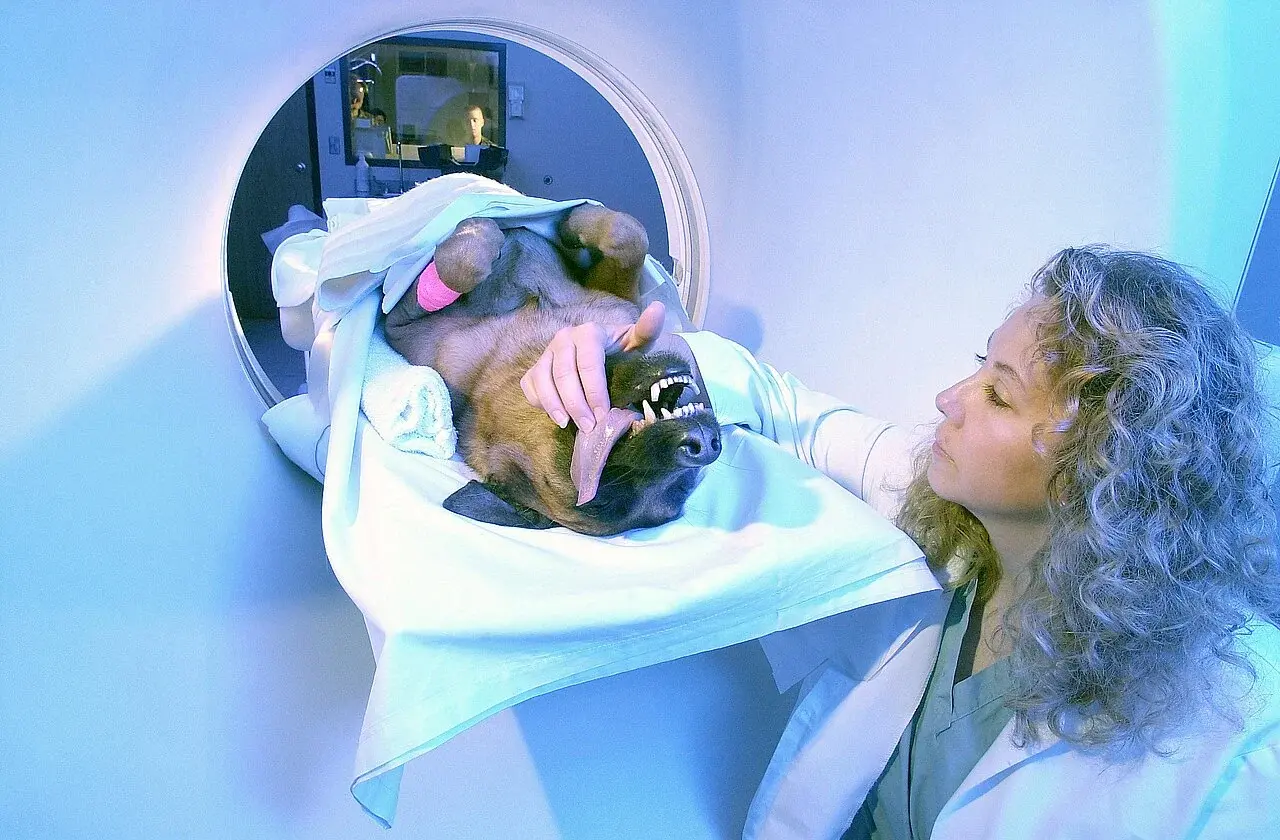
Comparative fMRI studies show that dogs, like humans, have brain regions that react more strongly to vocalizations than to non-vocal sounds, with sensitivity to emotional tone cues.
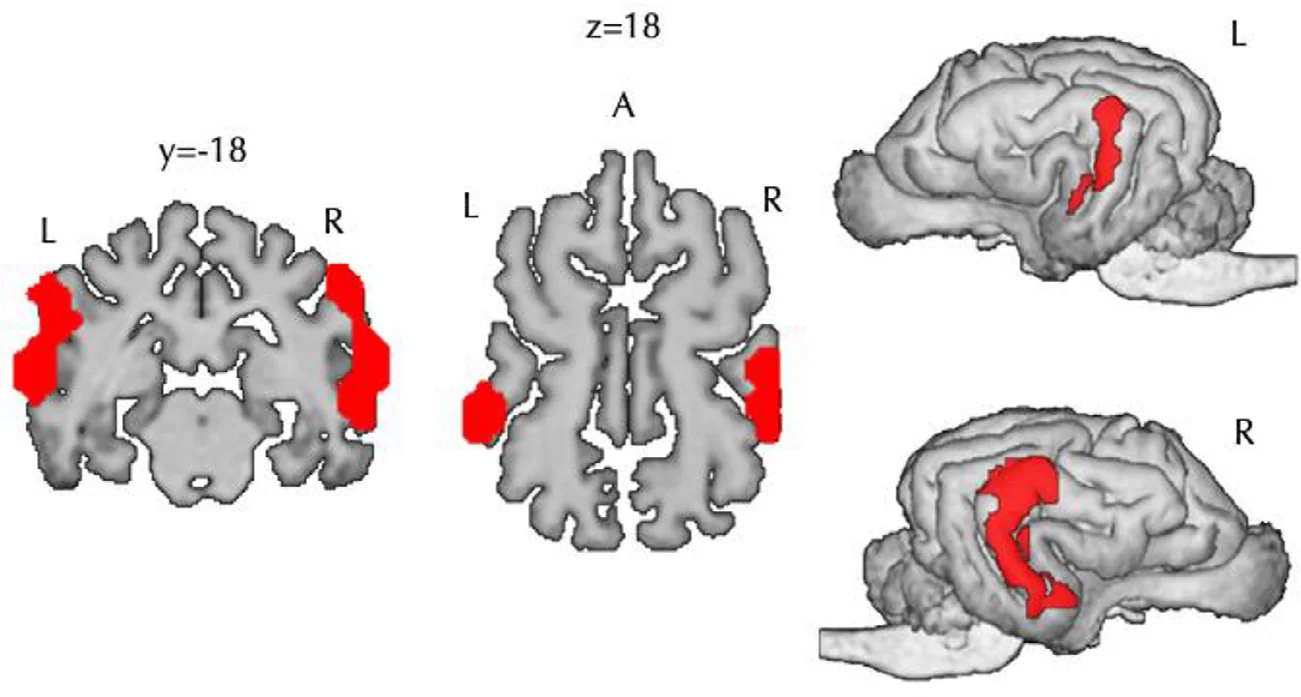
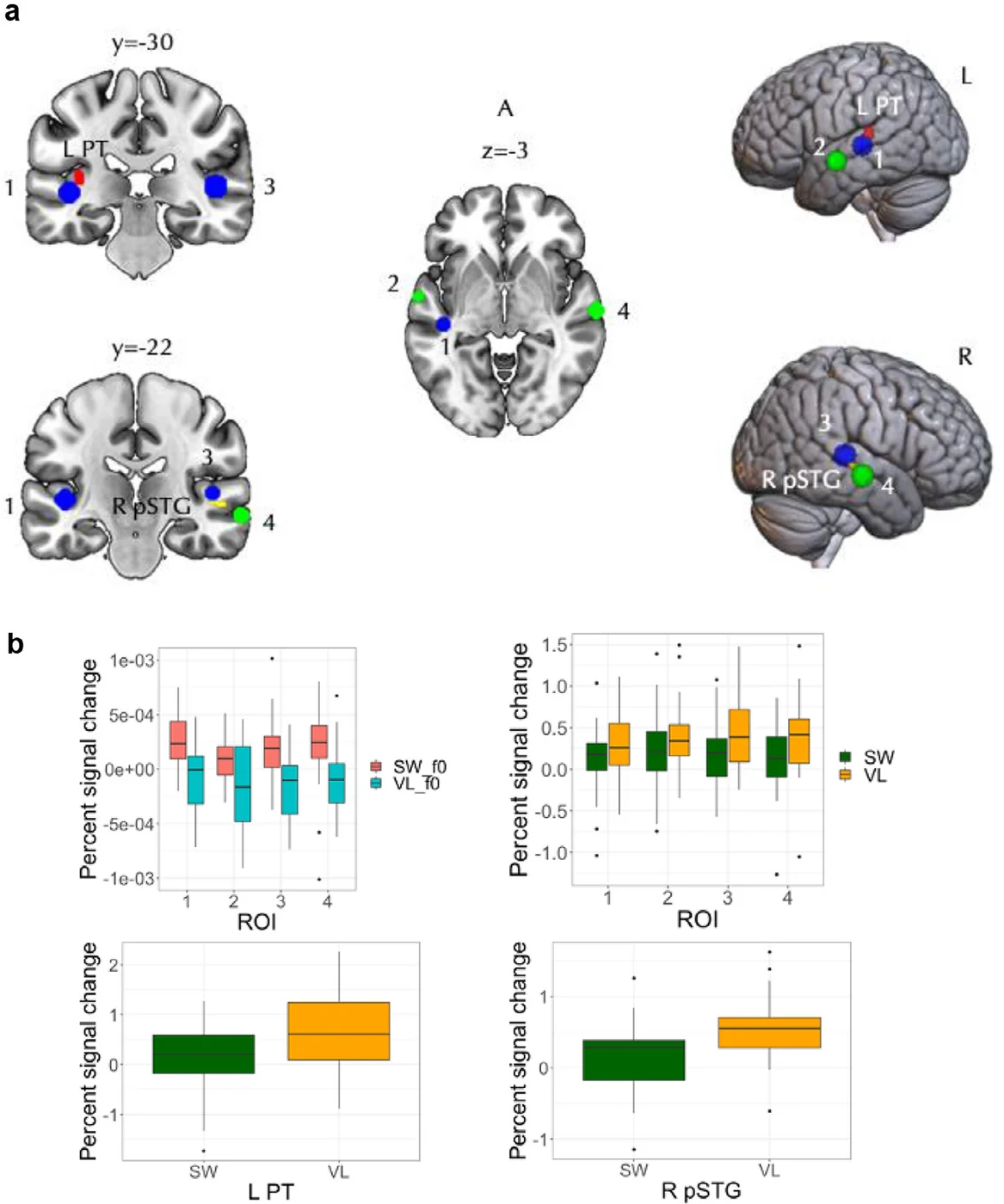
Canine brain areas responding to sounds in the comparative dog–human fMRI study by Bálint and colleagues (2023). Original research figure. Anna Bálint, Ádám Szabó, Attila Andics and Márta Gácsi · CC BY 4.0 · Web size optimized; source linked for the original.
When your dog tilts its head at the sound of your voice, it might be doing more than just listening politely. Brain imaging research reveals that dogs possess specialized regions that light up for voices in ways that echo human patterns, though important limits remain in what the scans can tell us. Two key studies using awake dogs in fMRI scanners found that nonprimary auditory areas in canine brains respond preferentially to vocal sounds over non-vocal ones, much like certain regions do in people. This cross-species overlap hints at shared evolutionary roots for processing social sounds, but the work also underscores that dogs do not treat human voices as uniquely special compared with their own species' calls. With modest participant numbers typical of this emerging field, the findings invite careful interpretation rather than sweeping conclusions about 'dog mind reading.'
Mapping Voice Sensitivity Across Species
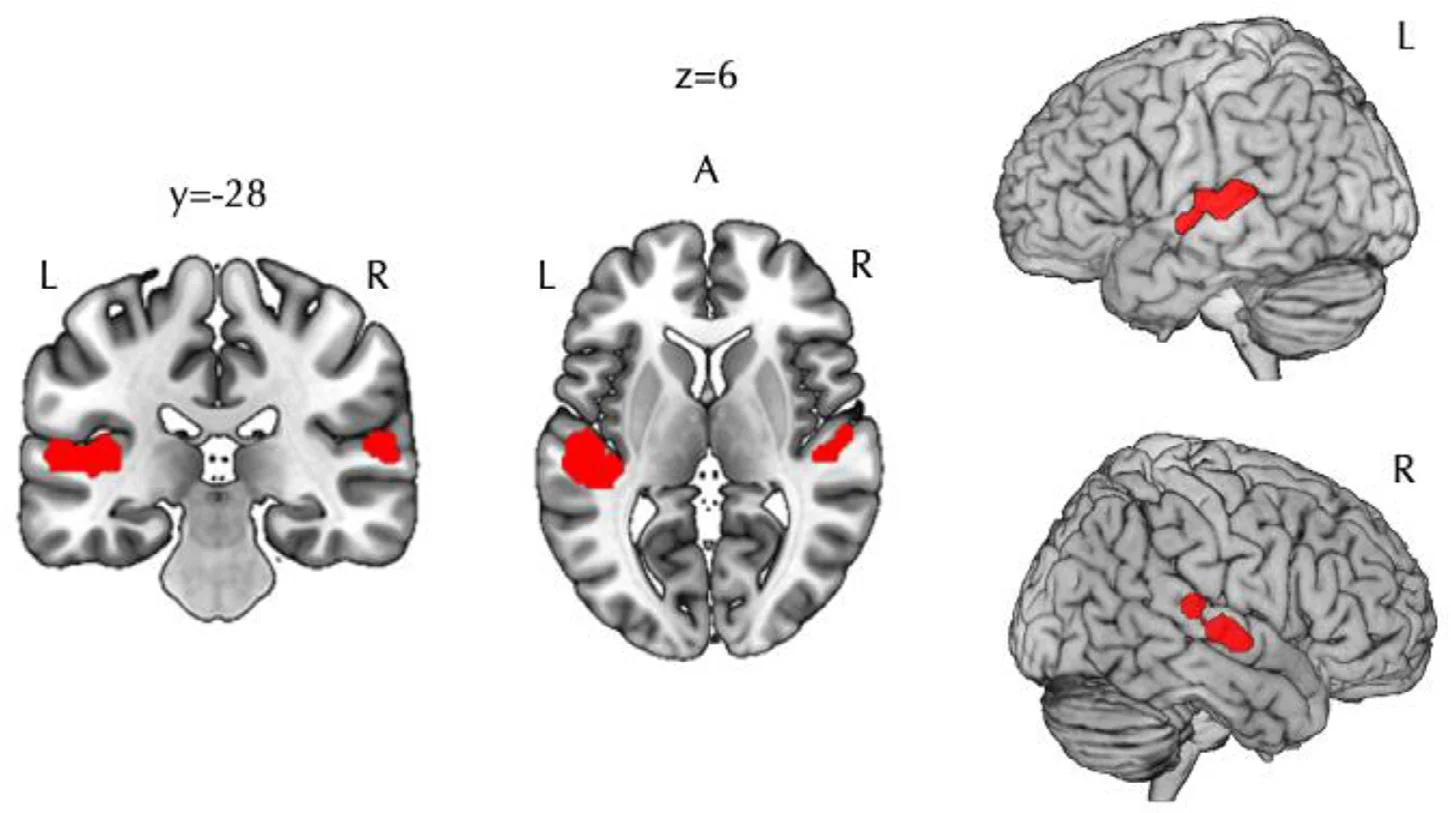
In the first study, researchers scanned the brains of dogs and humans while both listened to the same collection of sounds, including dog vocalizations, human vocalizations, and non-vocal environmental noises. The results showed that dogs have voice-sensitive patches in their nonprimary auditory cortex. These areas activate more strongly when the animal hears vocalizations, whether from dogs or humans, than when it hears non-vocal sounds. This pattern mirrors the anterior temporal voice areas observed in human brains, suggesting a conserved mechanism for detecting voices as a distinct category of sound. The comparative approach strengthens the case that such sensitivity is not unique to primates but appears in domestic dogs as well.
Humans displayed similar voice-sensitive responses in comparable brain locations. Both species' nonprimary auditory regions also demonstrated sensitivity to vocal cues carrying emotional valence, meaning the brains reacted differently depending on whether the vocalization sounded positive or negative in tone. This overlap in location and function points to an ancient neural architecture that may help social mammals quickly identify and evaluate calls from others. The study authors noted that dogs exhibited stronger responses to their own species' vocalizations in certain auditory zones, while no dog brain regions showed a preference for human vocalizations over non-vocal sounds. This finding tempers any assumption that dogs are wired to prioritize our speech above all else.
Human brain areas responding to sounds in the same comparative experiment. This is the human comparison image, not a dog brain (Bálint and colleagues, 2023). Anna Bálint, Ádám Szabó, Attila Andics and Márta Gácsi · CC BY 4.0. Web size optimized; original linked.
Probing Emotional Tone With Artificial Sounds
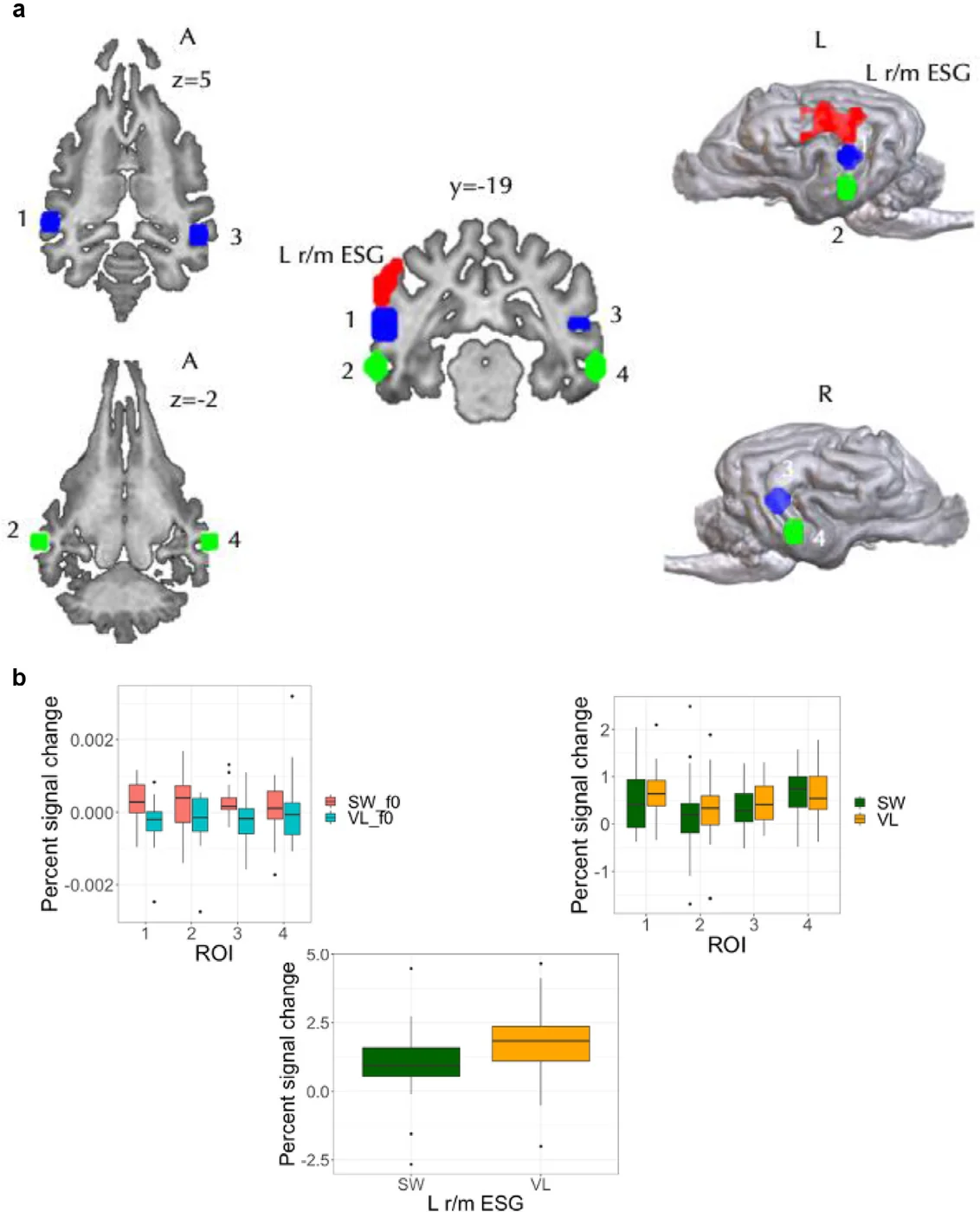
A follow-up comparative fMRI experiment took a different tack by using synthesized stimuli rather than natural recordings. Dogs and humans listened to artificial sounds that were either voice-like or sine-wave versions, with variations in fundamental frequency and call length designed to mimic emotional expression. Both species showed stronger cortical activation for the voice-like stimuli than for the sine-wave controls, and no brain areas preferred the non-voice-like sounds. This reinforces the idea that sensitivity to voice-like qualities is robust across the two species and not limited to real-world vocalizations.
The study also uncovered an interesting interaction involving fundamental frequency. In bilateral primary and emotional-valence-sensitive auditory regions of both dogs and humans, changes in frequency modulated the processing of voice-like and sine-wave sounds in opposite directions. Higher or lower frequencies affected the brain responses differently depending on whether the sound carried vocal characteristics. Such parallel patterns suggest that the neural machinery for extracting emotional information from pitch and timbre may share deep similarities, even if the everyday lives of dogs and humans differ dramatically. These results add nuance to our picture of how dogs might interpret the rise and fall of a scolding or praising voice.
Limitations and the Modest Sample Reality
Both studies come with an important caveat: sample sizes in dog fMRI research on voice and emotion processing remain modest. Scanning awake, cooperative dogs is technically challenging, so each experiment typically involves fewer participants than comparable human neuroimaging work. This reality means the findings, while intriguing, should be viewed as preliminary rather than definitive. Individual differences among dogs, breed variations, and training levels could all influence results but are difficult to capture fully with small groups.
The field is still young, and replication with larger cohorts will be necessary before strong generalizations can be made. Readers should therefore treat the observed brain patterns as evidence of interesting similarities rather than proof of identical perceptual experiences. The studies do not, for instance, demonstrate that dogs understand the semantic meaning of human words, only that certain acoustic features trigger comparable neural responses.
Canine brain activation and response profiles for voice-like and sine-wave stimuli in the published study. Research figure from Bálint and colleagues (2023). Anna Bálint, Ádám Szabó, Attila Andics and Márta Gácsi · CC BY 4.0. Web size optimized; original linked.
What This Means for Living With Dogs
If your dog's brain treats voices as special, it may help explain why tone of voice often seems to matter more than the actual words you choose. A cheerful 'good dog' delivered in a high-pitched, playful lilt might activate reward-related pathways more effectively than the same phrase spoken flatly. The research offers a neuroscientific backdrop for what many owners already sense intuitively: how you sound can influence how your dog feels. This perspective encourages paying closer attention to vocal delivery during training and daily interactions.
At the same time, the stronger response to conspecific calls reminds us that dogs remain dogs. Their brains may be tuned first and foremost to the barks, whines, and growls of their own kind. Human voices register, but they do not dominate the auditory landscape. Owners might therefore consider mixing in recordings of dog vocalizations or arranging playdates to provide the full spectrum of social sounds their pets appear wired to appreciate. Such small adjustments could enrich a dog's environment without requiring any new gadgets or expensive interventions.
Questions That Remain and Editorial Thoughts
Several uncertainties linger. Do these voice-sensitive regions actually help dogs distinguish individual human identities from voices alone, or is the response more general? The current evidence does not resolve this. Likewise, while emotional valence sensitivity appears shared, the precise emotional categories dogs experience remain opaque. fMRI shows where activation occurs but cannot directly report subjective feelings. Future work combining imaging with behavioral measures may narrow these gaps.
From an editorial standpoint, these studies are delightful because they treat dogs as worthy neuroscience partners rather than mere accessories. The light humor in imagining a dog 'rolling its eyes' at a monotone lecture is, of course, pure fiction; we have no evidence for such canine sarcasm. Yet the findings carry a serious implication: recognizing shared neural architecture should deepen our sense of responsibility toward animal welfare. If dogs process vocal emotion in ways that parallel our own, then careless shouting or inconsistent tone may affect them more than we assume. The research invites us to speak to them with the same consideration we would extend to any listening friend, even if their vocabulary is limited to barks and tail wags. It also prompts a broader question: how many other hidden similarities between human and canine minds are waiting to be scanned? For now, the data support cautious optimism and kinder voices, not grand claims about canine language comprehension.
Reading questions to consider: How might these brain responses change with different levels of human-dog bonding? Could training alter the strength of voice-sensitive activation? And what ethical responsibilities follow if we accept that dogs experience vocal cues as emotionally charged? The answers are not yet in the scans, but the conversation they spark is well worth having.
Human brain activation and response profiles in the comparative voice-like sound experiment. Original research figure from Bálint and colleagues (2023). Anna Bálint, Ádám Szabó, Attila Andics and Márta Gácsi · CC BY 4.0. Web size optimized; original linked.
AI-assisted original writing. This feature was revised against source material and checked for unsupported claims. Follow the references below for evidence and its limits.
Archaeological finds from select European sites offer glimpses into possible relationships between people and dogs, while underscoring the challenges of interpreting ancient deposits.
Owner-led projects offer scale and real-world glimpses into canine minds, yet differences in tester identity and uncontrolled home settings can introduce systematic errors that large samples do not automatically cancel out.
Penn State researchers once used MRI scans and computer simulations to map airflow inside a dog’s nasal passages, offering clues for designing better chemical sensors.
 Photograph