From the energetic demands of puppyhood to the measured pace of later years, a dog's cardiovascular system follows observable patterns that owners can learn to recognize.
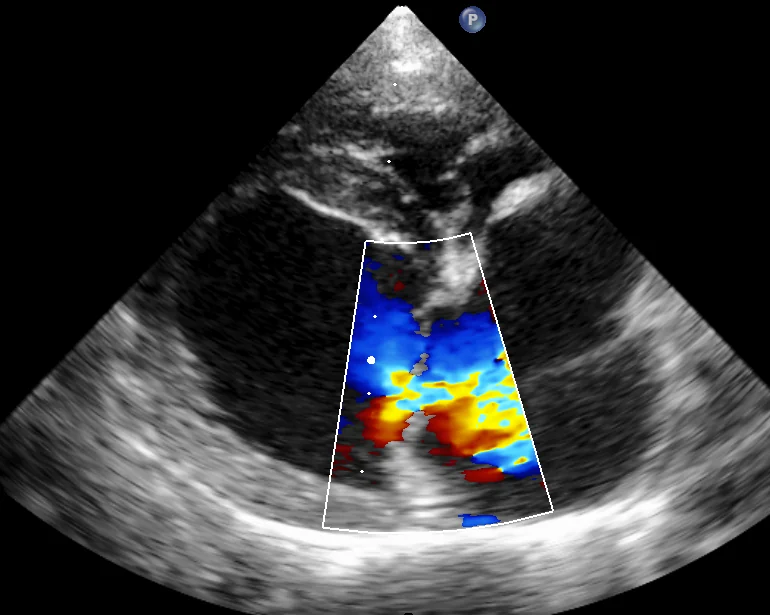
Colour-flow Doppler echocardiogram (right parasternal long-axis view) of a 13-year-old Australian Silky Terrier with myxomatous mitral valve disease, showing turbulent mitral regurgitation into the enlarged left atrium. Corak80 · CC BY-SA 4.0 · Web size optimized; source linked for the original.
A wriggly puppy's body works at a brisk tempo to support rapid growth. Over time, that pace naturally adjusts. Studies of conscious, unsedated, clinically normal dogs show measurable shifts in heart-related measures as the years pass. These changes offer a window into normal aging, though they never replace professional veterinary assessment. The evidence highlights patterns tied to age, body weight, and heart rate itself, reminding owners that every dog is an individual.
Early Life and Cardiovascular Maturation
Research involving 92 dogs ranging from 3 months to 19 years old found that age significantly influenced several measures of heart function, including isovolumic relaxation time, the ratio of early to late diastolic filling velocities, deceleration time of early filling, and atrial reversal velocity. These shifts became evident primarily in dogs older than 6 years for some variables and older than 10 years for others. The findings suggest that the cardiovascular system undergoes gradual refinement rather than abrupt transformation in the first months of life. Heart rate acted as a separate factor affecting certain diastolic parameters, underscoring the interplay between rate and overall function.
Owners often notice that puppies seem to recover quickly from bursts of activity. The evidence does not provide specific beats-per-minute targets for puppies or adolescents, but it does show that younger animals in the studied group exhibited characteristics consistent with higher metabolic demands. This period of rapid maturation sets the foundation for later efficiency. A useful reading question for dog guardians is whether their young dog's energy level and recovery after play align with what they observe in littermates or breed peers. The implication is that regular, gentle observation during wellness visits can help track expected maturation without leading to unnecessary worry.
Two puppies playing together at golden hour in the countryside of Don Det, Laos (2023). Basile Morin · CC BY-SA 4.0. Web size optimized; original linked.
Midlife Shifts in Cardiac Output and Stiffness
Beginning in midlife, cardiac output gradually decreases in dogs. One referenced study noted in the evidence suggests this decline can reach as much as 30 percent in geriatric animals, although that figure comes from a specific prior work and should be viewed with appropriate caution. Maximum heart rate and oxygen consumption during exercise also decrease with advancing age. These changes reflect a natural reduction in peak performance capacity rather than immediate dysfunction.
Studies comparing young and older Beagles (mean ages approximately 27.5 months versus 128 months) documented increased left ventricular stiffness during both systole and diastole along with prolonged contraction duration. A separate analysis of dogs from 3 months to 19 years old observed a gradual decrease in the rate of left ventricular relaxation, an increase in myocardial stiffness, and enhanced late diastolic filling as age advanced. These findings illustrate how the heart muscle adapts over time. Editorial analysis suggests that midlife is an ideal window for establishing consistent, moderate exercise routines that support circulation without pushing the system to its limits. One light-hearted implication: your once-zooming companion may now prefer a strategic game of tug over endless fetch, and that preference may align with a wiser, more energy-efficient heart.
Observable Changes in Senior Dogs
In dogs beyond approximately 6 to 10 years, depending on the individual and breed size, the evidence documents clearer alterations in mitral inflow and pulmonary venous flow variables. Isovolumic relaxation time lengthens and the early-to-late filling ratio shifts in ways that reflect stiffer ventricular walls and altered filling dynamics. These patterns appear in clinically normal animals and are therefore considered part of typical aging rather than automatic signs of disease.
Owners may notice that senior dogs rise more slowly after rest or settle more quickly after mild activity. The research implies that these behavioral observations can correspond to the measured physiological adjustments. A practical reading question is how an individual senior dog's daily stamina compares with its own history rather than with a younger dog or a strict calendar age. The implication is that shorter, enjoyable outings—sometimes called “sniffaris”—can maintain light circulation and joint mobility while respecting reduced maximum capacity. Veterinary guidance remains essential for distinguishing normal age-related slowing from conditions that might benefit from intervention.
Across the lifespan, heart rate itself functions as an independent covariate that influences certain diastolic parameters. The study of 92 dogs demonstrated that heart rate affected some measures even after accounting for age and body weight. This separation highlights why a single snapshot reading at a clinic visit may not tell the full story; context from the dog's usual resting state and activity level matters.
The evidence does not supply universal target ranges for resting or active heart rates at different life stages, reinforcing the principle that individual variation is substantial. Larger dogs and smaller dogs diverge in their typical patterns, as do different breeds and activity levels. An editorial observation is that attempting to count heartbeats at home can create more anxiety than insight; the data support leaving precise assessment to trained professionals using appropriate equipment. A gentle reminder with humor: while your dog's heart may no longer race like a caffeinated hummingbird in its later years, it still beats with the steady loyalty that made you fall in love in the first place.
Implications for Care and Observation
The collected evidence emphasizes that many cardiovascular changes are gradual and appear in clinically normal dogs. Nutrition, appropriate exercise, and attentive care likely influence how these patterns unfold, although the supplied studies do not isolate specific causal effects. What remains clear is the value of consistent veterinary relationships that track each dog's unique trajectory over time.
Useful questions for readers include: How does my dog's current energy and recovery compare with last year? Are there subtle shifts in breathing or enthusiasm that warrant a check-up? The logical implication is proactive rather than reactive care—routine wellness examinations can catch meaningful deviations early. By appreciating the natural symphony of age-related cardiovascular adjustment, families can celebrate each chapter of their dog's life while avoiding the temptation to self-diagnose. The research ultimately portrays a resilient system that evolves rather than simply declines, offering comfort to those sharing their homes with companions moving from puppyhood through their golden years.
General education, not individual veterinary advice. Ask a veterinarian about your dog’s health and care.
AI-assisted original writing. This feature was revised against source material and checked for unsupported claims. Follow the references below for evidence and its limits.
Research shows canine cognition follows a clear arc of early gains, midlife peak, and later gentle decline, offering owners practical ways to support their pets at every age.
Protected command centers in the brain and spinal cord team up with far-reaching nerves that connect to muscles, skin, and organs, letting dogs react to scents, sounds, and sudden surprises.



 Reference image