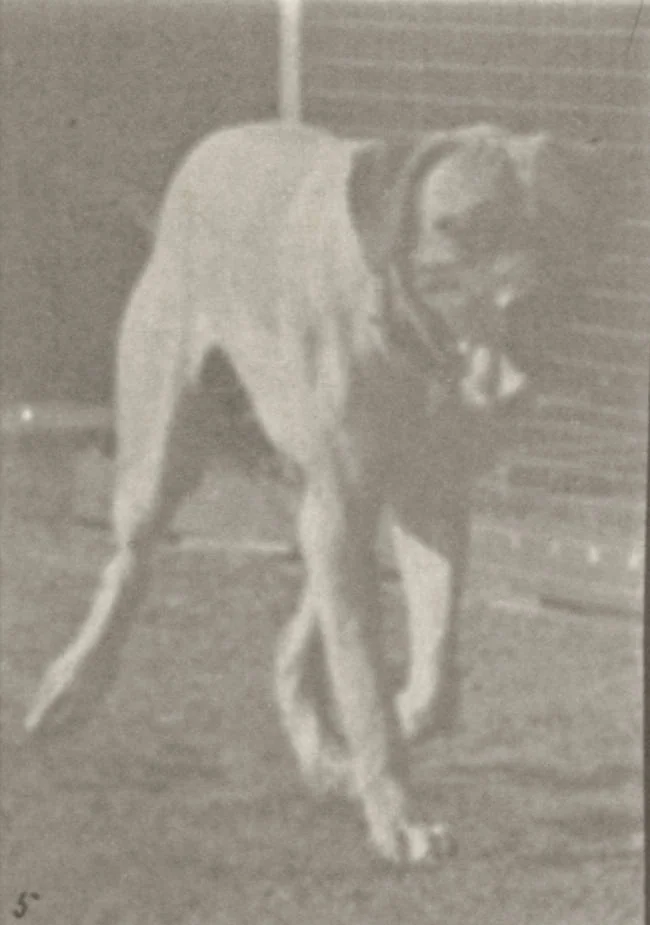
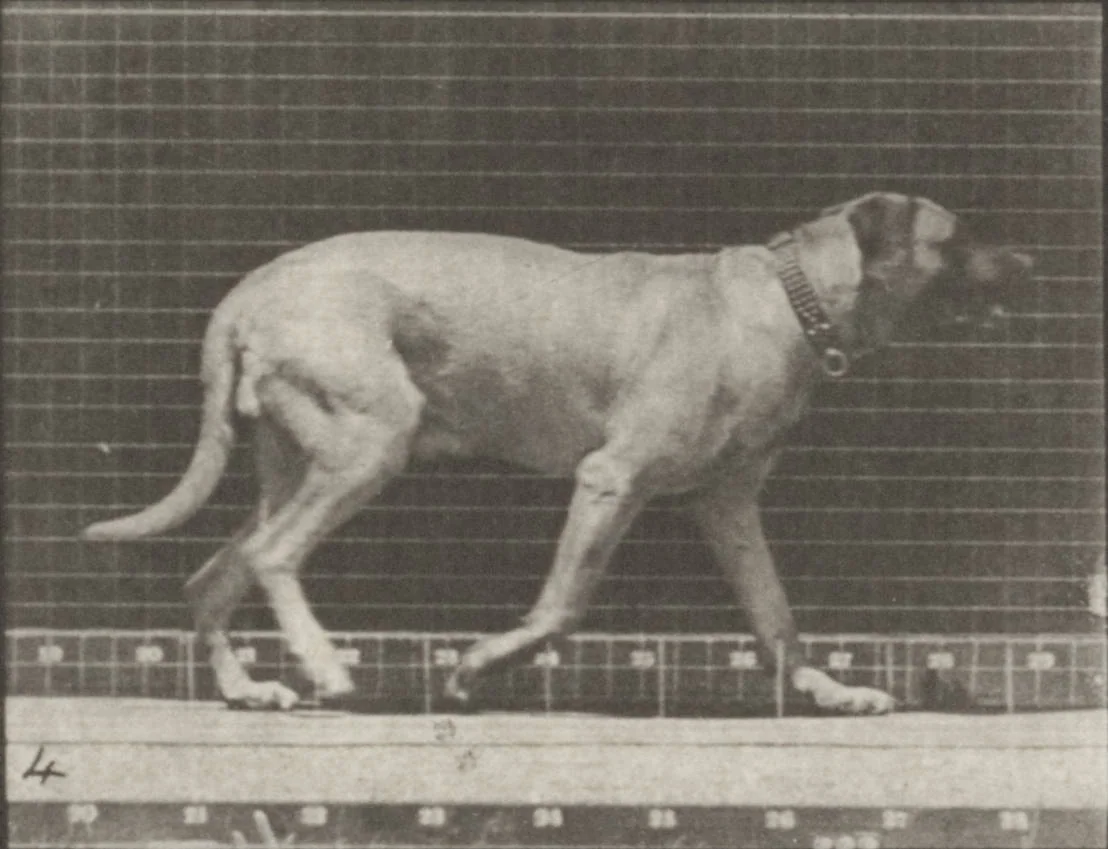
Eadweard Muybridge motion study of the dog Dread trotting, 1887 Muybridge, Eadweard, 1830-1904 · Public domain · Web size optimized; source linked for the original.
When a dog trots across the yard or stands quietly, its limbs experience measurable forces that change with body weight and movement style. Two peer-reviewed sources supply concrete observations from gait-analysis studies performed on healthy adult dogs. The data show clear differences between lean and overweight animals and confirm that the front limbs normally carry more of the body’s weight than the rear limbs. These facts invite owners to watch their dogs’ posture and gait with fresh appreciation, always in conversation with a veterinarian.
Weight Distribution at a Standstill
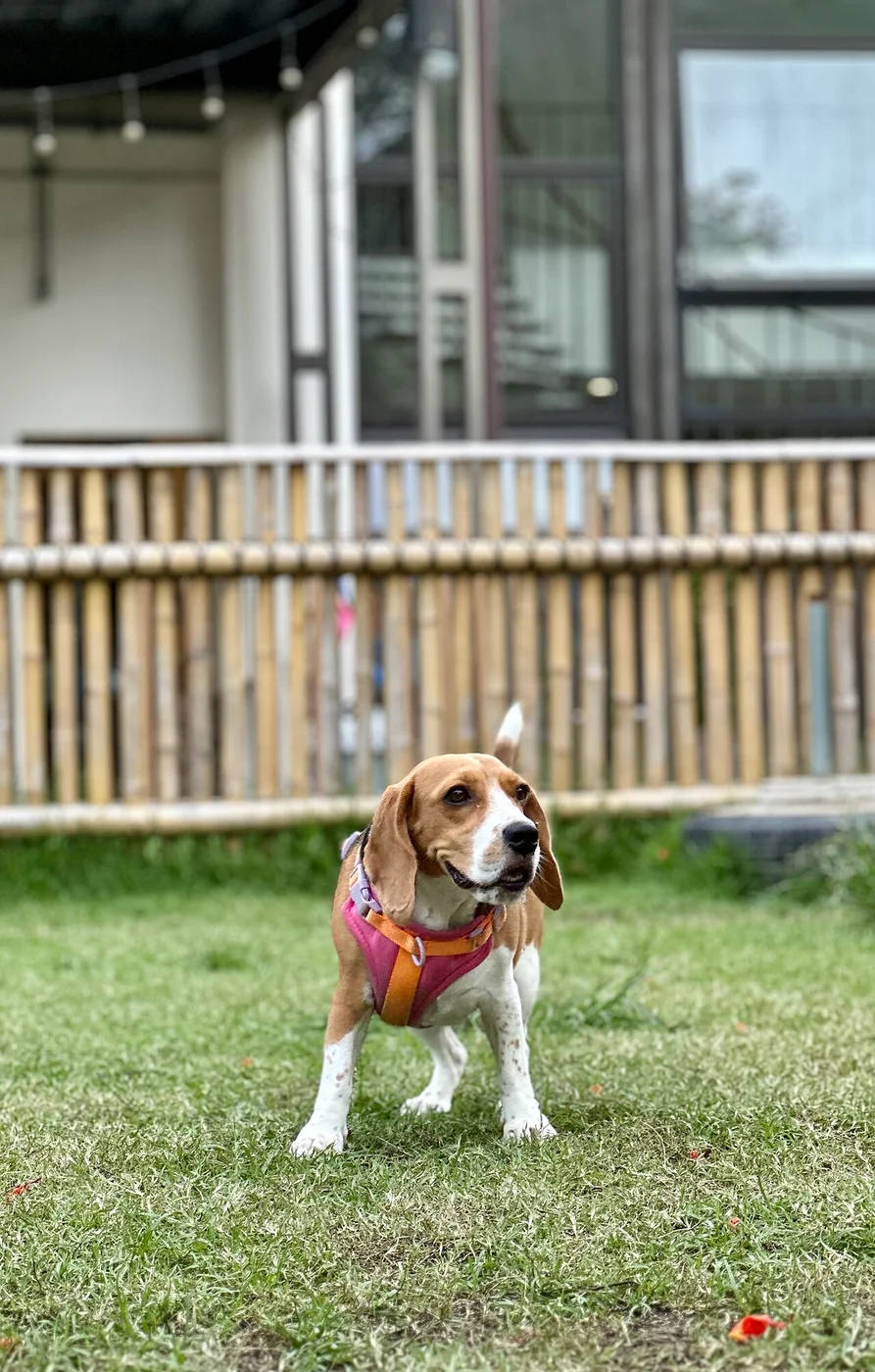
In healthy dogs standing on all four limbs, each front leg typically supports about 30 percent of body weight while each rear leg supports about 20 percent. This basic split arises because a dog’s center of mass sits closer to the chest than to the hips. The same pattern appears in many gait studies that record ground-reaction forces during movement.
Owners often notice this distribution when a dog shifts its weight forward or backward. A slight lean onto the front paws is normal, yet persistent changes in that balance can be worth mentioning at a veterinary visit. The reviewed literature presents these percentages as a general expectation rather than an absolute rule for every individual.
Modern documentary photograph of a beagle standing squarely on all four limbs. Slyronit · CC BY-SA 4.0. Web size optimized; original linked.
Stride Length and Joint Motion in Lean Versus Overweight Dogs
A study of 16 adult dogs of similar body size compared lean animals (body-condition score 4–5) with overweight ones (body-condition score 8–9) while they trotted at two controlled speeds. The overweight dogs took shorter strides with both front and rear limbs.
At the same time, the overweight group showed greater range of motion during the stance phase for the shoulder, elbow, hip, and tarsal joints. These measurements were taken in the sagittal plane using motion-capture techniques. The authors recorded higher peak vertical and horizontal ground-reaction forces in the heavier dogs, and they noted a statistical correlation between body mass and peak vertical force.
The researchers suggest that the larger forces and increased joint motion could produce greater compressive stress inside the joints, but they present this idea as a hypothesis rather than proven long-term outcome.
Ground-Reaction Forces During Trotting
Peak vertical force on a front limb can reach roughly 113 percent of body weight at certain trotting speeds, according to values summarized in a review of gait literature. The exact number varies with velocity and the individual dog’s gait pattern.
Because the front limbs already carry a larger share of weight at rest, the additional force during each stride concentrates more load on the shoulders and elbows than on the hips and stifles. This pattern holds across many healthy dogs studied on force plates and instrumented treadmills.
The review emphasizes that ground-reaction forces serve as one useful measure of limb function, though overlap exists between healthy dogs and those with osteoarthritis when the data are viewed in isolation.
Both sources focus on short-term measurements taken while dogs trotted on laboratory equipment. They do not track the same animals across years of naps, zoomies, or daily play, so lifetime wear cannot be read directly from the reported figures.
The studies also examined only a modest number of dogs of similar sizes and did not compare many different breeds or ages. Therefore the observed differences between lean and overweight groups apply strictly to the tested cohorts and the specific trotting speeds chosen.
No data in the cited sources quantify forces during jumping onto furniture, twisting to scratch, or lying in favorite sleeping positions. Those everyday scenes remain outside the measured scope.
Watching Your Own Dog With Informed Eyes
The concrete numbers—30 percent weight per front limb at rest, shorter strides and larger joint motion in heavier dogs, higher peak forces—offer a simple mental picture of what happens inside a dog’s limbs during ordinary movement.
Noticing whether a dog consistently stands with more weight on one side or shortens its stride on walks can spark a useful conversation with a veterinarian. The sources themselves stop short of giving exercise prescriptions or predicting future joint health; they simply document measurable differences under controlled conditions.
That restraint leaves room for light-hearted curiosity. When a dog launches into an evening zoomie, the front limbs are once again absorbing and redirecting the largest share of force—something to smile about while reaching for the treat jar with a slightly lighter hand.
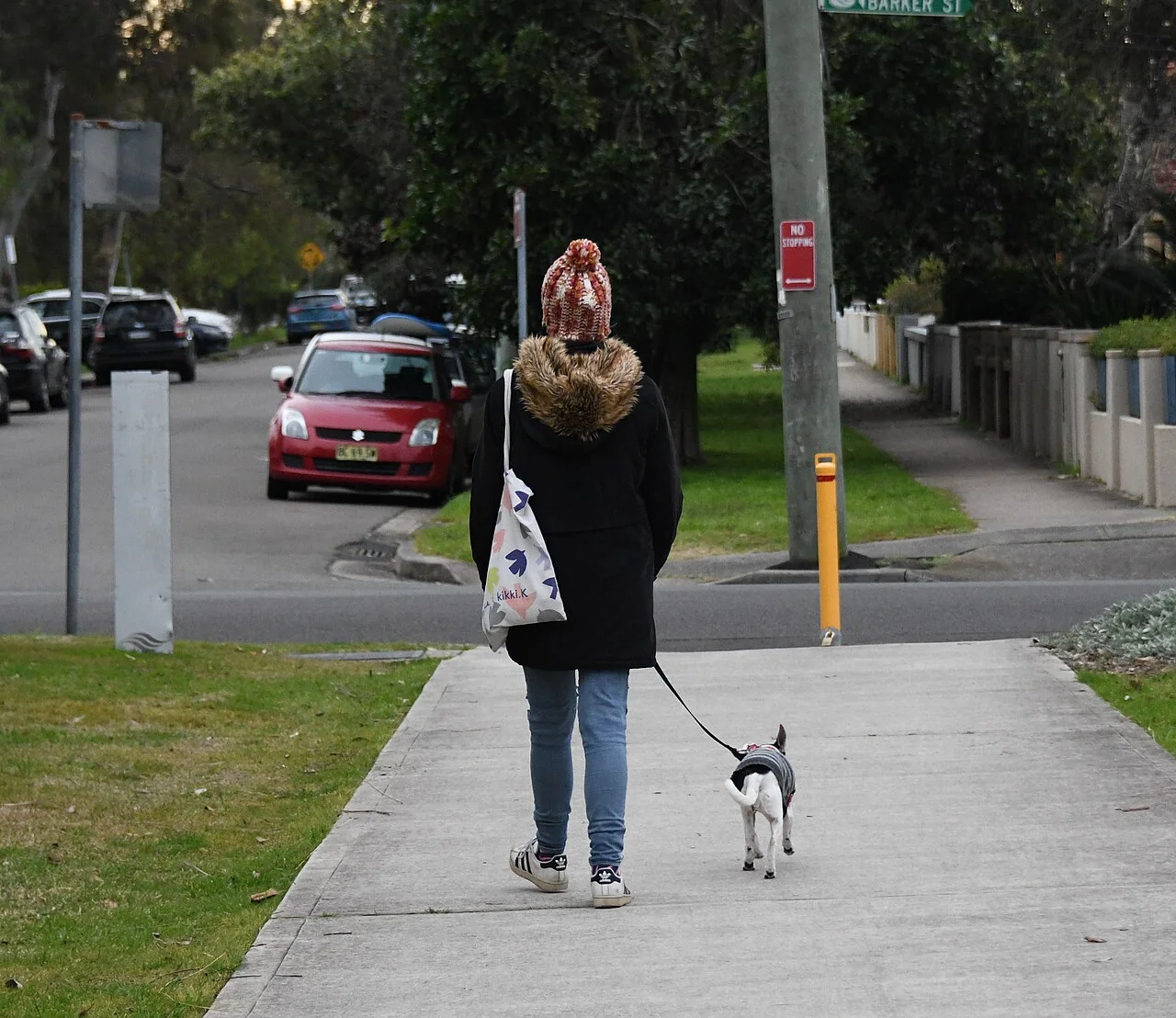
Modern documentary photograph of a girl walking her dog, observing its gait. Sardaka · CC BY-SA 4.0. Web size optimized; original linked.
General education, not individual veterinary advice. Ask a veterinarian about your dog’s health and care.
AI-assisted original writing. This feature was revised against source material and checked for unsupported claims. Follow the references below for evidence and its limits.
Research shows canine cognition follows a clear arc of early gains, midlife peak, and later gentle decline, offering owners practical ways to support their pets at every age.
Protected command centers in the brain and spinal cord team up with far-reaching nerves that connect to muscles, skin, and organs, letting dogs react to scents, sounds, and sudden surprises.
 Reference image