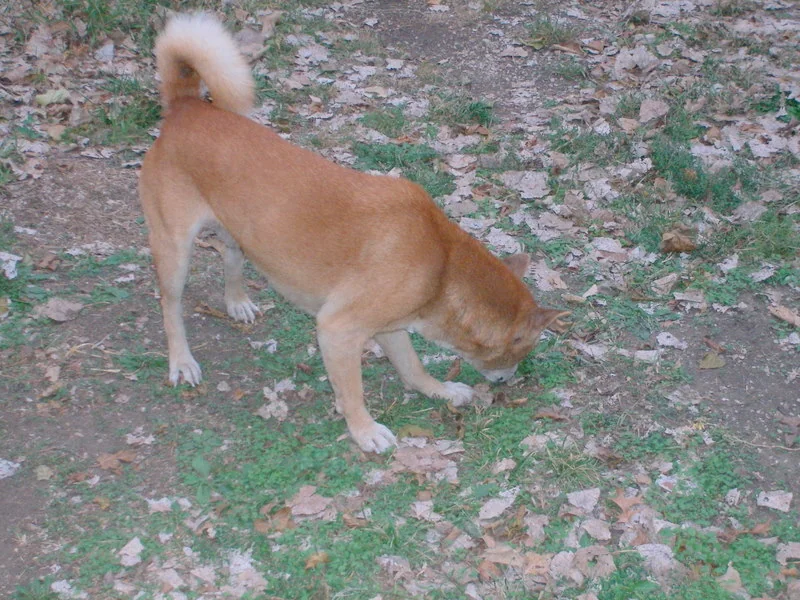
Genetically pure New Guinea Singing Dog sniffing dry leaves (2010 documentary photograph) Oldsingerman20 · CC BY-SA 3.0 · Web size optimized; source linked for the original.
Dogs move through a world alive with odors and faint sounds that most people never notice. Their noses and ears have evolved to gather and interpret information in ways that support survival, work, and companionship. Scientific reviews of canine anatomy and behavioral tests offer a window into these systems, though exact performance numbers can vary across studies and individuals. The evidence emphasizes the value of protecting a dog’s senses and consulting a veterinarian about any changes in behavior.
Inside the Canine Nose
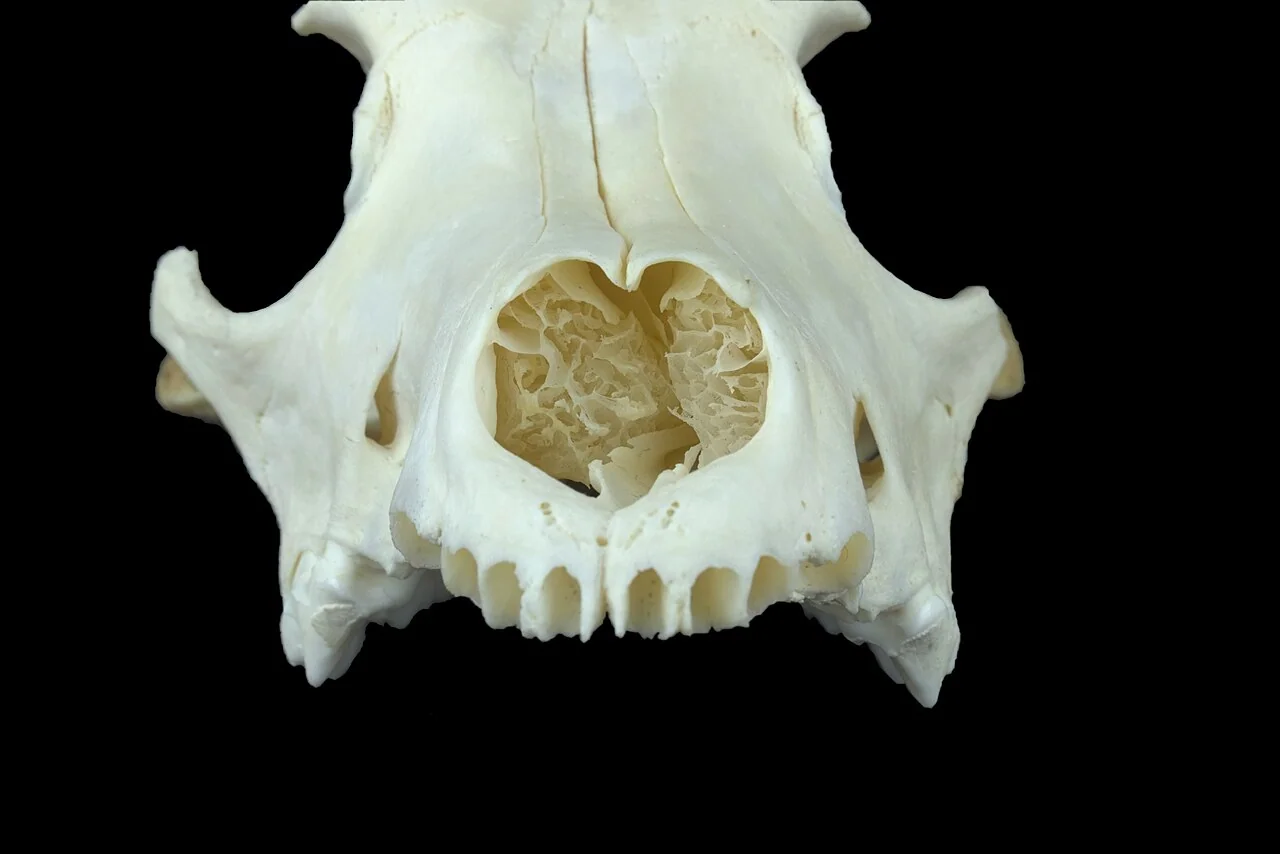
A dog’s nasal cavity holds intricate scroll-like turbinates that increase the surface area available for detecting odors. Specialized cells in the olfactory epithelium bind to scent molecules and send signals along the olfactory nerve to the olfactory bulb. In dogs this bulb makes up roughly 0.31 percent of total brain volume and contains about 5,000 glomeruli where signals converge.
From the bulb, information travels to regions of the olfactory cortex, including the piriform, peri-amygdaloid, and entorhinal cortices, then on to the frontal cortex, thalamus, and hippocampal formation. These pathways support odor memory and discrimination. Reviews of companion-animal neuroanatomy describe canine olfactory capacity as far greater than that of humans, with a much lower limit of detectability for many odorants. The precise mechanisms involve high densities of olfactory neurons, specialized patterns of airflow, and central brain processing.
Turbinate bones (cornets nasaux) in a dog skull, osteology collection specimen Anja · CC BY-SA 4.0. Web size optimized; original linked.
How the Brain Handles Scents
Once scent signals reach the brain, they integrate with memory, emotion, and decision-making areas. This integration allows dogs to recognize complex mixtures and track odors that are hours old. The reviewed literature notes that each nostril can process information somewhat independently, aiding in locating the direction of a smell.
Behavioral studies have trained dogs to notice very small differences in odor concentration, but the exact sensitivity reported in reviews—often described as 10,000 to 100,000 times greater than humans—comes from a synthesis of earlier anatomical and physiological work rather than any single measurement. These abilities appear reliable when dogs receive proper training and care, as referenced in materials on working-dog roles.
The Structure of a Dog’s Ears
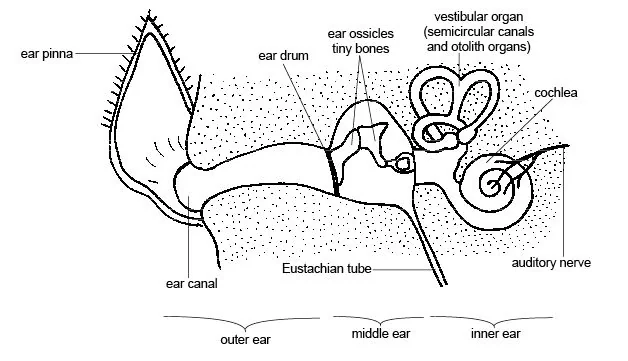
A dog’s external ear, or pinna, can rotate to focus on sounds from different directions. The ear canal follows a deeper, more angled path than in humans, which helps conduct high-frequency vibrations to the eardrum while offering some protection to inner structures.
The cochlea inside the inner ear contains hair cells tuned across a wide frequency range. Behavioral testing with a staircase method on a small group of dogs measured hearing thresholds at selected frequencies, producing mean values of 19.5 dB SPL at 0.5 kHz, 14.5 dB SPL at 4 kHz, and 8.5 dB SPL at 20 kHz. These results align with some prior literature at lower frequencies but showed more variability at 20 kHz.
Dogs can perceive sounds above the typical human upper limit of 20 kHz, including ultrasonic frequencies. One earlier behavioral study placed the upper end of the canine hearing range at 47 kHz when sound pressure levels exceed 60 dB SPL. The recent staircase-method experiment did not test frequencies beyond 20 kHz, so the exact upper limit remains uncertain.
Auditory signals travel from the cochlea via the auditory nerve to the brainstem and auditory cortex. The superior olivary complex helps localize sound sources. This wiring supports behaviors such as tilting the head to better aim the ears or responding to distant cues. The reviewed sources stress that individual and breed differences affect auditory acuity.
Practical Value and Care
The same sensory systems that once helped wild canids locate prey and avoid danger now assist modern working dogs in detection tasks. Pet dogs also rely on these abilities during daily walks and interactions. Understanding the anatomy encourages owners to prevent injury to noses and ears and to notice behavioral changes that might signal health concerns.
Veterinary guidance remains the recommended step whenever a dog shows altered responses to smells or sounds. The evidence underscores that while dogs experience a richer sensory world than humans in many respects, their abilities benefit from responsible care and training.
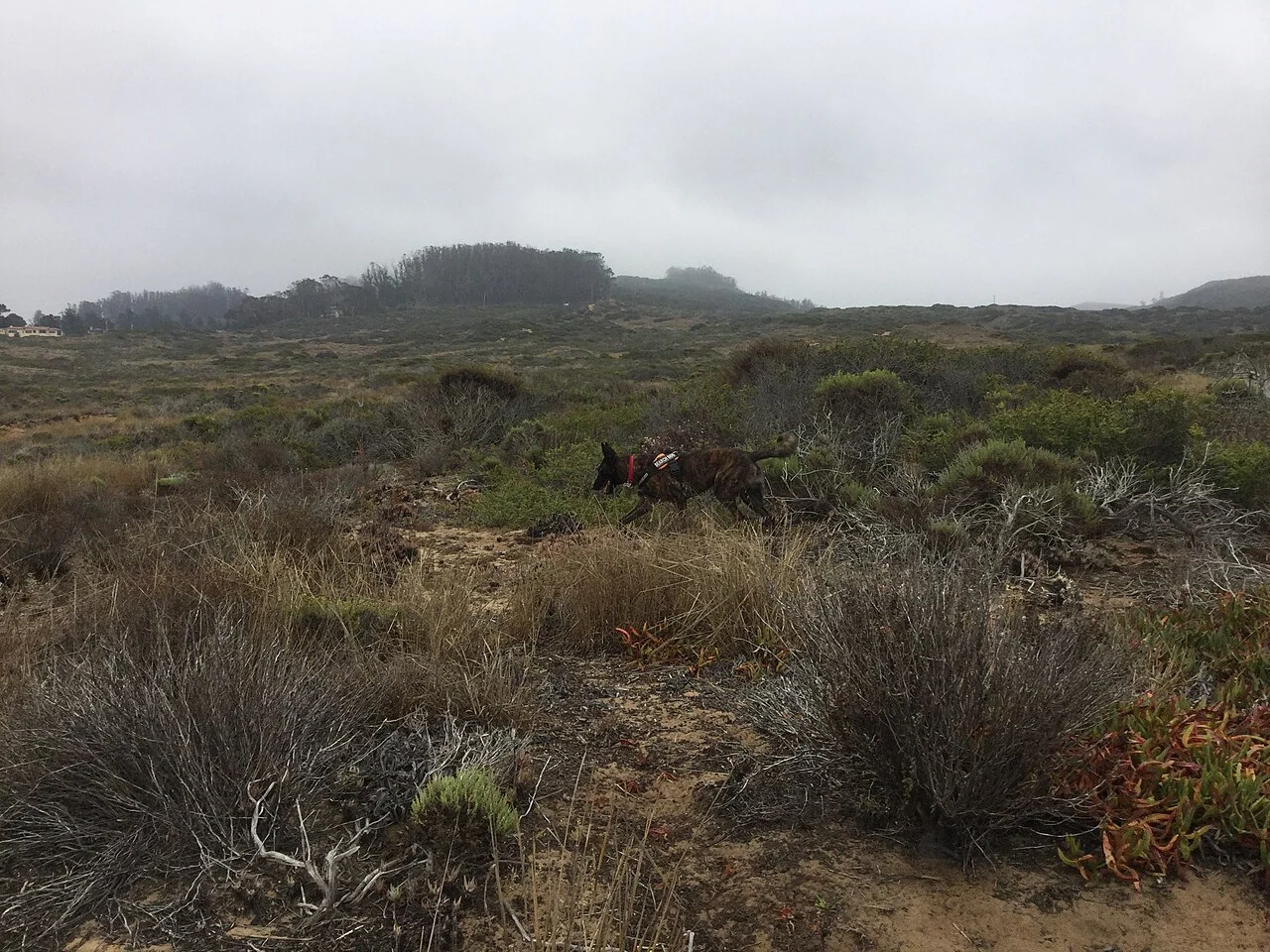
Vector, a wildlife scent detection dog, searches for the scent of the Morro bay kangaroo rat at Montana de Oro State Park (2016 documentary photograph by Chris Kofron/USFWS) Pacific Southwest Region USFWS from Sacramento, US · Public domain. Web size optimized; original linked.
General education, not individual veterinary advice. Ask a veterinarian about your dog’s health and care.
AI-assisted original writing. This feature was revised against source material and checked for unsupported claims. Follow the references below for evidence and its limits.
Research shows canine cognition follows a clear arc of early gains, midlife peak, and later gentle decline, offering owners practical ways to support their pets at every age.
Protected command centers in the brain and spinal cord team up with far-reaching nerves that connect to muscles, skin, and organs, letting dogs react to scents, sounds, and sudden surprises.
 Reference image