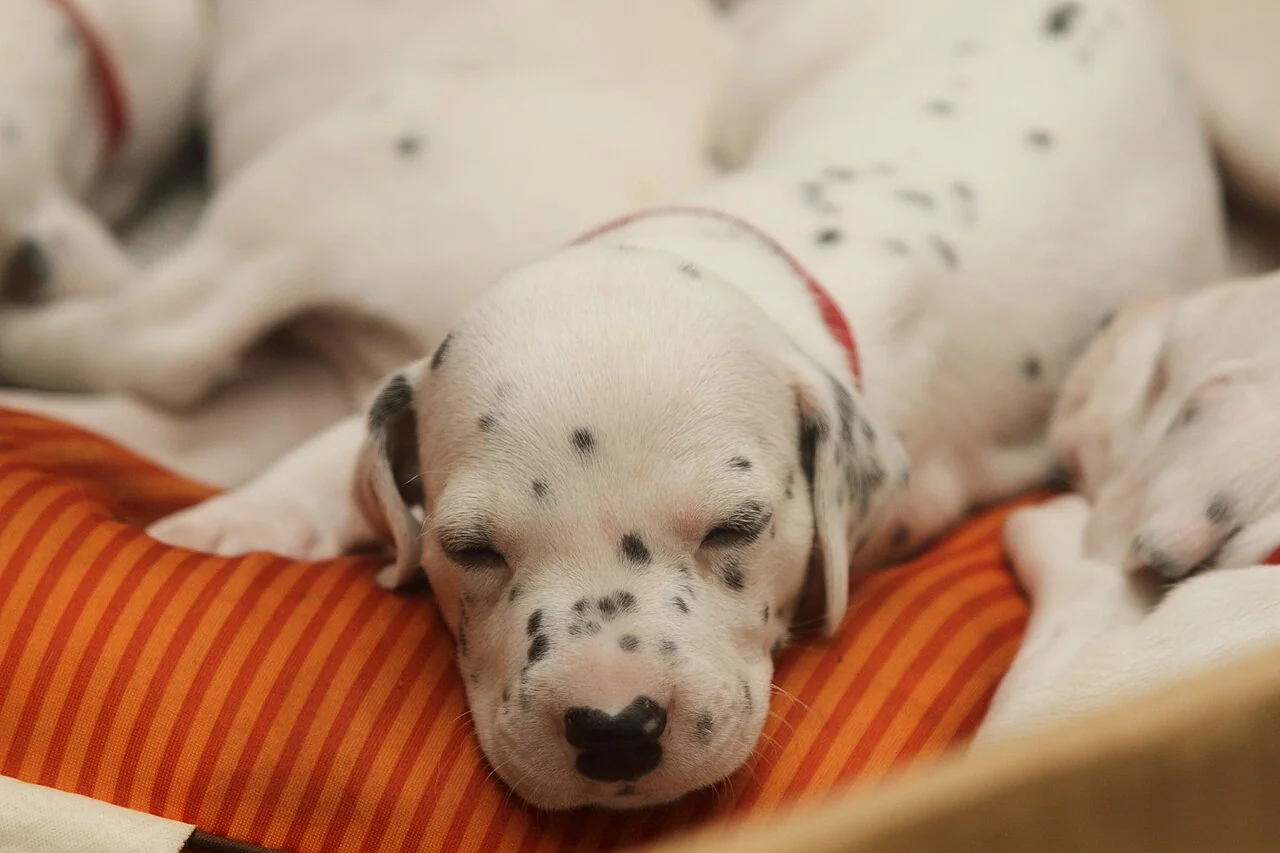
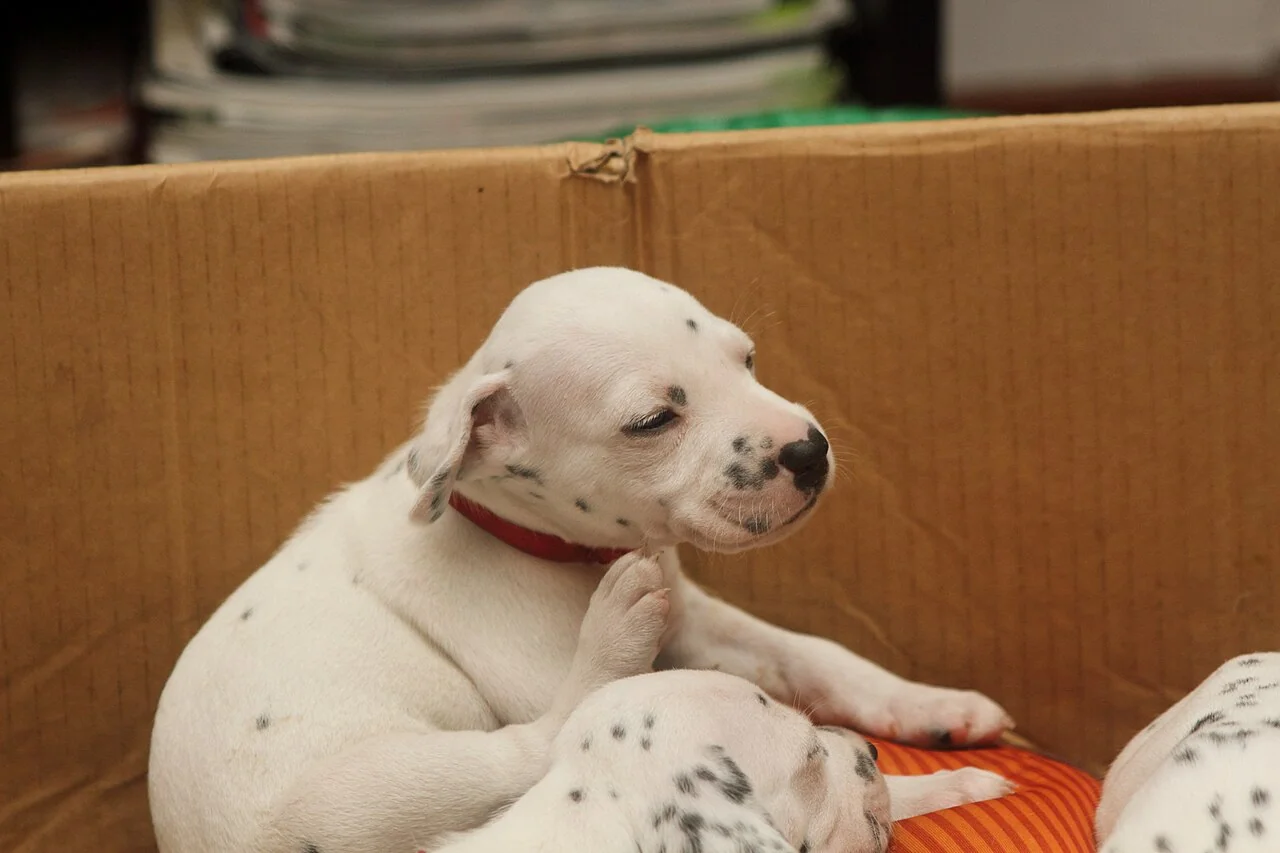
Litter of ten Dalmatian puppies, eight males and two females, three weeks old. Carlos Estrada · CC BY-SA 3.0 · Web size optimized; source linked for the original.
When you point at an object, does your dog understand what you mean? Research on puppies and wolf pups suggests that the ability to follow a human pointing gesture emerges quite early in domestic dogs. Three published studies compared how young dogs and similarly raised wolves respond to these gestures, offering a window into how domestication may have shaped canine social skills. The evidence comes from controlled tests where animals chose between hidden food locations after seeing a human point. While dogs often succeeded with simple or distant pointing, wolves typically needed simpler cues or extended training. These findings highlight behavioral differences that show up even when wolves receive intensive human contact from a young age. The studies do not claim that wolves cannot learn the skill, only that it appears later or under different conditions than in dogs.
Early Tests at Four Months Old
One study tested dogs and wolves at around four months of age. The dogs, including pet dogs with typical early lives, were able to use a momentary distal pointing gesture to find hidden food. This type of point involves a brief gesture from a distance, without the hand staying near the target. The same-aged wolves, raised with comparable human socialization, did not reliably follow this cue. Instead, the wolves responded better to simpler signals such as touching the container or pointing with the hand held close to it. The researchers noted that the wolves had been hand-reared in a way intended to match the dogs' experience, yet the species difference remained. Individual wolves showed wide variation in performance, reminding us that these are not uniform across every animal.
This pattern suggests that the capacity to interpret a distant, brief point may develop on a different timeline in dogs than in wolves. The study authors observed that wolves improved in eye contact and cue-following only after months of additional formal training. These results come from one specific set of hand-reared wolves and pet dogs, so they may not represent all populations. Still, the contrast at the same age and rearing level points to a developmental divergence that appears before full adulthood.
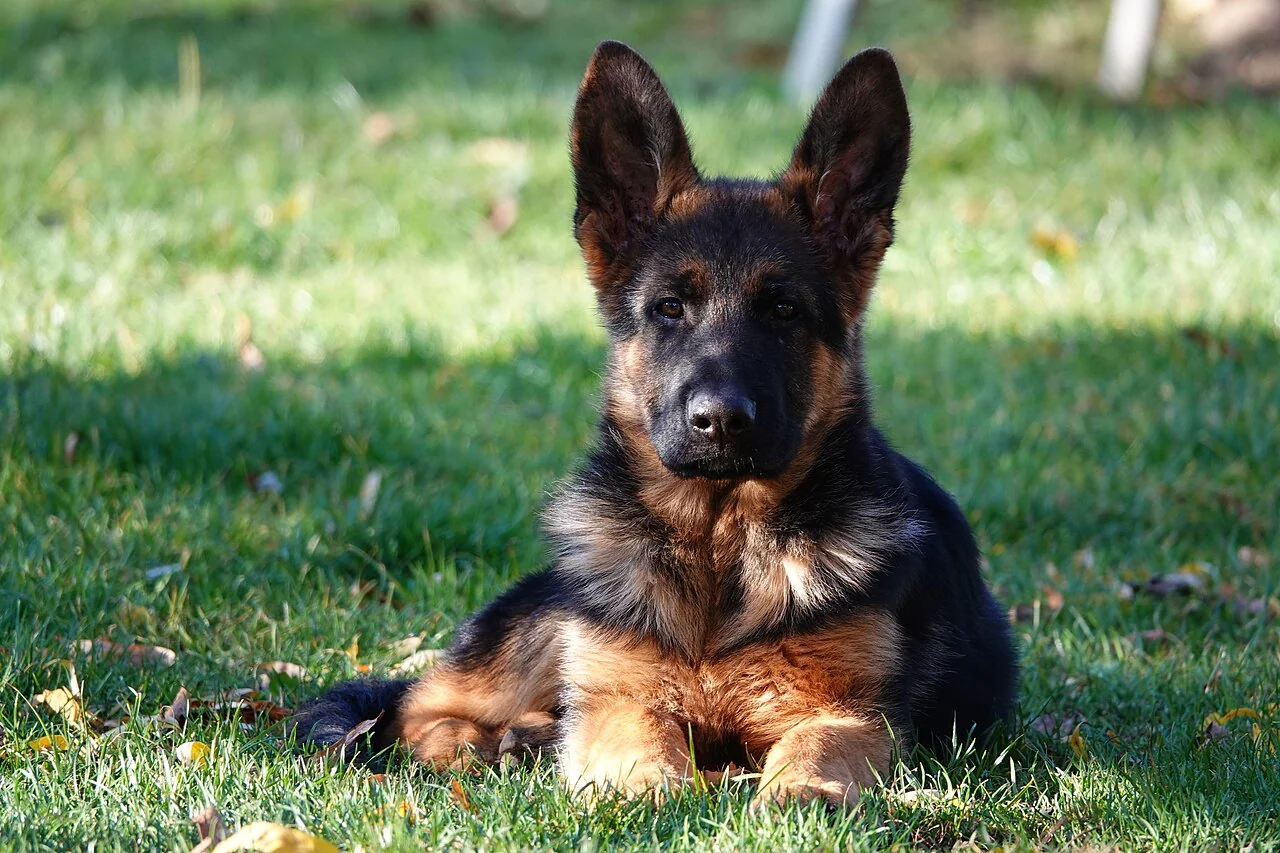
Four-month-old German Shepherd dog bkaree1 · CC BY 2.0. Web size optimized; original linked.
Performance at Eight Weeks and Four Months
A second study looked at even younger animals. At eight weeks old, hand-reared dogs and wolves performed similarly when given a simpler proximal momentary pointing cue. Both groups could use this closer gesture to some extent. By four months, however, pet dogs clearly outperformed the hand-reared wolves on the more challenging distal momentary pointing. The wolves continued to need simpler cues or more practice. Adult wolves that had received extensive socialization eventually performed at levels similar to dogs on the distal pointing without extra pretraining, showing that the skill can develop later.
Behavioral observations during testing added color to the data. Wolves took longer to make eye contact with handlers, showed more struggle, and displayed more biting behavior before settling down to focus on the signals. Dogs, by comparison, seemed to engage more readily. The researchers emphasized that early intensive socialization did not remove these species differences in the young animals. The delay in wolves' use of distal pointing, despite similar rearing, suggests a difference in how the two species tune into human gestures during early months.
Puppy Comparisons from Five to Eighteen Weeks
The third study focused on a larger group of puppies between five and 18 weeks old. Forty-four dog puppies and 37 wolf puppies participated. The dog puppies were significantly more likely to follow both pointing and marker gestures than the wolf puppies. Statistically, the dogs had over twice the odds of choosing the correct location. Seventeen of 31 dog puppies performed above chance levels across the gestures when looked at individually, while none of the 26 wolf puppies reached that mark. On their very first trial, dog puppies used the gestures at levels above chance; wolf puppies did not.
Even though the wolf puppies received near-constant human contact from shortly after birth, the dogs showed more attraction to humans, made more eye contact, and read the gestures better. The data did not show increasing success with age within this puppy period for the dogs, meaning the advantage was present from the early weeks tested. These results reinforce the idea that sensitivity to human pointing can appear early in dog development. The wolf puppies' lower performance, despite intensive socialization, points again to a species-level difference that emerges in puppyhood.
Three-week-old Dalmatian puppies in a litter Carlos Estrada · CC BY-SA 3.0. Web size optimized; original linked.
What the Differences Might Mean
Taken together, the studies indicate that domestic dogs often show an earlier or stronger inclination to follow certain human pointing gestures than wolves raised under similar conditions. This does not mean wolves are incapable. Adult wolves in the research eventually matched dogs after more time and training. The early advantage in dogs may reflect selection during domestication for traits that help them read human signals. The evidence does not prove a single cause, but it consistently shows the developmental gap appearing by four months and sometimes earlier.
From an editorial perspective, these findings invite us to think about how we interact with young dogs. If puppies are already tuning into our points in the first months, that offers a chance to build communication through play and training. For wolf enthusiasts or those working with wild canids, the data suggest patience and simpler cues may be more effective at first. The humor in imagining a wolf puppy dramatically ignoring your point while a dog puppy eagerly follows it should not distract from the serious point: these behavioral differences affect real animal welfare and training approaches. The research carries limitations, including small samples and specific rearing conditions, so we should avoid overgeneralizing to all dogs or all wolves.
Reading Questions and Practical Implications
What questions should a thoughtful reader ask? One is whether the tests truly measure understanding or simply learned association. The studies used food rewards, so motivation matters. Another question is how these early skills translate to life in a home or in conservation settings. The evidence does not address long-term outcomes, but the early dog advantage could make training easier and strengthen the human-animal bond.
Implications for pet owners include starting with clear, simple gestures and noticing when a puppy begins to respond. Light-hearted moments, such as a puppy misreading your point and running the wrong way, become opportunities to adjust rather than moments of frustration. For researchers, the variability in wolf performance suggests value in studying individual differences and different socialization methods. Overall, the studies support the view that dogs' cooperative communication with humans develops on an accelerated timeline compared with wolves. This does not diminish wolves' intelligence; it simply highlights one area where domestication appears to have left a mark. Future work may clarify how much of the difference is genetic, experiential, or both.
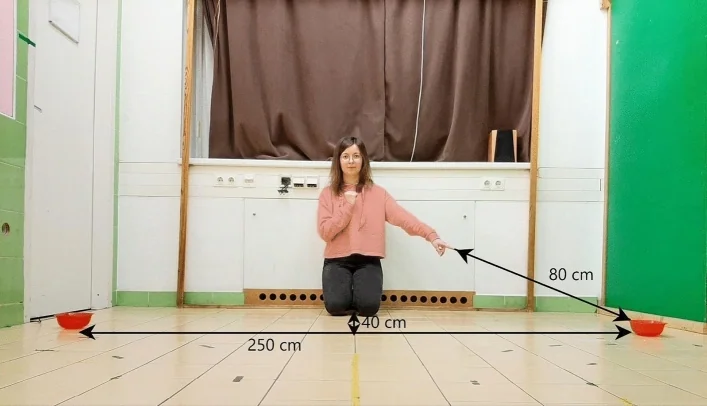
Published experimental setup for a dog pointing-gesture study, showing the experimenter and two choice locations. Source research figure, not a scene from a home training session. Salamon A, Uccheddu S, Csepregi M, Miklósi Á, Gácsi M. · CC BY 4.0. Web size optimized; original linked.
AI-assisted original writing. This feature was revised against source material and checked for unsupported claims. Follow the references below for evidence and its limits.
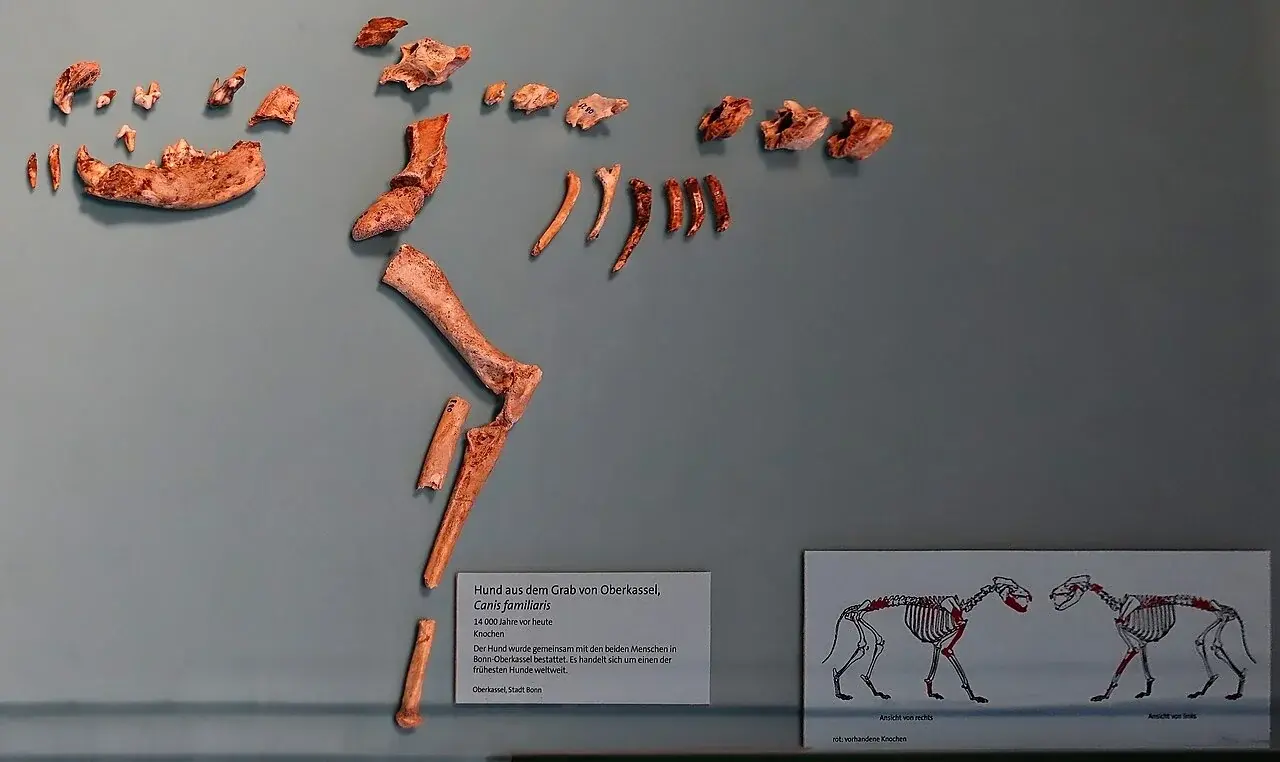
Archaeological finds from select European sites offer glimpses into possible relationships between people and dogs, while underscoring the challenges of interpreting ancient deposits.
Owner-led projects offer scale and real-world glimpses into canine minds, yet differences in tester identity and uncontrolled home settings can introduce systematic errors that large samples do not automatically cancel out.
Penn State researchers once used MRI scans and computer simulations to map airflow inside a dog’s nasal passages, offering clues for designing better chemical sensors.
 Photograph