Paleogenomics Pushes Back the Timeline of Ancient Dogs in Western Eurasia
New DNA from roughly 15,000-year-old bones shows a widespread population of early dogs already living alongside humans across Europe and Anatolia during the Late Upper Paleolithic.
Upper Paleolithic unknown canid depicted on the Gallery of Discs in the Cave of El Castillo, Spain. Cave painting from a site with Paleolithic human occupation. Bernietaylor · CC BY 4.0 · Web size optimized; source linked for the original.
Two recent studies of ancient canid bones have added fresh detail to our picture of when and how dogs became part of human life. Rather than pointing to a single moment of domestication, the genetic evidence reveals a complex history of early dogs spreading across western Eurasia by at least 14,300 years ago, followed by later arrivals of different ancestry from the east. The work relies on careful extraction of DNA from fragile remains found in caves and campsites, offering a window into a time when humans were still hunter-gatherers and our four-legged companions were just beginning to settle in by the fire. While the findings do not solve the ultimate origin puzzle, they narrow the gap between archaeological hints and direct genetic proof. This article walks through the key results, what they mean for understanding human-canine history, and the questions that remain open.
New Ancient Genomes Extend the Record
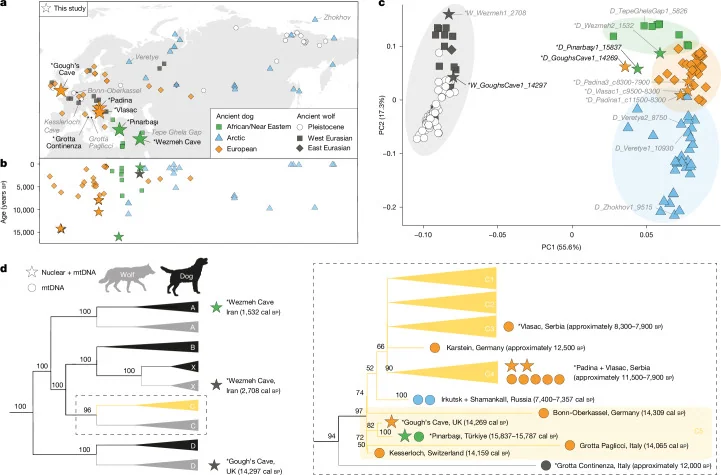
Researchers successfully recovered nuclear and mitochondrial DNA from two notable canid specimens: one from Pınarbaşı in Türkiye dated to about 15,800 years before present and another from Gough’s Cave in the UK dated to roughly 14,300 years before present. These genomes, though at modest coverage of 1.3× and 1.7× respectively, are the oldest direct ancient DNA evidence yet for dogs. Before this work, the earliest confirmed genetic samples came from Mesolithic contexts around 10,900 years ago. The new finds push that benchmark back by several thousand years and show that dogs were already present in both Anatolia and western Europe during the Paleolithic.
What stands out is how genetically similar these two dogs appear despite being separated by more than 2,000 kilometers. Analyses group them with a broader set of samples indicating a fairly homogeneous dog population had spread across Europe and Anatolia by at least 14,300 years ago. This distribution suggests the animals were not isolated oddities but part of a connected network. The expansion of this western Eurasian dog population appears to have taken place between approximately 18,500 and 14,000 years ago, a window that aligns with the later part of the Last Glacial Maximum and the warming that followed. Such timing raises interesting questions about whether climatic shifts or human movements played larger roles in helping dogs become established across the region.
The genetic data link these early dogs to several Late Upper Paleolithic human cultures, including the Magdalenian in western Europe, the Epigravettian in the east, and hunter-gatherer groups in Anatolia. Rather than remaining confined to one human population, the dogs seem to have been exchanged or traveled alongside different groups. This pattern hints at a level of social connection among far-flung hunter-gatherers that we are only beginning to appreciate. It is easy to imagine a scenario, purely for illustration, in which a band of Magdalenian hunters returns from a long trek with a friendly canine in tow, only to have the animal become the talk of the next seasonal gathering. Of course, such invented scenes are labeled here as light satire and not presented as historical fact.
The evidence does not claim a single domestication event or pinpoint an exact geographic origin. Instead it shows that by the time these bones were buried, dogs already formed a recognizable population that was moving with people. This finding complicates older ideas of dogs arising in one isolated spot and then radiating outward. It also underscores how incomplete our sample set still is; the studies themselves note that conclusions about timing and contribution rely on limited ancient specimens. Readers might usefully ask how many more undiscovered dog remains lie in unexplored caves or under modern towns, waiting for future sequencing technology to reveal them.
Later Influx of Eastern Ancestry Reshaped European Dogs
A second major finding involves an influx of eastern Eurasian dog ancestry that arrived during the Mesolithic, apparently carried by movements of eastern hunter-gatherers into Europe. This later wave contributed the primary ancestry seen in most later European dogs. The timing and exact size of that contribution are still modeled from a relatively small number of samples, so researchers treat the details with appropriate caution. Nonetheless, the pattern of replacement and admixture is clear: the earlier western Paleolithic dogs did not remain the dominant lineage forever.
This turnover mirrors some aspects of human population history while diverging in others. For instance, Neolithic European dog ancestry experienced a near-complete replacement, whereas human genetic shifts in the same period were more gradual in some regions. Such contrasts invite reflection on why dogs and people sometimes followed parallel paths and sometimes did not. One useful question for further reading is whether particular roles that dogs played, such as hunting partners or camp guardians, made certain lineages more or less likely to be kept or traded. The studies stop short of speculating on those behaviors, leaving room for future archaeological work to test ideas.
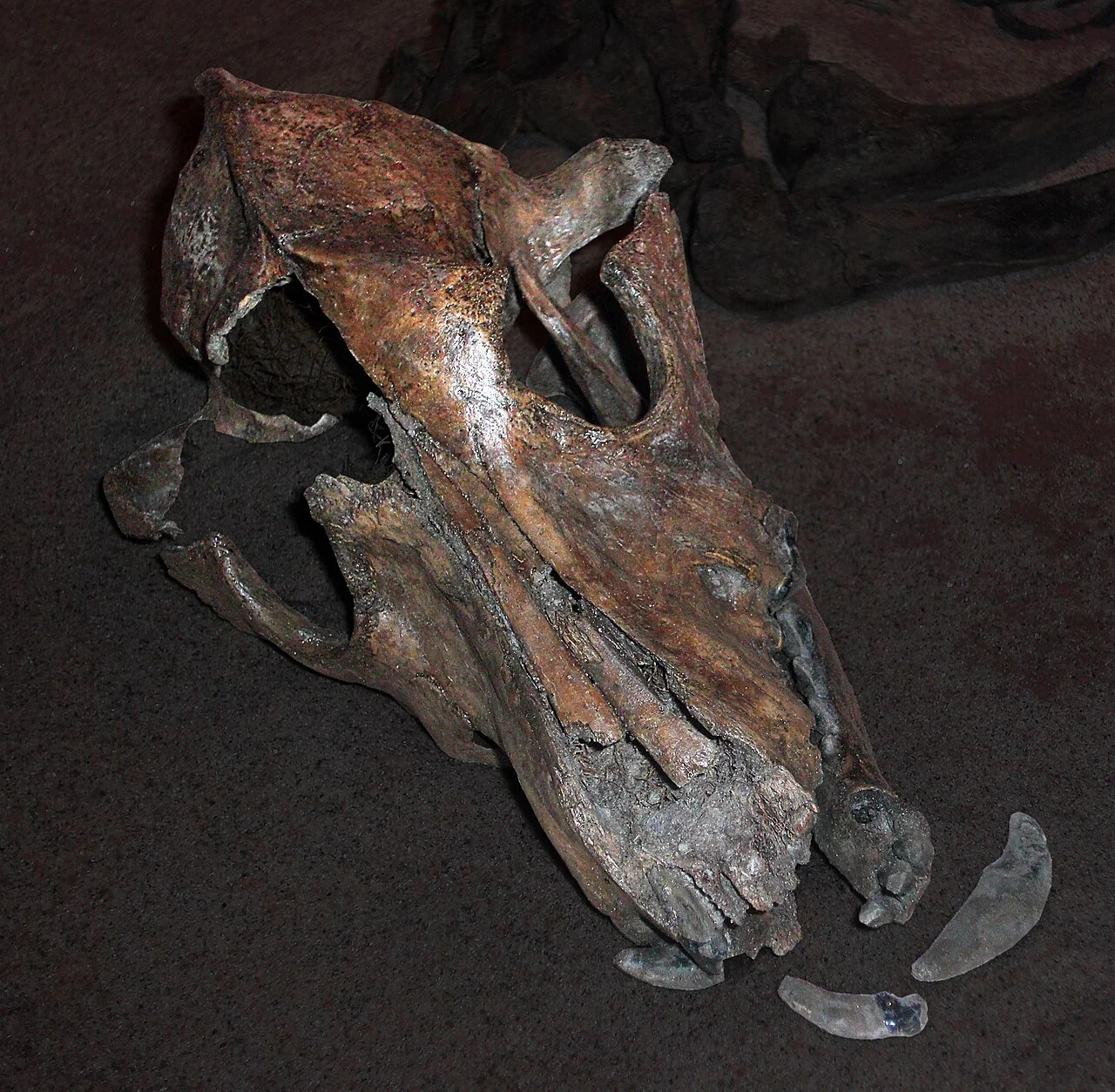
Skull of a Mesolithic dog from Almeö, Sweden, dated to approximately 9,300 years before present. Example of post-Paleolithic European dog remains discussed in ancestry turnover studies. Gunnar Creutz · CC BY-SA 4.0. Web size optimized; original linked.
Common Ancestry and Limited Wolf Gene Flow
Across both studies, all ancient and modern dogs trace back to a now-extinct wolf population that was distinct from today’s living wolves. After the initial domestication phase, there appears to have been limited gene flow from wolves into dogs, although dogs have contributed genetic material back into wolf populations on a larger scale. This asymmetry is intriguing and may reflect differences in how the two species interacted once dogs had become behaviorally distinct. Exactly when and where the original split occurred remains unresolved, a point both papers emphasize.
By around 11,000 years ago at least five major ancestry lineages of dogs had already diversified, pointing to a deep Paleolithic history. The genetic legacy of these early branches can still be detected in some modern populations, though many have been overwritten by later events. This complexity cautions against overly simple stories of “the first dog.” Editorial analysis suggests the evidence supports viewing domestication as an extended process involving multiple human groups rather than a eureka moment. For animal welfare advocates, the findings also underscore the long shared journey humans and dogs have taken, which may encourage continued ethical care for today’s breeds whose roots stretch back so far.
Implications, Open Questions, and Reading Reflections
The combined results paint a richer but more nuanced picture than earlier models. Dogs were widely distributed across western Eurasia during the Paleolithic, traveling with diverse human cultures and later receiving substantial eastern input. This history partially tracks human migrations yet shows its own twists, such as the wholesale replacement of Neolithic dog ancestry in Europe. The studies rely on a still-small set of ancient genomes, meaning future discoveries could shift the timeline or reveal additional lineages.
Thoughtful readers might consider what these genetic findings imply for conservation of rare modern dog breeds that retain unusual ancestry. They could also ponder the ethical dimensions of selective breeding today given the deep natural history uncovered. One lingering uncertainty is the precise location and circumstances of the original wolf-to-dog transition; the papers make no claim to have solved it. Light humor aside, it is somehow comforting to think that even 15,000 years ago someone was probably tossing scraps to a hopeful canine under the stars. The real takeaway is how much more there is to learn and how valuable continued careful excavation and sequencing will be. Those interested can explore the original papers to weigh the data for themselves.
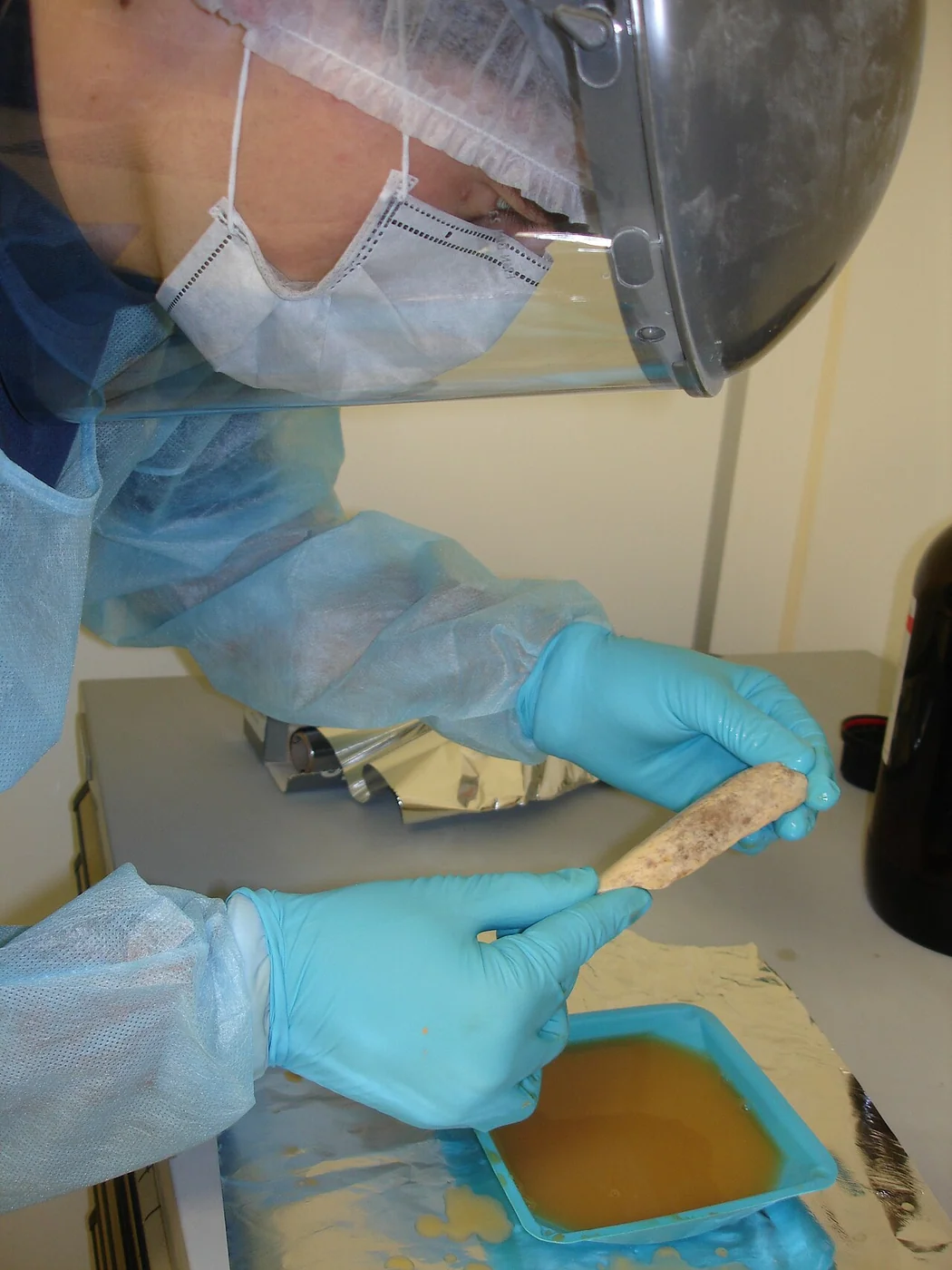
Researcher working in a clean room to extract ancient DNA from a bone sample, illustrating the laboratory process used in paleogenomic studies of ancient canids. Max Planck Institute for Evolutionary Anthropology · Public domain. Web size optimized; original linked.
AI-assisted original writing. This feature was revised against source material and checked for unsupported claims. Follow the references below for evidence and its limits.
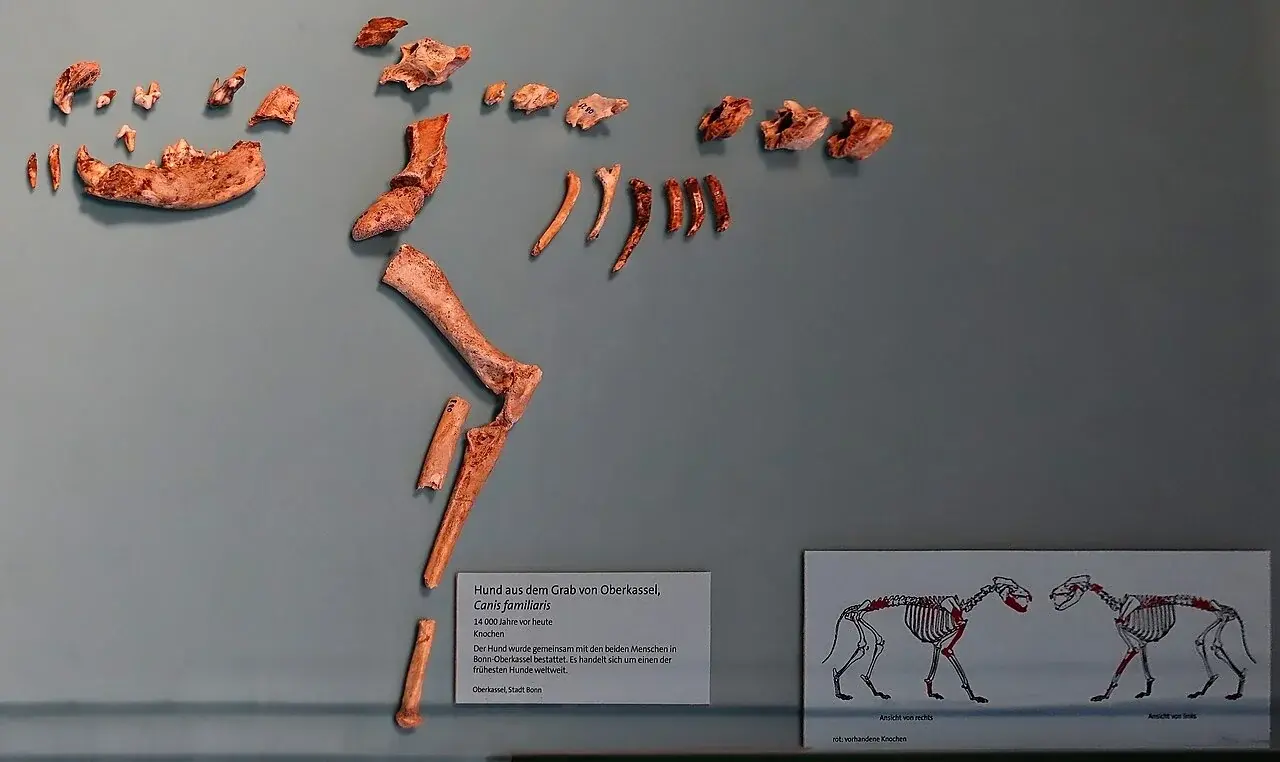
Archaeological finds from select European sites offer glimpses into possible relationships between people and dogs, while underscoring the challenges of interpreting ancient deposits.
Owner-led projects offer scale and real-world glimpses into canine minds, yet differences in tester identity and uncontrolled home settings can introduce systematic errors that large samples do not automatically cancel out.
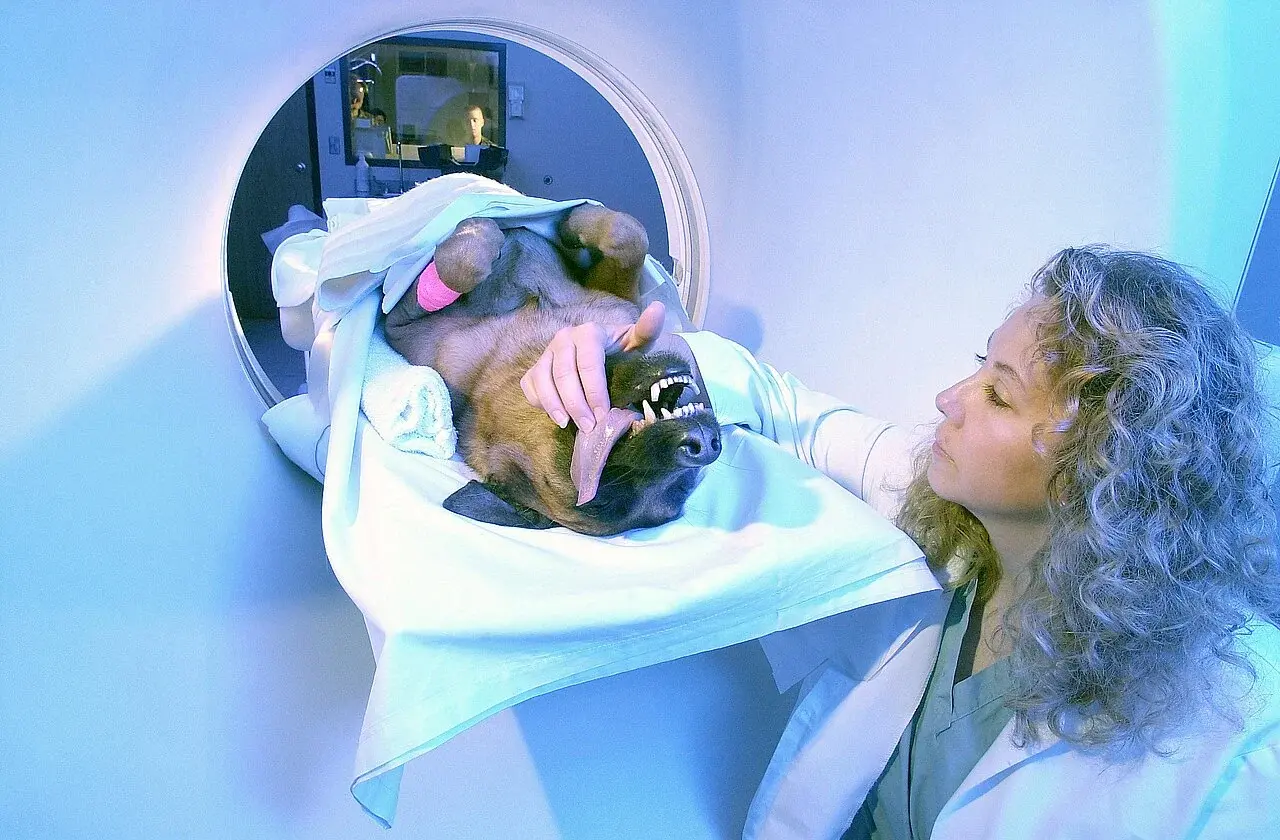
Penn State researchers once used MRI scans and computer simulations to map airflow inside a dog’s nasal passages, offering clues for designing better chemical sensors.

 Photograph