Reindeer Herding and the Role of Dogs Among the Sámi
Archaeological and historical evidence shows how small-scale herding practices among the Sámi evolved into larger mobile pastoralism, with dogs later recognized for their contributions to reindeer work.
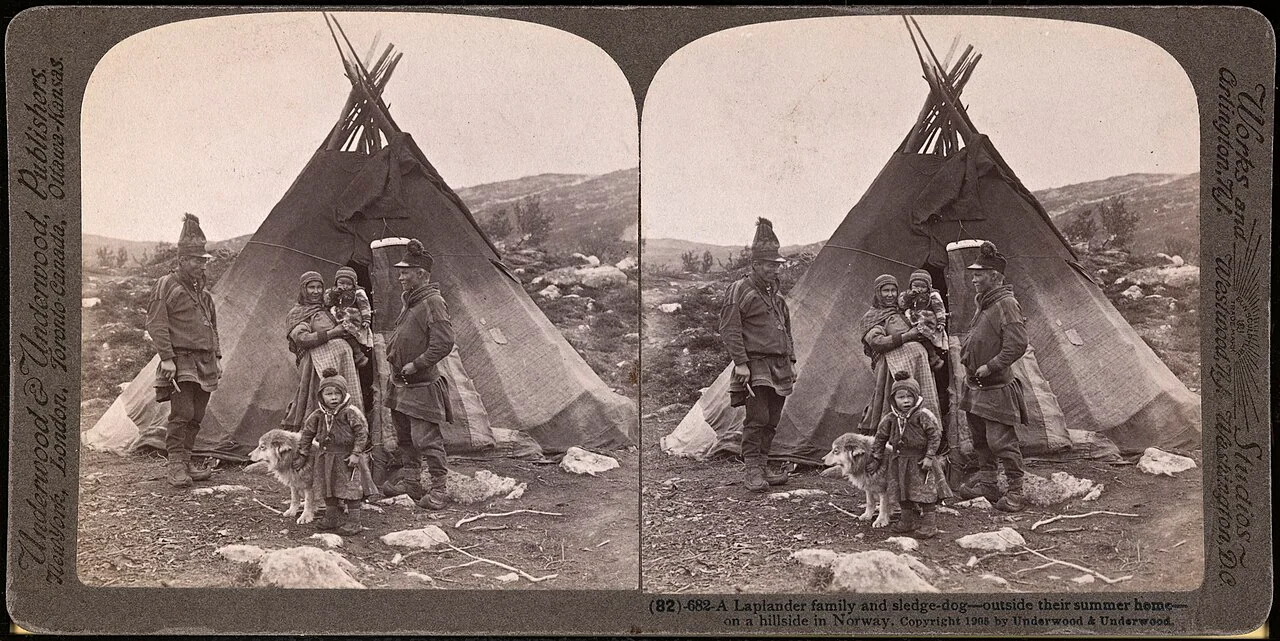
A Laplander family and sledge dog outside their summer home on a hillside in Norway, c. 1905. Historical photograph. Nasjonalbiblioteket from Norway · CC BY 2.0 · Web size optimized; source linked for the original.
In the vast landscapes of northern Fennoscandia, the relationship between the Sámi people and reindeer has deep roots shaped by environment, culture, and necessity. Evidence from archaeology and historical records points to a gradual development of herding practices, while certain Nordic dog breeds have been associated with this work in more recent times. This article explores what the available sources reveal about these traditions, acknowledging the limits of what we can confidently say about specific breeds or continuous centuries-old partnerships. Readers might consider how environmental changes and modern tools continue to influence these longstanding ways of life.
The Beginnings of Reindeer Herding
Research indicates that small-scale reindeer herding, involving interspecies sociality, cooperation, and care, developed among the Sámi during the Late Iron Age. This was not a uniform practice; regional variations existed across northern Fennoscandia. A significant shift toward larger-scale reindeer herding took place from the 15th century onward, though the exact timing and details differ by region. Practices before the 16th century remain relatively unclear, relying on later historical sources for insight.
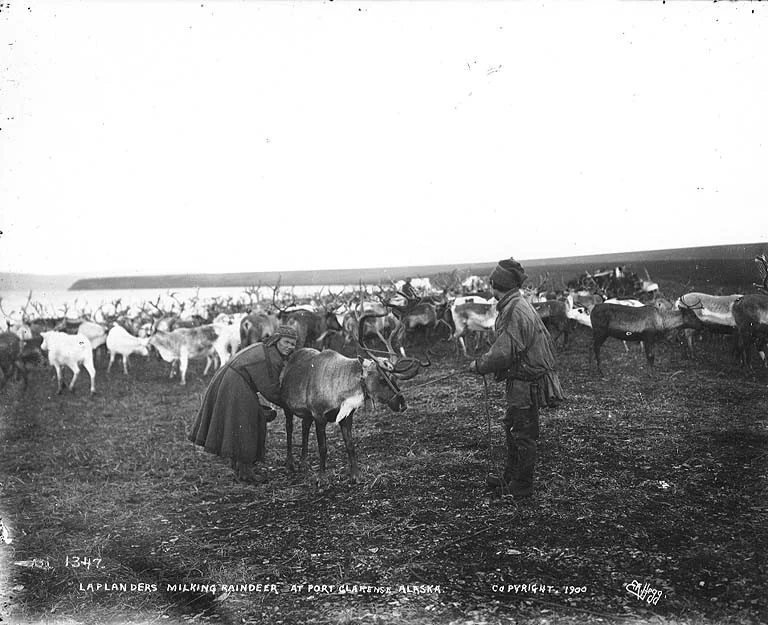
These early forms of herding likely adapted to the rhythms of seasonal movements, though the sources do not provide precise descriptions of daily routines or specific tools used in the earliest periods. As herding scaled up, it incorporated elements such as milking, the use of draught and cargo reindeer, and more care-intensive management. This transition reflects broader changes in Sámi society and economy, influenced by factors that historians continue to study. One might wonder how climate variations or interactions with neighboring groups played into these developments, questions that the archaeological record only partially answers.
Historical photograph from 1900 showing Sámi people milking reindeer at Port Clarence, Alaska Eric A. Hegg · Public domain. Web size optimized; original linked.
Variations Between Mountain and Forest Sámi
From the 17th and 18th centuries, historical accounts describe differences in herding approaches between mountain and forest Sámi communities. Mountain groups often emphasized mobile pastoralism, moving with herds across broader territories, while forest Sámi adapted practices to wooded environments. These sources highlight activities like reindeer milking and the use of animals for transport, but they reflect practices after the major expansion of herding and do not offer detailed early evidence.
Such variations underscore the adaptability required in northern environments, where seasons dictate movement and resource availability. Editorial analysis suggests that these differences highlight a pragmatic approach to herding that balanced human needs with animal welfare and ecological realities. A useful reading question arises here: how might contemporary climate shifts affect these historically distinct strategies? The evidence invites reflection on resilience rather than prescribing modern solutions, keeping the focus on documented adaptability without assuming unbroken continuity.
Dogs in Sámi Reindeer Traditions
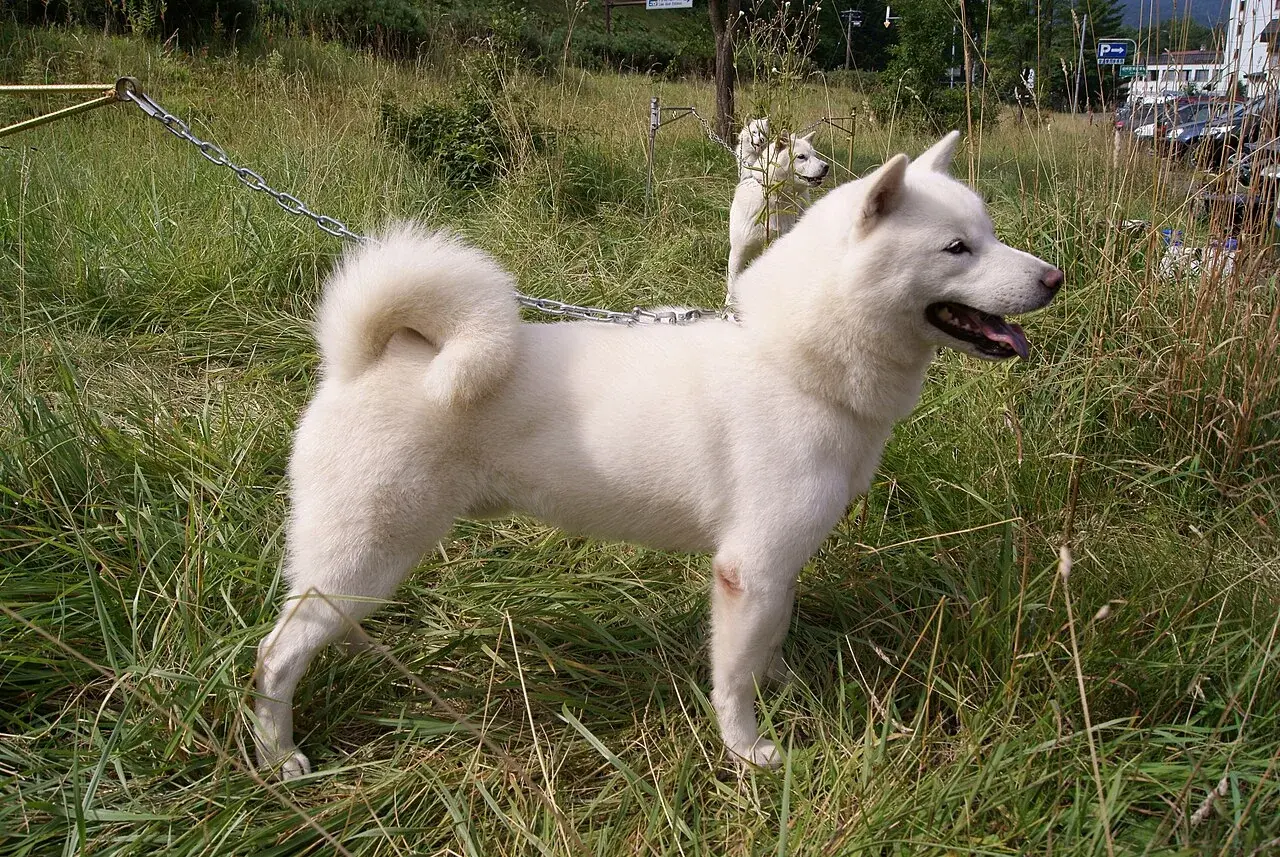
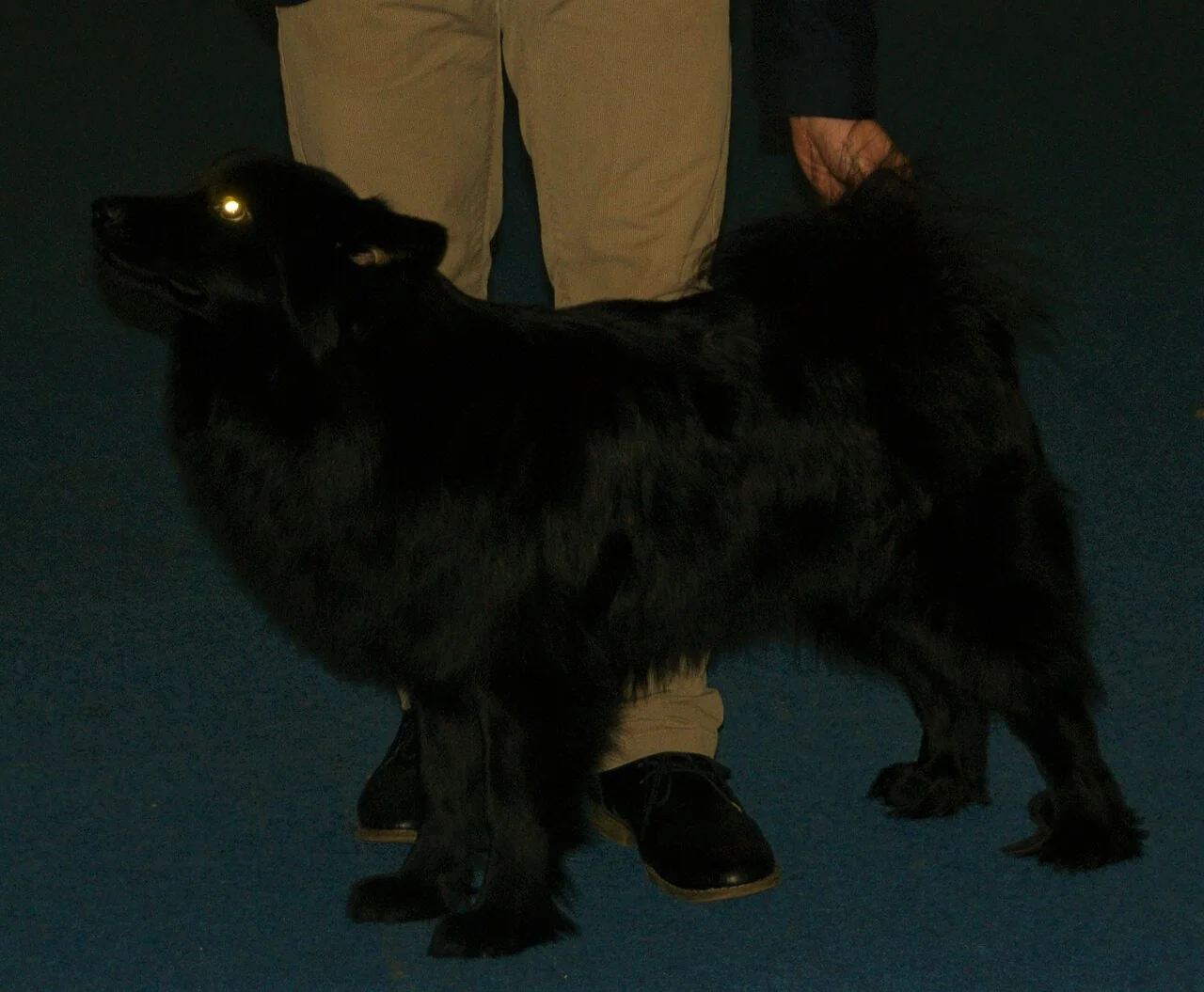
Certain Nordic dog breeds, including the Swedish Lapphund, have been linked to Sámi communities as animals originally used for farm, hunting, and herding tasks. Official breed standards note that the Swedish Lapphund's properties make it useful in reindeer herding, describing it as having been a reindeer herding dog in the past. Today it is primarily kept as a companion, though herding instincts persist in some lines.
Genetic studies of historic dog furs from traditional clothing, dating roughly 100 to 200 years old, show that modern Swedish Lapphund and related breeds developed from indigenous non-breed dogs used by Sámi reindeer herding people and rural inhabitants in northern Sweden during the 19th century. These dogs were involved in herding or hunting activities. However, the sources emphasize that modern equipment such as snowmobiles has reduced the practical need for dogs in many operations. This raises an interpretive point: while dogs clearly played supporting roles, the precise extent of their integration into pre-19th century seasonal migrations is not detailed in the available evidence, inviting cautious interpretation rather than sweeping claims of ancient partnership.
A Swedish Lapphund. Canarian · CC BY-SA 4.0. Web size optimized; original linked.
Modern Changes and Diminishing Roles
As technology advanced, the reliance on dogs for reindeer herding has decreased in many areas. Breed information highlights that while the Swedish Lapphund is still used as a reindeer herder in some places, snowmobiles and other equipment have largely taken over tasks once performed with canine assistance. This shift mirrors broader transformations in northern livelihoods.
From an editorial perspective, this evolution prompts questions about cultural continuity and animal welfare. If dogs once contributed to herding through their natural instincts, what happens to those traits when working roles fade? The sources do not romanticize the past but present a practical picture of change. Light humor might imagine a modern Lapphund eyeing a snowmobile with mild professional jealousy, yet the underlying reality is one of adaptation. Readers could consider whether preserving working lines of these dogs enriches cultural heritage or simply serves as a hobby, a debate grounded more in opinion than in the limited historical specifics provided.
Reflections on Evidence and Future Implications
The archaeological and genetic evidence offers valuable but incomplete glimpses into Sámi herding practices and the dogs associated with them. Caveats abound: pre-16th century details are scarce, breed histories focus on 19th-century formation rather than ancient origins, and no sources quantify centuries of seamless cooperation during seasonal migrations. This uncertainty encourages humility in interpretation.
Implications for today include recognizing that indigenous knowledge systems have evolved through practical necessity, not fixed tradition. An opinion-based editorial angle, presented transparently without claiming firsthand experience, is that supporting Sámi-led initiatives to maintain cultural practices—whether involving dogs or not—matters more than reconstructing an idealized past. What questions remain for future research? How might DNA studies or oral histories fill current gaps? By focusing on what the evidence actually supports, we avoid overstatement while appreciating the human-animal bonds that have helped shape life in northern Scandinavia. In the end, these stories remind us that history is rarely as tidy as a breed standard might suggest.
Interior of the Siida museum in Inari, Finland, showing Sámi cultural exhibits including a snowmobile display. Manfred Werner - Tsui · CC BY-SA 3.0. Web size optimized; original linked.
AI-assisted original writing. This feature was revised against source material and checked for unsupported claims. Follow the references below for evidence and its limits.
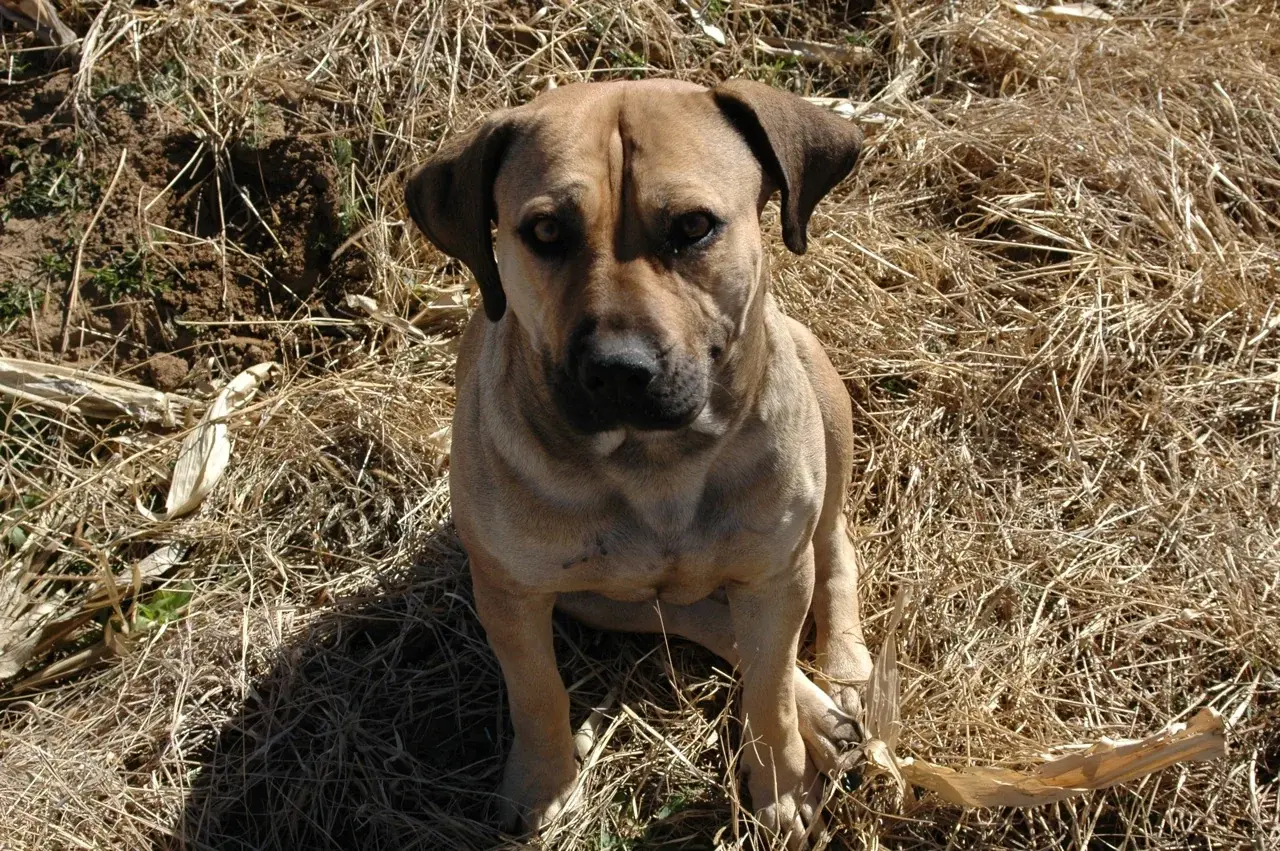
Large mastiff-type dogs have served as protectors on remote South African farms for generations, though many popular stories about their exact origins remain unverified tradition.

 Photograph