Insisting on cheerful hellos between unfamiliar dogs and people may feel like good manners, yet it often sows seeds of unease that later blossom into lasting worry.
We like to picture our dogs as joyful ambassadors, tails spinning like helicopter blades at the sight of every neighbor or fellow pup. That warm image fuels a habit many of us have absorbed without question: the expectation that polite dogs must greet one another on command. Yet forcing these introductions, however well-intentioned, can quietly erode a dog's confidence. A more humane path lies in learning to let them simply exist alongside the world, choosing connection only when it feels safe. The trade-off may look like fewer spontaneous smiles on the sidewalk, but it buys something deeper: calmer minds, stronger trust, and walks that both dog and human actually enjoy.
The Weight of Expected Cheer
Picture a narrow city sidewalk at dusk. You round the corner with your older rescue, a dog who once lived through uncertain times and now prefers a respectful buffer. Another owner approaches, their young Labrador straining forward with happy whines. The ritual begins: the bright question "Can they say hi?" hangs in the air like an obligation. Declining feels rude, as though you are withholding a universal joy. Yet for your dog, that forced proximity might register as an ambush, leash tight, escape impossible. Over repeated evenings, the pattern teaches a troubling lesson—that strangers reliably bring pressure rather than play.
This pressure of public politeness runs deeper than awkward small talk. It rests on an unspoken belief that every dog benefits from universal friendliness, ignoring the wide spectrum of canine personalities. Some dogs thrive on new acquaintances; others find the same encounters exhausting. Normalizing a cheerful wave and a continued stride would relieve both parties. The tradeoff is real: we lose the quick dopamine hit of watching tails wag in unison. In return we gain public spaces where dogs can simply breathe, reducing the slow accumulation of stress that so often precedes bigger behavioral shifts.
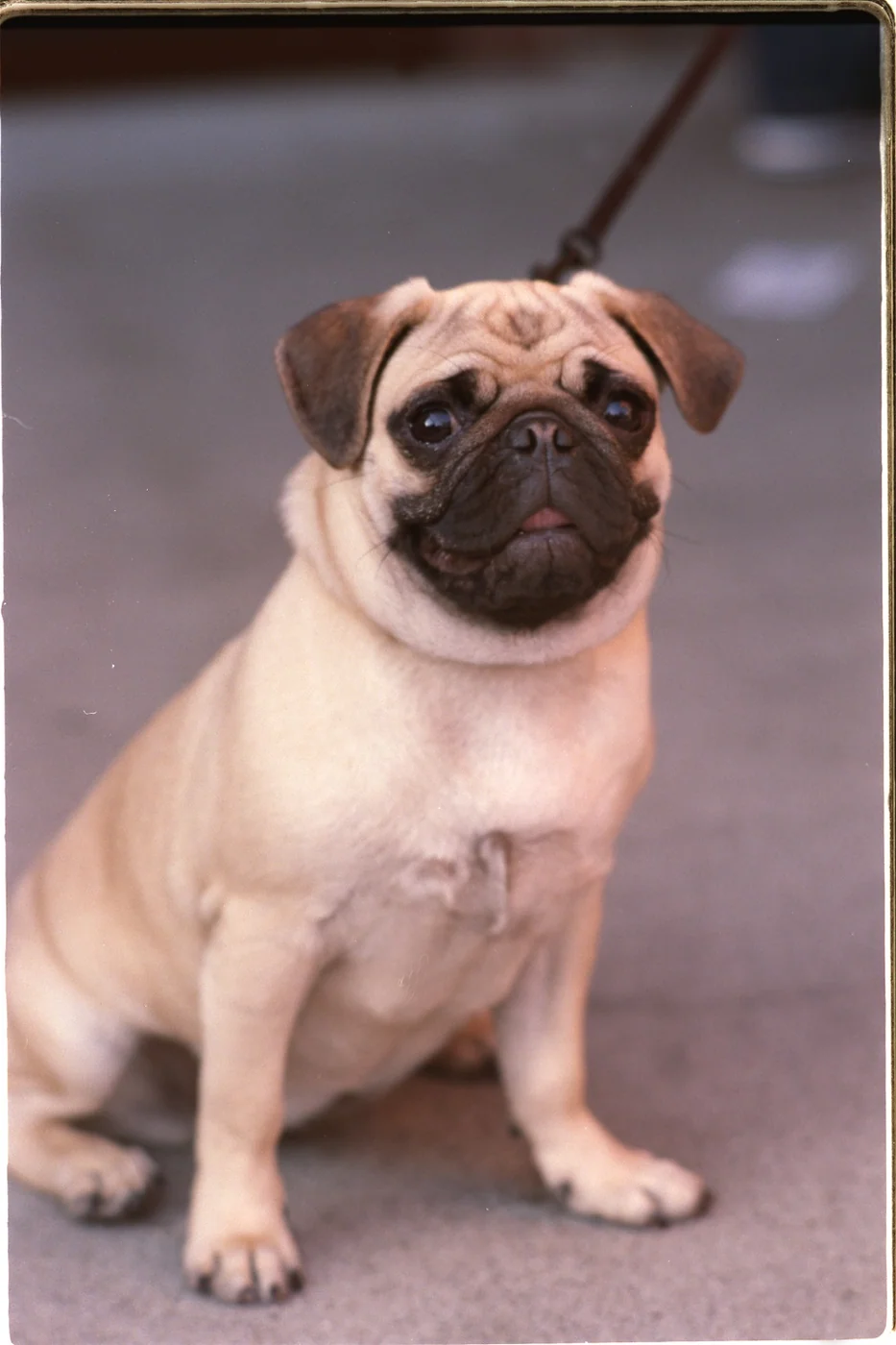
A pug on leash sits on sidewalk Nancy Wong · CC BY-SA 4.0. Web size optimized; original linked.
Listening Before the Leash Tightens
Dogs speak in glances and postures long before they resort to growls. Imagine a hypothetical walk where your dog spots an oncoming pair and offers a subtle half-turn of the head, a quick lick of the lips, a momentary freeze. These are polite requests for distance. Yet if we tug them forward to meet the other dog nose-to-nose, we broadcast that those early signals carry no weight. The next time, the message may need to be louder—perhaps a snap in the air—just to be heard.
Consent, in this context, looks like a loose, curving approach, soft eyes, and an open invitation rather than stiff shoulders or attempts to hide behind our legs. Teaching ourselves to notice these nuances asks for patience and a slower pace. The reward is a dog who trusts that we will advocate rather than override. The tradeoff feels uncomfortable at first; we might appear standoffish to fellow owners. Yet the alternative—repeatedly ignoring discomfort—risks turning temporary hesitation into entrenched fear, a far heavier price for everyone involved.
When One Bad Moment Echoes
Consider a young dog who, in a moment of youthful curiosity, is pulled into a greeting that goes sideways: the other dog lunges, voices rise, leashes tangle. In that instant the brain may file the sight of any approaching stranger under "threat." Future walks become tense negotiations. The dog scans horizons, body braced; the human shortens the route. What began as a single uncomfortable encounter ripples outward, shrinking the world for both.
The broader cost stretches beyond one household. Neighbors lose the easy pleasure of shared paths. The dog misses out on the casual exploration that builds resilience. In more serious cases, accumulated anxiety can lead to difficult decisions about living arrangements or professional help. The gentler alternative—checking first, respecting a polite refusal—does not isolate dogs. It simply offers them agency. The tradeoff is giving up the assumption that every meeting will be delightful. In exchange we protect the possibility of genuinely positive encounters later, chosen rather than compelled.
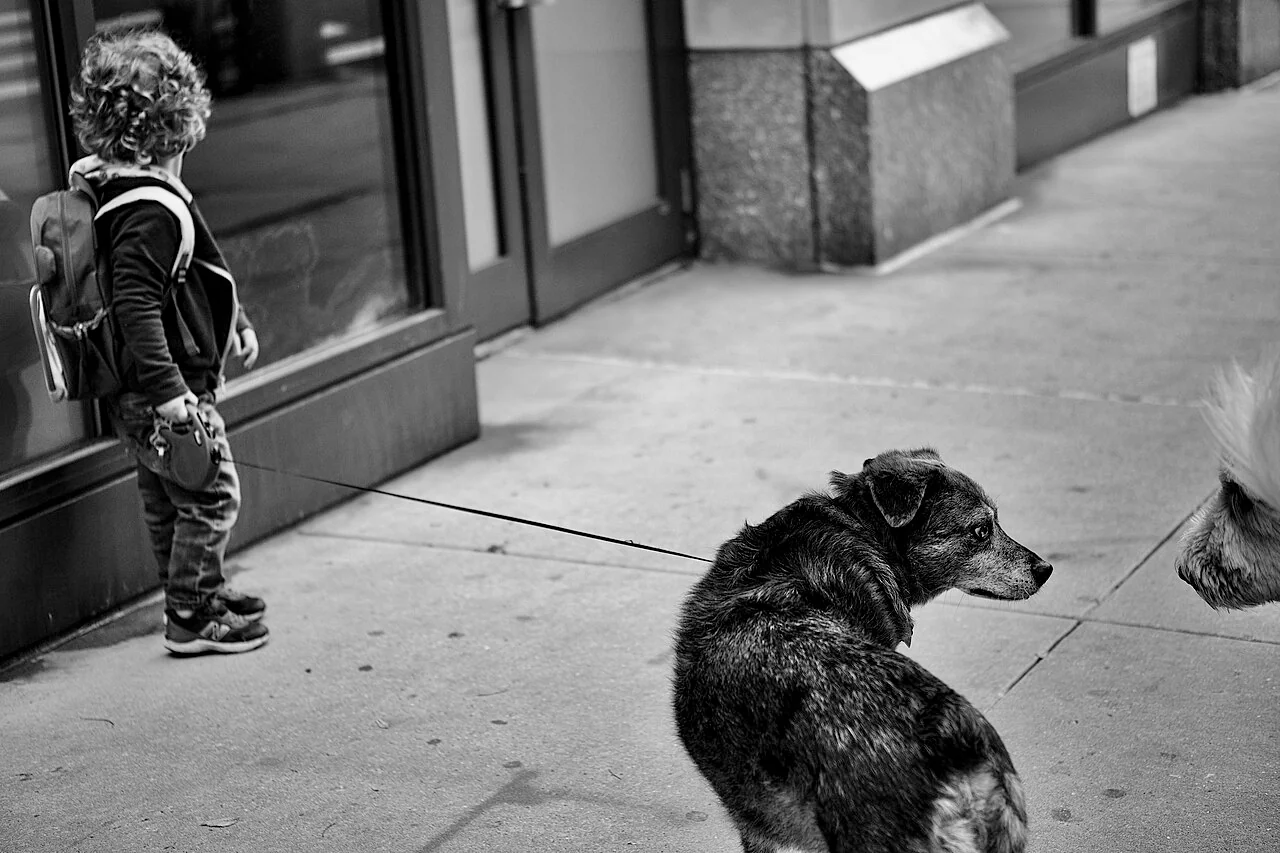
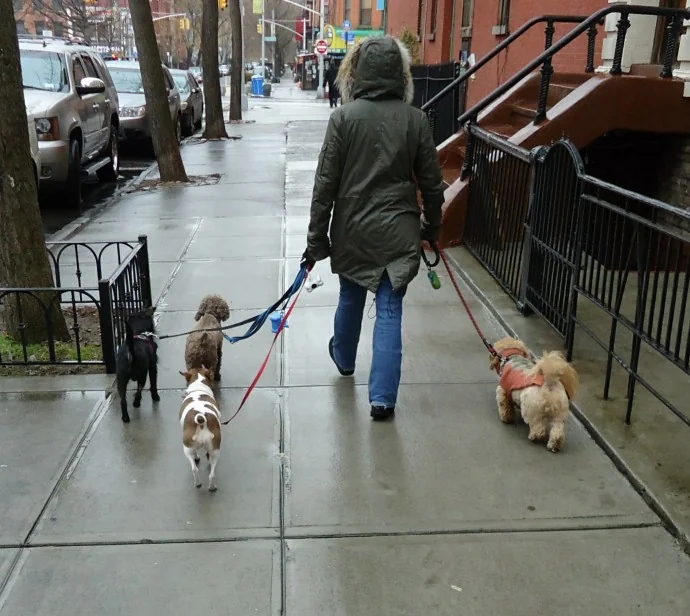
Dog walker with four dogs in Brooklyn, NY. Tomwsulcer · CC0 1.0. Web size optimized; original linked.
Choosing Peace Over Performance
Behavioral well-being in dogs resembles our own need for emotional safety. Envision a hypothetical puppy raised with the freedom to observe other dogs from across the street, deciding when and whether to close the gap. That puppy grows into an adult who recovers quickly from surprises and carries less ambient tension. Contrast this with the dog whose every outing includes mandatory diplomacy; the constant performance can leave little room for authentic curiosity.
Honoring these preferences also enriches the bond between person and dog. When we consistently read our companion's cues and respond with protection instead of insistence, trust deepens. The dog no longer scans every silhouette with dread, knowing its human will create space. The tradeoff is modest: we trade performative friendliness for quieter competence. Education helps here—simple phrases like "We're giving everyone room today" can spread without confrontation. For persistent challenges, guidance from a qualified behavior professional remains invaluable, always tailored to the individual rather than applied as blanket advice.
Building a Culture of Canine Space
Cultural change arrives not through lectures but through small, consistent examples. Imagine neighborhoods where owners greet one another with a smile and a deliberate arc of distance, signaling respect rather than rejection. Leash laws might evolve to encourage wider buffers by default. The occasional voluntary greeting then becomes a true celebration instead of an expected routine, all the sweeter for its authenticity.
This shift demands little yet returns much: dogs who age with fewer accumulated worries, humans who walk with lighter hearts, and communities that model the empathy we profess. The tradeoff is abandoning the idea that kindness must always look like contact. In its place we practice a more observant care—one that sees the quiet dog, the hesitant tail, the turned shoulder, and answers with space instead of demand. Our dogs cannot ask for this courtesy in words, but their bodies speak clearly if we choose to listen.
Walking the dogs, Sandsend Beach - geograph.org.uk - 1013592.jpg Stephen McCulloch · CC BY-SA 2.0. Web size optimized; original linked.
AI-assisted original writing. This feature was revised against source material and checked for unsupported claims. An editorial perspective; interpretations are distinguished from factual reporting.
Sources & further reading
This article is labeled opinion and offers an editorial perspective.
Focusing on certain breeds distracts from the real drivers of dog bites: negligent ownership and missed opportunities for early socialization that affect every kind of pup.
Urban planners rarely pause to consider how their straight paths and echoing plazas feel through a dog's nose, ears, and eyes, yet a few gentle adjustments could transform shared spaces into places where both species truly thrive together.
Strict enforcement on suburban paths and trails quietly shields our canine companions from injury, escape, and tense encounters that off-leash freedom too often invites.

 Photograph