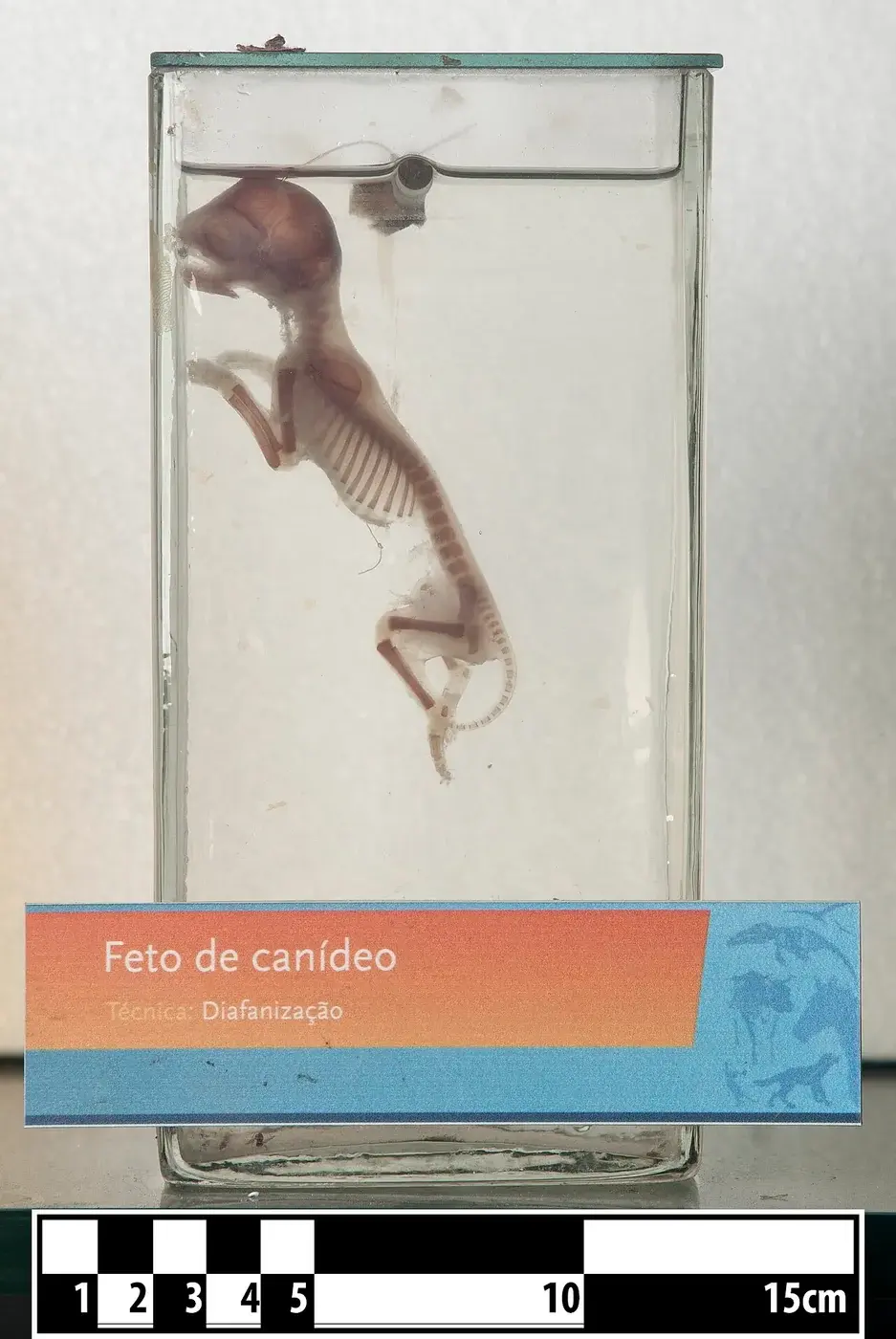
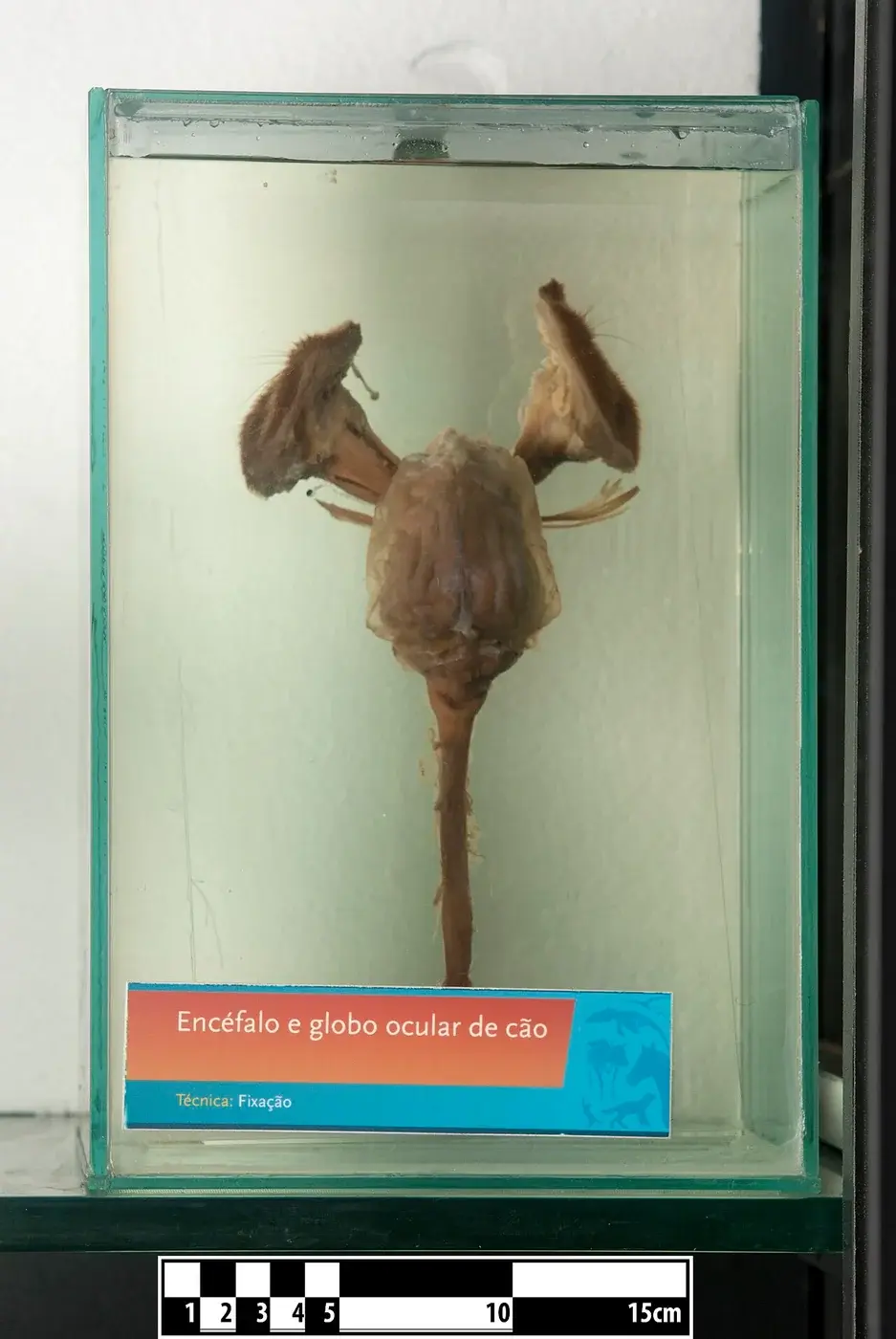
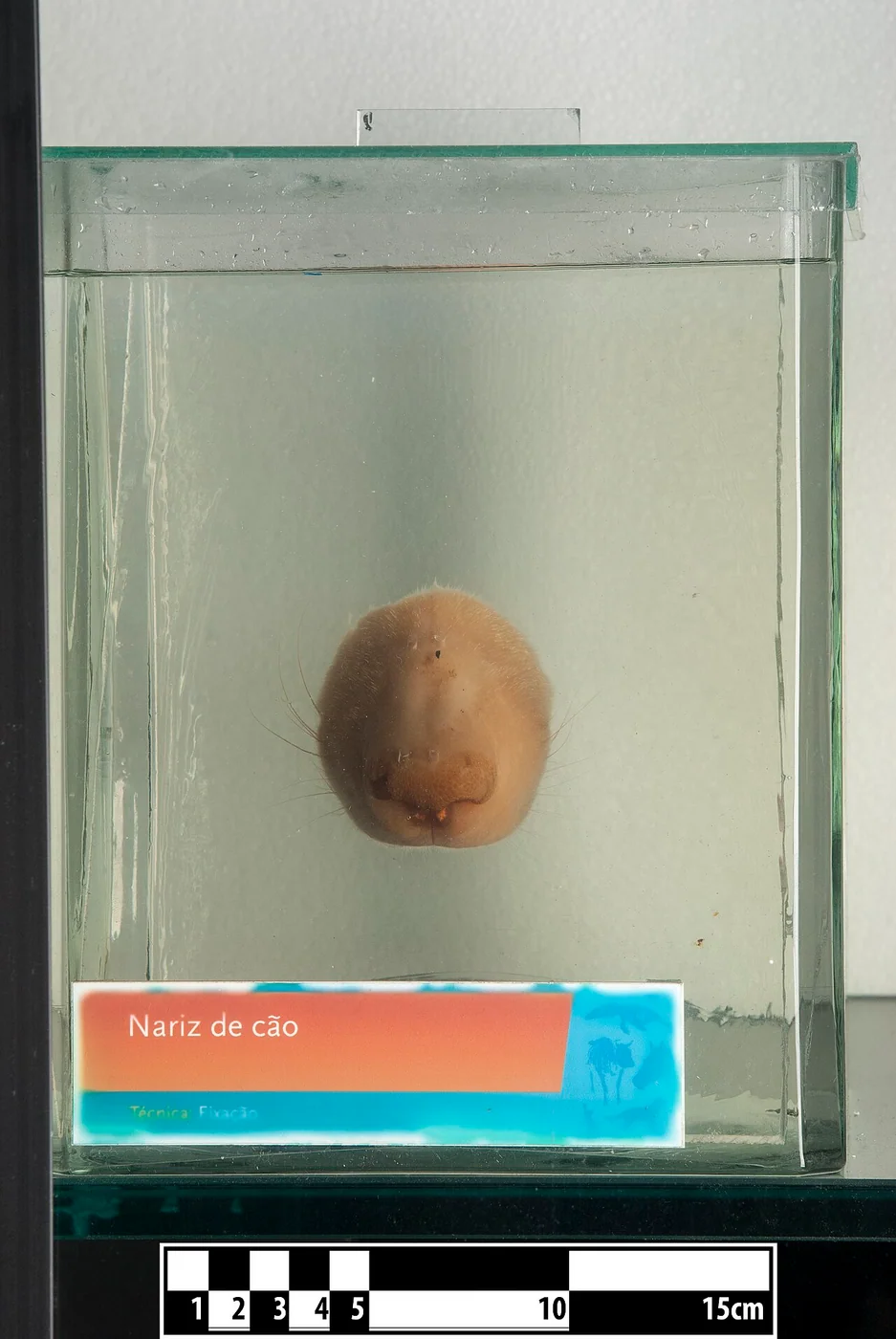
Dog nose. Canis lupus familiaris. Technique of formalin fixation on display at the Museum of Veterinary Anatomy, FMVZ USP. Source collection · CC BY-SA 4.0 · Web size optimized; source linked for the original.
A dog’s skin does more than hold the fur in place. It manages moisture, blocks many invaders, and cushions the body against everyday knocks. The barrier is made of three main layers—epidermis, dermis, and subcutis—that work together. Evidence from veterinary sources describes these layers and their basic roles. Owners who notice changes in coat or skin are encouraged to consult a veterinarian rather than rely on home diagnosis.
The Epidermis: Outermost Shield
The epidermis is the thin outer layer of canine skin. It is made mainly of keratinocytes that move upward, flatten, and form the stratum corneum. This outermost part consists of overlapping corneocytes sandwiched between lipid layers that help regulate water movement and support removal of surface material through continuous renewal.
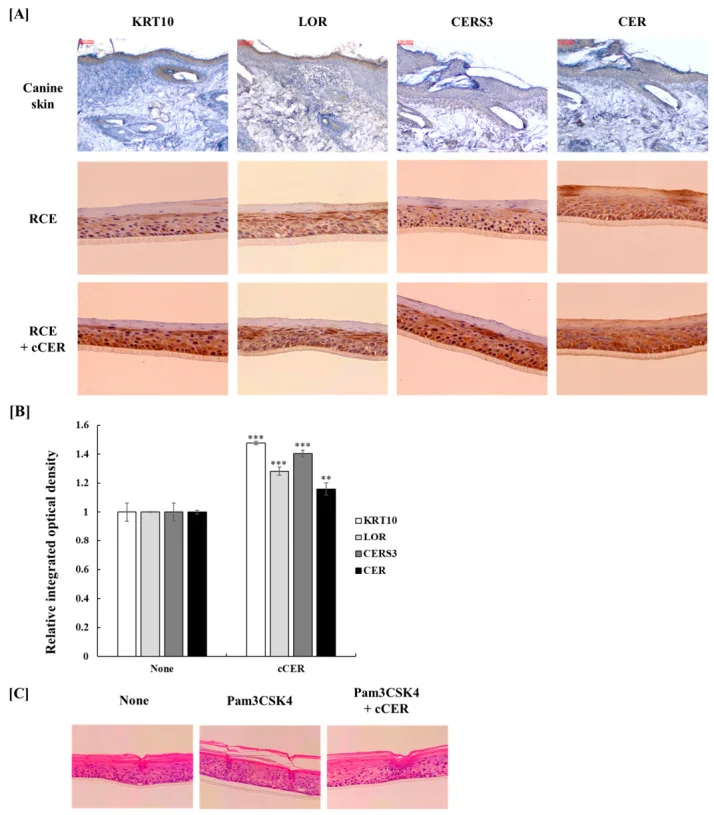
The stratum corneum lipids in normal canine skin are arranged in an organized structure that includes ceramides. This arrangement contributes to the barrier that limits transepidermal water loss and penetration of some exogenous molecules. The epidermis also contains other cell types that support its protective function.
Hair follicles pass through the epidermis. The layer varies in thickness; it is thicker on paw pads. Veterinary descriptions note that the epidermis provides the first defense against foreign substances.
Beneath the epidermis lies the dermis. This middle layer contains collagen and elastin fibers along with blood vessels that nourish the skin above. It also houses nerve endings that register touch, pressure, and temperature.
Sebaceous glands in the dermis produce oils. The layer supports wound repair and helps maintain the connection between epidermis and deeper tissue through the basement membrane zone. Sources describe the dermis as the supportive and nourishing layer of canine skin.
The Subcutis: Cushion and Insulation
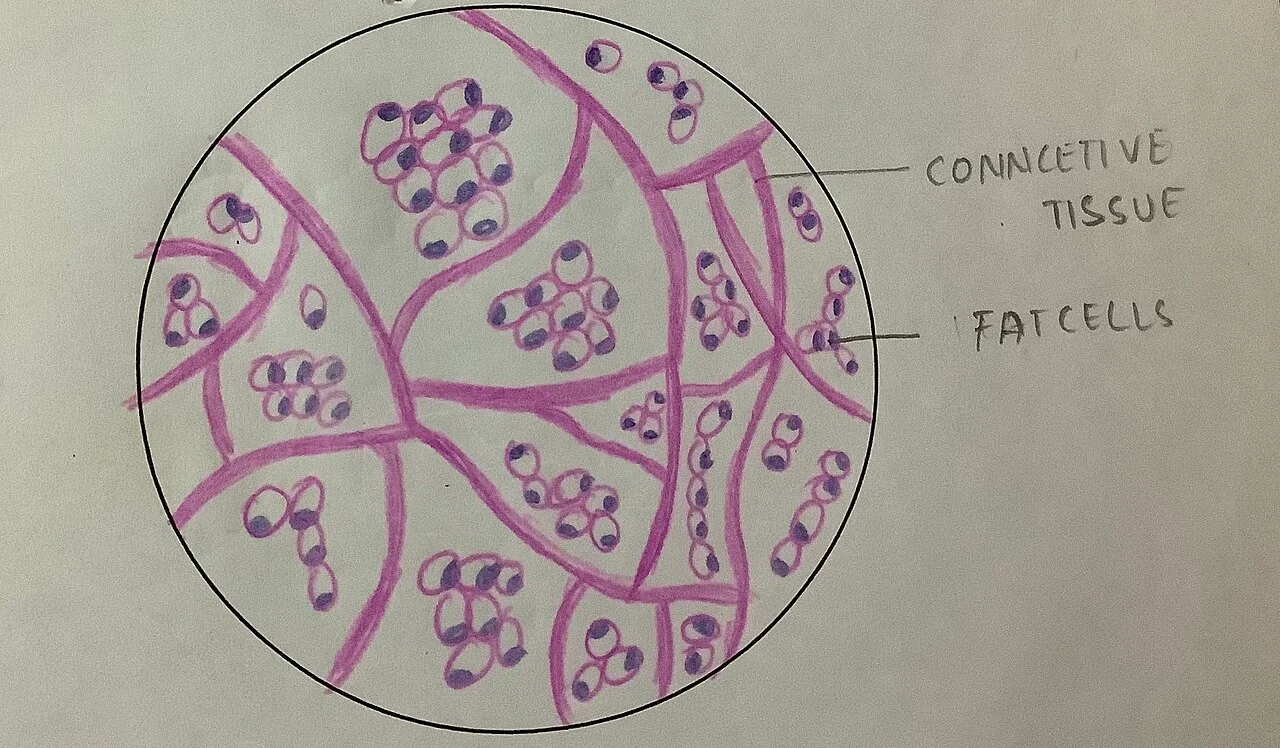
The innermost layer is the subcutis, also called subcutaneous tissue. It consists mainly of fat cells and connective tissue. This layer provides cushioning and helps with thermal insulation.
Larger blood vessels and lymphatic vessels run through the subcutis. The fat stored here can serve as an energy reserve. Veterinary summaries list the subcutis as one of the three major layers of canine skin.
Histology of adipose tissue consisting of connective tissue and fat cells. Veeresh likhitha · CC BY-SA 4.0. Web size optimized; original linked.
How the Layers Coordinate
The epidermis, dermis, and subcutis function together. The stratum corneum in the epidermis forms the primary barrier against water loss and some external substances. The dermis supplies nutrients and immune support, while the subcutis adds padding and insulation.
Disruption of the organized lipid structure between corneocytes can affect barrier performance. Sources focused on atopic dermatitis describe these organized lipids as the normal baseline in healthy canine skin.
Everyday Observations and Veterinary Advice
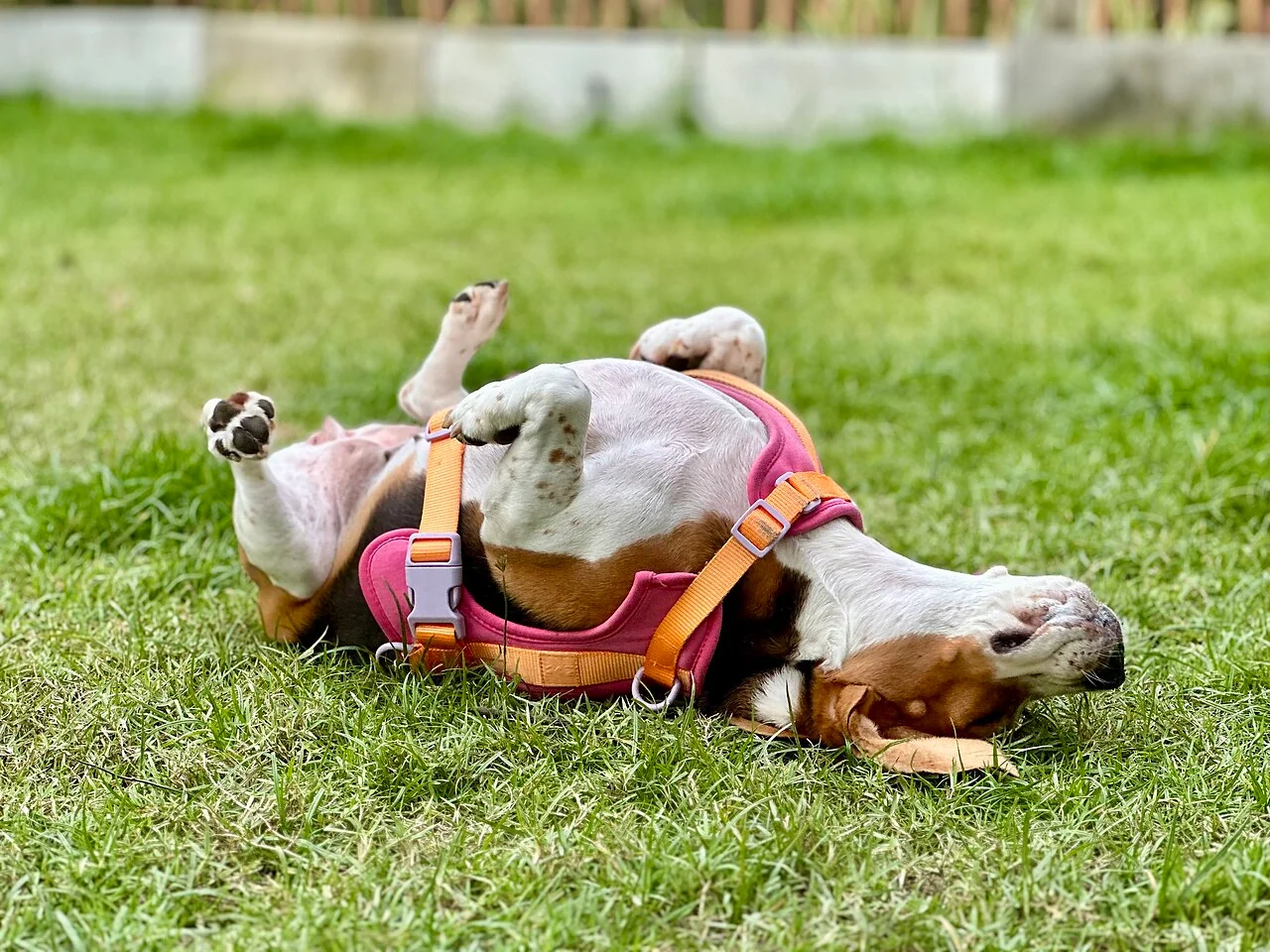
Daily activities such as rolling in grass or shaking off water show the skin barrier at work. Owners may notice shedding, dryness, or changes in coat appearance. These observations can be discussed with a veterinarian.
Routine grooming and attention to diet support general skin health. Professional assessment remains the recommended step for any specific concerns about a dog’s skin or coat.
Beagle rolling in grass, an everyday activity that demonstrates interaction with the skin barrier. Slyronit · CC BY-SA 4.0. Web size optimized; original linked.
General education, not individual veterinary advice. Ask a veterinarian about your dog’s health and care.
AI-assisted original writing. This feature was revised against source material and checked for unsupported claims. Follow the references below for evidence and its limits.
Research shows canine cognition follows a clear arc of early gains, midlife peak, and later gentle decline, offering owners practical ways to support their pets at every age.
Protected command centers in the brain and spinal cord team up with far-reaching nerves that connect to muscles, skin, and organs, letting dogs react to scents, sounds, and sudden surprises.
 Reference image