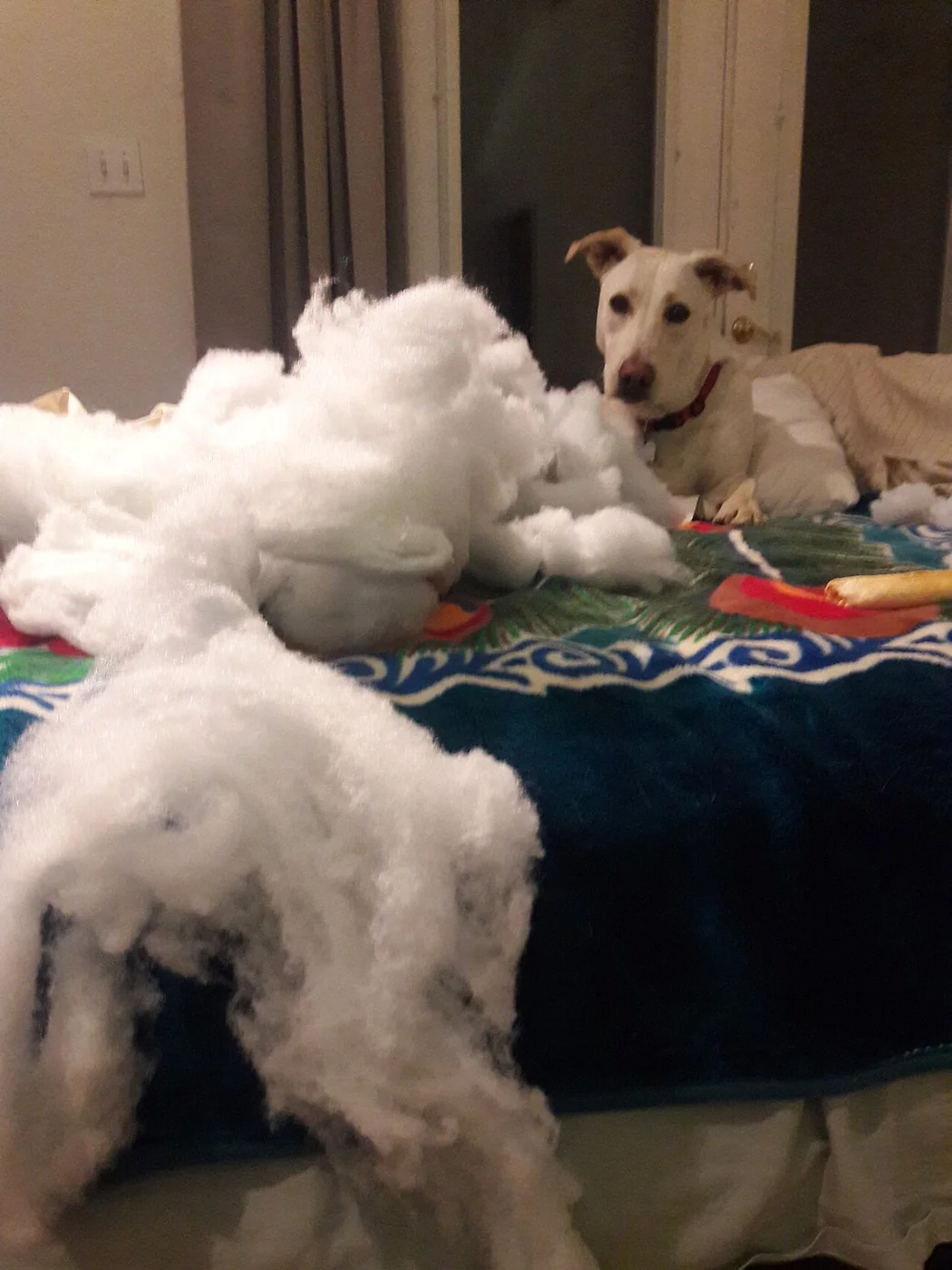
Dog destroying pillows and cushions, illustrating the destruction caused by severe separation anxiety in the home. Gerardolagunes · CC BY-SA 4.0 · Web size optimized; source linked for the original.
We like to imagine our dogs as flawless companions, bounding through sunlit fields with tails forever wagging in pure devotion. Yet many of us share our homes with creatures whose quirks test the very limits of that fantasy. When such a dog slips away, the grief that follows can arrive tangled with an uneasy sense of relief, a feeling so human and so rarely voiced that it leaves its bearer feeling like a traitor to the bond. This is not a failure of love but a testament to its complexity, and it deserves a place in the stories we tell about living well with dogs.
The Weight of Imperfect Love
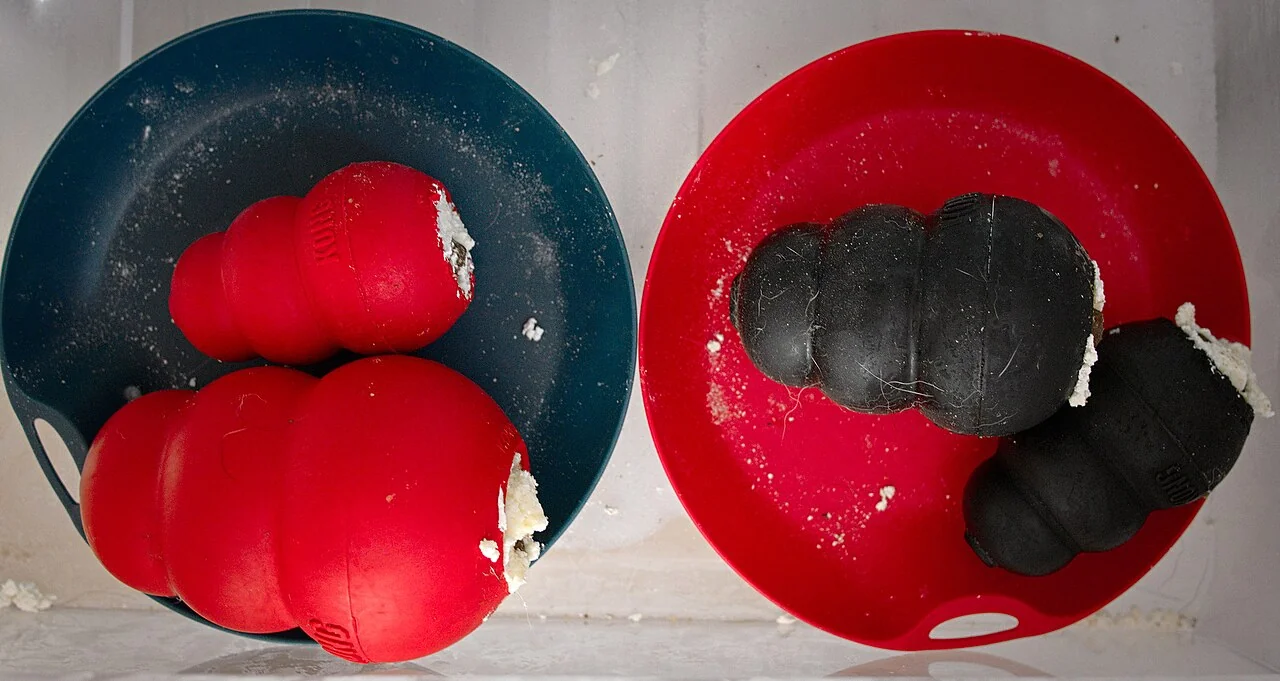
Imagine a young couple bringing home a rescue with such profound separation anxiety that every departure triggers a symphony of destruction: cushions reduced to confetti, doors scratched raw, and worried notes from neighbors about the howling that echoes down the hall. They might spend years experimenting with frozen Kongs stuffed with peanut butter, pheromone diffusers, and even calming prescriptions from the vet, all while carving out routines that accommodate the dog's terror. The daily management becomes a quiet marathon of patience and creativity, turning what could have been a simple apartment life into a carefully orchestrated dance.
When that dog eventually passes, perhaps after a gentle euthanasia to spare further distress, the sorrow arrives laced with an unexpected lightness, a release from the constant vigilance. This emotional blend can spark shame, as if admitting any relief somehow cheapens the years of devotion. Yet love often deepens precisely through these trials, in the small triumphs of a peaceful evening on the couch or a walk without panic. To pretend otherwise is to flatten the rich, imperfect reality of companionship into something cartoonish and unattainable.
Frozen KONG toys (red XL, black L, and medium sizes) stuffed for anxious dogs. Modern documentary photograph. Olgierd (Creative Commons licensed only) · CC BY 2.0. Web size optimized; original linked.
Health Battles That Test Every Boundary
Picture an older single professional whose beloved mutt develops a stubborn case of inflammatory bowel issues, requiring meticulously timed medications, a fridge full of hydrolyzed protein diets, and monthly trips to the clinic that devour both time and savings. Mornings might begin with cleaning up accidents on the rug, while evenings involve watching for subtle signs of discomfort that could signal a flare-up. The commitment reshapes weekends, vacations, and even career choices, turning what once felt like carefree pet ownership into a profound act of stewardship.
In the wake of such a dog's passing, the grief might carry an undercurrent of doubt: Did we do enough? Could we have stretched the budget further or tried one more specialist? These questions are natural, but they highlight how health struggles reveal the tradeoffs inherent in caring for a vulnerable being. Acknowledging the exhaustion alongside the tenderness does not betray the animal; it honors the full weight of the shared journey and invites others to share their own hidden burdens rather than suffer them alone.
Behavioral Realities in Public Spaces
Consider a family with a dog whose reactivity turns every neighborhood stroll into a tactical operation: scanning for approaching strangers, crossing streets to avoid triggers, and forgoing dog parks altogether in favor of dawn hikes where encounters are rare. Thunderstorms might send the dog into trembling fits that require blackout curtains and white noise machines, limiting spontaneous outings and shrinking the social circle to only the most understanding friends. The bond becomes a private universe of routines and accommodations that outsiders rarely glimpse.
Losing this dog could unleash a complicated wave of emotions, mourning the loyal heart beneath the fear while quietly welcoming a new ease in daily life. Such mixed feelings underscore a key tradeoff: the hyper-awareness these dogs demand teaches empathy and adaptability, qualities that enrich human relationships too. By imagining communities that accommodate reactivity with thoughtful park signage or shame-free training circles, we move toward a world where every kind of dog-human pair feels seen rather than sidelined.
Envision online forums and local meetups that overflow with tales of flawless recall, Instagram-ready hikes, and dogs who greet every visitor like a long-lost friend. Amid this cheer, stories of dogs who never quite mastered leash manners or whose fear-based snapping required years of careful management often remain whispered in private messages. This unspoken hierarchy isolates those whose experiences fall outside the sunny ideal, precisely when they most need solidarity and practical wisdom.
Opening the conversation to include these realities would not diminish the delight of easier dogs but would weave a fuller tapestry of what companionship truly entails. Owners might exchange strategies for living with resource guarding or the emotional toll of watching a pet's mobility fade, creating networks that value resilience over perfection. In this expanded circle, the loyalty forged in difficulty shines as brightly as any effortless wag, reminding us that growth often blooms where challenges meet commitment.
Toward a More Compassionate Canine Culture
Suppose we begin to normalize the full spectrum of grief by listening without quick fixes or sunny platitudes when a friend describes the bone-deep fatigue of managing a dog's intense guarding behaviors or the ache of deciding when quality of life has slipped away. These candid exchanges could replace idealized images with something truer: a culture that celebrates the messy, magnificent variety of lives lived with dogs, where the so-called imperfect ones often leave the most lasting imprints on our character.
Ultimately, every dog offers a unique curriculum in patience, humor, and adaptation. Those whose flaws demand the most from us may impart the profoundest lessons about showing up consistently amid chaos. By welcoming these narratives into casual dog talk, at the park bench or the coffee meetup, we cultivate a warmer, more humane community, one that values the quiet dignity of choosing care over convenience and recognizes that love, in all its complicated glory, is what makes the bond worthwhile.
AI-assisted original writing. This feature was revised against source material and checked for unsupported claims. An editorial perspective; interpretations are distinguished from factual reporting.
Sources & further reading
This article is labeled opinion and offers an editorial perspective.
Focusing on certain breeds distracts from the real drivers of dog bites: negligent ownership and missed opportunities for early socialization that affect every kind of pup.
Urban planners rarely pause to consider how their straight paths and echoing plazas feel through a dog's nose, ears, and eyes, yet a few gentle adjustments could transform shared spaces into places where both species truly thrive together.
Strict enforcement on suburban paths and trails quietly shields our canine companions from injury, escape, and tense encounters that off-leash freedom too often invites.
 Photograph