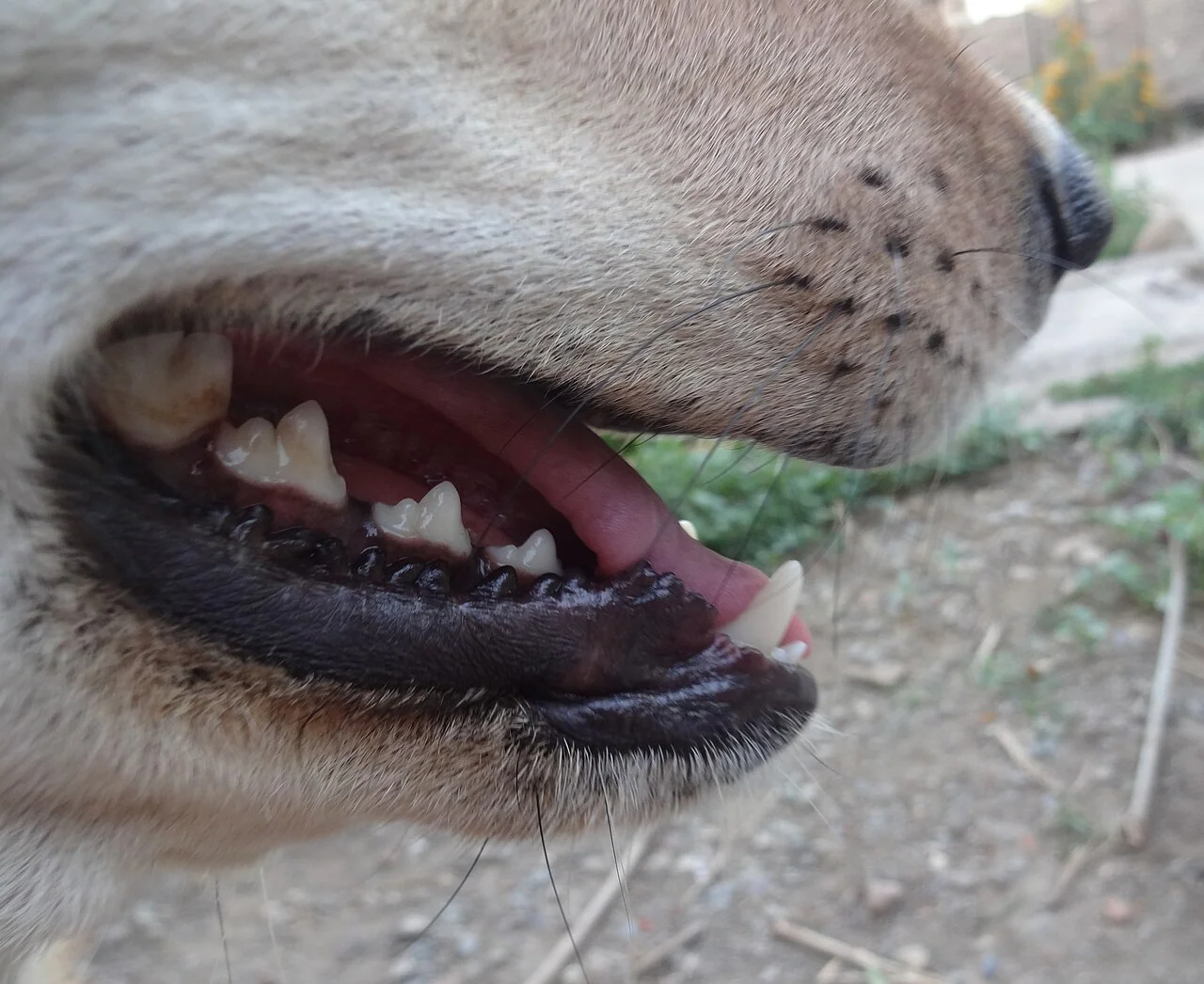
Greyhound with mouth open showing its teeth (documentary photograph, 2010) Chaoticfluffy · CC BY-SA 3.0 · Web size optimized; source linked for the original.
A dog's mouth contains an intricate set of teeth that support gripping, tearing, and chewing. These teeth erupt in stages during puppyhood and gradually change through everyday use. The Merck Veterinary Manual outlines the standard layout of 42 permanent teeth in dogs, along with details on their development and the distinction between types of wear. Observing these natural patterns at home can add appreciation for a dog's growth and habits, while professional veterinary guidance addresses individual concerns.
The Basic Layout of a Dog's Teeth
Dogs have 42 permanent teeth arranged as 12 incisors, 4 canines, 16 premolars, and 10 molars. Incisors sit at the front. Canines are the long, pointed teeth used for anchoring. Premolars and molars handle shearing and crushing.
Tooth roots vary by type. Incisors, canines, and certain premolars and molars are single-rooted. Other premolars and molars have two or three roots. The Merck Veterinary Manual describes this arrangement using the modified Triadan numbering system, which assigns consistent numbers across jaw quadrants.
Enamel covers the crown of each tooth. Beneath it lies dentin, with a central pulp chamber containing nerves and blood vessels. These structural features support the tooth's role in daily function.
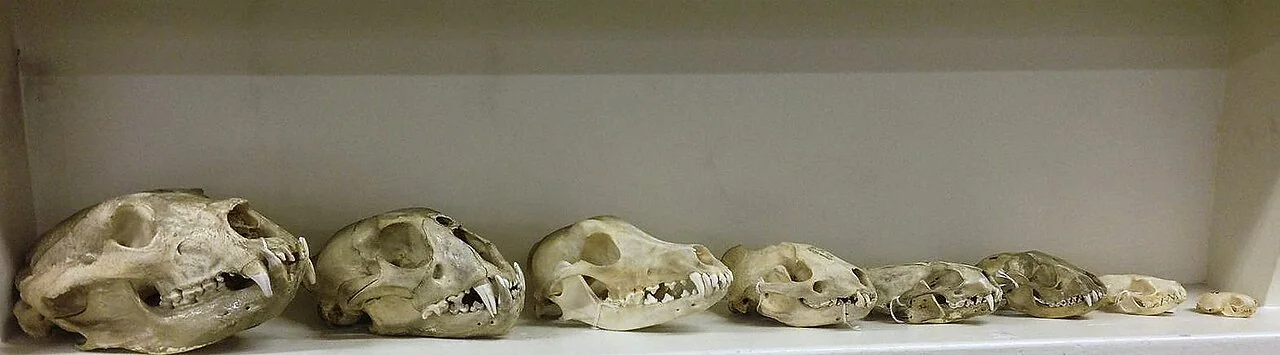
Comparison of carnassial teeth in various carnivores including dog (Canis) (historical artifact photograph, 2013) Cbrookes92 · CC BY-SA 3.0. Web size optimized; original linked.
Timing of Tooth Eruption in Puppies
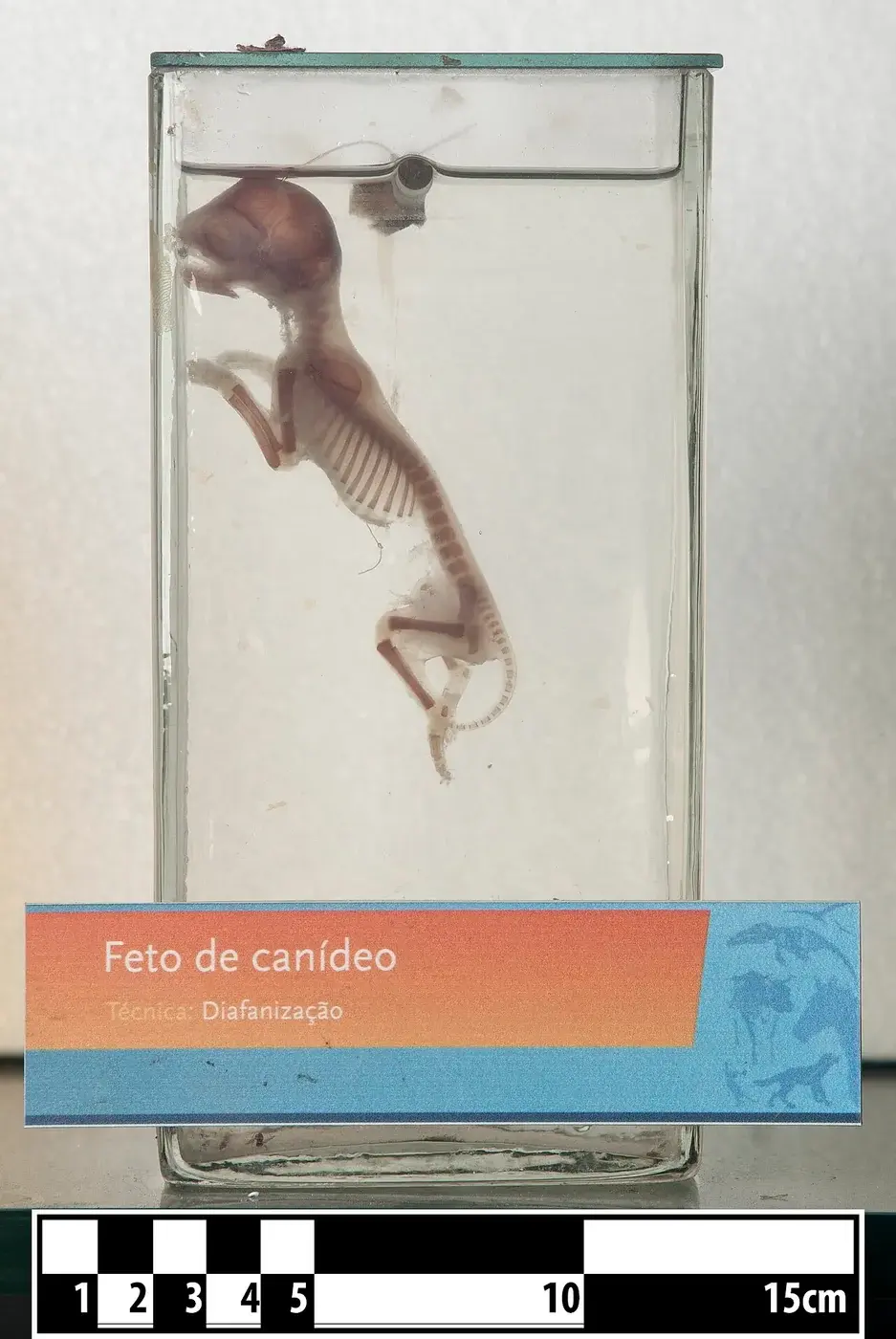
Puppies are born without teeth. Dental development begins early, with the dental lamina appearing at about 25 days of gestation. Calcification of deciduous teeth starts later in gestation and continues after birth.
Deciduous tooth crowns complete calcification around 20 days after birth, with roots finishing by about 45 days post-birth. These baby teeth number 28 in total and erupt in a sequence beginning with incisors.
Permanent teeth form lingual to most deciduous precursors. The Merck Veterinary Manual notes that the first premolars and molars lack deciduous predecessors. The transition from baby teeth to permanent ones involves natural root resorption of the deciduous set. Breed and individual variation can shift exact timing by weeks.
Natural Wear from Daily Chewing
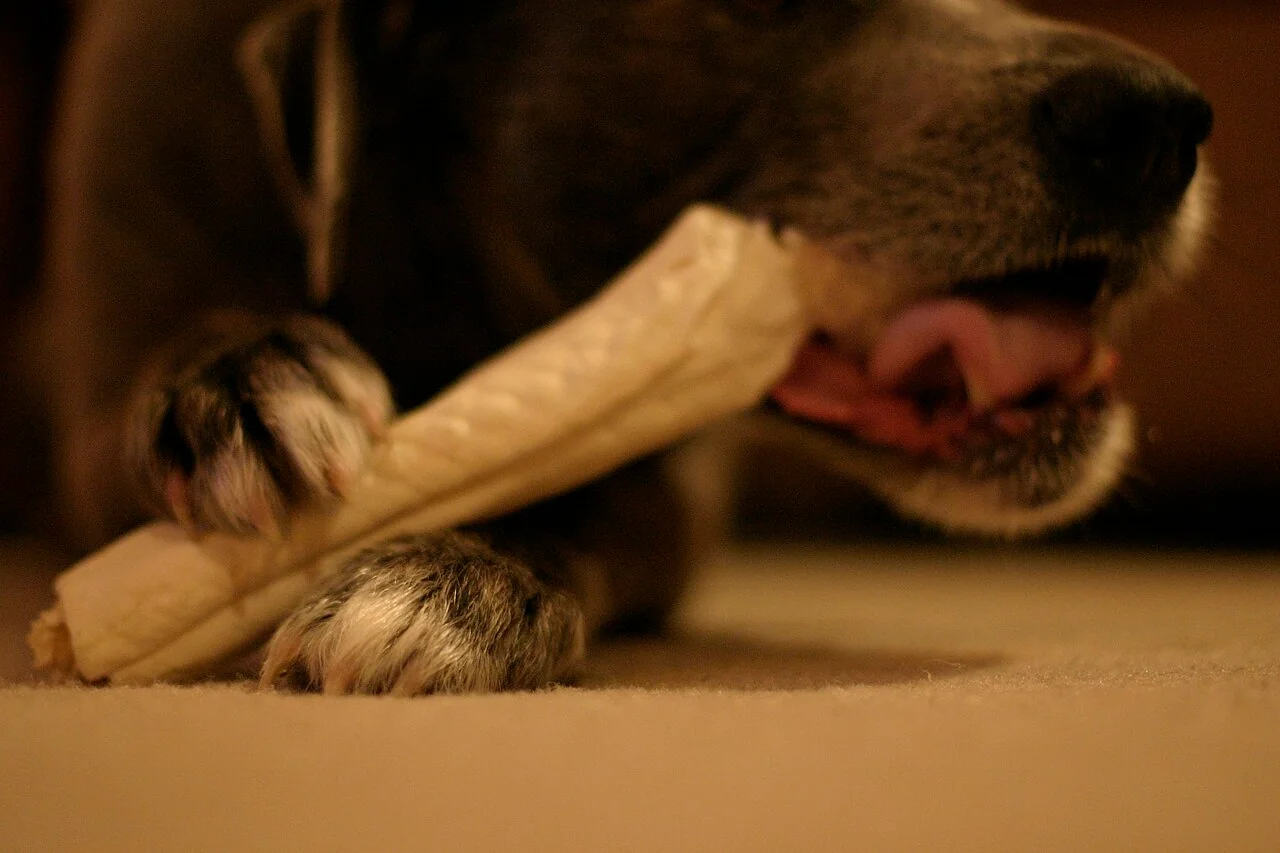
Once permanent teeth are in place, contact with objects produces wear. The American Veterinary Dental College defines abrasion as tooth wear from contact with non-dental objects such as toys or bones. Attrition refers to wear from tooth-to-tooth contact.
These processes remove microscopic layers over time. The Merck Veterinary Manual and AVDC materials describe such changes as common in dogs that chew regularly. Wear appears as gradual blunting or flattening rather than dramatic alteration in healthy cases.
Not every mark indicates a problem. Small chips or grooves can occur during normal activity if the inner pulp remains protected. The patterns reflect a dog's habits without necessarily affecting overall function.
Dreyfuss chews his rawhide bone causing natural tooth abrasion (documentary photograph, 2009) Shane Adams · CC BY 2.0. Web size optimized; original linked.
Changes Seen in Older Dogs
As dogs age, enamel may thin gradually. This can allow the underlying dentin to become more visible, resulting in a slightly different tooth color. Gum tissue may show minor recession along the necks of teeth.
The Merck Veterinary Manual references developmental processes that continue subtly throughout life, including formation of secondary dentin. Pulp chambers can narrow over years as this material fills in from inside.
Tooth roots may accumulate additional layers of cementum. These adaptations appear in both domestic dogs and wild canids according to anatomical references, helping maintain stability despite long-term use.
Watching Dental Patterns at Home
Owners can note general changes during everyday moments such as play or feeding. A dog's open mouth while panting may reveal the current shape of incisors and canines. Moderate flattening on back teeth often appears in middle-aged dogs.
Puppies typically show sharp deciduous teeth that give way to broader permanent ones. Seniors may display smoother surfaces across more of the dental arcade. These observations remain casual and do not substitute for veterinary assessment.
Discussing visible patterns with a veterinarian during routine visits connects home views to professional knowledge. The focus stays on general developmental arcs rather than specific diagnoses.
Close-up of a dog's mouth showing the whiskers, lips, tongue, carnassials and canines. Achat1999 · CC BY-SA 4.0. Web size optimized; original linked.
General education, not individual veterinary advice. Ask a veterinarian about your dog’s health and care.
AI-assisted original writing. This feature was revised against source material and checked for unsupported claims. Follow the references below for evidence and its limits.
Research shows canine cognition follows a clear arc of early gains, midlife peak, and later gentle decline, offering owners practical ways to support their pets at every age.
Protected command centers in the brain and spinal cord team up with far-reaching nerves that connect to muscles, skin, and organs, letting dogs react to scents, sounds, and sudden surprises.

 Reference image