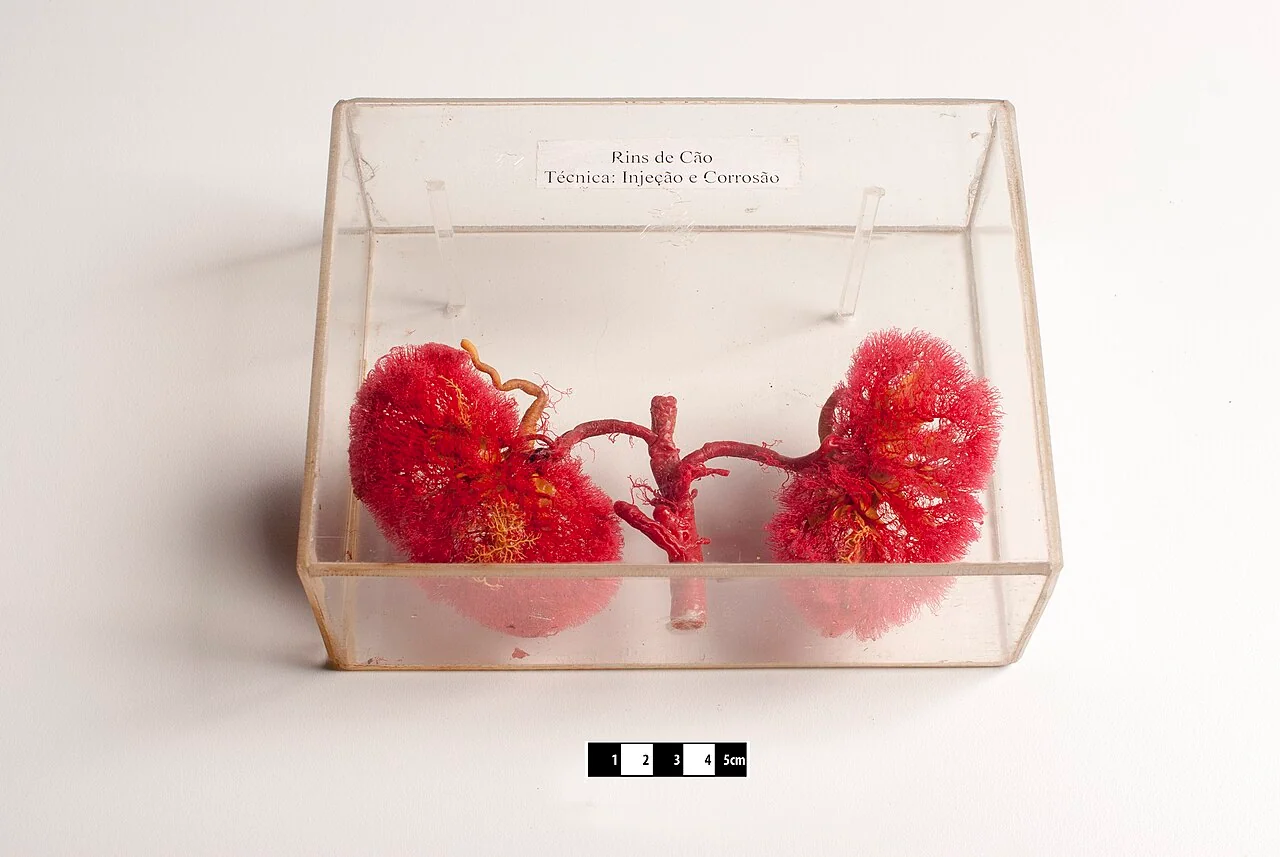
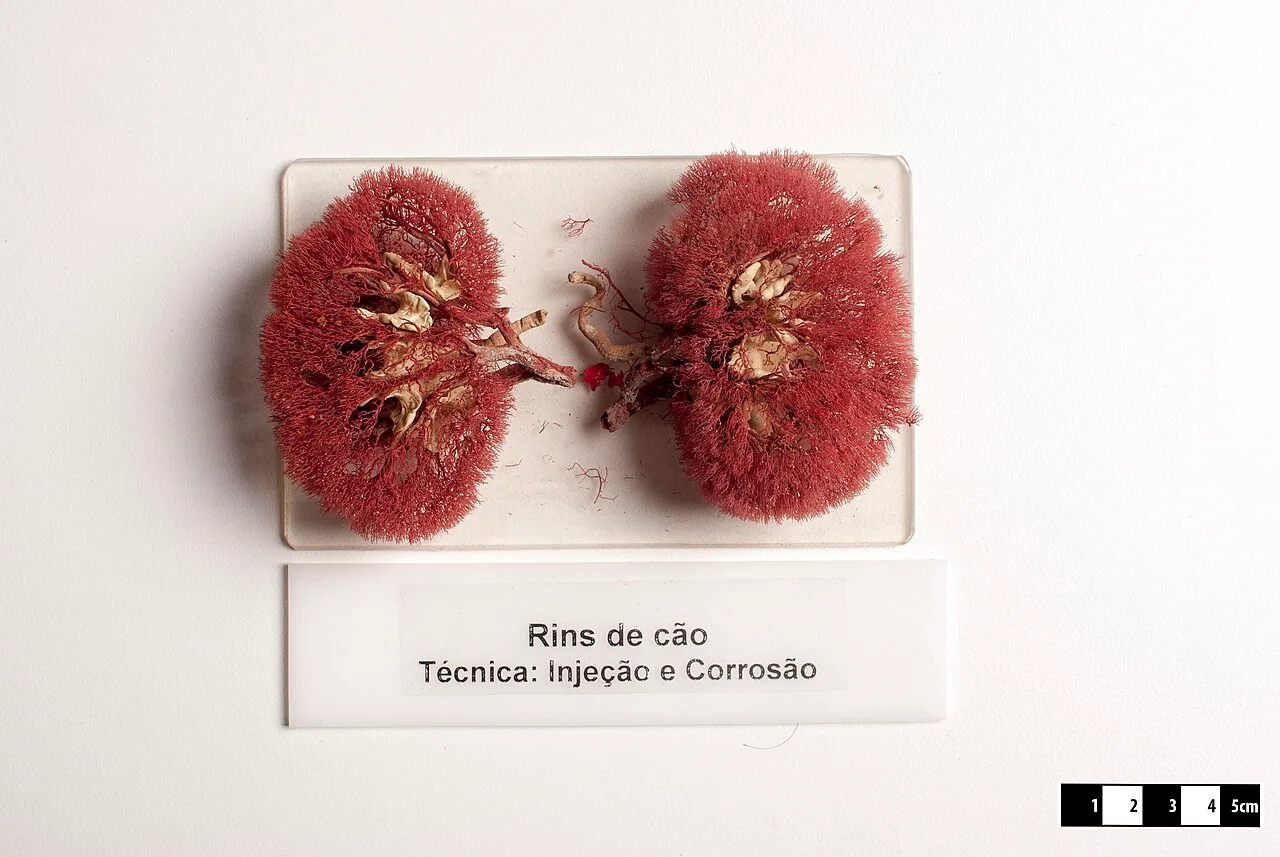
Dog kidneys (Canis lupus familiaris). Vinylite corrosion cast demonstrating vascular architecture. Historical artifact photograph from the Museum of Veterinary Anatomy, FMVZ USP (2015). Wagner Souza e Silva · CC BY-SA 4.0 · Web size optimized; source linked for the original.
A dog races across the yard after a ball, full of energy. Inside, the kidneys run a constant filtering operation that most owners overlook until bloodwork hints at trouble. At the center are the glomeruli, small capillary clusters within nephrons that separate waste from essential blood components. The available evidence shows these structures play a key role in maintaining blood purity and handling electrolytes, though many finer details of long-term function remain under study.
Nephrons and Their Filtering Units
Research measured glomerular numbers and diameters in kidneys from 27 young adult male mongrel dogs of varying body sizes. Glomerular diameter showed a significant positive correlation with body weight and body surface area. No significant correlation existed between glomerular number and body weight or body surface area. Differences in kidney size within dogs were attributed to variation in glomerular size rather than number of glomeruli.
Each glomerulus sits inside a Bowman’s capsule. Blood pressure drives water, electrolytes, and small molecules across a filtration barrier into the tubule system while keeping larger proteins and cells in circulation. The resulting filtrate moves through the proximal tubule, loop of Henle, and distal tubule, where reabsorption of glucose, sodium, and water occurs.
Dog kidneys. Canis lupus familiaris. Technique of vinylite and corrosion. Allow the visualization of the vascular architecture of the body. Specimens on display at the Museum of Veterinary Anatomy, FMVZ USP. Wagner Souza e Silva · CC BY-SA 4.0. Web size optimized; original linked.
The Glomerular Filtration Barrier
The barrier consists of fenestrated endothelium, a negatively charged basement membrane, and podocyte slit diaphragms. This layered sieve helps keep essential plasma proteins in the blood while allowing waste to pass toward the urine.
When the barrier works as expected, waste markers such as creatinine and blood urea nitrogen remain at relatively steady levels that veterinarians monitor in blood tests. Electrolytes including sodium and potassium are also regulated along the nephron to support normal nerve and muscle activity.
Changes Seen in Glomerular Disease
In a study of eight dogs with membranous nephropathy, renal glomerulosclerosis, or renal amyloidosis, glomerular filtration rate was decreased in all eight dogs compared with reference values. Effective renal plasma flow was within reference range in one dog, increased in one dog, and decreased in six dogs. Filtration fraction was within reference range in two dogs and decreased in six dogs.
Endogenous creatinine clearance also showed decreased glomerular filtration rate in all eight dogs with these confirmed glomerular lesions. Such findings illustrate how damage to the glomeruli can affect overall filtration efficiency and related blood flow measures.
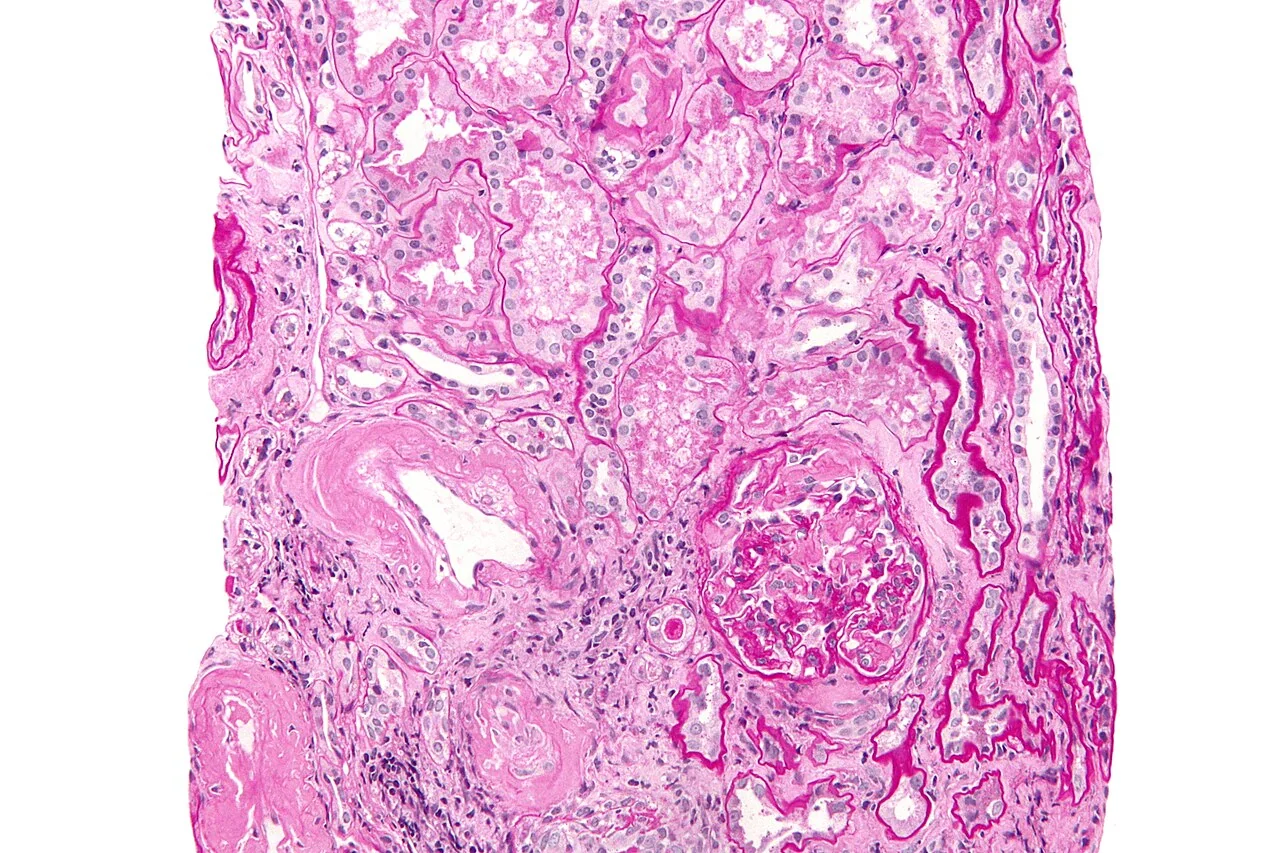
High magnification micrograph of renal amyloidosis, also known as kidney amyloidosis and amyloidosis of the kidney. Kidney biopsy. PAS stain. Nephron · CC BY-SA 3.0. Web size optimized; original linked.
Age and Adaptation
Healthy kidneys have a reserve capacity that allows remaining nephrons to increase filtration when others decline. The evidence indicates this compensation can help maintain function for years, but gradual changes may still occur without obvious outward signs.
Routine veterinary blood and urine tests can track shifts in waste products and electrolyte levels before major problems develop. Access to fresh water, suitable nutrition, and regular exercise support the system in its daily work.
Working With Your Veterinarian
Regular wellness visits allow veterinarians to interpret laboratory results against established reference ranges, taking into account a dog’s individual breed, age, and history. Early discussion of small behavioral changes can lead to timely checks of kidney parameters.
Owners contribute by keeping water available, feeding life-stage-appropriate diets, and ensuring opportunities for normal activity. These steps help maintain the quiet balancing act that supports a dog’s active life.
General education, not individual veterinary advice. Ask a veterinarian about your dog’s health and care.
AI-assisted original writing. This feature was revised against source material and checked for unsupported claims. Follow the references below for evidence and its limits.
Research shows canine cognition follows a clear arc of early gains, midlife peak, and later gentle decline, offering owners practical ways to support their pets at every age.
Protected command centers in the brain and spinal cord team up with far-reaching nerves that connect to muscles, skin, and organs, letting dogs react to scents, sounds, and sudden surprises.
 Reference image