What Research Tells Us About Dogs’ Ability to Pinpoint Sounds
Studies using minimum audible angle tests show dogs can localize certain noises with surprising precision, though results vary widely between individuals and don’t always outperform humans.
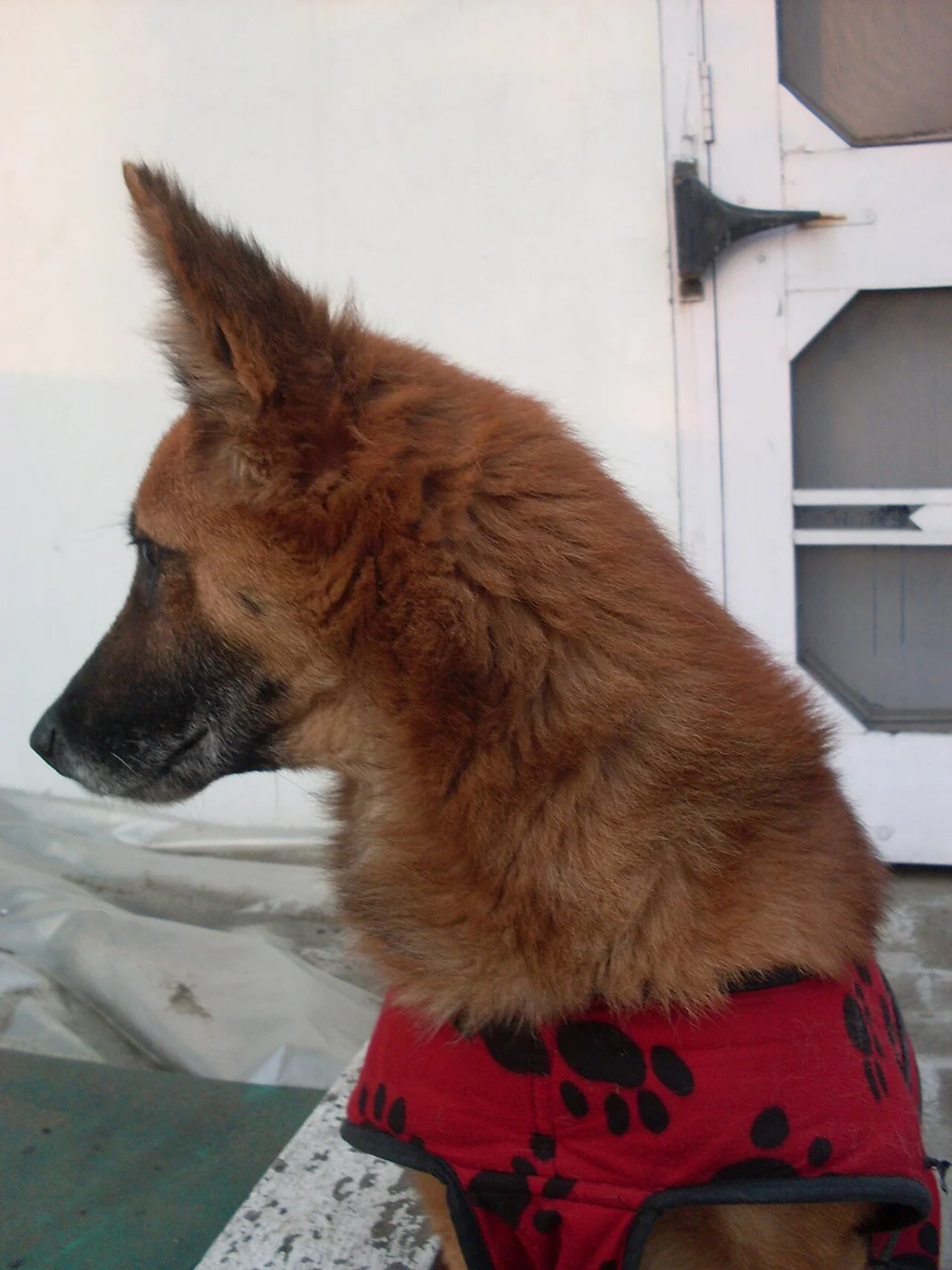
German Shepherd with perked, focused ears listening intently Gopal1035 · CC BY 2.5 · Web size optimized; source linked for the original.
The idea that dogs can swivel their ears and instantly know exactly where a squeak or rustle is coming from makes intuitive sense. Their mobile pinnae and different ear anatomy do seem built for the job. Yet when scientists measure sound localization ability directly, the picture is more nuanced. Recent work with carefully trained dogs reports some impressively tight minimum audible angles, while other comparisons remind us that humans still hold certain advantages. This article looks at what the evidence actually supports, what remains uncertain, and what it might mean for our understanding of canine senses.
Measuring How Precisely Dogs Can Tell Sounds Apart
Researchers tested ten dogs on their ability to notice when a sound source shifted position. Using a staircase procedure with white noise bursts, they found the dogs’ average minimum audible angle came in at 7.6 degrees. Some individuals performed much better, with the best reaching 1.3 degrees, while others needed up to 13.2 degrees before they could reliably detect a change. The dogs also improved across testing sessions, suggesting that learning plays a role when animals are given the chance to practice.
Earlier studies had often used different methods that did not allow for this improvement and typically involved very small numbers of subjects. The newer results therefore hint that at least some dogs may localize sounds more accurately than older reports indicated. Still, the sample was small and the tests used only one type of stimulus, so it is not yet clear how well these findings would hold up with other sounds or larger groups of dogs.
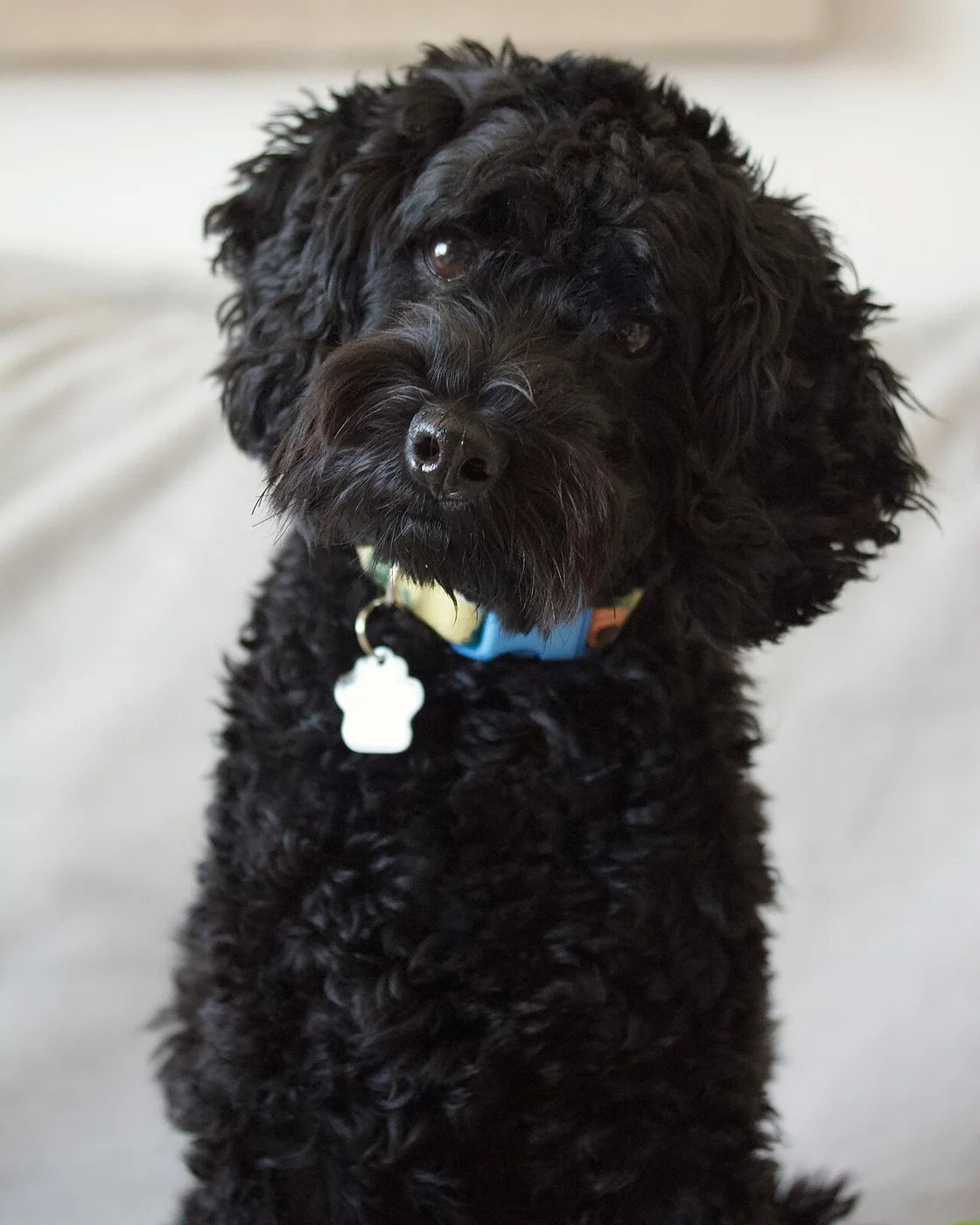
Black schnoodle puppy tilting head Reid Campbell · CC0 1.0. Web size optimized; original linked.
The Role of Movable Ears in Sound Collection
A dog’s outer ear, or pinna, can swivel thanks to a complex set of muscles and specialized cartilage, including the scutiform cartilage. This mobility is widely thought to help funnel sound and improve directional hearing. In theory, animals with movable pinnae should have an edge over species like humans, who must move their whole heads to redirect their ears.
At the same time, direct comparisons have sometimes shown dogs performing less accurately than humans on localization tasks despite this apparent advantage. Systematic data remain limited, and no one has rigorously tested whether different ear shapes, such as erect versus floppy, produce measurable differences in how well dogs gather or amplify distant noises. The pinna clearly matters, but exactly how much it helps in everyday situations is still an open question.
Inside the Ear: Middle-Ear Anatomy and Its Mixed Effects
Dogs possess a higher malleus-to-incus lever ratio in the middle ear than humans do. This feature could, in principle, boost sensitivity to faint sounds. Reports differ, however, on how much pressure amplification actually occurs, with some estimates placing dogs at roughly 20 times and humans at 22 times.
Another structural difference is that a much larger proportion of a dog’s external ear canal is supported by cartilage, sometimes reaching 98 percent compared with about 30 percent in people. While this flexibility may support ear movement, it could also affect how efficiently sound travels deeper into the ear. Breed-to-breed variation adds further complexity, and researchers have not yet established a clear, direct link between these traits and superior sound localization.
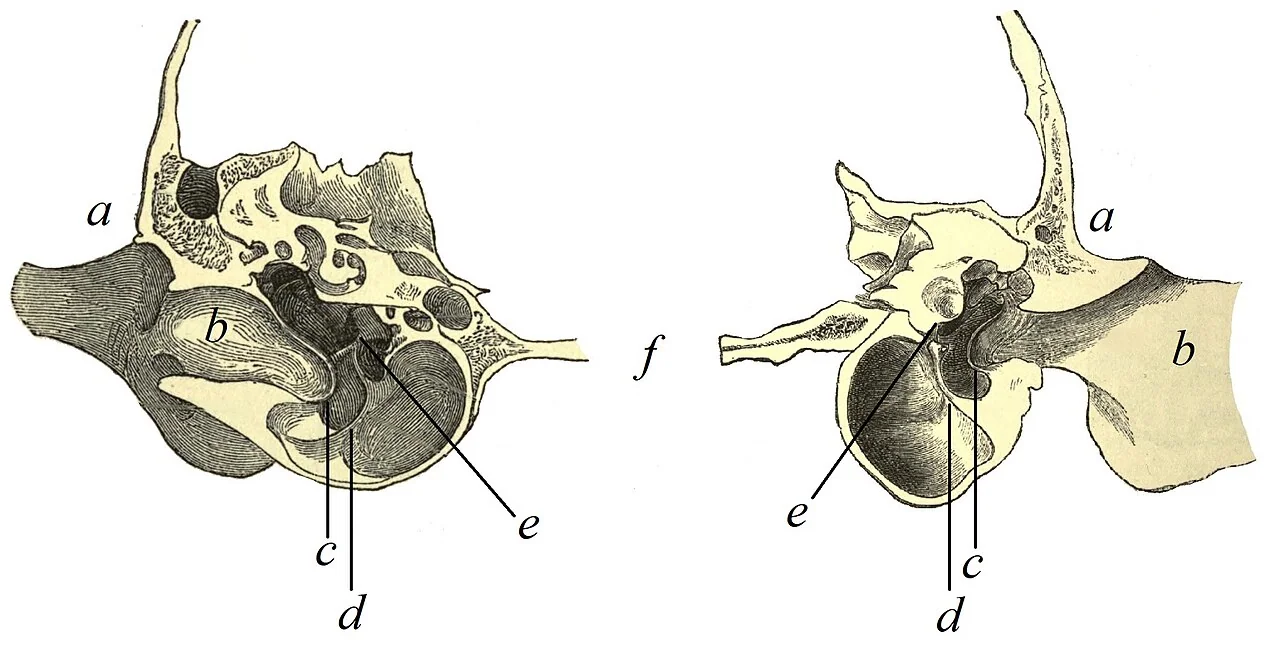
Auditory bullae of dog and tiger (1881). a: Squamosal bone b: External auditory meatus c: Tympanic ring d: Septum e: Eustachian canal f: Basioccipital bone St. George Mivart · Public domain. Web size optimized; original linked.
High-Frequency Hearing and the Importance of Visual Field
Dogs can hear higher frequencies than humans. This extended range allows them to pick up on spectral cues created when sound waves are shadowed by the head, cues that help the brain figure out where a noise is coming from. Because dogs have smaller heads than humans, they need those higher frequencies for the shadowing effect to be useful.
Interestingly, localization accuracy across mammals seems to correlate with the width of each species’ best-vision field. Dogs have a relatively narrow field of about 5.1 degrees, which would place their expected performance between that of cats and animals with wider visual fields. This relationship, drawn from comparative work by Heffner and Heffner, suggests that sound localization may be tuned to complement where an animal sees best rather than being driven by ear anatomy alone.
What the Evidence Means for Dog Owners and Future Research
The studies we have show real individual differences among dogs, with some animals demonstrating very fine localization under controlled conditions. This variability is worth remembering the next time your dog seems to ignore a sound you can hear clearly; it may simply fall outside that particular dog’s range or require more practice. Light-hearted as it sounds, the data also caution against assuming every dog is a four-legged sonar system. Their ears are impressive, but performance depends on many factors.
For researchers, the current findings highlight the need for larger samples, varied stimuli, and consistent testing methods that allow animals to learn. Questions remain about how ear shape, age, breed, and even training history affect real-world performance. Until those gaps are filled, it is safest to treat claims of canine superiority in sound localization as intriguing but provisional. In the meantime, watching your own dog tilt its head at a distant rustle offers a charming reminder that evolution has equipped them with a sophisticated, if not always perfect, auditory toolkit.
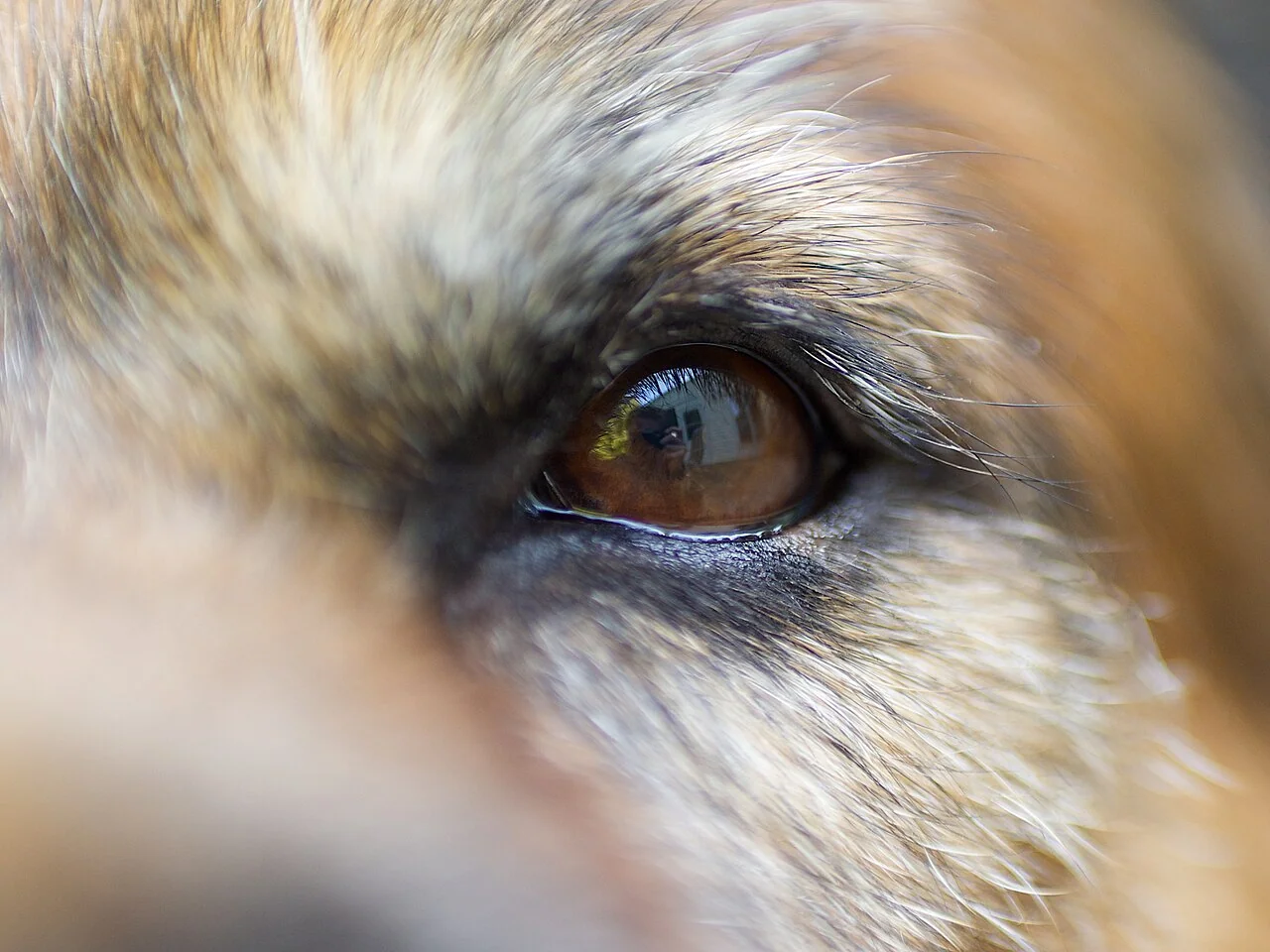
Close-up photograph of a dog’s eye and face, illustrating individual variation in dogs’ attentiveness to sounds. (20-52 Weeks of Teddy - Keeping an Eye on You by Austin Kirk, CC BY 2.0, via Wikimedia Commons) Austin Kirk · CC BY 2.0. Web size optimized; original linked.
AI-assisted original writing. This feature was revised against source material and checked for unsupported claims. Follow the references below for evidence and its limits.
Archaeological finds from select European sites offer glimpses into possible relationships between people and dogs, while underscoring the challenges of interpreting ancient deposits.
Owner-led projects offer scale and real-world glimpses into canine minds, yet differences in tester identity and uncontrolled home settings can introduce systematic errors that large samples do not automatically cancel out.
Penn State researchers once used MRI scans and computer simulations to map airflow inside a dog’s nasal passages, offering clues for designing better chemical sensors.
 Photograph