Dog-friendly workplaces may look like enlightened progress, yet they often trade genuine animal comfort for human optics, inviting us to imagine kinder, more honest arrangements instead.
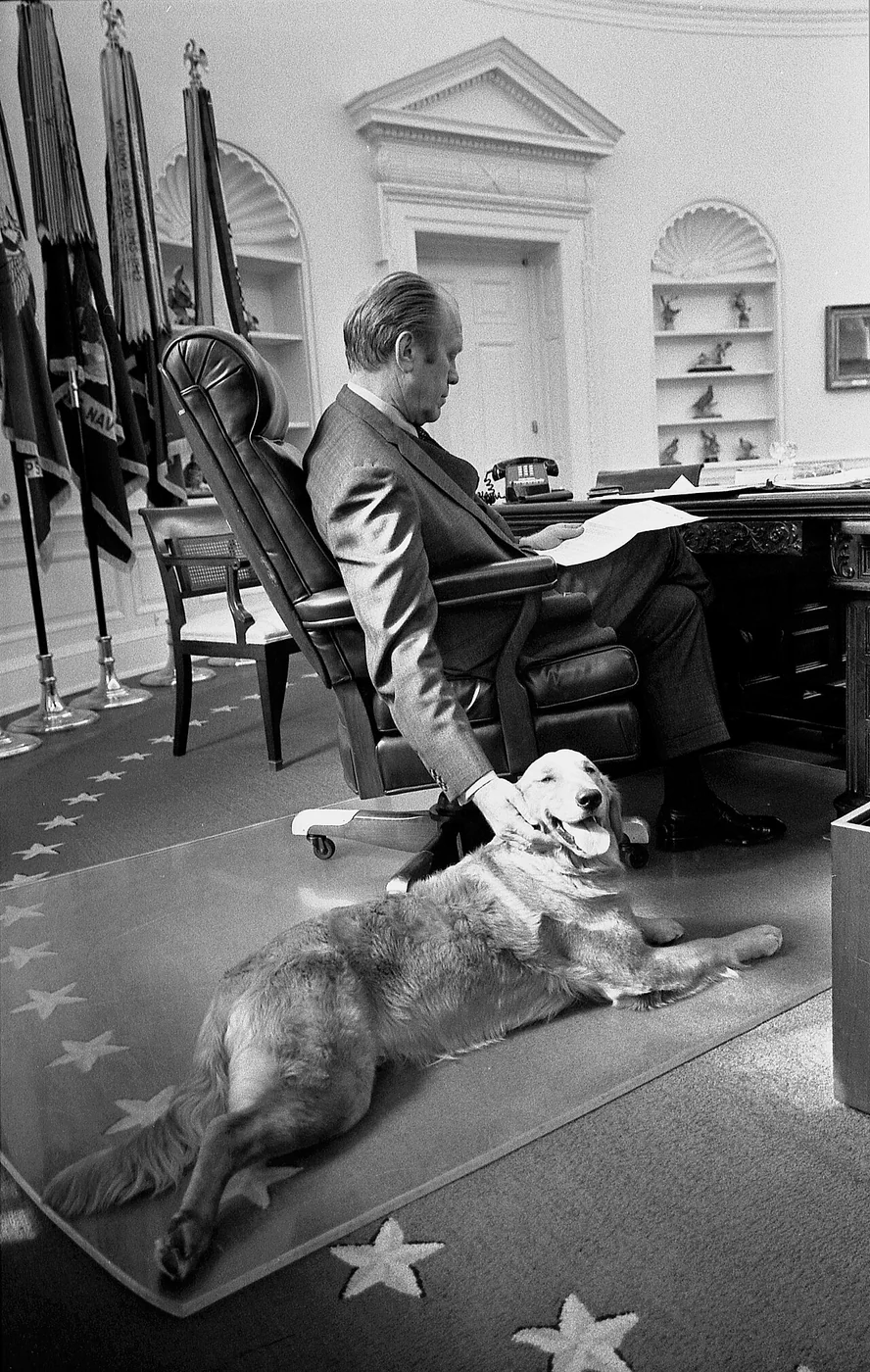
Photograph of President Gerald R. Ford and his golden retriever, Liberty, in the Oval Office. David Hume Kennerly · Public domain · Web size optimized; source linked for the original.
We love our dogs with a fierce, wordless loyalty that feels almost sacred. So it is tempting to extend that affection into every corner of daily life, including the fluorescent hum of the workplace. Yet the vision of canine colleagues curled contentedly beneath conference tables can mask a quieter truth: many such policies serve as corporate stage dressing rather than thoughtful accommodations. A humane approach to living well with dogs asks us to look past the photogenic ideal and weigh real tradeoffs, for their sake and ours.
The Allure and the Reality of Office Dogs
Imagine a bustling marketing firm where the weekly all-hands meeting is regularly attended by Luna, a cheerful golden retriever whose tail thumps against laptop bags like a metronome of goodwill. Her presence is sold as a perk that softens the edges of deadline pressure and sparks spontaneous smiles across the open-plan floor. In this hypothetical world, some team members do report feeling lighter, as if the simple act of scratching a furry ear resets their nervous systems. Yet the picture grows more complicated when we consider the colleagues who quietly dread those same meetings, perhaps because a past bad encounter with a larger dog still lingers or because the faint dander in the air sets off an afternoon of watery eyes and muffled sneezes.
For Luna herself the day may unfold less like a pampered adventure and more like an extended test of patience. Fluorescent lights replace the dappled shade she would choose in a sunlit yard. Rolling chairs and ringing phones create a soundscape no ancestral wolf ever prepared her to endure. What looks like peaceful napping under a desk might actually be a dog conserving energy while she waits for the next unpredictable disruption. The office, however well-intentioned, rarely offers the long, purposeful walks or quiet downtime her biology craves. In such scenarios the dog becomes an accessory to human branding rather than a creature whose needs are placed at the center.
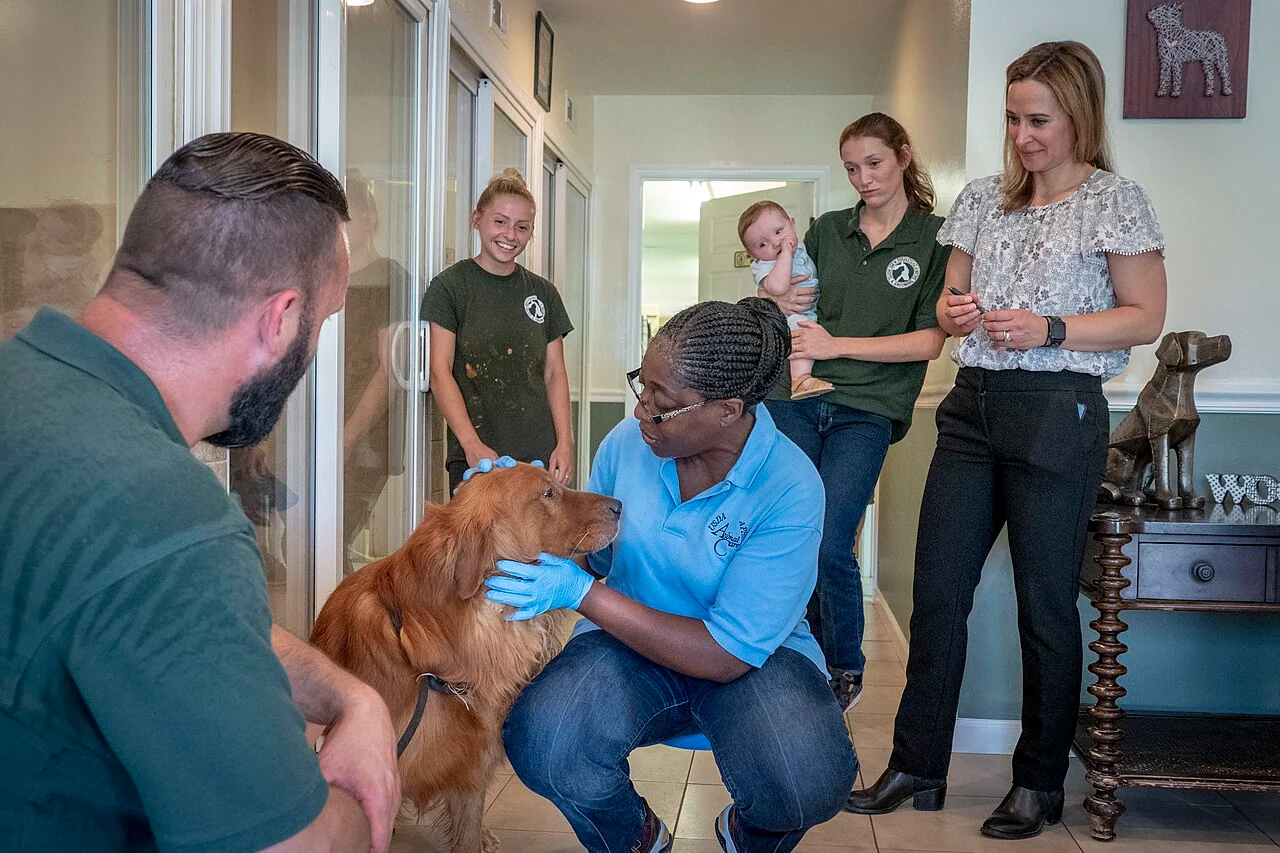
Dr. Gloria McFadden, Veterinary Medical Officer, USDA Animal and Plant Health Inspection Service performs a hands-on examination of Deuce, a 4-year-old Golden Retriever, at Farmsteads Puppy Paradise. USDAgov · Public domain. Web size optimized; original linked.
Stress Signals Hidden in Plain Sight
Picture a quiet accounting office where Max, a sensitive border collie, spends his days beside his owner’s standing desk. At first glance he seems the model of composure. Yet an attentive eye might notice the slight tremble in his ears when the printer whirs to life or the way he tucks his tail each time the elevator dings with new arrivals. These small signals, easy to miss amid the rush of quarterly reports, can hint at a dog who is coping rather than thriving. In a hypothetical setting like this, what begins as a generous policy can slide into an endurance trial for an animal wired for routine and clear purpose.
Meanwhile the humans around Max face their own quiet calculations. A new intern with a mild allergy now debates whether to mention the growing itch behind her eyes, fearing she will be seen as the office curmudgeon who ruined the vibe. Another coworker who once had a frightening experience with a reactive dog finds himself scanning the room before every trip to the kitchen. These tensions rarely erupt into open conflict, yet they erode the very harmony the policy was meant to create. The result is a subtle tax on goodwill, paid in small increments of discomfort and unspoken resentment.
The Limits of Corporate Compassion
Advocates for dog-friendly offices often speak with genuine warmth about recognizing dogs as family members rather than mere pets. In one imagined tech campus, sleek policy documents celebrate this evolution, complete with photos of employees and their dogs posed like coworkers on casual Friday. Yet the fine print may quietly favor calm, medium-sized breeds that photograph well and rarely challenge the décor. High-energy terriers or anxious rescues are gently discouraged through lengthy approval processes, revealing that the compassion has limits shaped more by convenience than by canine welfare.
True care would require more than permission slips and water bowls. It would mean investing in professional guidance on each dog’s individual tolerance, creating genuine escape spaces, and training humans to read subtle stress cues before problems arise. Without those commitments, the warm narrative of inclusivity can curdle into something less admirable: a setting where dogs absorb the ambient pressure of human schedules and deadlines. When a hypothetical overwhelmed owner spends half the afternoon soothing a barking dog instead of finishing a client proposal, both the animal and the business quietly pay the price.
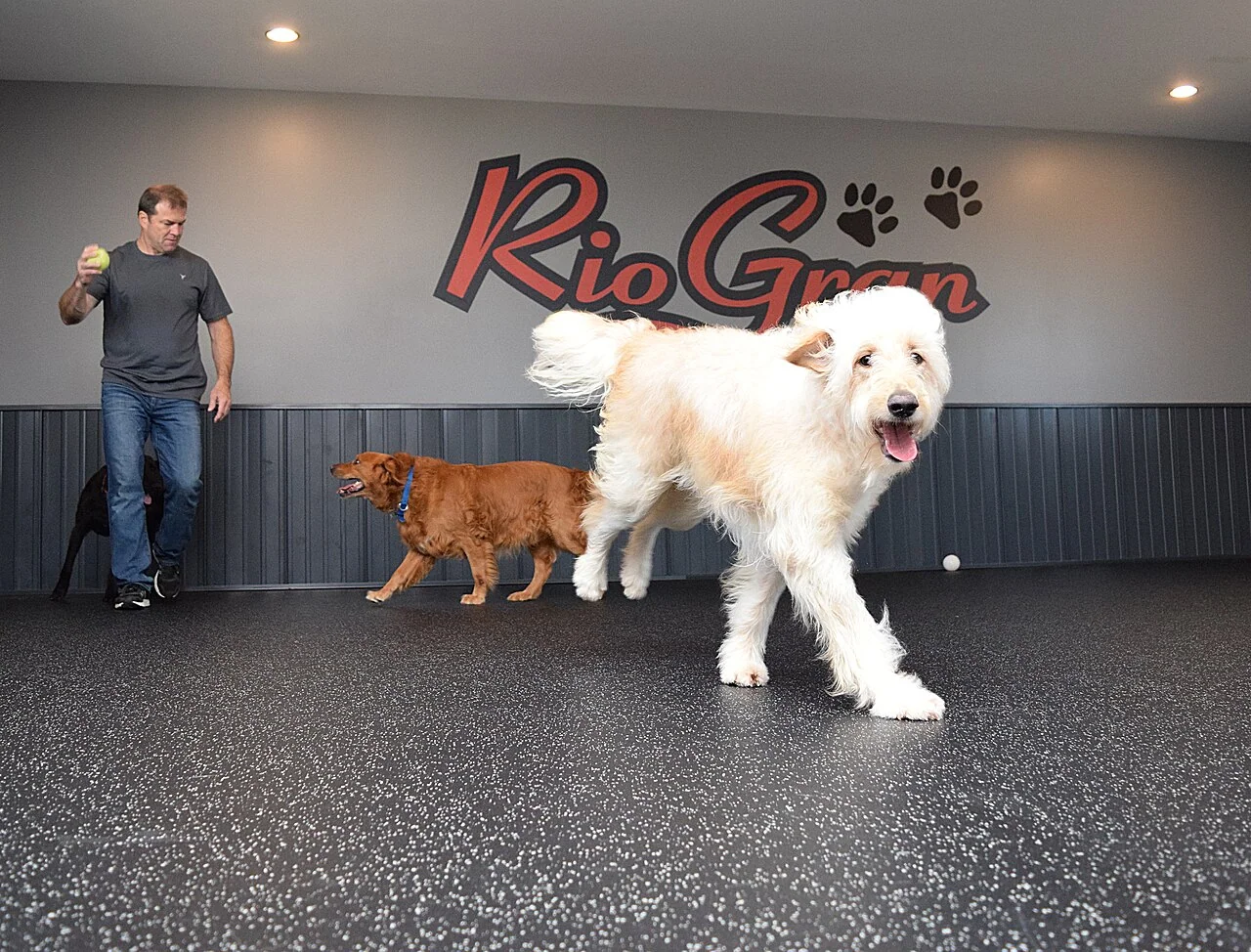
Rather than insisting every workplace open its doors, consider a different possibility. An advertising agency might partner with a local doggy daycare that offers structured play, midday walks, and quiet rest pods tailored to canine rhythms. Employees receive a modest stipend to offset the cost, freeing them to focus during office hours while knowing their dogs are enjoying species-appropriate enrichment. In this imagined arrangement, both humans and animals return home at day’s end with energy to spare for long neighborhood rambles, strengthening the bond without forcing it into cubicle life.
Cities, too, could reimagine shared spaces with more nuance. Picture dog parks designed with separate zones for exuberant zoomies and calmer sniffing sessions, shaped by thoughtful input from people who study canine behavior. Hybrid work schedules might allow guardians to build their days around their dogs’ natural patterns instead of the reverse. Employers invested in animal welfare could also offer paid volunteer time at shelters or match donations to rescue groups, creating ripples of good that reach far beyond any single office. These approaches sidestep the zero-sum tension of shared workspaces and honor the fact that most dogs prefer consistency over corporate novelty.
Toward Thoughtful Companionship in Public Life
The question of dogs in offices reflects a larger cultural conversation about where our four-legged family members truly belong. In hypothetical apartment buildings, airplanes, and coffee shops, the desire to include them collides with practical realities of noise, hygiene, and personal comfort. A mature perspective celebrates the profound companionship dogs offer without pretending every environment was made for them. This stance respects both the human longing for connection and the legitimate preferences of those who wish to keep their workspaces free of fur, slobber, and the occasional enthusiastic greeting.
Performative policies may generate pleasant optics and social media likes, yet they risk distracting us from more meaningful reforms. By choosing evidence-guided alternatives that center actual welfare, companies can support the animals we love without manufacturing stress for them or their human colleagues. The goal is not to push dogs out of our lives but to invite them into spaces that suit their natures. In doing so we move beyond virtue signaling toward relationships that feel deeper precisely because they are more honest. When tails wag from genuine contentment rather than obligation, everyone involved stands a better chance of living well together.
Photograph of the indoor play area at Rio Gran Boarding, Daycare & Training Academy, designed with rolled rubber flooring, 2015. A real documentary image of a dog daycare facility used here as contextual imagery for alternatives to office dogs. Greatmats · CC BY-SA 4.0. Web size optimized; original linked.
AI-assisted original writing. This feature was revised against source material and checked for unsupported claims. An editorial perspective; interpretations are distinguished from factual reporting.
Sources & further reading
This article is labeled opinion and offers an editorial perspective.
Focusing on certain breeds distracts from the real drivers of dog bites: negligent ownership and missed opportunities for early socialization that affect every kind of pup.
Urban planners rarely pause to consider how their straight paths and echoing plazas feel through a dog's nose, ears, and eyes, yet a few gentle adjustments could transform shared spaces into places where both species truly thrive together.
Strict enforcement on suburban paths and trails quietly shields our canine companions from injury, escape, and tense encounters that off-leash freedom too often invites.
 Photograph