Why We Should Stop Celebrating 'Velcro' Dogs as Ideal
The romantic image of dogs that panic without their owners may feel like ultimate loyalty, but it often masks distress that harms both pets and people.
Imagine a golden retriever who follows you from the kitchen to the bathroom, eyes wide with devotion, and collapses into trembling fits the moment the front door shuts. For years, we have called this the gold standard of canine love: the Velcro dog, stuck to us like warm Velcro. Yet this ideal may be doing more harm than good. True companionship with dogs asks for something richer than constant proximity. It asks for a bond sturdy enough to survive ordinary absences, one that honors a dog's capacity for calm self-possession as much as its affection. By romanticizing frantic attachment, we risk mistaking suffering for loyalty and burdening both ourselves and our pets with expectations that leave little room for real life.
The Velcro Trap: When Clinginess Becomes Suffering
Picture a young couple bringing home a fluffy spaniel puppy. They revel in how she trails them everywhere, leaping into laps at the first hint of movement. Friends coo over the videos: "She's your shadow!" But months later the same dog is destroying baseboards and howling for hours whenever they leave for work. What began as endearing devotion has revealed itself as deep unease. In this hypothetical, the owners initially mistook the dog's inability to self-soothe for proof of a profound connection. They celebrated the clinginess until the practical costs mounted: chewed furniture, exhausted evenings, and a pet clearly living on an emotional knife-edge.
The warmth of being so thoroughly needed can blind us to the dog's inner state. A dog that cannot tolerate solitude may be signaling chronic stress rather than pure adoration. While every good relationship includes moments of joyful reunion, building an entire ideal around panic when apart creates a trap. Owners delay seeking help because the behavior feels like flattery. The dog, meanwhile, endures repeated spikes of anxiety that erode its quality of life. Celebrating Velcro dogs as the pinnacle of love therefore risks turning a blind eye to genuine discomfort in favor of a flattering narrative.
Cavalier King Charles Spaniel puppy (2009) Jessicali345 · CC BY-SA 3.0. Web size optimized; original linked.
How Social Media and Breeding Amplified the Myth
Consider the endless scroll of smartphone videos: a terrier erupting in ecstatic spins the instant its owner returns from grocery shopping. These clips rack up likes and shares, framing desperate reunion as the ultimate heart-melter. In our imagined cultural landscape, such content quietly teaches that the more frantic the greeting, the deeper the love. Breeders, sensing market demand, might favor lines of compact companion dogs already inclined toward intense attachment, sometimes overlooking the value of balanced temperaments that can handle quiet afternoons alone.
Over time this creates a feedback loop. Urban apartment dwellers seeking four-legged company lean toward breeds or individuals that seem happiest glued to a lap. The dogs who greet departures with a casual sigh and a nap rarely go viral. As a result, we collectively nudge the canine population toward greater dependence while calling it progress. The myth grows stronger with every heart-eyed emoji, even though thoughtful living with dogs might require us to value resilience as highly as adoration. What feels like harmless entertainment can quietly reshape expectations in ways that leave many animals ill-equipped for ordinary human schedules.
The Case for Healthy Independence in Canine Companions
Suppose a family chooses a mixed-breed puppy known for curious confidence rather than instant lap-dog tendencies. They practice short, pleasant alone-time sessions from an early age, leaving the pup with a food-stuffed toy and soft music. Over months the dog learns that solitude can be safe and even rewarding. When the adults head to work, he settles on his bed with a contented sigh instead of spiraling into distress. This scenario is no fantasy of cold detachment; the same dog still bounds to the door with genuine joy at day's end. The bond remains warm, only now it rests on mutual trust rather than anxious necessity.
Breeding programs that screen for emotional steadiness alongside friendliness offer a path toward this healthier middle ground. A dog capable of relaxed independence does not love its people any less; it simply carries an internal sense of security that allows everyone more breathing room. Such animals adapt more gracefully to the realities of modern households where work, errands, and occasional travel are inevitable. By shifting our admiration toward these balanced companions, we reduce the likelihood of chronic anxiety, rehoming, and medical interventions. The tradeoff is giving up the ego boost of being someone's entire universe. In return we gain relationships built on choice instead of desperation.
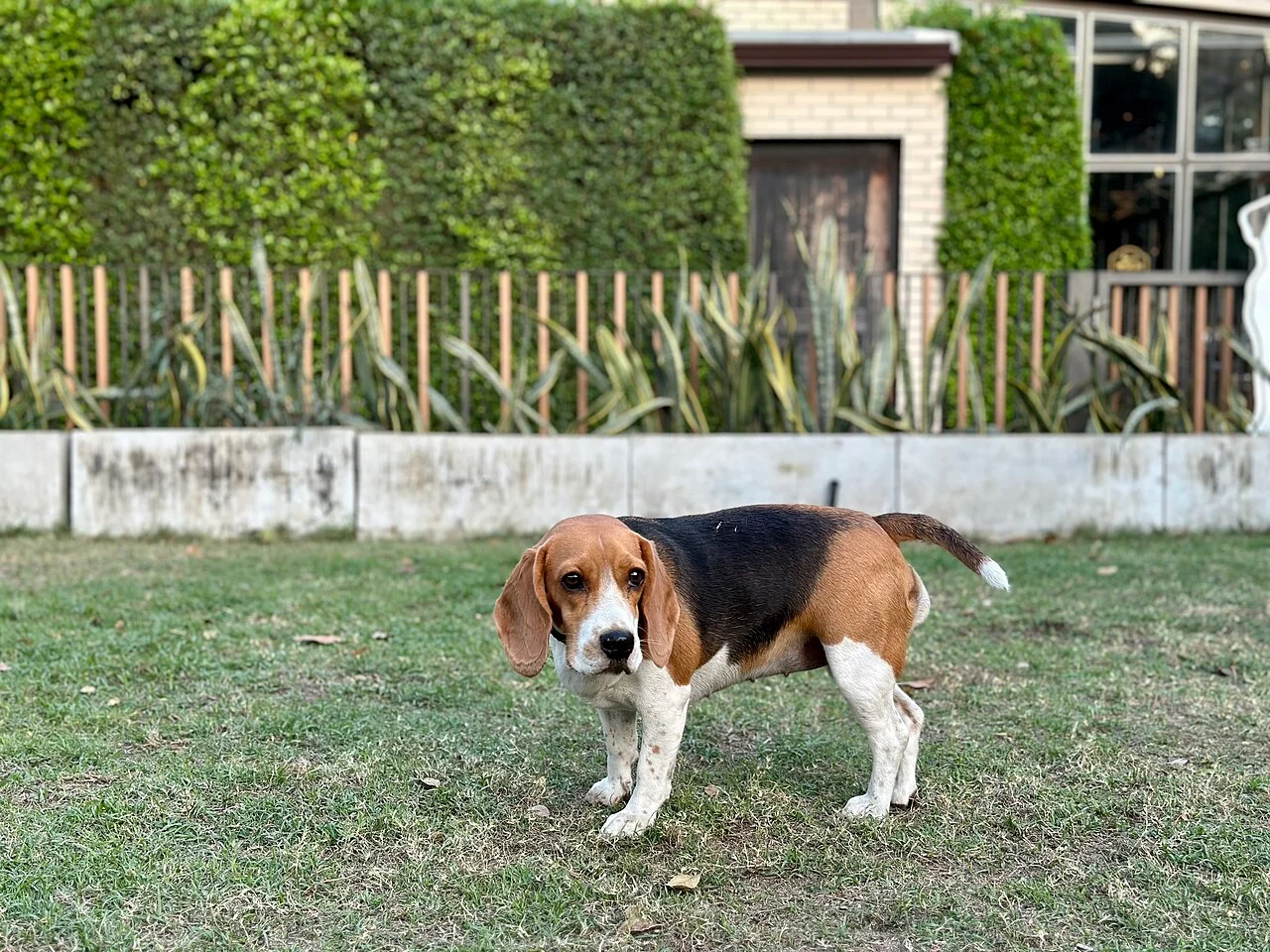
Beagle standing alone Slyronit · CC BY-SA 4.0. Web size optimized; original linked.
Public Spaces and the Ripple Effects of Anxious Dogs
Envision a neighborhood café with outdoor tables where patrons hope to enjoy coffee alongside their dogs. If one anxious dog barks nonstop the moment its owner steps inside to order, the entire patio suffers. Neighbors in apartment buildings face similar strain when constant vocalizing echoes through thin walls. In these possible futures, the celebration of Velcro behavior concentrates stress outward, limiting where and how dogs can comfortably exist in shared spaces. Owners tied to reactive pets find themselves unable to chat with friends or even duck into a store without elaborate arrangements.
Communities flourish when dogs and humans can manage both closeness and respectful distance. A calm dog resting quietly under a table lets its person linger in conversation without constant monitoring. This freedom ripples outward, making public areas more welcoming to canine companions overall. When we overvalue extreme attachment, we subtly train ourselves and our pets away from the very skills that expand our shared world. The tradeoff is clear: trading the dramatic reunion reel for the quiet satisfaction of a dog who trusts the world enough to wait patiently. In the long run, that patience opens more doors than any amount of clingy devotion ever could.
Practical Steps Toward Better Bonds
Prospective owners might begin by asking breeders or shelters not only about cuddliness but about a dog's ability to settle independently. Puppy classes could incorporate gentle alone-time practice, teaching that a closing door does not spell catastrophe. For dogs already showing distress, the first step could be a veterinary check to rule out physical contributors, followed by thoughtfully designed behavior plans from qualified professionals. These incremental changes respect the animal's emotional reality while gently expanding its comfort zone.
At home, simple adjustments such as puzzle toys offered before departure or gradual desensitization to leaving cues can make solitude feel predictable rather than terrifying. The goal is never to create aloofness but to foster confidence, allowing the dog to feel secure in its own company. Reframing independence as an act of kindness rather than emotional distance changes everything. We move from relationships rooted in anxious dependence to ones grounded in mutual ease. Our dogs, in turn, gain the dignity of living without perpetual worry. In the end, the best companionship may be the one that lets both parties breathe freely, whether side by side or across an empty room.
AI-assisted original writing. This feature was revised against source material and checked for unsupported claims. An editorial perspective; interpretations are distinguished from factual reporting.
Sources & further reading
This article is labeled opinion and offers an editorial perspective.
Focusing on certain breeds distracts from the real drivers of dog bites: negligent ownership and missed opportunities for early socialization that affect every kind of pup.
Urban planners rarely pause to consider how their straight paths and echoing plazas feel through a dog's nose, ears, and eyes, yet a few gentle adjustments could transform shared spaces into places where both species truly thrive together.
Strict enforcement on suburban paths and trails quietly shields our canine companions from injury, escape, and tense encounters that off-leash freedom too often invites.

 Photograph