


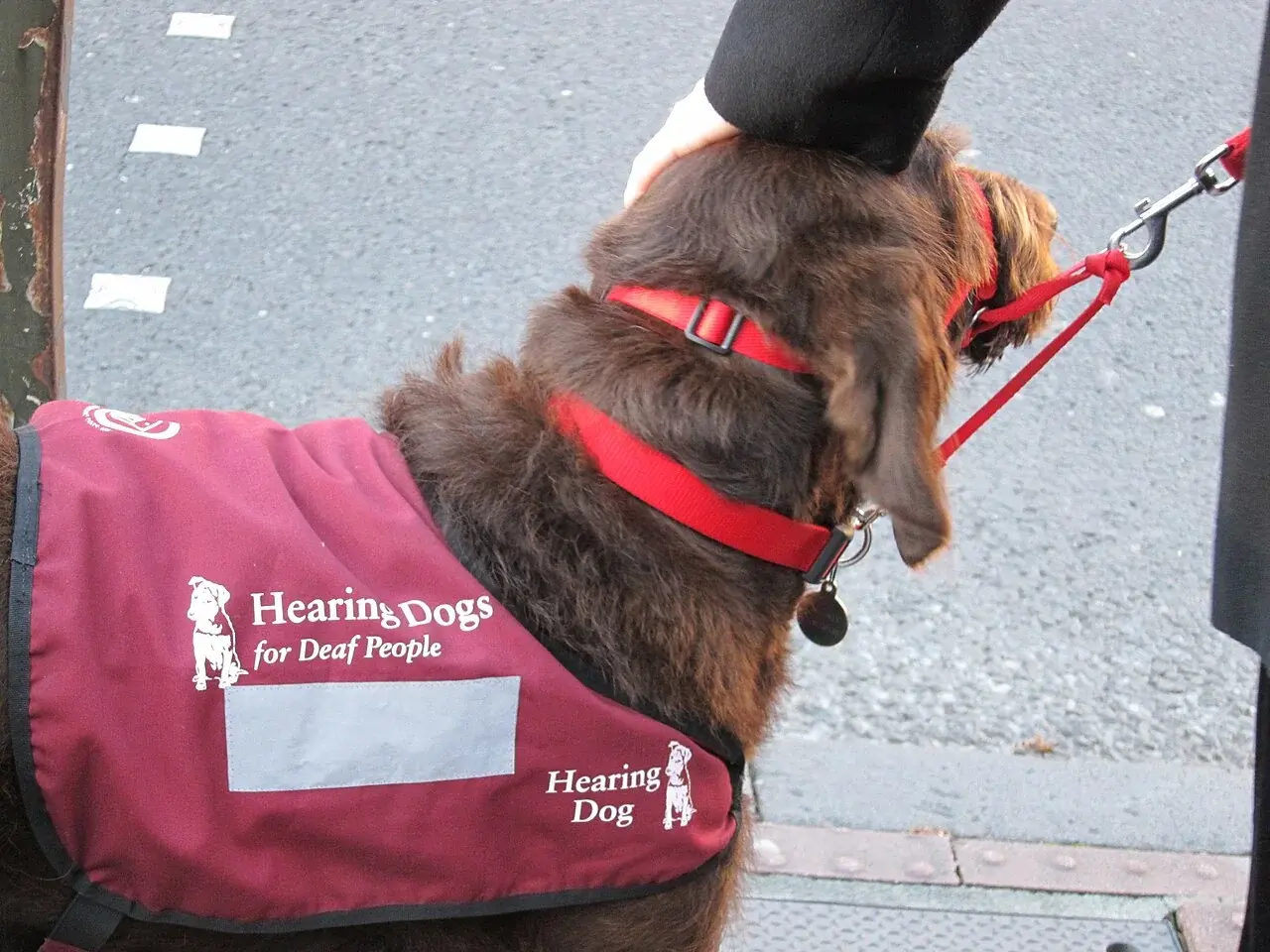
 Photograph
Blowing Puffer Fish · CC BY 2.0
Hero Dogs
Alert Ears and Wagging Tails: How Hearing Dogs Help Their Partners
A dog-focused look at the training and daily work of hearing dogs, drawn from one UK charity’s own descriptions.
All the News That's Fit to Bark!
Handlers used scent bags and careful scheduling to support dogs searching the World Trade Center rubble, while later studies tracked the animals' exposure to hazards.
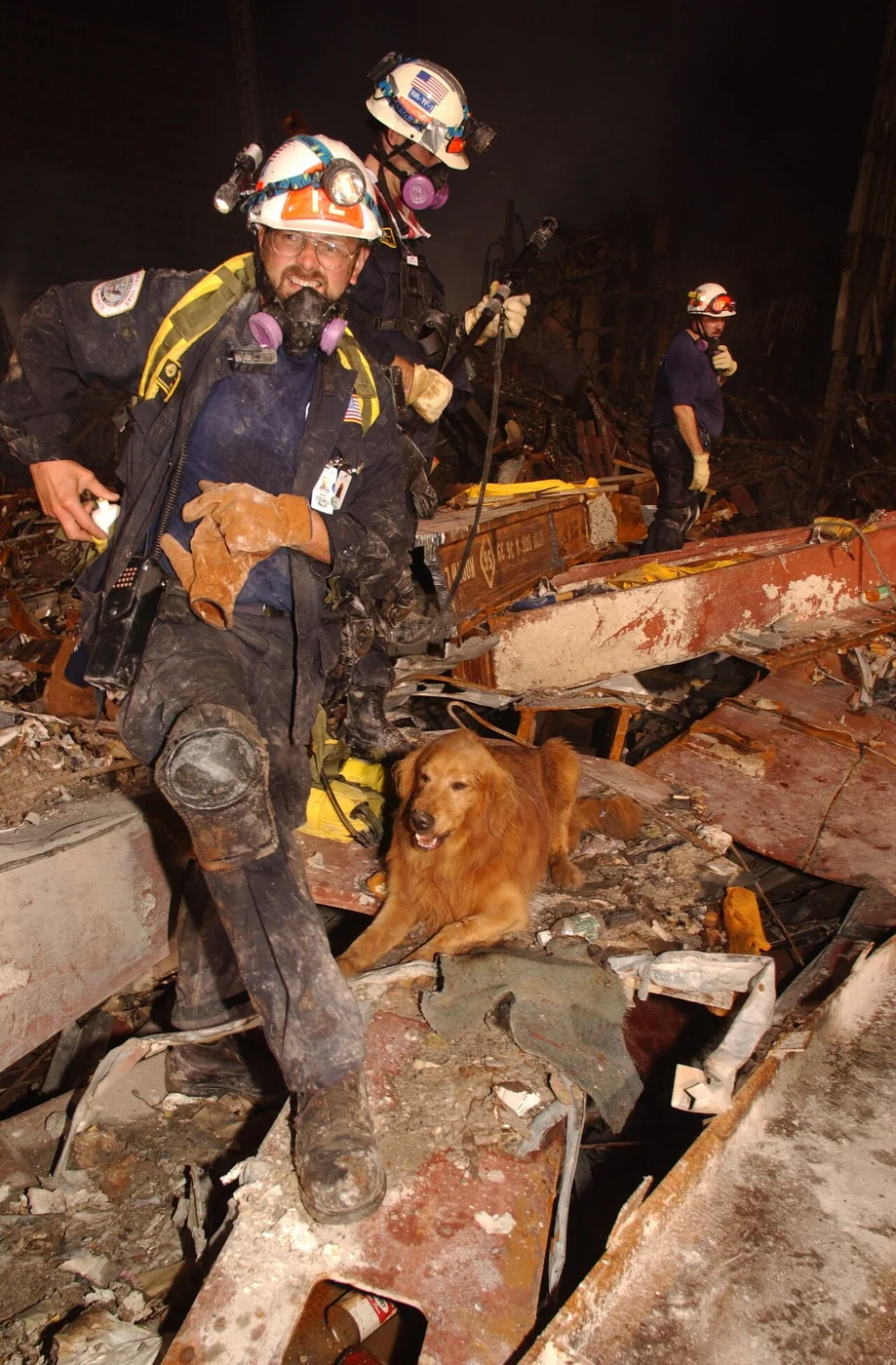
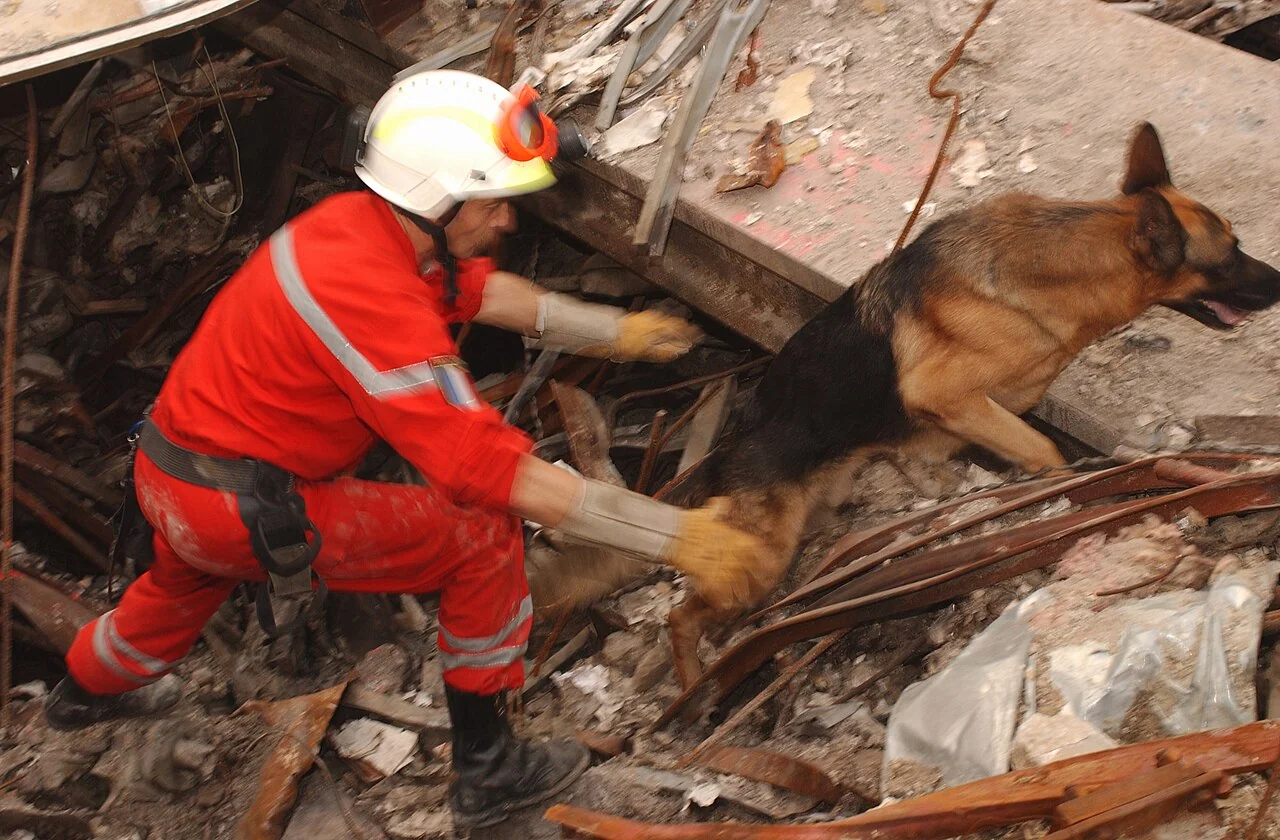
Kent Olson and his dog, Thunder, search through the rubble at the World Trade Center site, September 21, 2001. Documentary photo of a search dog working at Ground Zero. Andrea Booher · Public domain · Web size optimized; source linked for the original.
In the days after the September 11 attacks, search-and-rescue dogs and their handlers faced the grim task of working through the unstable, toxic debris at the World Trade Center site. A preserved artifact from that effort—a small bag of synthetic cadaver scent—offers a tangible reminder of how handlers tried to keep their animals focused amid overwhelming conditions. Evidence shows that these dogs operated without protective equipment, encountering physical dangers and airborne particles. Follow-up health monitoring provided some reassurance about their long-term wellbeing. This article draws directly from available records to examine the tools, working conditions, and outcomes for the dogs, while considering what their service meant for both animal welfare and human recovery efforts. Light moments, such as imagining a German shepherd momentarily distracted by an unrelated aroma, remain fictional illustrations only.
One concrete item from the response is a cadaver scent bag used by a New York State Police K-9 Unit. This bag contained synthetic cadaver scent and was employed alongside a German shepherd to help maintain the dog's focus during searches at the World Trade Center ruins in 2001. The artifact, now part of the Smithsonian National Museum of American History collection, illustrates a practical aid for keeping trained dogs engaged when actual scents might be faint, mixed, or emotionally taxing for the handler and animal alike.
Such tools align with broader forensic training principles for cadaver dogs, which emphasize detection of generic human decomposition odors rather than live human scent. These dogs typically work by air scenting, where odors can gather in pools or form cones influenced by air movement. At a chaotic site like Ground Zero, a synthetic aid could reinforce the target scent without relying solely on the unpredictable environment. This approach reflects thoughtful preparation, even if the precise effectiveness in that specific chaos remains difficult to quantify from the records. An editorial observation: the existence of this preserved bag underscores the human-canine partnership under pressure, a quiet form of heroism worth reflecting on when we consider how responders used every available resource.
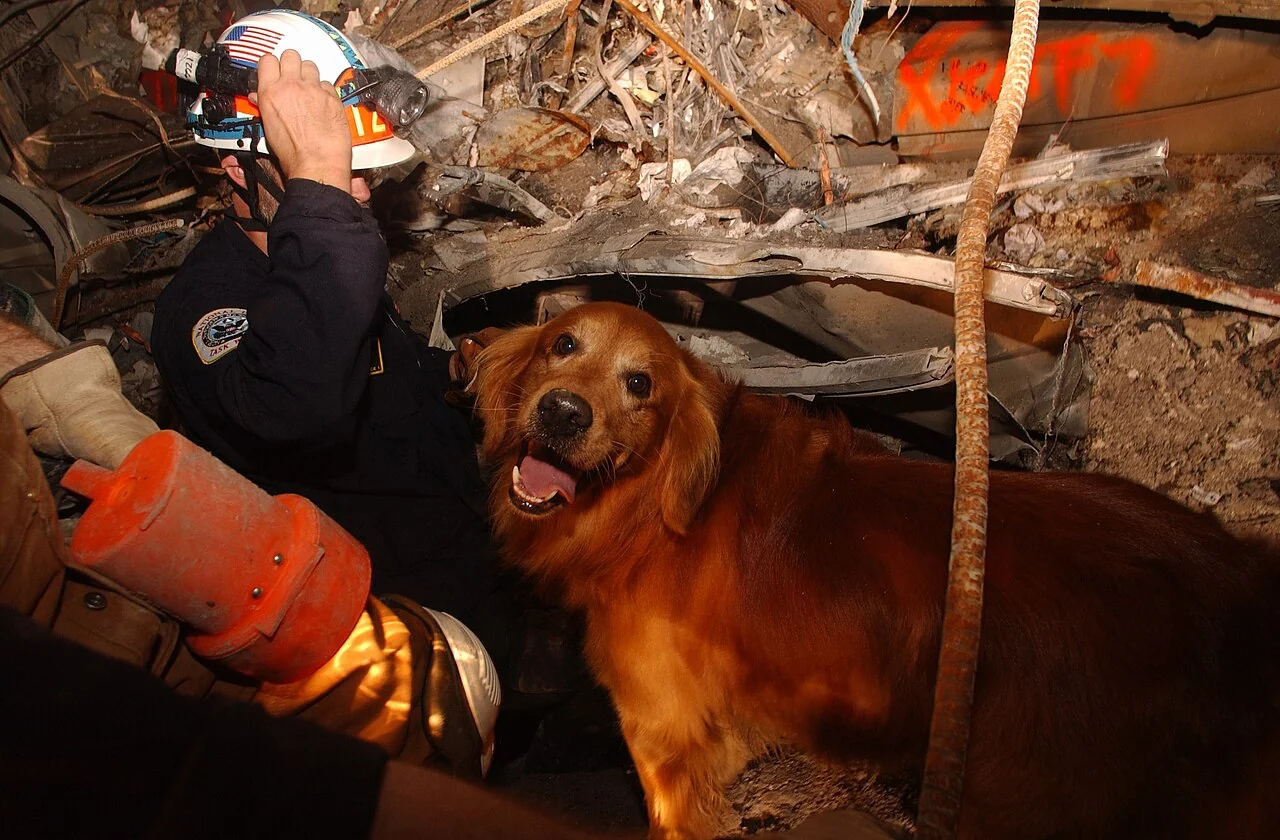
Available studies indicate that search and rescue dogs at Ground Zero operated in structured shifts, with some reports citing approximately 12-hour rotations. These schedules aimed to balance the need for thorough coverage against the physical toll on the animals. The rubble presented immediate hazards including sharp debris that could cause cuts, as well as risks of dehydration and fatigue in an environment lacking any personal protective gear for the dogs.
Handlers had to navigate constantly shifting piles of material while monitoring their partners for signs of exhaustion. The absence of protective equipment meant dogs were directly exposed to dust and particulates. This setup highlights both the dedication of the teams and the practical limits of what was possible in the urgent early phases of the response. Reading question: how might modern protocols differ if similar events occurred today, given what was learned about exposure? The evidence invites consideration of whether shorter shifts or rudimentary booties might have altered outcomes, though such specifics are not detailed in the sources.
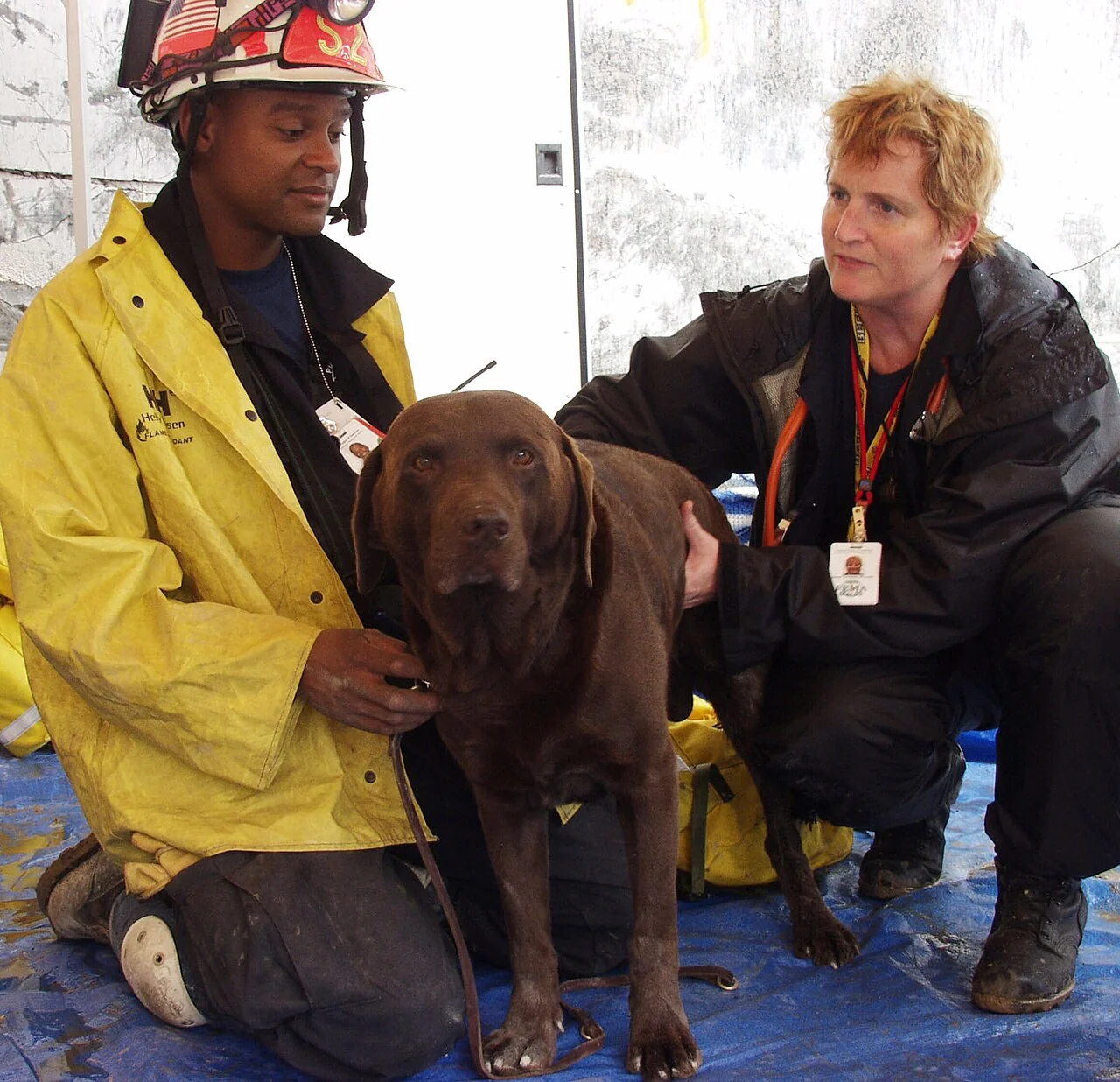
Post-deployment examinations revealed that many dogs had evidence of inhaled matter in their pulmonary tissue, consistent with working in an atmosphere heavy with fine particles and potential toxins. Despite these findings, surveillance studies conducted at five and fifteen years showed no significantly higher long-term mortality rates compared to control groups of dogs that had not been at the site.
This data offers a measure of reassurance about the dogs' resilience, though it does not eliminate concerns about shorter-term impacts or quality of life. The studies represent a valuable effort to track outcomes systematically rather than relying on anecdote. From an editorial standpoint, the results suggest that while the work was undeniably taxing, the dogs' bodies handled the insult better than some feared. A light fictional scenario for illustration: picture a handler joking with colleagues that their dog seemed more interested in napping than in any long-term grudge against the dust—purely invented humor, not drawn from records. The evidence supports continued attention to animal welfare in disaster planning.
General forensic literature describes how cadaver dogs are trained to identify decomposition scent carried through the air. These scents can settle into primary and secondary pools or travel in cones shaped by wind. Variable winds at outdoor sites can distort these cones, sometimes creating areas where scent seems absent even when target material is nearby.
Distinguishing live scent from decomposition odor requires separate training paths, with cadaver dogs specifically alerted to the latter. While these principles are not tied exclusively to 9/11 in the evidence, they provide context for why handlers might have used synthetic scent bags to reinforce training amid the complex odor landscape of burned and crushed materials. Implication: such techniques remain relevant for future urban search efforts, suggesting that ongoing refinement of scent aids and wind-pattern awareness could improve efficiency and reduce unnecessary stress on working animals. The records do not detail exact success rates at Ground Zero, so claims of outcomes stay outside this scope.
The combination of scent tools, shift management, and subsequent health data from Ground Zero offers lessons for balancing urgency with care. The use of a synthetic scent bag points to innovation under pressure, while the health surveillance indicates that thoughtful monitoring can yield useful insights even when immediate protections were limited. Editorial analysis: prioritizing animal welfare does not diminish the heroic narrative; instead, it strengthens it by showing responders who adapted and later studied results to protect future teams.
Useful reading questions include: what minimum protective measures should be standard for dogs in rubble environments? How can scent training be updated to account for modern building materials? These flow directly from the evidence without speculating on unrecorded details. A transparent personal editorial note: the partnership between handlers and dogs at such sites feels profoundly moving, even without claiming any firsthand observation. The sources support a view that continued investment in both training aids and health tracking represents a practical way to honor the animals' contributions. Overall, the material encourages viewing these dogs not just as tools but as sentient partners whose service deserves ongoing ethical consideration.
AI-assisted original writing. This feature was revised against source material and checked for unsupported claims. Follow the references below for evidence and its limits.
PhotographBlowing Puffer Fish · CC BY 2.0
A dog-focused look at the training and daily work of hearing dogs, drawn from one UK charity’s own descriptions.
 Photograph
A look at coordinated Swiss rescue operations that include avalanche dogs, drawn from limited public descriptions of specialist teamwork.
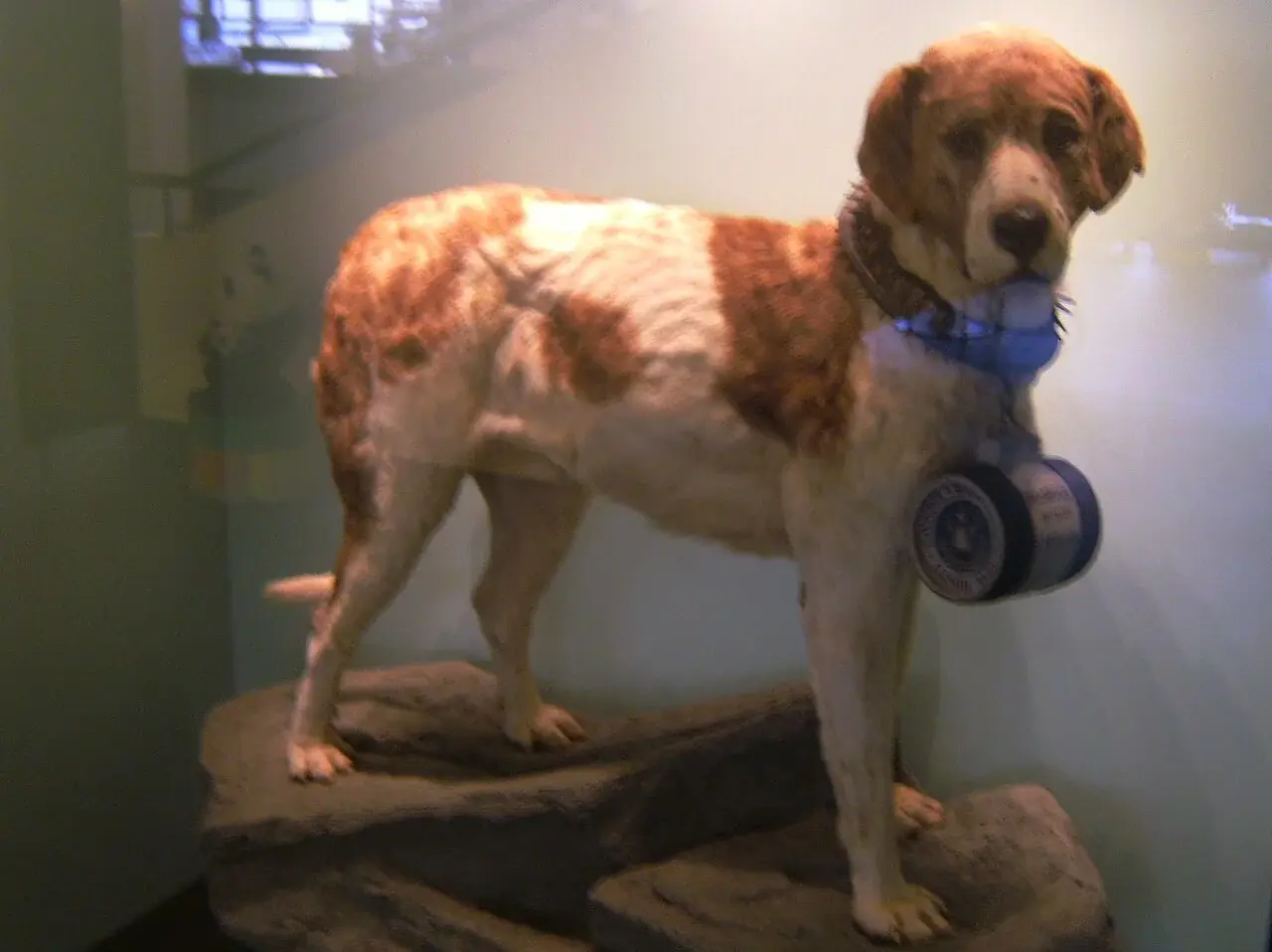
A real Alpine dog whose reputation grew from hospice service, even though detailed rescue records were never kept.