


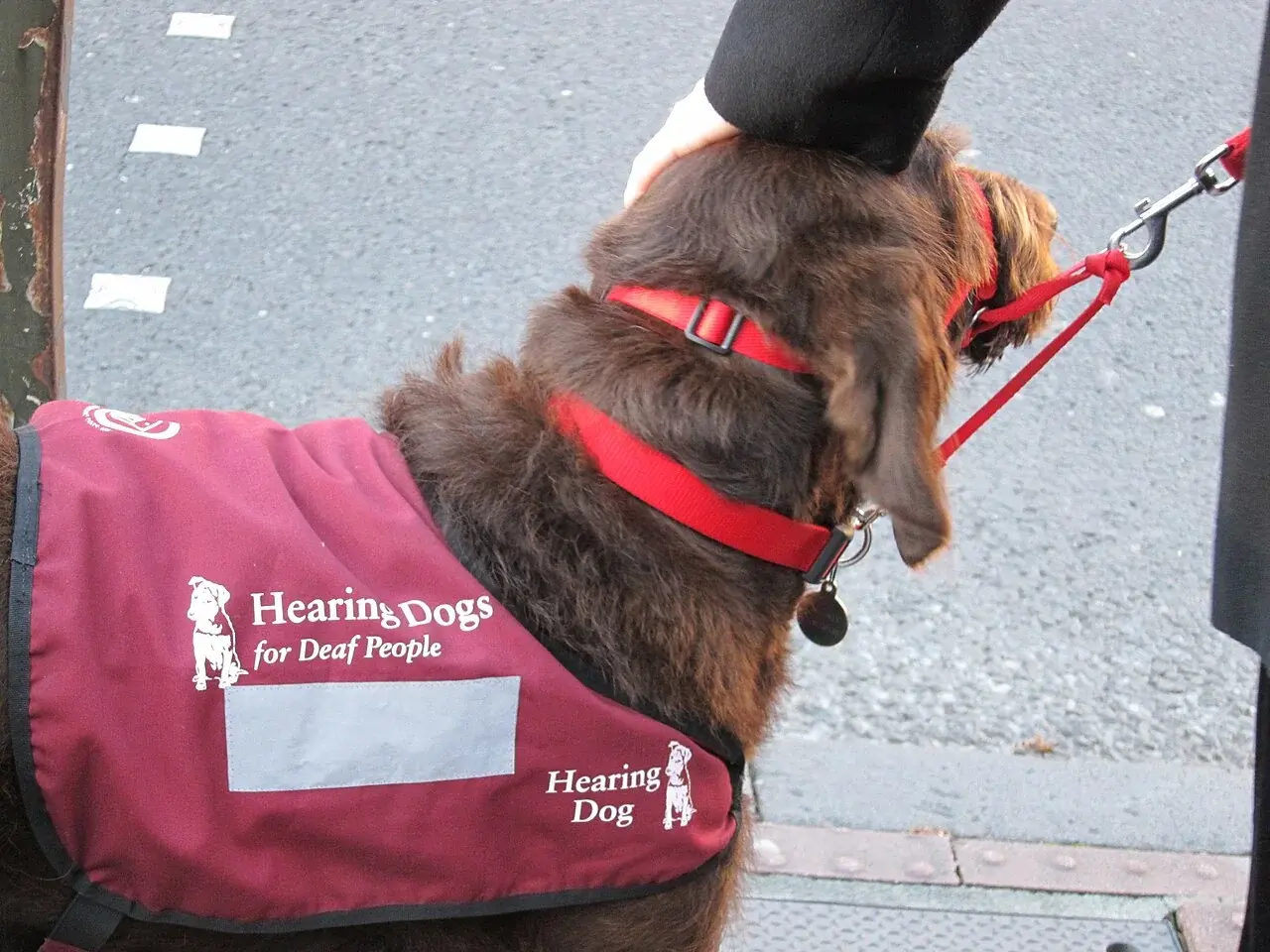
 Photograph
Blowing Puffer Fish · CC BY 2.0
Hero Dogs
Alert Ears and Wagging Tails: How Hearing Dogs Help Their Partners
A dog-focused look at the training and daily work of hearing dogs, drawn from one UK charity’s own descriptions.
All the News That's Fit to Bark!
From military experiments in the 1940s to civilian stewardship by the Swiss Alpine Club, dogs became valued partners in locating people buried by snow.
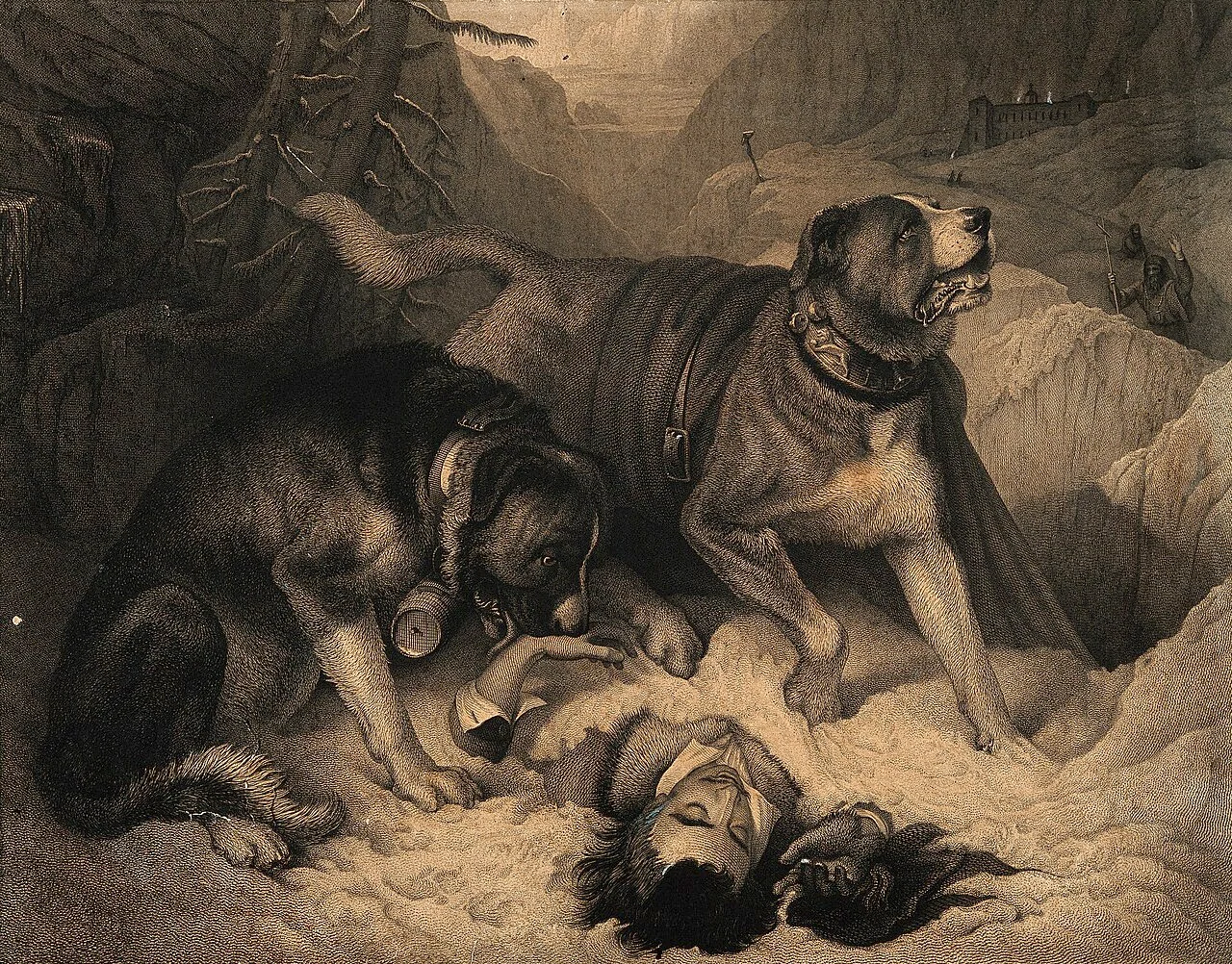
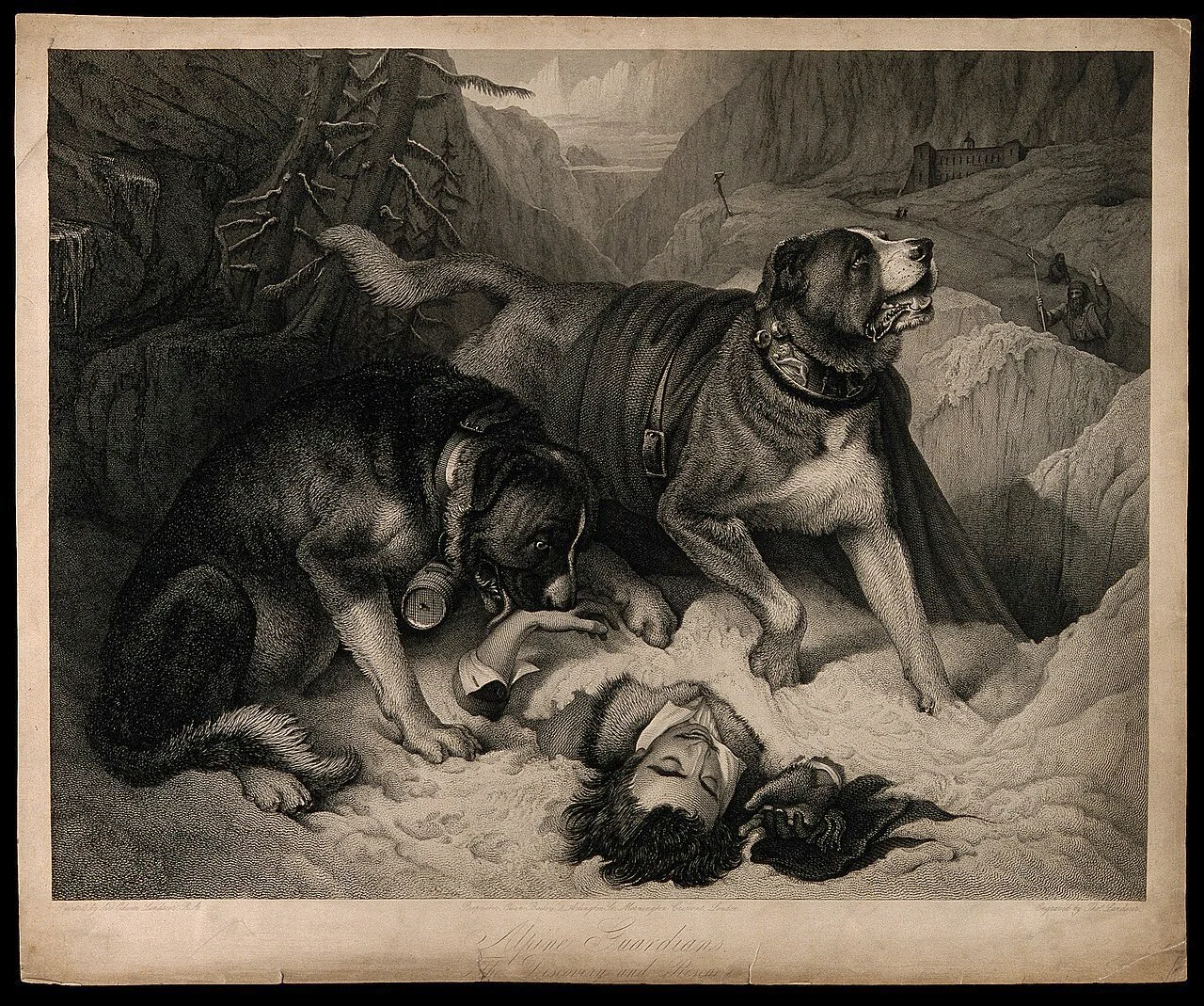
Two St. Bernard dogs with an avalanche victim, one tries to revive him while the other alerts the rescue party. Line engraving by J. Landseer, 1831, after E. Landseer. Source collection · CC BY 4.0 · Web size optimized; source linked for the original.
Avalanche rescue dogs occupy a special place in Swiss mountain culture. Their story begins with a few determined trainers in the years around World War II and continues today through the work of Alpine Rettung Schweiz. The evidence shows that systematic efforts to prepare dogs for this role started in the early 1940s under the Swiss Army. After the war the Swiss Alpine Club took primary responsibility, shaping a program that remains active. While popular accounts sometimes add colorful details, the verified record centers on practical training, the use of helicopters for transport, and the dogs’ natural ability to scent buried victims. This article examines the documented history, the transition from military to civilian control, and what the record actually supports.
The first documented steps toward using dogs in avalanche rescue trace to the winter of 1939/40. Ferdinand Schmutz, working with the Swiss Army, converted a sanitary dog into one capable of indicating avalanche victims. Contemporary accounts describe the dog alerting by barking at a specific spot, an event that impressed military observers. In December 1940 the Army chief medical officer recommended that such dogs be available for every avalanche accident. By 1943 the Swiss Cynological Society had issued new regulations that formally addressed avalanche dogs.
In 1940 Schmutz demonstrated the work to General Guisan and his staff. These early tests laid groundwork for what would become a more organized effort. The precise beginning of targeted training specifically for locating buried victims cannot be fixed with complete certainty today. Some details in the origin stories rely on later retellings that may include legendary elements. Even so, the evidence clearly shows that practical experiments were underway before systematic programs existed.
Systematic training of avalanche dogs by the Swiss Army began in the early 1940s under Ferdinand Schmutz. After World War II the Army discontinued the specialized avalanche training for financial reasons. In 1945 responsibility transferred to the Swiss Alpine Club. The Army dog service was later reactivated in 1949 by decision of the Federal Council, yet avalanche-specific training stayed with the SAC.
Ferdinand Schmutz became the first head of avalanche dog affairs for the SAC and continued in that role for decades. The club maintained sole responsibility for this work until a reorganization at the end of the 20th century. The Valais region later chose its own path. Throughout this period the program evolved from its military roots into a civilian rescue resource coordinated by experienced mountaineers. The transition reflected both cost considerations and a belief that the Alpine Club was well placed to sustain the effort in peacetime.
Dogs’ ability to detect human scent beneath snow has been central to their use in avalanche rescue. The most frequently cited early example comes from an incident on the Schilthorn in the late 1930s. A dog accompanying a rescue team reportedly barked at one location, prompting searchers to probe there and find a live victim. This event is presented in official histories as the catalyst that convinced authorities of the dogs’ potential.
While the story is consistent across SAC and Alpine Rettung Schweiz accounts, the exact details rest on historical recounting rather than contemporaneous records. The incident helped inspire Schmutz’s later experiments. Modern training builds on the idea that dogs can reliably alert to buried people, though the evidence does not describe a single standardized method used in the 1940s. The focus has remained on developing a clear alert signal from the dog rather than on any particular search formation.
Getting dog teams to avalanche sites quickly has always been a practical challenge. Early attempts included experimental parachute drops of both handlers and dogs. These proved less practical than hoped. Helicopter transport soon emerged as the more efficient solution and became the standard means of deployment.
The shift to helicopters allowed teams to reach remote or dangerous terrain faster and with less risk. Official histories note that this change improved response times and overall effectiveness. While the documents do not provide step-by-step protocols for every scenario, they make clear that reliable transport was a key factor in turning early experiments into a functioning rescue system. The emphasis has been on safety for both dogs and handlers in high-mountain conditions.
The current avalanche rescue dog program of Alpine Rettung Schweiz descends directly from the SAC initiative and is recognized as one of the oldest formal programs worldwide. It uses a structured “4 Phase” progression designed to develop a reliable alert from the dog. This methodical approach reflects lessons learned over decades of experience.
Although popular narratives sometimes speak of precise grid patterns followed by the dogs themselves, the cited source material does not detail such patterns. Training instead concentrates on scent detection, clear signaling, and teamwork between dog and handler. The program’s longevity testifies to its value, yet the records also caution that some origin stories contain elements that cannot be verified with precision. The enduring image of a dog working in deep snow continues to capture the public imagination while the actual work remains grounded in careful, incremental training.
AI-assisted original writing. This feature was revised against source material and checked for unsupported claims. Follow the references below for evidence and its limits.
PhotographBlowing Puffer Fish · CC BY 2.0
A dog-focused look at the training and daily work of hearing dogs, drawn from one UK charity’s own descriptions.
 Photograph
A look at coordinated Swiss rescue operations that include avalanche dogs, drawn from limited public descriptions of specialist teamwork.
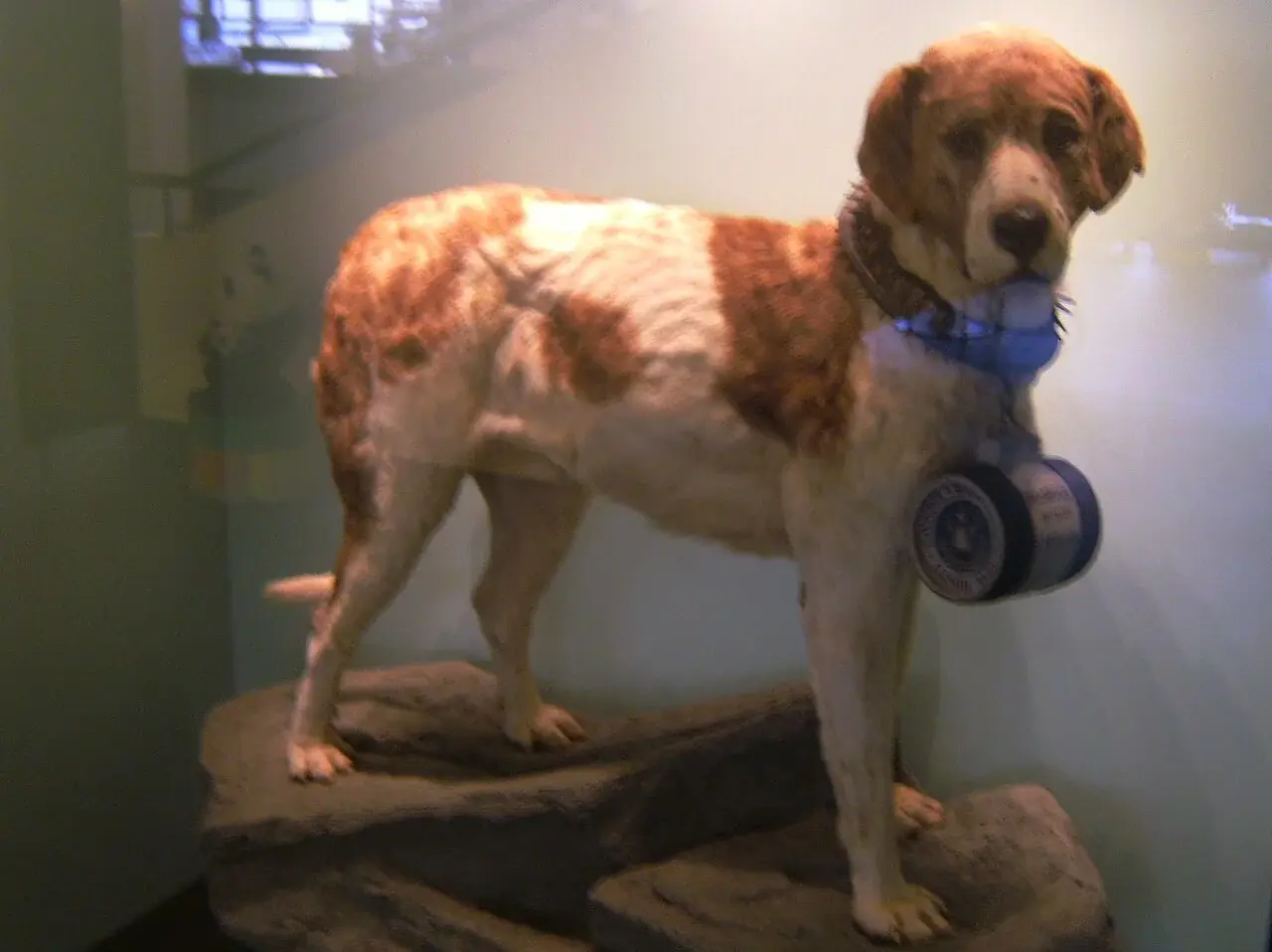
A real Alpine dog whose reputation grew from hospice service, even though detailed rescue records were never kept.